Best Free App to Learn Spanish in 2026: 7 Apps Compared

- 1
 DuolingoDaily habit buildingVisit
- 2
 BusuuStructured coursesVisit
- 3
 MemriseNative speaker videosVisit
- 4
 SpanishDictionary.comGrammar and vocabularyVisit
- 5
 Language TransferAudio learningVisit
- Duolingo suits daily habit building, with free, fun, bite-sized lessons across reading, writing, listening and speaking.
- Busuu suits structured learners, with speaking, listening, reading and writing practice plus feedback from a community of more than 120 million learners.
- Memrise suits sounding natural, with thousands of short videos of native speakers and a free starting tier.
- SpanishDictionary.com suits grammar and vocabulary study, with free lessons, quizzes and a Spanish-English dictionary in one place.
- Language Transfer suits audio learners, with completely free material, no adverts and no sign-ups, funded by donations.
- HelloTalk suits real conversation, with free language exchange with native speakers in more than 260 languages.
- LingQ suits reading and listening immersion, with a free start and real-world content from podcasts, books and videos.
- Free apps work best in combination: use one for daily lessons, one for speaking and one for reading or listening.
Quick comparison
| Product | Ideal for | Price from | Free version | |
|---|---|---|---|---|
| Duolingo | Daily habit building | Free | Yes | Visit |
| Busuu | Structured courses | Free | Yes | Visit |
| Memrise | Native speaker videos | Free | Yes | Visit |
| SpanishDictionary.com | Grammar and vocabulary | Free | Yes | Visit |
| Language Transfer | Audio learning | Free | Yes | Visit |
 HelloTalk | Language exchange | Free | Yes | Visit |
 LingQ | Reading immersion | Free | Yes | Visit |
The best free app to learn spanish
Learning Spanish for free is realistic in 2026, because several strong apps offer full starter courses at no cost, with paid plans only adding extra features. The apps below differ in method: gamified lessons, structured courses, native speaker video, grammar study, audio courses, language exchange and reading immersion. We checked each app's official homepage before listing it, and we note where free access is limited so you can plan around it.
Duolingo
Ideal for: Daily habit building
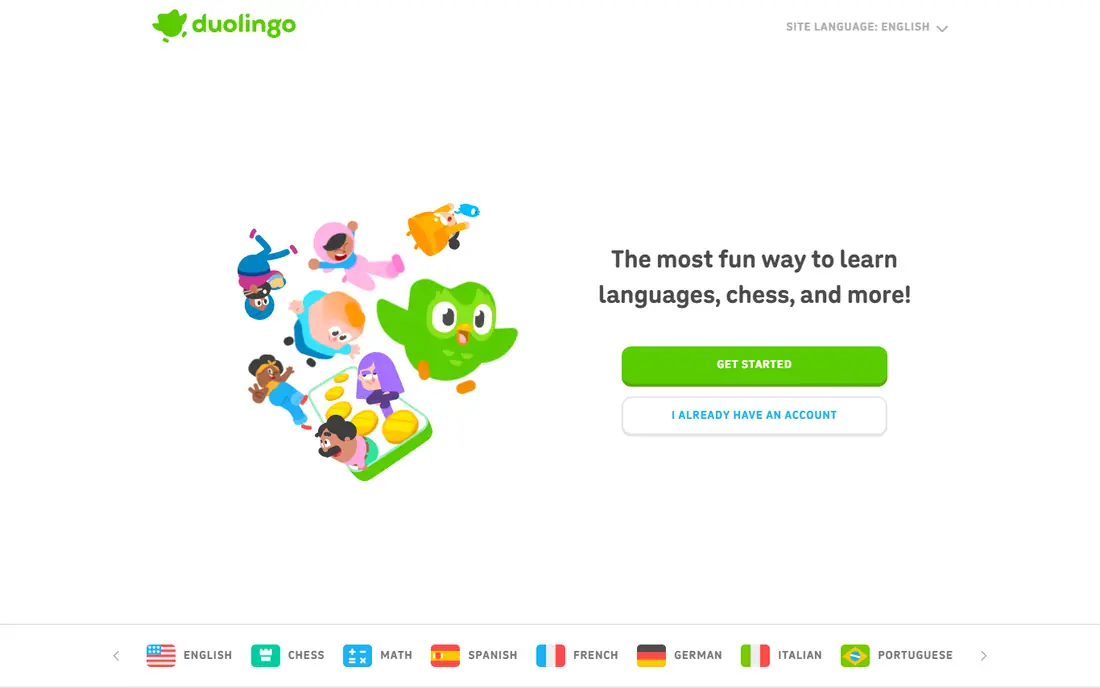
Duolingo describes itself as free, fun and effective, with quick, bite-sized lessons where learners earn points and open new levels while gaining real-world communication skills. Its homepage stresses research-backed teaching methods, game-like features and fun challenges, reminders from its mascot Duo the owl, and personalized learning combining AI and language science to keep lessons at just the right level and pace.
Duolingo suits beginners who need a daily habit most of all, since its streaks, points and short lessons make it easy to study for ten minutes a day. It covers all four skills, though speaking remains the weakest area compared with live exchange. For a free start that keeps you coming back, Duolingo is the easiest first pick, and it pairs well with HelloTalk for conversation.
- Free, fun and effective with quick, bite-sized lessons
- Research-backed teaching methods for reading, writing, listening and speaking
- Game-like features, challenges and reminders that help form a habit
- Personalized lessons tailored to your level and pace
- Free version includes ads and limited hearts or mistakes in some courses
- Speaking practice is less deep than live conversation
Busuu
Ideal for: Structured courses
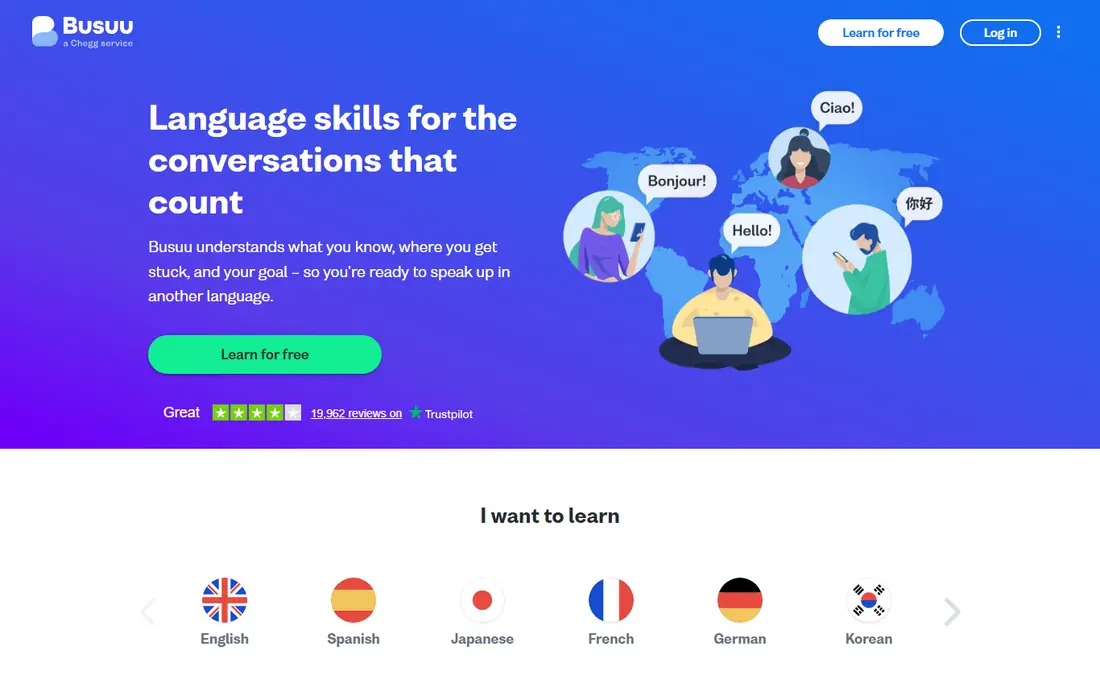
Busuu invites learners to go beyond the textbook, practising pronunciation, gaining cultural insights and exchanging local language tips with a global community of learners. Its homepage highlights building solid foundations with plenty of speaking, listening, reading and writing practice, personalised pronunciation feedback, immersive videos featuring native speakers, and study plans that let learners control their pace. It holds Google Play Editors' Choice and App Store App of the Year awards, with more than 120 million learners.
Busuu suits learners who want a structured course with clear levels and real speaking practice, rather than only games. Its community corrections add value that solo apps lack, since native speakers review your writing and speaking. The free tier covers a good start, though advanced levels and offline mode need payment, so check what your level requires before committing.
- Start for free with simplified courses and short, focused lessons
- Speaking, listening, reading and writing practice
- Pronunciation feedback and immersive videos with native speakers
- Community of more than 120 million learners for corrections and cultural tips
- Full course access and some features need a paid plan
- Free tier is more limited than Duolingo's
Memrise
Ideal for: Native speaker videos
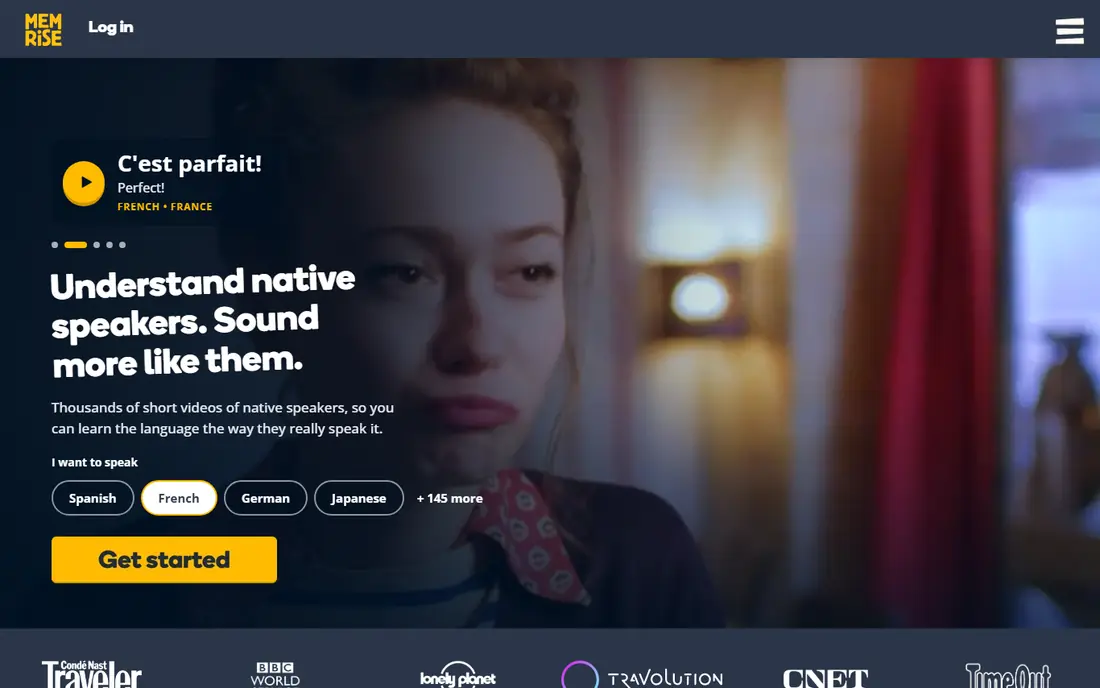
Memrise focuses on understanding native speakers and sounding more like them, with thousands of short videos of native speakers for Spanish and other languages. Its method has three steps: hear a useful word or phrase through a native speaker video, learn it with practice until it sticks, then copy it by recording yourself and comparing rhythm, stress and natural phrasing. Its homepage notes that learners spending 15 minutes a day can confidently have a basic conversation in 2 months, and that you can start learning for free.
Memrise suits learners who know some words but struggle when real people speak, since its native videos train your ear for accents, speed and rhythm. Its Spanish examples include everyday phrases such as "La cuenta, por favor" spoken by a speaker in Madrid, which teaches useful language in context. For grammar rules, pair Memrise with SpanishDictionary.com, but for natural speech Memrise is a top free pick.
- Thousands of short videos of native speakers, so you learn how Spanish really sounds
- Hear, learn and copy method with recording and comparison
- Words and phrases approved by native speakers
- Free start, with paid plan adding extra features
- Less grammar depth than SpanishDictionary.com
- Full features need a paid plan
SpanishDictionary.com
Ideal for: Grammar and vocabulary
SpanishDictionary.com calls itself Spanish learning made easy, combining a translator and dictionary with lessons, vocabulary and articles. Its homepage lists lessons such as Introduce Yourself, Getting Started grammar and Pronunciation of A, vocabulary sets including a beginner 1,000-word quiz and tourism and travel sets, plus articles on Spanish culture, food and etymology. Its dictionary provides not only translations but also conjugations, pronunciations and examples, and its team of language experts aims to teach the world Spanish for free.
SpanishDictionary.com suits learners who want to understand grammar and build vocabulary systematically, and anyone who needs a reliable Spanish-English dictionary daily. Its learning path gives structure without a subscription, and its conjugation tables solve a common pain point for Spanish learners. It is less game-like than Duolingo, but as a free study companion it is hard to beat.
- Best Spanish-English translator and dictionary with conjugations, pronunciations and examples
- Free lessons, vocabulary quizzes and a personalized learning path
- Articles on Spanish language, countries and Hispanic cultures
- Community of more than 40,000 subscribers for premium, with much content free
- Web-first experience rather than a gamified app
- Some features such as cheat sheets and unlimited tests need premium
Language Transfer
Ideal for: Audio learning
Language Transfer runs on a simple promise: there are no price tags to access any material, no adverts, no sign-ups and no one asking for or selling your data, with the project funded by donations through Patreon and PayPal. Its Thinking Method teaches Spanish by building understanding step by step, so learners grasp how the language works instead of memorizing phrases. Lessons are audio-based and designed to be listened to anywhere, from commuting to walking.
Language Transfer suits audio learners and anyone who dislikes apps, ads and accounts, since it asks nothing before you start. Its method suits learners who want to understand Spanish grammar intuitively, and it pairs well with Duolingo for reading and writing. The trade-off is format: there are no games, streaks or visual lessons, so self-motivated learners get the most from it.
- Completely free material with no price tags, no adverts, no sign-ups and no data selling
- Runs on donations
- Thinking Method teaches understanding rather than memorization
- Audio-only format with no app gamification or reading exercises
- Course pace suits patient learners
HelloTalk
Ideal for: Language exchange
HelloTalk connects learners with native speakers who are learning their language, so both sides practice together through real conversations. Its homepage highlights language exchange with built-in tools for translation, pronunciation, transliteration and corrections, practice through text, voice or video, Voicerooms for live group conversation, and Moments for community posts, questions and native speaker responses. Its community spans more than 70 million learners, more than 200 countries and regions, and more than 260 languages, with a 4.8 out of 5 rating from 1,250,000 ratings.
HelloTalk suits learners who already know basics and want real conversation, since talking with native speakers builds confidence faster than any solo app. One testimonial on its homepage describes going from basic Spanish to confident conversations in six months through exchange. The trade-off is partner quality: finding patient, regular partners takes effort, but the free exchange model makes HelloTalk the best free speaking practice here.
- Practice for free by chatting with native speakers around the world
- Text, voice and video chat plus Voicerooms and Livestreams
- Built-in translation, pronunciation, transliteration and corrections
- Community of more than 70 million learners across more than 200 countries and more than 260 languages
- Exchange quality depends on finding good partners
- Some advanced features need a paid plan
LingQ
Ideal for: Reading immersion
LingQ teaches languages naturally through reading, listening and discovering new words in context, rather than repeating a small set of phrases or playing games. Its homepage highlights immersive content from podcasts, books, TV shows, songs and articles, vocabulary growth through meaningful encounters, measurable progress with stats and milestones, and AI tools that instantly turn a show or song into a lesson with transcripts, translations and audio. It supports more than 50 languages and claims that an hour of study a day can move a learner up a proficiency level in 90 days.
LingQ suits learners who enjoy reading and listening and want to learn from content they actually like, from Spanish podcasts to Netflix shows. Its import tool is a standout: bring your own content and LingQ turns it into a study lesson. Absolute beginners may find Duolingo or Language Transfer easier for the first weeks, but once you know basics, LingQ is the best free immersion tool here.
- Get started for free with real-world content from podcasts, books, videos and songs
- Vocabulary grows naturally through meaningful context
- AI tools turn Netflix shows, songs and articles into lessons
- Progress tracking with stats and milestones
- Community of more than 5 million learners
- Free tier limits some features and content
- Method suits intermediate learners more than absolute beginners
How we picked these
We compared official homepages, free access, learning method, speaking practice and content type, favoring apps that offer a genuine free start for Spanish in 2026. We covered gamified lessons, structured courses, native speaker video, grammar study, audio learning, language exchange and reading immersion, because no single free app covers every skill well. We checked each app's own site before listing it.
How to choose a free Spanish app
Start with your weakest skill. If you need a habit, start with Duolingo. If you need structure, start with Busuu. If you understand words but cannot follow native speech, start with Memrise. If grammar confuses you, start with SpanishDictionary.com. If you learn by listening, start with Language Transfer. If you can read but cannot speak, start with HelloTalk. If you want to read and listen to real Spanish, start with LingQ.
Next, combine two or three apps rather than relying on one. A strong free routine is ten minutes of Duolingo or Busuu daily, plus a HelloTalk exchange twice a week and LingQ reading for fun. That mix covers lessons, speaking and immersion without paying, and it keeps study varied enough to sustain. Avoid collecting ten apps: depth in two or three beats shallow use of many.
Finally, set a realistic daily target and track it. Fifteen minutes a day beats two hours once a week for language learning, and apps with streaks, stats and milestones help you stay consistent. After two months, test yourself with a real conversation or a Spanish podcast: if you follow more than before, your routine works, and you can keep it free or upgrade only the app you use most.
Frequently asked questions
What is the best free app to learn Spanish for beginners?
Duolingo is the best free starting app for most beginners, with bite-sized lessons, game-like motivation and all four skills. Busuu suits beginners who prefer structured courses, while Language Transfer suits beginners who learn best by listening.
Can I really learn Spanish for free?
Yes, up to a solid conversational level, by combining free apps for lessons, speaking and immersion. Duolingo, Busuu, Memrise, SpanishDictionary.com, Language Transfer, HelloTalk and LingQ all offer free starts, with paid plans adding extras rather than blocking core learning.
How long does it take to learn Spanish with a free app?
It depends on daily time and method. Memrise notes that learners spending 15 minutes a day can confidently have a basic conversation in 2 months, while LingQ notes that an hour a day can move a learner up a proficiency level in 90 days. Consistency matters more than app choice.
Is Duolingo enough to become fluent in Spanish?
Duolingo builds a strong foundation in vocabulary, grammar and basic conversation, but fluency also needs real speaking and listening. Pair Duolingo with HelloTalk for conversation and LingQ or Memrise for native speech to move from lessons toward fluency.
Which free Spanish app is best for speaking practice?
HelloTalk is best for free speaking practice, since it connects you with native speakers for text, voice and video exchange. Busuu adds pronunciation feedback and community corrections, while Memrise helps you copy native speaker rhythm and stress before live conversation.
Do free Spanish apps work offline?
Some apps offer offline lessons on paid plans, but free tiers usually need an internet connection for lessons, videos and exchange. Language Transfer audio can be downloaded for offline listening in many cases, so check each app's offline options if you study without reliable internet.