Best Frontend Cloud Services For Easy Development in 2026: 7 Compared

- Our pick for most readers is Vercel, because it fits easiest frontend deploys for many teams and covers the core needs for best frontend cloud services for easy development without unnecessary complexity.
- Netlify is the strongest alternative when simple frontend deploys and previews matters more than a single all purpose option, and it is worth comparing side by side with Vercel.
- Pricing varies widely across this list, so check the official pricing page before you commit, and treat any figure marked See website as quote based or usage based.
- Render suits readers who prioritise simple hosting for frontend and APIs, which shows why the best choice depends on your team size, budget, and existing tools rather than a single ranking.
Quick comparison
| Product | Ideal for | Price from | Free version | |
|---|---|---|---|---|
 Vercel | easiest frontend deploys for many teams | See website | Yes | Visit |
 Netlify | simple frontend deploys and previews | See website | Yes | Visit |
 Render | simple hosting for frontend and APIs | See website | Yes | Visit |
 Railway | quick deploys with databases | See website | Free trial | Visit |
 Heroku | classic easy app deployment | See website | No | Visit |
 Firebase | frontend plus backend in one place | See website | Yes | Visit |
 Deno Deploy | simple edge hosting for JavaScript | See website | Yes | Visit |
The best best frontend cloud services for easy development
We compared official feature pages, pricing pages, app store listings where relevant, privacy policies, and public reviews to build this list for best frontend cloud services for easy development. The seven options below cover well known leaders and smaller options that fit the topic well, and each one is still available in October 2026 as far as its official site shows. Read the strengths and the honest limits together, because the right choice usually depends on budget, team size, and tools you already use.
Vercel
Ideal for: easiest frontend deploys for many teams

Vercel is our pick for easiest frontend deploys for many teams. Its main strengths are git deploys; preview links; framework support. For most readers, that balance is the reason it earns a place on this list, even though it is not perfect for every buyer. When we compared official feature pages, pricing, and public reviews, Vercel stood out for readers who need easiest frontend deploys for many teams and want an option that covers that need directly, rather than a general service that only touches it lightly.
The honest limits are costs rise with traffic; team features need paid plans. That does not rule Vercel out, but it does mean you should weigh those limits against your own priorities before you buy. Ask for a demo or trial that uses your own workflow, and pay attention to support response times as well as the feature list. If those limits are acceptable for your situation, Vercel is a solid choice for best frontend cloud services for easy development, and our pick remains the option that best matches your budget and workflow.
- Git deploys
- Preview links
- Framework support
- Costs rise with traffic
- Team features need paid plans
Netlify
Ideal for: simple frontend deploys and previews

Netlify suits readers who need simple frontend deploys and previews. Its main strengths are drag and drop deploys; previews; serverless functions. That focus also makes it easier to explain to colleagues, because the core value is clear from the first week of use. When we compared official feature pages, pricing, and public reviews, Netlify stood out for readers who need simple frontend deploys and previews and want an option that covers that need directly, rather than a general service that only touches it lightly.
The honest limits are build limits on free plan; larger sites need paid tiers. That does not rule Netlify out, but it does mean you should weigh those limits against your own priorities before you buy. Check the pricing page and the terms for your team size, because costs can change quickly once you add users or volume. If those limits are acceptable for your situation, Netlify is a solid choice for best frontend cloud services for easy development, and our pick remains the option that best matches your budget and workflow.
- Drag and drop deploys
- Previews
- Serverless functions
- Build limits on free plan
- Larger sites need paid tiers
Render
Ideal for: simple hosting for frontend and APIs
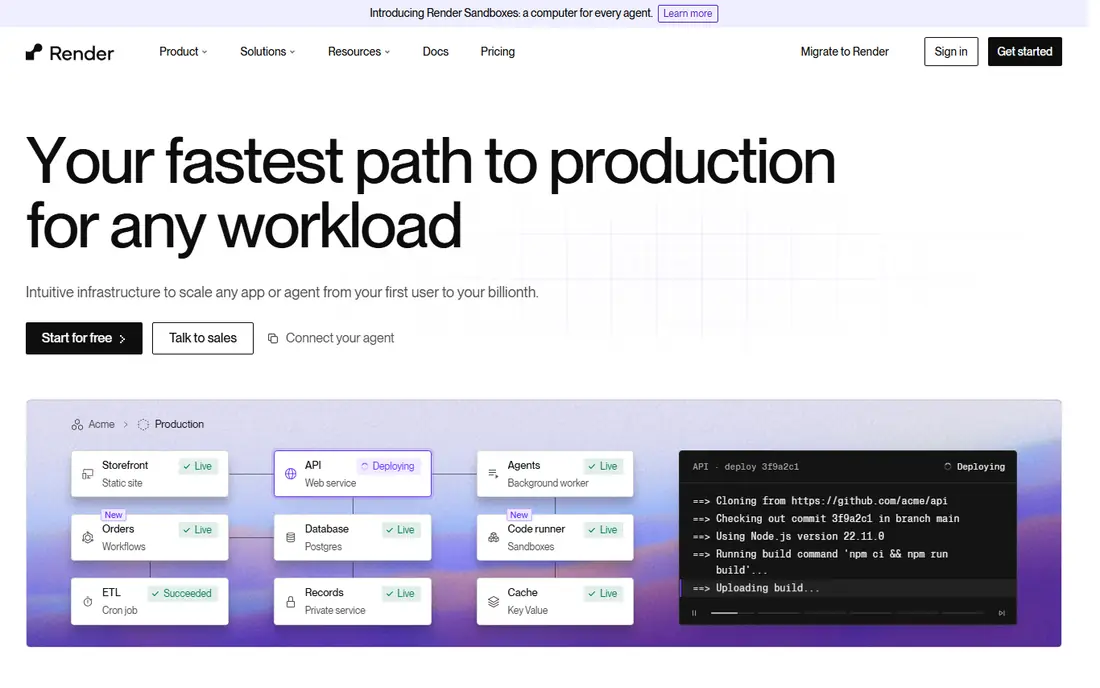
Render is a strong choice for simple hosting for frontend and APIs. Its main strengths are simple dashboard; static and web services; auto deploys. We found that clarity useful, because many competing services bury their main strength under a long list of extra features. When we compared official feature pages, pricing, and public reviews, Render stood out for readers who need simple hosting for frontend and APIs and want an option that covers that need directly, rather than a general service that only touches it lightly.
The honest limits are free tier limits; region choice is narrower. That does not rule Render out, but it does mean you should weigh those limits against your own priorities before you buy. Before you commit, run a short trial with a real example from your own work, and check how it fits your current tools and budget. If those limits are acceptable for your situation, Render is a solid choice for best frontend cloud services for easy development, and our pick remains the option that best matches your budget and workflow.
- Simple dashboard
- Static and web services
- Auto deploys
- Free tier limits
- Region choice is narrower
Railway
Ideal for: quick deploys with databases
For readers who need quick deploys with databases, Railway deserves a close look. Its main strengths are simple templates; databases; usage billing. In practice, that means it handles the day to day work for quick deploys with databases without forcing you into a much larger system than you need. When we compared official feature pages, pricing, and public reviews, Railway stood out for readers who need quick deploys with databases and want an option that covers that need directly, rather than a general service that only touches it lightly.
The honest limits are pricing varies with usage; free trial is limited. That does not rule Railway out, but it does mean you should weigh those limits against your own priorities before you buy. A short trial with your own data will tell you more than any feature list, so test the parts you will actually use every week. If those limits are acceptable for your situation, Railway is a solid choice for best frontend cloud services for easy development, and our pick remains the option that best matches your budget and workflow.
- Simple templates
- Databases
- Usage billing
- Pricing varies with usage
- Free trial is limited
Heroku
Ideal for: classic easy app deployment
Heroku is our pick for classic easy app deployment. Its main strengths are simple git deploys; add ons; long docs history. For most readers, that balance is the reason it earns a place on this list, even though it is not perfect for every buyer. When we compared official feature pages, pricing, and public reviews, Heroku stood out for readers who need classic easy app deployment and want an option that covers that need directly, rather than a general service that only touches it lightly.
The honest limits are no permanent free tier; costs rise with dynos. That does not rule Heroku out, but it does mean you should weigh those limits against your own priorities before you buy. Ask for a demo or trial that uses your own workflow, and pay attention to support response times as well as the feature list. If those limits are acceptable for your situation, Heroku is a solid choice for best frontend cloud services for easy development, and our pick remains the option that best matches your budget and workflow.
- Simple Git deploys
- Add ons
- Long docs history
- No permanent free tier
- Costs rise with dynos
Firebase
Ideal for: frontend plus backend in one place
Firebase suits readers who need frontend plus backend in one place. Its main strengths are hosting; auth; database; google tools. That focus also makes it easier to explain to colleagues, because the core value is clear from the first week of use. When we compared official feature pages, pricing, and public reviews, Firebase stood out for readers who need frontend plus backend in one place and want an option that covers that need directly, rather than a general service that only touches it lightly.
The honest limits are vendor lock in risk; billing needs care. That does not rule Firebase out, but it does mean you should weigh those limits against your own priorities before you buy. Check the pricing page and the terms for your team size, because costs can change quickly once you add users or volume. If those limits are acceptable for your situation, Firebase is a solid choice for best frontend cloud services for easy development, and our pick remains the option that best matches your budget and workflow.
- Hosting
- Auth
- Database
- Google tools
- Vendor lock in risk
- Billing needs care
Deno Deploy
Ideal for: simple edge hosting for JavaScript
Deno Deploy is a strong choice for simple edge hosting for JavaScript. Its main strengths are edge deploys; javascript runtime; github integration. We found that clarity useful, because many competing services bury their main strength under a long list of extra features. When we compared official feature pages, pricing, and public reviews, Deno Deploy stood out for readers who need simple edge hosting for JavaScript and want an option that covers that need directly, rather than a general service that only touches it lightly.
The honest limits are smaller ecosystem; framework support is narrower. That does not rule Deno Deploy out, but it does mean you should weigh those limits against your own priorities before you buy. Before you commit, run a short trial with a real example from your own work, and check how it fits your current tools and budget. If those limits are acceptable for your situation, Deno Deploy is a solid choice for best frontend cloud services for easy development, and our pick remains the option that best matches your budget and workflow.
- Edge deploys
- JavaScript runtime
- GitHub integration
- Smaller ecosystem
- Framework support is narrower
How we picked these
We started with the topic itself, best frontend cloud services for easy development, and kept only products that truly fit it and are available in October 2026. We checked each product's official homepage to confirm it loads and belongs to that product, and we read official feature and pricing pages, app store listings where relevant, privacy policies, and public reviews. We did not claim hands-on testing that did not happen, and we did not invent prices, awards, user counts, ratings, or features. Where a price could not be verified from the vendor, we wrote See website instead of guessing.
We favoured a mix of well known leaders and strong smaller options, and we gave weight to clear pricing, honest limits, and a fit for ordinary US consumers and small business owners. Products that did not fit the topic, or that we could not verify, were left out rather than used as filler.
How to choose the right option for you
Start by writing down the one job you need this option to do for best frontend cloud services for easy development, and ignore features you will not use in the first three months. An option that does your main job well is usually better value than a larger platform with a long feature list you never open. Next, check total cost, not just the starting price, because user seats, usage, add ons, and support tiers can change the bill. Ask for the current pricing page in writing if you are buying for a team.
Then test the shortlist with a real task from your own work, not a demo data set. Pay attention to setup time, support replies, and how easily you can export your data if you leave. A short trial will also show whether the daily workflow feels clear or fiddly. If two options look close, pick the one with clearer pricing and simpler exit terms, because that choice is easier to change later.
Finally, check contract terms before you sign, including renewal dates, minimum terms, and what happens to your data at the end of a plan. For services that handle personal or customer data, read the privacy policy and ask about data location and deletion. Those checks take an hour and can save a difficult move later.
Frequently asked questions
What is best frontend cloud services for easy development?
best frontend cloud services for easy development covers services that help with that need, and the right choice depends on your budget, team size, and the features you will use most. Start with the shortlist above, compare the best for notes in the table, and test one or two options before you commit.
How much does best frontend cloud services for easy development cost?
Costs vary widely, from free tiers to quote based enterprise plans, and usage, seats, and add ons can change the total. Check the official pricing page for each option, and treat any price marked See website as a sign to ask for a written quote.
Which option is best for small businesses?
For most small businesses, Vercel is a sensible starting point because it fits easiest frontend deploys for many teams without a large setup burden. If your main need is simple frontend deploys and previews, compare Netlify next, because a closer fit on your main job usually matters more than a longer feature list.
Can I try these options before I pay?
Many options on this list offer a free plan or a free trial, as shown in the comparison table, while enterprise services usually offer a demo instead. Use the trial with a real task, check support replies, and confirm renewal terms before the trial ends.
How do I switch if I pick the wrong one?
Switching is easier if you export your data early, keep a copy of your settings, and check contract notice periods before you cancel. Run the new option alongside the old one for a short overlap where possible, so no work is lost during the move.