6 GDPR Compliance Software, Compared by Cost and Features

- 1
 SecuritiOrganizations that want data discoveryVisit
- 2
 CookieYesSmall websites that require compliant cookie banners quick and cheapVisit
- 3
 DataGrailMid-market privacy teams automating DSRs and consentVisit
- 4
 KetchTeams that want to start free and grow into fullVisit
- 5
 OneTrustLarge enterprises running privacyVisit
- Securiti is the opening pick, best for organizations that want data discovery, security and privacy on one system.
- One limit worth knowing about DataGrail: no public pricing, so budgeting needs a sales conversation.
- Pricing for Securiti, DataGrail, OneTrust and TrustArc is quote-based, which adds a sales step before you can compare cost.
- For privacy teams that want guided programs and responsive support, TrustArc is worth a look.
Direct answer
Securiti leads the list, best for organizations that want data discovery, security and privacy on one product. Alternatives: CookieYes for small websites that require compliant cookie banners quick and cheap, and DataGrail for mid-market privacy teams automating DSRs and consent. The remaining 3 options are covered below with prices and limits.
Quick comparison
| Product | Ideal for | Price from | Free version | |
|---|---|---|---|---|
| Securiti | Organizations that want data discovery | See website | No | Visit |
| CookieYes | Small websites that require compliant cookie banners quick and cheap | Free (premium plans from $10/month/domain) | Yes | Visit |
| DataGrail | Mid-market privacy teams automating DSRs and consent | See website | No | Visit |
| Ketch | Teams that want to start free and grow into full | Free (full-feature CMP at $0/month; Ketch Pro custom pricing) | Yes | Visit |
| OneTrust | Large enterprises running privacy | See website | No | Visit |
 TrustArc | Privacy teams that want guided programs and responsive support | See website | No | Visit |
GDPR Compliance Software profiles
Short on time? The summary and table above give the quick view of 6 tools for GDPR compliance software, and the profiles that follow give the detail behind each entry.
Securiti
Ideal for: Organizations that want data discovery
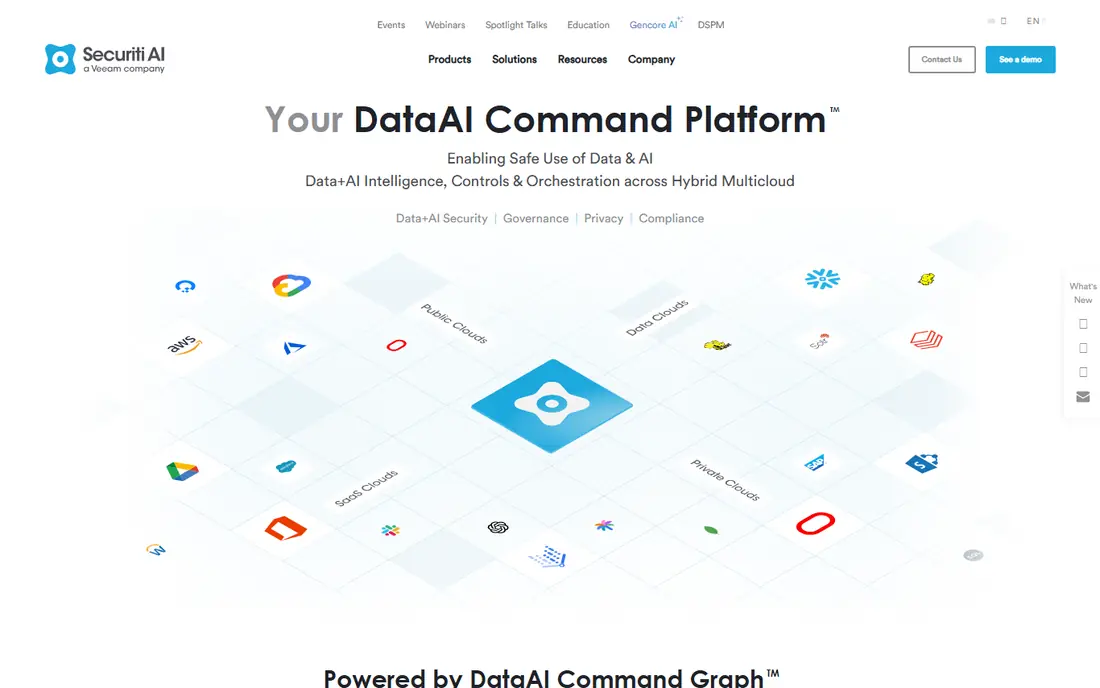
Securiti works best for organizations that want data discovery, security and privacy on one system. Securiti approaches GDPR from the data up instead of the legal form down. Its discovery engine finds personal data across cloud, SaaS and on-prem systems, classifies it, and feeds that inventory into data mapping (RoPA), DSR fulfillment, consent enforcement and breach impact analysis.
What works well: Capable DSPM heritage means security teams buy in too.
Downsides: The product's breadth (DSPM, AI security, privacy) can overwhelm teams that only need GDPR basics.
Also, when a deletion request arrives, the system knows where the data actually lives since it discovered it, not because someone filled in a spreadsheet. That makes Securiti the pick for data-heavy organizations where the privacy team and the security team have to share one picture. Worth adding: pricing is quote-based. This comparison lists no price for Securiti; ask the vendor. Securiti does not include a free plan.
- Consent management
- Deep data discovery and classification across hybrid multicloud and SaaS feeds the privacy modules with real system data
- Enterprise pricing with no public levels
CookieYes
Ideal for: Small websites that require compliant cookie banners quick and cheap

Where CookieYes fits: small websites that require compliant cookie banners quick and cheap. CookieYes does one thing and does it well: cookie consent banners that satisfy GDPR, UK GDPR, CCPA/CPRA and other regimes. From a buyer's view, be clear-eyed about scope: CookieYes is a consent tool, not a privacy product.
Watch-outs: Per-domain pricing layers on up across large site portfolios.
For everyday use, installation is a single line of code, the banner auto-blocks trackers until consent, and premium levels add geo-targeting, monthly or weekly scheduled scans and branding removal. Worth adding: for anything with employee data, SaaS sprawl or regular subject requests, pair it with (or graduate to) a fuller system. Entry price for CookieYes: Free. CookieYes has a free plan.
- Google-certified CMP with IAB TCF support and one-line installation
- Premium plans from $10/month/domain with geo-targeting and scheduled scans
- Consent-only scope: no DSR automation
DataGrail
Ideal for: Mid-market privacy teams automating DSRs and consent

DataGrail works best for mid-market privacy teams automating DSRs and consent. DataGrail built its reputation on one painful workflow: data subject requests.
Worth adding: treat that as a bonus, not the buying reason: the core value is still DSR and data-map automation for teams of one to twenty. The 2,500-plus integrations matter because DSR automation only works if the systems are actually connected. This comparison lists no price for DataGrail; ask the vendor. DataGrail does not include a free plan.
Limits to weigh: The AI positioning is new and unproven at scale compared to the core automation.
- AI agent "Vera" drafts assessments and recommends consent rules
- 2,500-plus integrations let non-technical teams link systems without engineering
- No public pricing, so budgeting needs a sales conversation
Ketch
Ideal for: Teams that want to start free and grow into full
Think of Ketch for teams that want to start free and grow into full privacy infrastructure. Ketch's wedge is straightforward: launch a full-featured consent management system at $0 per month, then add data discovery, permissioning and DSR automation as the program matures. That makes it the rare vendor that serves both a startup that needs a banner today and an enterprise building permissioning infrastructure.
For teams that want modern architecture without an enterprise commitment on day one, Ketch is the pragmatic choice. The consent layer enforces choices across connected systems in live, and the system is a Google-certified CMP partner. The main limit is the usual land-and-expand shape: the free CMP is real, but the full product is custom-priced. Still, starting free removes the evaluation risk that quote-based competitors impose. Ketch pricing: Free. Ketch offers a free plan.
What Ketch does well: not a trial. Trade-offs to know: Newer than OneTrust/TrustArc, so fewer long-tenure enterprise references.
- Grows into discovery
- A genuinely free full-feature consent management product
- The deeper system modules are premium and quote-based
OneTrust
Ideal for: Large enterprises running privacy
OneTrust works best for large enterprises running privacy, AI governance and external risk in one product. For a multinational juggling GDPR, CPRA and a dozen other regimes, that consolidation is the pitch.
The company says more than half of the Fortune 500 use it, and analysts consistently place it among the leaders. In practice, OneTrust does not publish pricing; deals are quoted, and implementations are projects, not signups. This comparison lists no price for OneTrust; ask the vendor. OneTrust has no permanent free option.
Honest limits: The product's breadth can mean long rollouts and heavy services involvement.
- Chosen by more than half of the Fortune 500
- From consent and DSRs to AI governance and external management
- Enterprise pricing and implementation effort put it out of reach for small teams
TrustArc
Ideal for: Privacy teams that want guided programs and responsive support
Choose TrustArc for privacy teams that want guided programs and responsive support. TrustArc has been doing privacy software since before GDPR existed. It displays in the product's maturity: consent management, assessments, data mapping, DSR workflows and vendor risk are all present and well integrated.
Watch-outs: The interface and brand feel more traditional than the newer automation-first competitors.
Beyond that, pricing is quote-based, so expect an enterprise sales cycle. On top of that, the differentiator in reviews is the human layer: named experts, migration teams and support that customers rate highly. For a team that wants software plus guidance (instead of software that assumes a mature privacy program already exists), TrustArc is the safer choice. TrustArc does not show a starting price in this comparison, so check the vendor site for current pricing. No free plan comes with TrustArc.
- Customer reviews consistently praise the support team and migration help
- 28-plus years of in-house privacy expertise baked into the system
- Quote-based pricing with no public numbers
How we chose
Ainotely looked at what each vendor publishes: pricing, plan limits, feature coverage for GDPR compliance software and stated drawbacks. No hands-on testing is claimed. Seat minimums, billing terms and add-ons can move the real cost, so the starting prices here are a guide and not a quote. Position on the page reflects fit for a typical buyer first, with price clarity and free access breaking ties. Treat it as a guide, not a ruling.
What to confirm before you sign up
- Confirm the entry price on the vendor page. For Securiti, DataGrail, OneTrust and TrustArc that means a quote rather than a fixed price.
- Check what the free option really includes: CookieYes and Ketch offer a free plan, and usage caps differ.
- Before choosing Securiti, weigh its main limit: the product's breadth (DSPM, AI security, privacy) can overwhelm teams that only need GDPR basics.
- See whether TrustArc offers onboarding or training, and whether it is included in the price.
- Confirm the exact DataGrail plan that includes your must-have features.
Frequently asked questions
How are the tools for GDPR compliance software ordered?
Securiti sits first and TrustArc last because the order follows typical fit for GDPR compliance software, then price clarity and free access. It is a judgement call, so read each profile for fit and limits.
Do I need a Data Protection Officer to use this software?
Not necessarily to use the software, but GDPR needs a DPO for certain organizations (public authorities, large-scale systematic monitoring, large-scale sensitive data processing).
Which options for GDPR compliance software have a free plan?
On this list, CookieYes and Ketch include a free plan. Caps on seats, usage or features are common, so test the free plan against your real workload.
Is Securiti the right pick for everyone comparing GDPR compliance software?
No single tool suits every team. Securiti comes first because it fits organizations that want data discovery, security and privacy on one platform, while CookieYes suits small websites that need compliant cookie banners fast and cheap and DataGrail suits mid-market privacy teams automating DSRs and consent. Match the tool to your own size, budget and workflow before deciding.
What is the difference between a CMP and a privacy system?
A consent management product (CMP) takes care of website and app consent: banners, preference centers and consent logs. A privacy system layers on data mapping, DSR automation, assessments and vendor risk.
Which platform is a good match for automating data subject requests?
Securiti is the pick this page puts first, mainly for organizations that want data discovery, security and privacy on one product. If your situation differs, CookieYes suits small websites that require compliant cookie banners quick and cheap, and DataGrail suits mid-market privacy teams automating DSRs and consent. Compare price and limits before you decide.