Best GLP-1 Tracking App in 2026: 8 Apps Compared

- Ro is our pick for most GLP-1 users because it pairs medication support with tracking, coaching, and clinician access.
- Noom suits people who want habit and behavior coaching alongside weight tracking.
- Found and Calibrate suit users who want a structured, clinician-guided program rather than a simple log.
-
Dose reminders, side-effect logs, and weight trends matter more than any single feature, so pick the app you will open daily.
-
Side-effect tracking and dose timing support separate the best GLP-1 apps from simple weight logs.
Quick comparison
| Product | Ideal for | Price from | Free version | |
|---|---|---|---|---|
 Ro | All-in-one GLP-1 support | See website | No | Visit |
 Noom | Habit and behavior coaching | See website | No | Visit |
 Found | Clinician-guided weight care | See website | No | Visit |
 Calibrate | Structured metabolic program | See website | No | Visit |
 WeightWatchers | Points, community, and GLP-1 support | See website | No | Visit |
 Form Health | Medical weight care with dietitians | See website | No | Visit |
 Omada | Chronic condition coaching | See website | No | Visit |
 Hello Alpha | Online clinician access | See website | No | Visit |
The best glp1 tracking apps
This is not medical advice. GLP-1 medicines affect appetite, digestion, and blood sugar, and they work best with clinician guidance, so talk with your doctor or pharmacist about dosing, side effects, and whether a program fits you. The apps below help with the daily side: dose reminders, weight trends, food and activity logs, and coaching.
Ro
Ideal for: All-in-one GLP-1 support
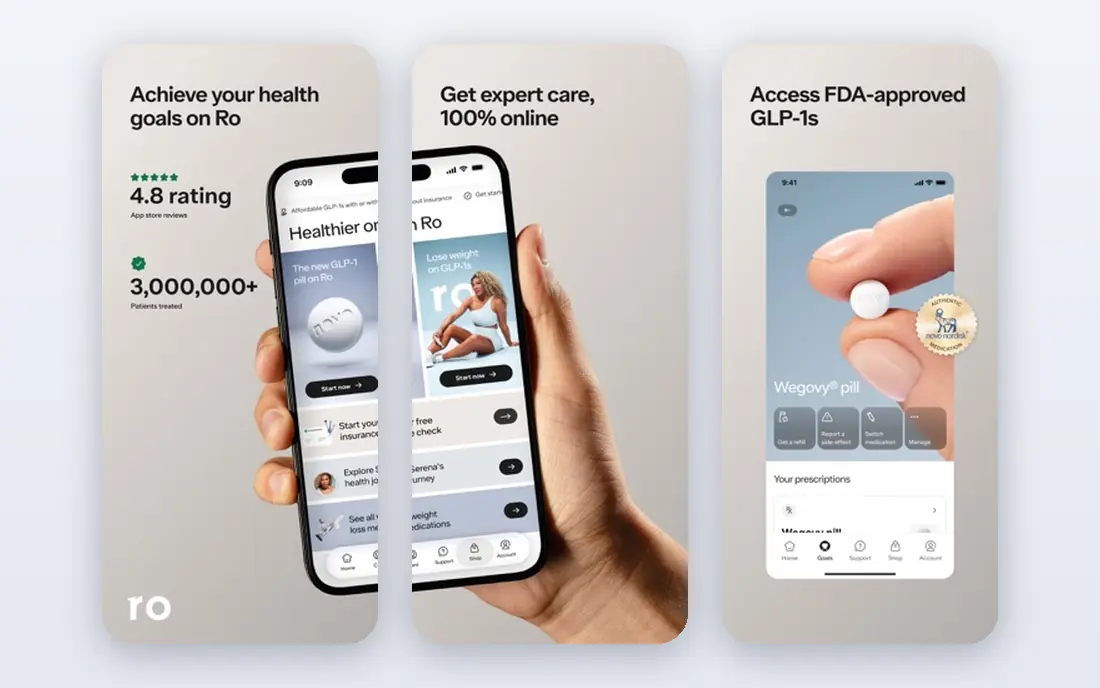
Ro offers a GLP-1 program that combines tracking with clinical support. Members log doses, weight, and habits, message clinicians, and follow coaching content built for appetite and side-effect changes. That combination matters, since GLP-1 treatment raises practical questions about eating, nausea, and dose timing that a bare log cannot answer.
The trade-off is price and structure. Program fees vary, and medication costs sit apart from program costs, so the total can surprise new members. Check the current program page and your insurance options before joining. For users who want tracking plus a clinician to ask, Ro is the most complete package here.
- Medication support with clinician access
- Dose and weight tracking
- Coaching and lessons
- Program pricing varies
- Medication cost is separate from program fees
Noom
Ideal for: Habit and behavior coaching

Noom built its name on psychology-based weight coaching, and it now offers companion support for GLP-1 users. Daily lessons cover eating habits, cravings, and activity, while food and weight logs show trends over time. For people whose main challenge is building steady habits around a new appetite, that coaching layer adds value a simple tracker lacks.
Noom is a paid subscription, and its lesson-and-coach style is not for everyone. Some users find daily lessons helpful, while others want a quieter log. If you like guided habit work and want GLP-1 support inside a familiar weight program, Noom is a strong fit.
- Daily lessons and habit coaching
- Food and weight logging
- GLP-1 companion support
- Subscription cost
- Coaching style does not suit everyone
Found
Ideal for: Clinician-guided weight care
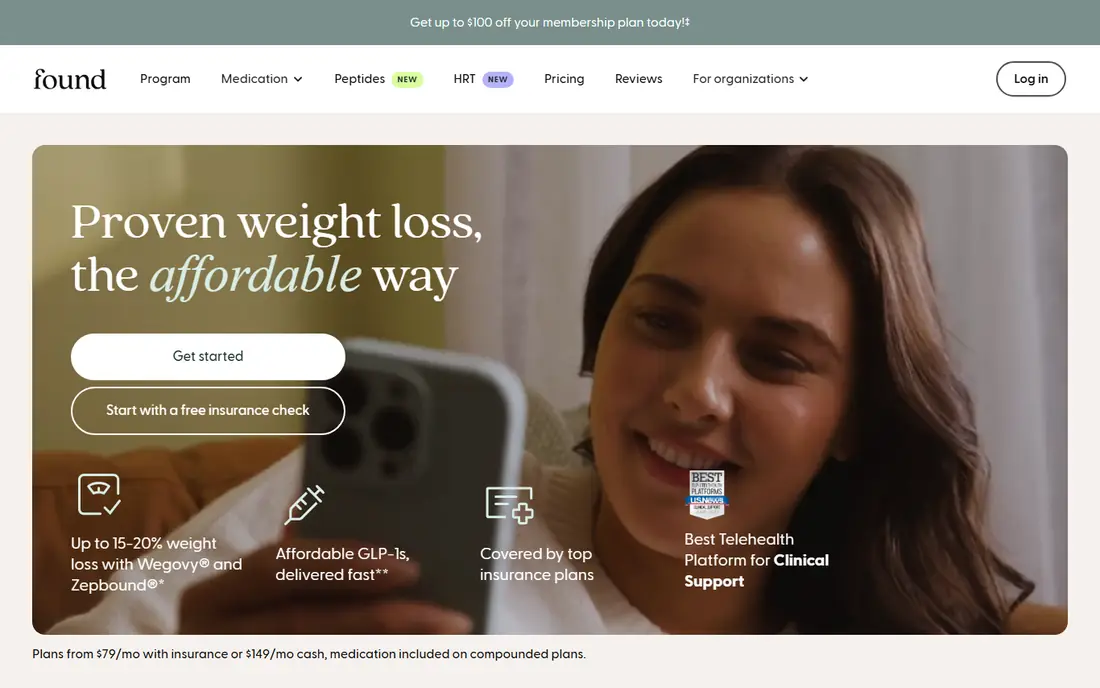
Found pairs members with clinicians who build a weight-care plan that may include medication, nutrition, and movement guidance. Tracking covers weight, habits, and medication use, and members can message their care team with questions. That clinical link is useful when side effects or dose changes need professional input.
Membership pricing and state availability are the limits to check first. Found is not a free log, and not every program option is offered everywhere. For users who want a clinician-guided plan rather than a self-directed tracker, Found is a solid, structured choice.
- Clinician oversight
- Personalized plan
- Medication and habit tracking
- Membership pricing
- Program availability varies by state
Calibrate
Ideal for: Structured metabolic program
Calibrate runs a structured, year-long program built around metabolic health, with clinician oversight and coaching. Members track weight, habits, and medication use, and the program emphasizes lab work and long-term behavior change rather than quick fixes. That depth suits users who want a full program with accountability.
Cost and commitment are the trade-offs. Calibrate is a premium program, and a year-long structure demands steady engagement. If you want a complete, guided program and can commit the time and budget, Calibrate is one of the most thorough options here.
- Year-long structured program
- Clinician and coach support
- Lab and metabolic focus
- Higher program cost
- Time commitment is real
WeightWatchers
Ideal for: Points, community, and GLP-1 support
WeightWatchers, now with GLP-1 member support, combines its long-running points system with community features and weight tracking. Members log food, activity, and weight, join workshops, and use app tools built for GLP-1 users. The community size is a real asset, since peer support helps many people stay consistent.
Points tracking takes daily effort, and some users tire of logging every meal. Plan pricing also varies, so check the current offer. For users who already know WeightWatchers or want group support alongside GLP-1 tracking, this is a natural fit.
- Familiar points system
- Large community
- GLP-1 member support and clinics option
- Points tracking takes daily effort
- Pricing varies by plan
Form Health
Ideal for: Medical weight care with dietitians
Form Health offers medical weight care with a physician and registered dietitian team. Members get a personalized plan, nutrition guidance, and ongoing messaging, with tracking for weight, habits, and medication use. The dietitian link is a plus, since GLP-1 treatment changes how much and what people want to eat.
As a medical program, Form Health carries program pricing, and availability varies by state. It is not a casual free tracker. For users who want dietitian input alongside medical oversight, Form Health is a thoughtful, care-first choice.
- Physician and dietitian team
- Personalized nutrition
- Ongoing messaging
- Medical program pricing
- Availability varies by state
Omada
Ideal for: Chronic condition coaching
Omada runs coach-led digital programs for chronic conditions, including weight management and diabetes prevention. Members track weight, food, and activity, often with connected scales, and work with a coach and peer group. The structure suits people who want steady accountability without a heavy medical program.
Access is the caveat: many members join through an employer or health plan, so direct pricing and availability vary. Omada is also less GLP-1 specific than Ro or Found. If your plan offers Omada, it is a well-supported way to track progress with coaching behind you.
- Coach-led programs
- Connected devices
- Strong chronic-condition focus
- Often accessed through employers or plans
- Less GLP-1 specific than rivals
Hello Alpha
Ideal for: Online clinician access
Hello Alpha offers online clinician visits and weight-care plans, with messaging for follow-up questions. For GLP-1 users, the main value is access: you can discuss treatment, side effects, and refills with a clinician online, and track basic weight and medication details in the process.
Tracking and coaching tools are lighter than the full programs above. Hello Alpha suits users who mainly need clinician access and simple tracking, and who already manage habits on their own. Pair it with a free food or weight log if you want deeper daily tracking.
- Online visits with clinicians
- Weight-care plans
- Straightforward messaging
- Tracking tools are lighter than rivals
- Program depth varies
How we picked these
We compared official feature pages, app-store listings, and public reviews, and we kept only programs and apps that support GLP-1 users in October 2026 with real tracking, coaching, or clinician access. We favored options with clear clinical oversight, honest pricing pages, and practical tools for doses, weight, and side effects. We left out simple calorie counters with no GLP-1 support and any service making unsafe weight-loss promises.
What to check before you join a GLP-1 program
Start with your clinician. Confirm that the program fits your prescription, your health history, and your dose plan, and ask how side effects and dose changes are handled. Then check total cost: program fees, visit fees, and medication costs are often billed separately, and insurance coverage varies widely.
Next, look at the tracking you will actually use. Dose reminders, weight trends, and a simple side-effect log matter more than a long feature list. Finally, check availability in your state and how you reach a clinician when something feels wrong. A good program answers quickly and tells you clearly when to seek in-person care.
A final check is whether the app helps when progress stalls. Weight loss often slows after the first months, and a good app responds with habit reviews, coaching check-ins, and clinician messaging rather than generic encouragement. If your app only shows a graph and leaves you to interpret it alone, you will get less value from it over a full year of treatment.
Frequently asked questions
What is the best app for GLP-1 tracking?
Ro is our pick for most GLP-1 users because it combines dose and weight tracking with coaching and clinician access. Noom suits habit coaching, while Found and Calibrate suit structured clinical programs. The best app is the one you will open daily and that keeps you connected to care.
Can I track GLP-1 doses for free?
Basic dose reminders and weight logs exist in free health apps, but GLP-1 specific programs with clinician support are paid. If cost is the barrier, use a free reminder and weight app for logging, and keep dose questions with your prescribing clinician.
What should I track while taking a GLP-1 medicine?
Track your dose and injection day, weight trends, appetite and food intake, activity, and side effects such as nausea or digestive changes. Share that log with your clinician at visits, since patterns in side effects and weight change guide dose decisions.
Do GLP-1 tracking apps replace my doctor?
No. These apps support tracking, coaching, and messaging, but they do not replace your prescribing clinician. Report serious side effects, severe stomach pain, or signs of an allergic reaction to a clinician promptly, and seek urgent care for severe symptoms.
How do GLP-1 programs handle medication cost?
Most programs charge separately for membership and medication, and coverage varies by plan and diagnosis. Check the program page, ask about prior authorization help, and compare pharmacy options before joining, since medication cost is often the largest part of the total.
How do I handle a missed GLP-1 dose?
Follow your prescribing clinician instructions, since guidance varies by medicine and timing. Do not double up a dose unless your clinician tells you to do so. Log the missed dose in your app so you can discuss the pattern at your next visit and avoid repeating the gap.