For pipeline and account automation at scale, Salesforce Sales Cloud is where this list starts. Listed starting prices: Clay from $167 a month. Alternatives: ZoomInfo for B2B data with marketing and sales AI, and HubSpot Marketing Hub for Marketing-led demand and conversion automation. Details, prices and limits for the rest of the 5 tools are below.
Choosing growth tools for GTM automation usually comes down to price, fit and limits. This Ainotely guide sets 5 tools side by side on those three points, with the facts kept short and checkable.
Key takeaways
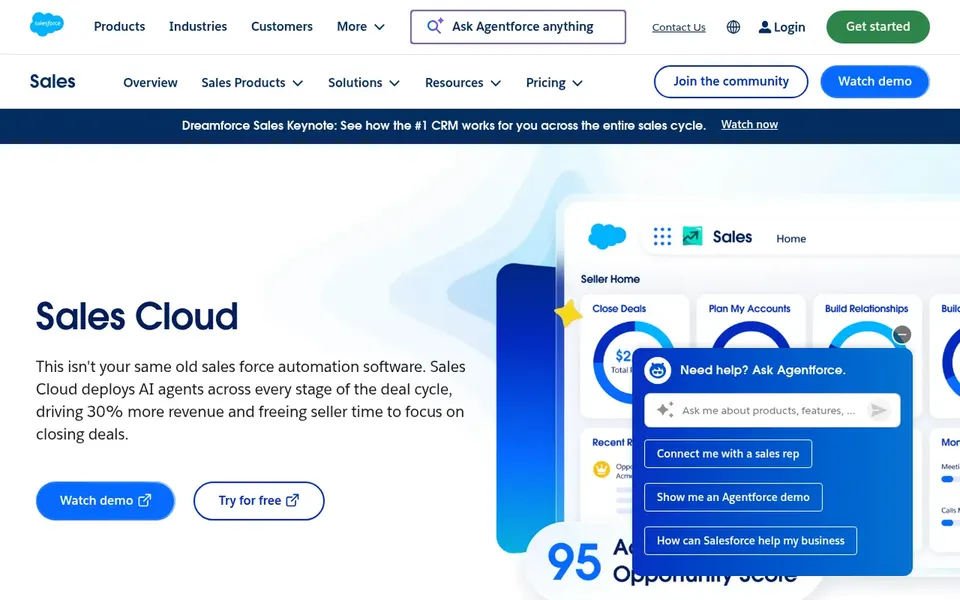
The list opens with Salesforce Sales Cloud, aimed at pipeline and account automation at scale.
Salesforce Sales Cloud, Clay and the 3 others all need a premium plan or a trial, since no free plan is listed.
The cheapest monthly starting price in the list is $167 per month, offered by Clay.
One limit worth knowing about Apollo.io: breadth means depth varies by module.
For custom data workflows and GTM plays, Clay is worth a look.
Best for: Pipeline and account automation at scale
Salesforce Sales Cloud is built with pipeline and account automation at scale in mind. Its center of gravity is sales execution, so marketing demand generation and outbound data enrichment generally come from other systems.
If you want one lighter tool including both marketing and sales basics, a marketing-led suite may be a more straightforward starting point. Check the vendor site for Salesforce Sales Cloud pricing; none is listed in this comparison. As for free access: Not stated.
Limits to weigh: Sales-focused, so marketing automation lives elsewhere.
Where ZoomInfo fits: B2B data with marketing and sales AI. Verify coverage for your target segments and regions, and choose a workflow-first tool instead if your primary constraint is orchestration instead of data supply.
Points against: Data-driven system, so workflows may need integration.
This comparison lists no price for ZoomInfo; ask the vendor. Free options: Free trial.
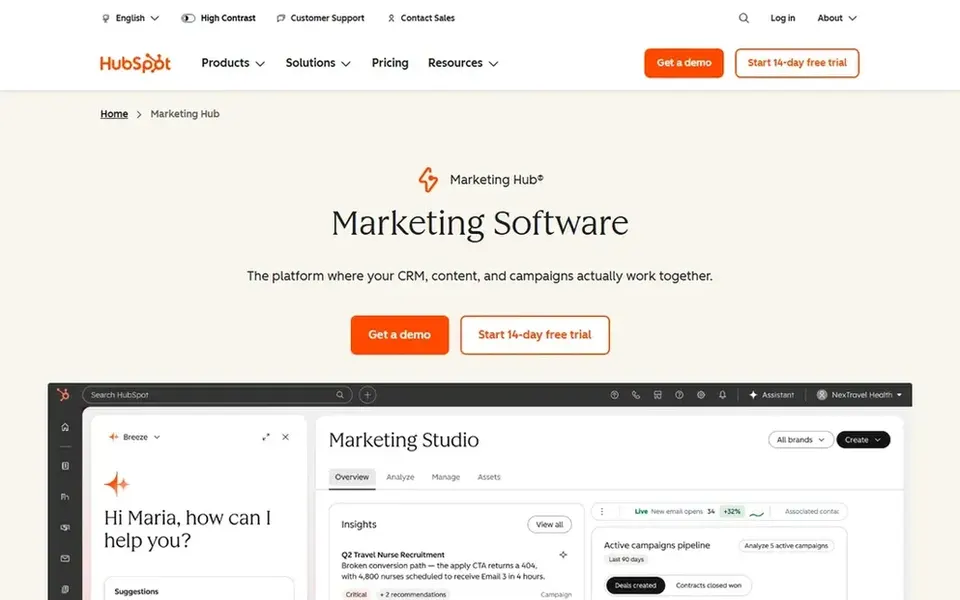
Best for: Marketing-led demand and conversion automation
HubSpot Marketing Hub was built for Marketing-led demand and conversion automation. It suits organizations that run inbound campaigns and want marketing workflows connected to downstream sales activity instead of stitched together across separate systems.
Trade-offs to know: Deep outbound data work needs other tools.
From a buyer's view, choose something else if your primary automation need is outbound prospecting or account data enrichment instead of demand generation. This comparison lists no price for HubSpot Marketing Hub; ask the vendor. As for free access: Not stated.
Apollo.io is built with one connected data and execution system in mind. A single connected product can trade some depth for convenience, so specialist tools may outperform it in narrow areas.
From a buyer's view, pick Apollo when consolidation and speed matter most, and verify data coverage for your specific market before committing your outbound motion to it. Pricing for Apollo.io is not stated here, so ask the vendor for current figures. Free access: Free trial.
The main drawbacks: Data quality still needs internal checks.
Where Clay fits: custom data workflows and GTM plays. The adaptability includes setup effort, so teams without operational bandwidth may find it slower to value than a packaged product.
Worth adding: choose Clay when customization and data orchestration are the priority, and pair it with an execution tool if you need built-in sequencing and coaching. Clay cost at the entry level: $167 per month. Free options: Free trial.
Honest limits: Requires setup and operational skill.
Confirm the entry price on the vendor page. For Salesforce Sales Cloud, ZoomInfo, HubSpot Marketing Hub and Apollo.io that means a quote rather than a fixed price.
Use real work to test the free trial from ZoomInfo, Apollo.io and Clay, rather than a demo project.
Read the limits listed for Salesforce Sales Cloud first: Sales-focused, so marketing automation lives elsewhere.
Compare total cost, not headline price: for Apollo.io, add extra seats, add-ons and any usage-based charges.
Ask ZoomInfo how an export works before you move any records in; an easy exit lowers the risk.
How we picked
We compared the tools on published pricing, free plan or trial availability, feature coverage for growth tools for GTM automation, and the limits each vendor documents. Where a price is missing, the vendor does not list one publicly or ties it to a quote. Always confirm before budgeting. The sequence is a judgement call: typical use case first, then pricing transparency, then free access. Use the profiles to check fit.
Every price and plan detail on this page comes from the vendors’ own websites. We did not run hands-on tests unless the text says so, and we do not publish star ratings or review scores. See how we score and our disclosure.
Keep your shortlist in one place
Paste prices, trial dates and notes from this guide into Ainotely, our AI note app. It files them into a topic and pulls out tasks like “cancel trial by Friday”. Free 7-day trial, no card needed.
How are the tools for growth tools for GTM automation ordered?
Salesforce Sales Cloud sits first and Clay last because the order follows typical fit for growth tools for GTM automation, then price clarity and free access. It is a judgement call, so read each profile for fit and limits.
Can I try these tools before paying?
Often, yes. ZoomInfo, Apollo.io and Clay offer a free trial. Use your own data and a real task during the test, and check what the free tier or trial limits before you rely on it.
How should I evaluate these tools before buying?
Map your GTM stages, identify where automation is weakest, and check native integrations with your CRM and data sources. Confirm data coverage for your segments and ask vendors straight about setup effort and support.
Do these tools publish their prices?
Not all of them. Salesforce Sales Cloud, ZoomInfo, HubSpot Marketing Hub and Apollo.io publish no starting price, so expect a quote request for those. The rest, Clay included, show a starting price, though seats and billing terms still change the final cost.
Is Salesforce Sales Cloud the right pick for everyone comparing growth tools for GTM automation?
No single tool suits every team. Salesforce Sales Cloud comes first because it fits pipeline and account automation at scale, while ZoomInfo suits B2B data with marketing and sales AI and HubSpot Marketing Hub suits Marketing-led demand and conversion automation. Match the tool to your own size, budget and workflow before deciding.