6 Best Healthcare Contract Management Software Options for 2026

- 1
 Conga CLMEnd-to-end lifecycleVisit
- 2
 IcertisLarge enterprise portfoliosVisit
- 3
 GatekeeperRenewal and risk visibilityVisit
- 4
 ContractWorksStraightforward repository and alertsVisit
- 5
 PandaDocSmall healthcare teamsVisit
- The list opens with Conga CLM, aimed at end-to-end lifecycle.
- For cross-department collaboration, Concord is worth a look.
- One limit worth knowing about ContractWorks: fewer workflow features than enterprise CLM.
- PandaDoc stands alone as the one tool in this list with a free plan.
Direct answer
Conga CLM is the first pick on this list for end-to-end lifecycle. Icertis is better for large enterprise portfolios, and Gatekeeper is better for renewal and risk visibility. Prices, free plans and limits for all 6 tools follow.
Quick comparison
| Product | Ideal for | Price from | Free version | |
|---|---|---|---|---|
| Conga CLM | End-to-end lifecycle | See website | No | Visit |
| Icertis | Large enterprise portfolios | See website | No | Visit |
| Gatekeeper | Renewal and risk visibility | See website | No | Visit |
| ContractWorks | Straightforward repository and alerts | $600 per month | No | Visit |
| PandaDoc | Small healthcare teams | $19 per user a month | Yes | Visit |
 Concord | Cross-department collaboration | $499 a month | No | Visit |
6 options for healthcare contract management software in detail
If you are comparing healthcare contract management software, this page covers 6 tools in one place: what each is best for, what it costs to start, whether it has a free plan, and the main limit to know about.
Conga CLM
Ideal for: End-to-end lifecycle
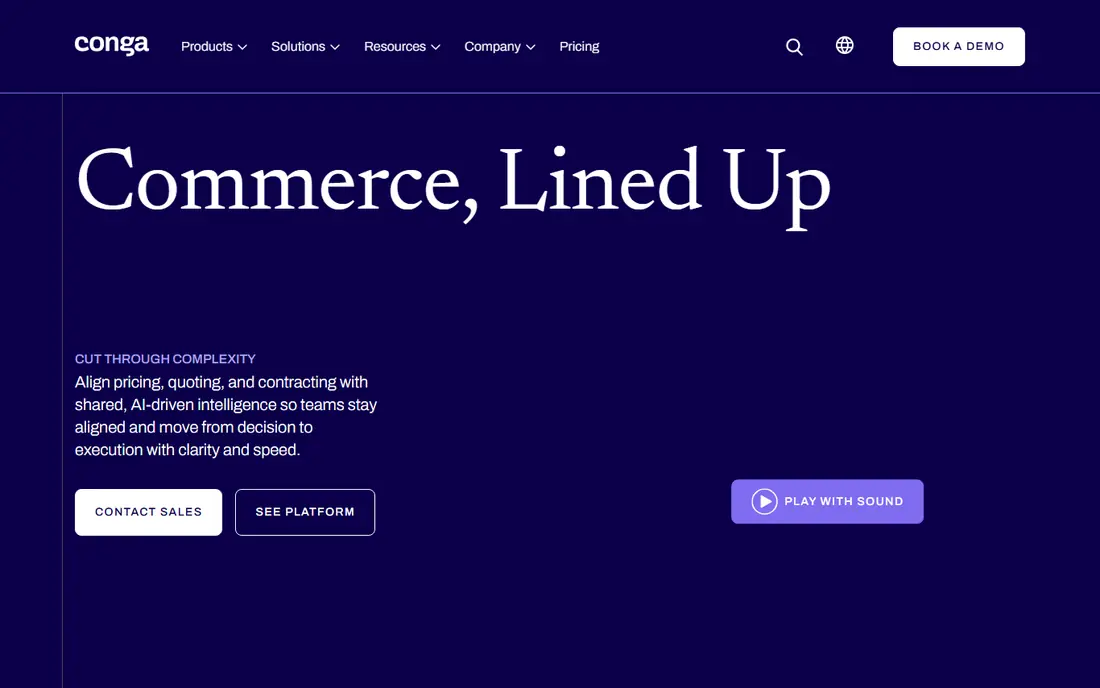
In short, Conga CLM is for end-to-end lifecycle. Pricing is not published, and some deployments are Salesforce-centric, so organizations without Salesforce should confirm integration fit before committing.
Highlights: End-to-end lifecycle coverage.
Obligation management tracks post-signature duties, which matters for healthcare vendor and payer agreements with continuing commitments. No starting price is listed for Conga CLM here; confirm pricing on the vendor site. Conga CLM has no free tier. Drawbacks to consider: Pricing not published.
- AI insights and guided wizards
- Document generation
- Salesforce-centric for some deployments
Icertis
Ideal for: Large enterprise portfolios
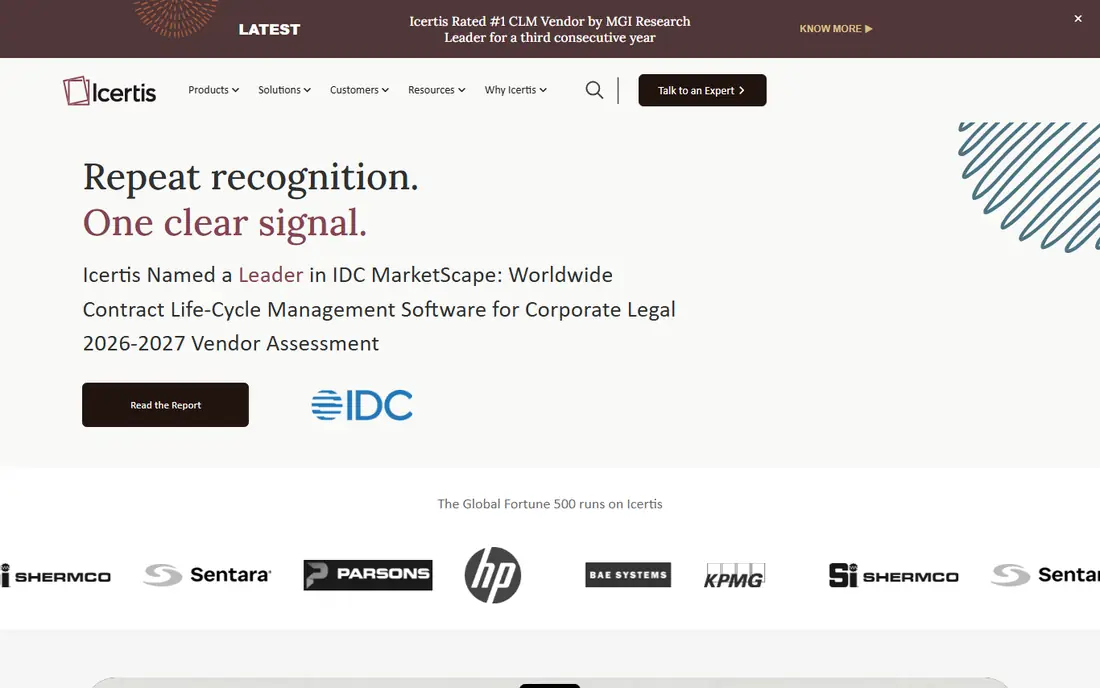
Icertis works best for large enterprise portfolios. Icertis fits large health systems and payers with thousands of agreements across entities, where portfolio visibility matters more than single-contract speed.
Points against: Overkill for small organizations.
Worth adding: Icertis gives you enterprise contract intelligence with three AI engines: VisualizeAI, DiscoverAI, and NegotiateAI, including portfolio insight, clause discovery, and negotiation support. This comparison lists no price for Icertis; ask the vendor. Icertis has no free plan.
- Enterprise scale
- Obligation tracking
- Pricing not published
Gatekeeper
Ideal for: Renewal and risk visibility
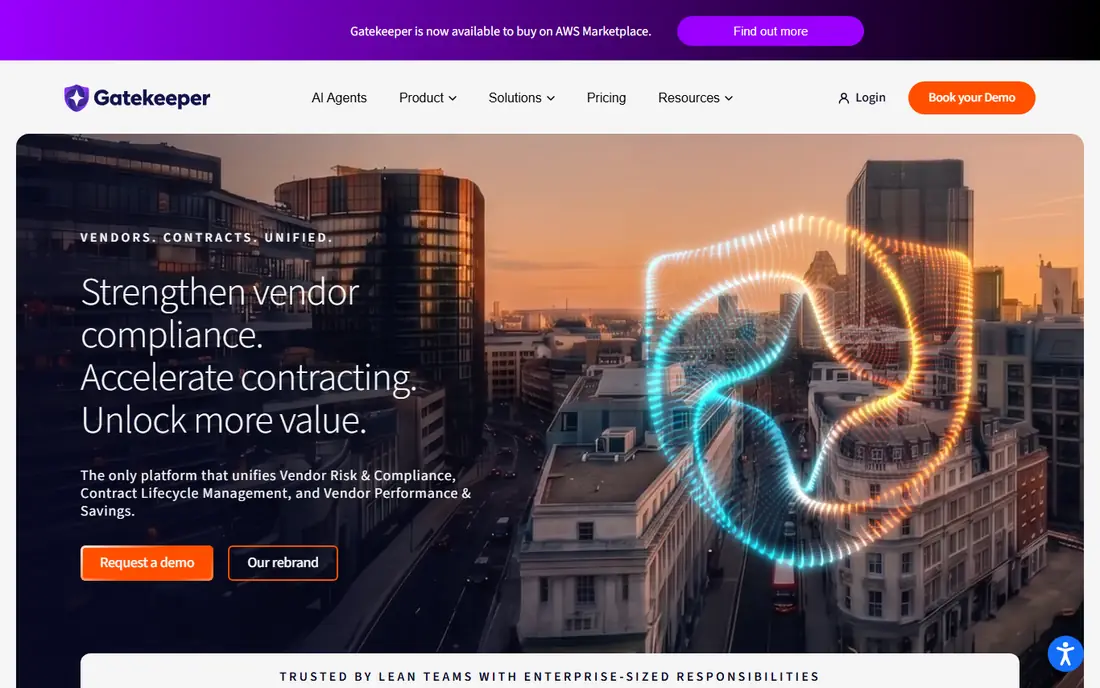
Where Gatekeeper fits: renewal and risk visibility. Gatekeeper is an AI-driven contract management option giving organizations total control and visibility over agreements, with a workflow engine that automates contract processes and ensures agreed procedures are followed every time. More specifically, renewal management is its core strength, with alerts and workflows that prevent auto-renewals of unwanted vendor deals.
Pricing is not published, and Gatekeeper US presence is smaller than some rivals, which may affect support coverage and reference customers in healthcare. Clear visibility across all contracts helps teams identify wasted spend and consolidation opportunities, actively handle renewals, minimize risk through categorization and auditable records, and realize agreed contract benefits like volume discounts and service credits. As for the details, workflow depth also varies by level, so complicated approvals may need higher plans. Check the vendor site for Gatekeeper pricing; none is listed in this comparison. Gatekeeper has no free tier.
Downsides: Smaller US presence than some rivals.
Reasons to shortlist it: AI-driven contract visibility.
- Auditable activity records
- Workflow engine
- Pricing not published
ContractWorks
Ideal for: Straightforward repository and alerts
In short, ContractWorks is for simple repository and alerts. Standard pricing at $600 a month billed annually handles unlimited users, 2,500 documents, 5 e-signature licenses, smart document tagging, OCR, permission-based roles, date alerts, and configurable reporting, whereas Professional at $800 and Enterprise at $1,000 raise document and signature limits.
Upsides: Unlimited users.
Drawbacks to consider: E-signature licenses restricted by level.
What you pay to start with ContractWorks: $600 per month. ContractWorks does not include a free plan.
- AI smart document tagging
- Date alerts
- Pricing opens at $600 a month
PandaDoc
Ideal for: Small healthcare teams
PandaDoc is a good fit for small healthcare teams. AI features contain automatic field capture, contract Q and A, optical character recognition for scanned documents, and connectors to Claude and ChatGPT, which help teams find clauses and answer questions about agreements without reading every page. More specifically, PandaDoc gives you document automation, e-signatures, workflow management, and live analytics for small to mid-market teams, with pricing from $19 to $49 per user a month across Starter to Business levels and custom Enterprise pricing.
Beyond that, PandaDoc is a general contract tool instead of a healthcare-specific product. So its compliance depth trails tools made for regulated industries, and enterprise features like advanced approvals need higher levels. PandaDoc cost at the entry level: $19 per user per month. PandaDoc has a free plan.
Trade-offs to know: Less healthcare-specific compliance depth. What works well: Document automation and e-signatures.
- CRM integrations
- AI field capture and contract Q
- Enterprise features need higher levels
Concord
Ideal for: Cross-department collaboration
Concord is a good fit for cross-department collaboration. Concord is a contract management system rebuilt for the AI era as Concord Horizon, applying ten years of Concord expertise to a modern, AI-native architecture with a cleaner interface, collapsible navigation, and consistent tables across modules.
Where it falls short: Essentials opens at $499 a month for 5 users.
Concord pricing model changed in 2026, so current terms should be verified before budgeting, with Essentials beginning at about $499 a month for 5 users on annual billing. Starting cost for Concord: $499 per month. Concord does not include a free plan.
- Audit trails
- Approval workflows
- AI features vary by level
Selection criteria
Pricing pages, product documentation and feature lists were the main sources, and every entry carries at least one honest drawback. Treat prices as a snapshot: vendors change plans often, so check the vendor site for the figure that applies today. Order on the page follows fit for the typical buyer first, then price transparency and free access. Your own requirements should decide the final pick.
Questions to settle before buying
- Confirm the entry price on the vendor page. For Conga CLM, Icertis and Gatekeeper that means a quote rather than a fixed price.
- Look at the free plan from PandaDoc closely: its caps decide whether it is usable for real work.
- Before choosing Conga CLM, weigh its main limit: pricing not published.
- Read the plan comparison for Icertis carefully; key features often start on a higher tier.
- A short pilot of Concord with your real workflow tells you more than a feature table.
Frequently asked questions
Is Conga CLM the right pick for everyone comparing healthcare contract management software?
No single tool suits every team. Conga CLM comes first because it fits end-to-end lifecycle, while Icertis suits large enterprise portfolios and Gatekeeper suits renewal and risk visibility. Match the tool to your own size, budget and workflow before deciding.
Do these tools publish their prices?
Not all of them. Conga CLM, Icertis and Gatekeeper publish no starting price, so expect a quote request for those. The rest, ContractWorks included, show a starting price, though seats and billing terms still change the final cost.
What is the cheapest option for healthcare contract management software in this list?
On published monthly entry prices, PandaDoc is the lowest here at $19 per user per month. Entry price is only part of the cost, because seats, add-ons and billing terms can change the total.
Is contract management software HIPAA compliant?
It relies on the vendor and your configuration. Verify that the vendor will sign a business associate agreement, confirm how protected health information is stored and encrypted, and check access controls and audit logs before storing contracts that contain protected health information. Do not assume compliance from marketing claims alone.
Can I try these options before paying?
Often, yes. PandaDoc has a free plan. Use your own data and a real task during the test, and check what the free tier or trial limits before you rely on it.
What is healthcare contract management software?
Healthcare contract management software helps healthcare organizations manage payer, provider, vendor, and employment contracts through initiation, negotiation, review, signing, and renewal, with compliance features for industry regulations like HIPAA and government guidelines.