The 6 Best Healthcare HR Software Options to Shortlist in 2026

- MedTrainer is the opening pick, best for Workforce readiness, credentialing and training compliance.
- What to know about Workday first: highest cost and longest implementation here.
- ADP Workforce Now fits organizations standardized on ADP payroll.
- Every tool from MedTrainer to ADP Workforce Now works by quote, with no list price shown.
- Neither MedTrainer nor ADP Workforce Now, nor any of the other 4 tools, has a permanent free plan; trials and quotes are the norm.
Direct answer
If you need Workforce readiness, credentialing and training compliance, MedTrainer is the first tool to look at here. For a different need, Paylocity covers compliance-driven scheduling plus payroll in one and Workday covers very large multi-entity health systems. The other 3 tools in the list cover narrower or pricier cases.
Quick comparison
| Product | Ideal for | Price from | Free version | |
|---|---|---|---|---|
 MedTrainer | Workforce readiness, credentialing and training compliance | See website | Demo | Visit |
 Paylocity | Compliance-driven scheduling plus payroll in one | See website | Demo | Visit |
 Workday | Very large multi-entity health systems | See website | Demo | Visit |
 Paycor | Mid-sized healthcare and long-term care | See website | Demo | Visit |
 HR Cloud | Purpose-built healthcare HR and compliance | See website | Demo | Visit |
 ADP Workforce Now | Organizations standardized on ADP payroll | See website | Demo | Visit |
Every option for healthcare HR software explained
If you are comparing healthcare HR software, this page covers 6 tools in one place: what each is best for, what it costs to start, whether it has a free plan, and the main limit to know about.
MedTrainer
Ideal for: Workforce readiness, credentialing and training compliance
In short, MedTrainer is for Workforce readiness, credentialing and training compliance. The platform takes care of provider credentialing, license verification, exclusion list checking, mandatory training through its LMS, and policy management, with reporting aimed at audits and surveys.
That is the honest architecture for plenty of providers: MedTrainer for readiness and compliance, plus an HRIS for the rest. No starting price is listed for MedTrainer here; confirm pricing on the vendor site. As for free access: Demo.
Honest limits: not a full HRIS; Quote-based pricing.
- Purpose-built healthcare credentialing and exclusion checking
- Audit-ready reporting
- Needs pairing with payroll and core HR
Paylocity
Ideal for: Compliance-driven scheduling plus payroll in one
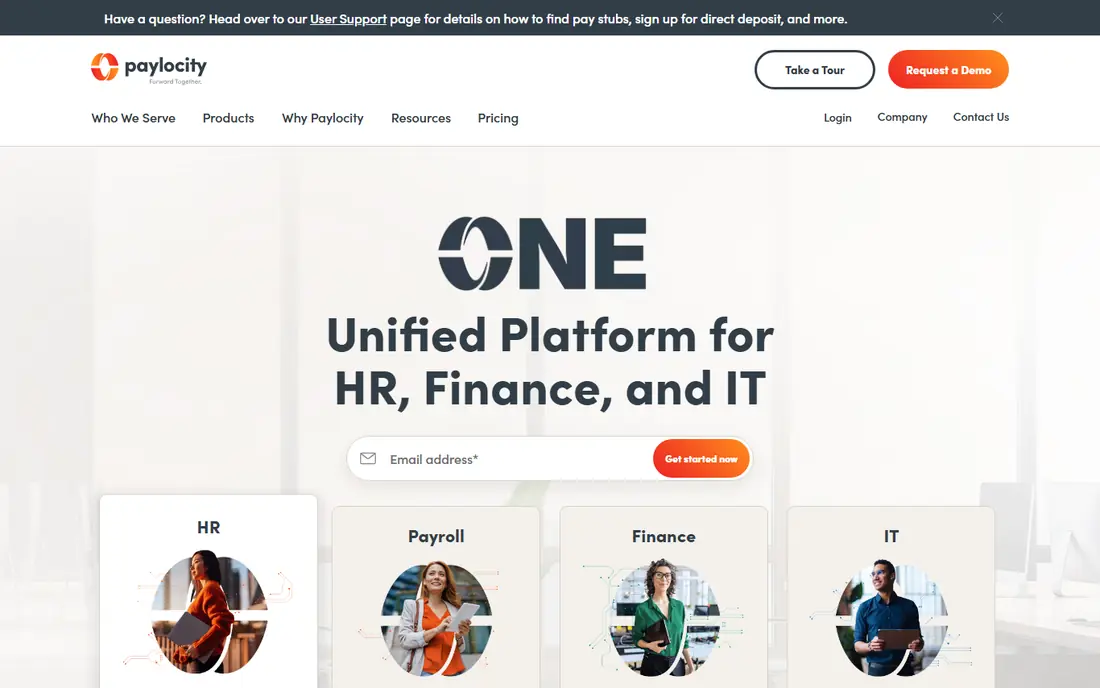
Paylocity targets compliance-driven scheduling plus payroll in one. Paylocity merges payroll, HR and workforce management with a modern interface employees actually use, which matters in healthcare where adoption decides whether compliance data stays current. Also, pricing is quote-based.
Credential dashboards provide managers visibility into who is compliant and who is not. The built-in LMS ties required training to the same records. Healthcare-specific depth varies by module, so validate the credentialing and scheduling workflows against your requirements in a demo instead of assuming coverage. Pricing for Paylocity is not stated here, so ask the vendor for current figures. Trial and free access: Demo.
Trade-offs to know: Implementation quality relies on the partner team.
- Credential dashboards plus LMS
- Modern employee experience
- Quote-based pricing
Workday
Ideal for: Very large multi-entity health systems
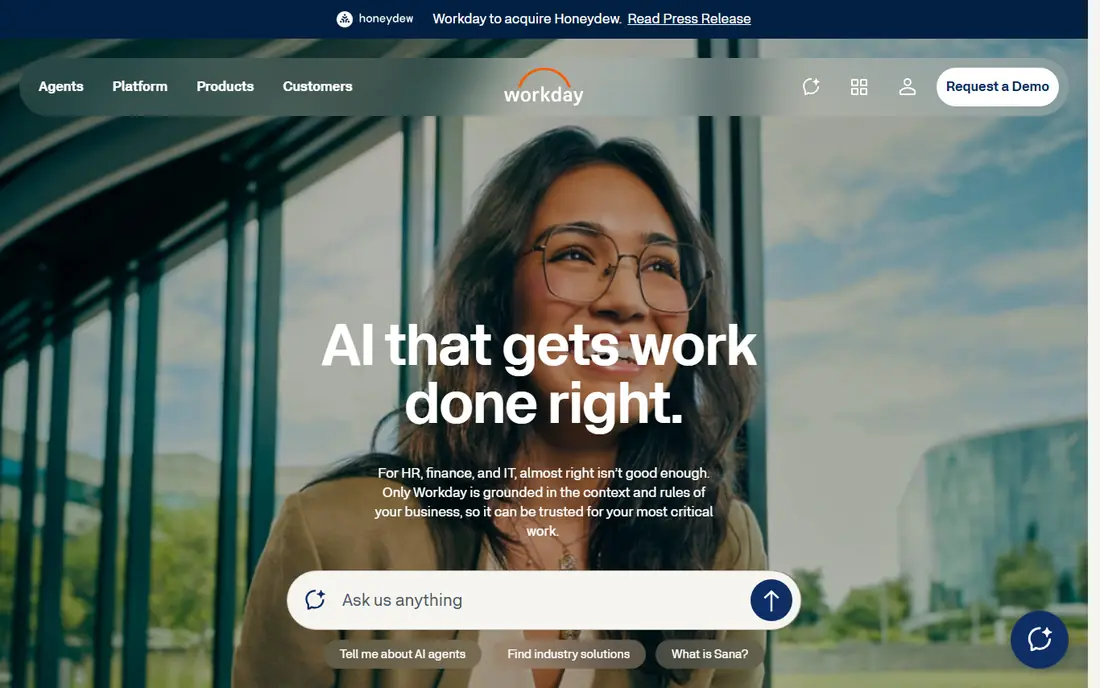
Where Workday fits: very large multi-entity health systems. Its partner ecosystem means implementation help is available, though at enterprise rates.
Watch-outs: Healthcare credentialing is customizable, not purpose-built; Highest cost and longest implementation here.
Reasons to shortlist it: Deep partner ecosystem; Capable analytics.
Workday shows no starting price here, so confirm the cost on the vendor site. On free options: Demo.
- Deep HCM and financials in one
- Proven at the largest health systems
- Needs significant internal team
Paycor
Ideal for: Mid-sized healthcare and long-term care
Paycor targets mid-sized healthcare and long-term care. Paycor has built a real healthcare practice, especially in long-term care, home health and outpatient settings where turnover is high and margins are thin. More specifically, credential tracking is built into the scheduling flow instead of sitting in a separate module, which means expired certifications actually block scheduling rather than generating a report nobody reads.
Downsides: Advanced analytics trail the enterprise suites.
For everyday use, pricing is quote-based. But for mid-sized providers that require healthcare-aware HR without an enterprise implementation, Paycor hits a practical middle ground that the giants cannot reach down to and the small tools cannot reach up to. Paycor does not show a starting price in this comparison, so check the vendor site for current pricing. On free options: Demo.
- Recruiting through payroll in one system
- Capable in long-term care and outpatient
- Quote-based pricing
HR Cloud
Ideal for: Purpose-built healthcare HR and compliance
HR Cloud serves purpose-built healthcare HR and compliance. HR Cloud is one of the few HR systems designed around healthcare from the start instead of adapted to it. Onboarding workflows reflect healthcare reality, with compliance documents and role-specific checklists, and the system serves hospitals, practices and staffing agencies.
But for mid-sized providers where credential compliance is the daily risk, the purpose-built design beats a generic HRIS with a healthcare module bolted on. For everyday use, the standout is credential management: automatic 30, 60 and 90-day expiration alerts for licenses and certifications. So a nurse never works a shift on an expired license since someone forgot a spreadsheet. HR Cloud shows no starting price here, so confirm the cost on the vendor site. Free options: Demo.
Where it falls short: Less depth outside healthcare workflows.
- Used by home health and rehab providers
- Healthcare-specific onboarding
- Quote-based pricing
ADP Workforce Now
Ideal for: Organizations standardized on ADP payroll
Think of ADP Workforce Now for organizations standardized on ADP payroll. If payroll already lives at ADP and finance will not move it, Workforce Now plus targeted integrations is a defensible strategy.
Downsides: Pricing complexity with modules.
No starting price is listed for ADP Workforce Now here; confirm pricing on the vendor site. Free options: Demo.
Strengths: Payroll reliability at scale.
- Familiar to finance teams
- Marketplace integrations including healthcare specialists
- Large-vendor support experience varies
How we chose
The comparison looks at four things: starting price, free access, how well the feature set matches healthcare HR software, and the main limit of each tool. Treat prices as a snapshot: vendors change plans often, so check the vendor site for the figure that applies today. The sequence is a judgement call: typical use case first, then pricing transparency, then free access. Use the profiles to check fit.
Pre-purchase checklist
- Request quotes from MedTrainer, ADP Workforce Now and the others; the list shows no fixed prices.
- Read the limits listed for MedTrainer first: compliance layer, not a full HRIS.
- Before you load data into Paylocity, check what an export looks like and who can run it.
- Before rolling out HR Cloud, verify the integrations your workflow depends on.
- Find out what support MedTrainer includes on your plan, and whether onboarding help costs extra.
Frequently asked questions
Can I try these options before paying?
Not by default. None of the tools, from MedTrainer to ADP Workforce Now, lists a free plan or a free trial here, so ask each vendor for a demo before committing.
Is MedTrainer the right pick for everyone comparing healthcare HR software?
No single tool suits every team. MedTrainer comes first because it fits Workforce readiness, credentialing and training compliance, while Paylocity suits compliance-driven scheduling plus payroll in one and Workday suits very large multi-entity health systems. Match the tool to your own size, budget and workflow before deciding.
Should a small clinic buy healthcare-specific HR software?
If credential tracking and compliance reporting consume real staff time, yes. Smaller practices commonly do well with a mid-market system like Paycor or Paylocity, or a focused tool for the specific pain. Start from the credentialing requirement and buy the smallest tool that meets it.
Do these tools publish their prices?
No. None of the tools, from MedTrainer to ADP Workforce Now, shows a fixed starting price here, so budget time for quotes.
How are the tools for healthcare HR software ordered?
MedTrainer sits first and ADP Workforce Now last because the order follows typical fit for healthcare HR software, then price clarity and free access. It is a judgement call, so read each profile for fit and limits.