Best HIPAA Compliance Software in 2026: 6 Tools Compared

- 1
 DrataScaling tech teams that want continuous monitoring and audit readinessVisit
- 2
 SprintoBusinesses that want quick, automatic multi-framework complianceVisit
- 3
 MedcuritySmall and mid-sized healthcare organisations that require HIPAA onlyVisit
- 4
 AccountableSmall healthcare teams that want guided HIPAA compliance with a certificateVisit
- 5
 VantaTechnology businesses building a multi-framework trust programmeVisit
- Top of the list is Drata, which targets scaling tech teams that want continuous monitoring and audit readiness.
- Paubox fits healthcare teams that require HIPAA-compliant email without portals.
- A permanent free plan is missing from all 6 tools, Drata and Paubox included; plan for a trial or a premium start.
- Starting prices begin at $29 per month with Paubox.
- Before buying Medcurity, weigh this: no free plan, higher levels needed for onsite assessments and dedicated advisors.
Direct answer
This list puts Drata first for scaling tech teams that want continuous monitoring and audit readiness. Sprinto fits businesses that want fast, automatic multi-framework compliance; Medcurity fits small and mid-sized healthcare organisations that require HIPAA only. Details, prices and limits for the rest of the 6 tools are below.
Quick comparison
| Product | Ideal for | Price from | Free version | |
|---|---|---|---|---|
| Drata | Scaling tech teams that want continuous monitoring and audit readiness | See website | No | Visit |
| Sprinto | Businesses that want quick, automatic multi-framework compliance | $8,000 per year | No | Visit |
| Medcurity | Small and mid-sized healthcare organisations that require HIPAA only | $499 a year | No | Visit |
| Accountable | Small healthcare teams that want guided HIPAA compliance with a certificate | $169 per month | Free trial | Visit |
| Vanta | Technology businesses building a multi-framework trust programme | See website | No | Visit |
 Paubox | Healthcare teams that require HIPAA-compliant email without portals | $29 a month | Free trial | Visit |
HIPAA Compliance Software compared in detail
Ainotely put together this guide to HIPAA compliance software for readers who want a clear shortlist without reading every vendor page. It compares 6 tools on starting price, free plans, who each one suits and where each one falls short.
Drata
Ideal for: Scaling tech teams that want continuous monitoring and audit readiness
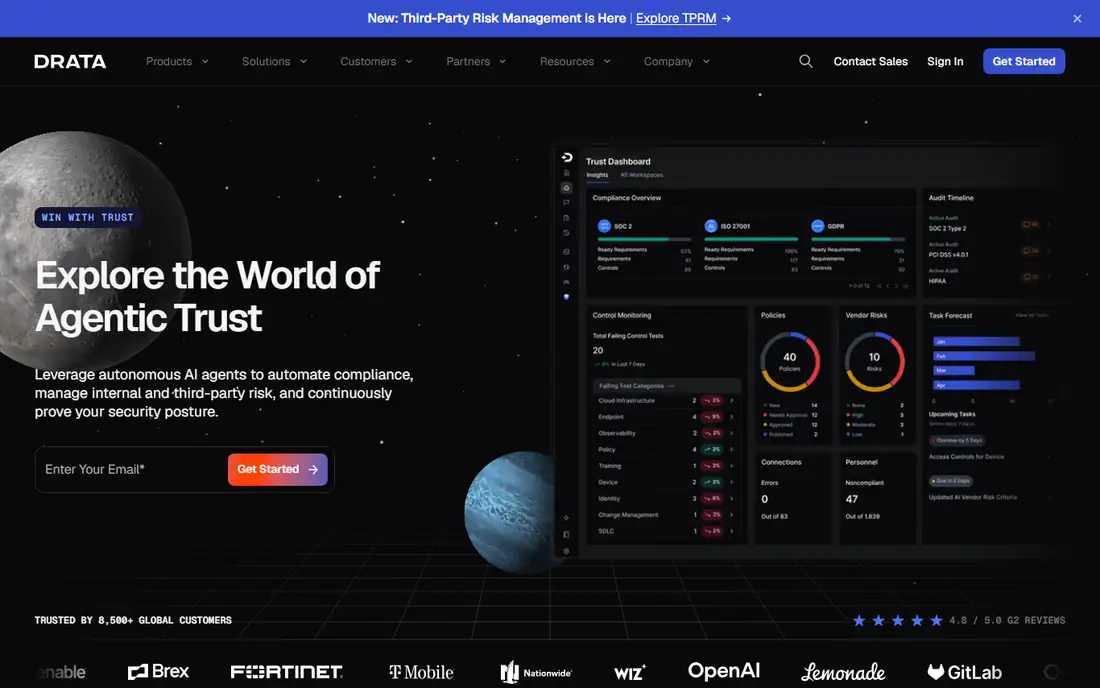
Drata makes the most sense for scaling tech teams that want continuous monitoring and audit readiness. Drata competes straight with Vanta for technology-led compliance teams.
It maps controls once and reuses them across frameworks, collects evidence automatically from cloud, identity, and HR systems, and watches controls continuously so gaps surface early. From a buyer's view, a trust centre and AI questionnaire help shorten sales security reviews, which matters for firms selling to hospitals and large employers. Check the vendor site for Drata pricing; none is listed in this comparison. Drata has no free plan.
Where it falls short: implementation help is additional.
- Continuous monitoring
- Solid automation and control mapping
- Costs rise with frameworks and headcount
Sprinto
Ideal for: Businesses that want quick, automatic multi-framework compliance
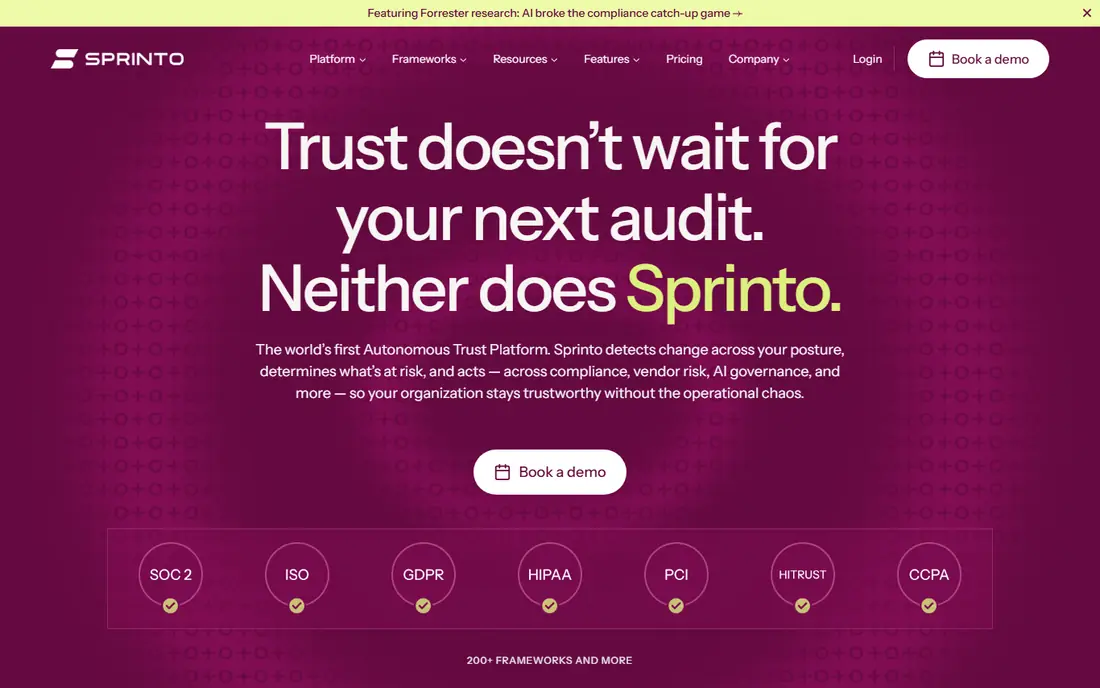
In short, Sprinto is for businesses that want quick, automatic multi-framework compliance. It supports more than 200 frameworks, including HIPAA, SOC 2, ISO 27001, GDPR, and PCI DSS, with 300 plus integrations across cloud, identity, HR, and SaaS tools. Beyond that, vendor risk, AI governance, and trust centre features sit in the same system, which fits firms whose compliance scope keeps expanding.
Trade-offs to know: HIPAA is one framework among plenty of.
For a clinic, Sprinto is typically the wrong shape. For a technology company that needs HIPAA as part of a wider programme, that can undercut bigger rivals whereas keeping automation depth. The starting price for Sprinto: $8,000 per year. Sprinto has no permanent free option.
- 300 plus integrations
- Automation-first design
- Less healthcare-specific workflow than clinic tools
Medcurity
Ideal for: Small and mid-sized healthcare organisations that require HIPAA only

Medcurity makes the most sense for small and mid-sized healthcare organisations that require HIPAA only. Medcurity concentrates on one job, helping healthcare organisations complete a Security Risk Analysis and maintain a HIPAA programme through the year. The trade is scope.
Medcurity does not try to be a general governance system. So a health-tech company that also needs SOC 2 will still need another tool or a multi-framework product. The system includes administrative, technical, and physical safeguards, with policy templates, training tracking, business associate agreement management, data flow mapping, and incident response planning. Entry price for Medcurity: $499 per year. No free plan comes with Medcurity.
Points against: higher levels needed for onsite assessments and dedicated advisors.
- Healthcare-specific risk assessments
- Lowest starting price on this list
- No free plan
Accountable
Ideal for: Small healthcare teams that want guided HIPAA compliance with a certificate
For small healthcare teams that want guided HIPAA compliance with a certificate, Accountable is a natural candidate. Accountable guides small healthcare teams through HIPAA step by step, using an AI-assisted setup that customises policies, risk assessments, and training to how the business actually operates. Support from a compliance team, including help preparing an audit response, is part of the appeal for teams without a compliance specialist.
Plus and Pro levels add monitoring, advanced training, dedicated support, and scheduled security testing at higher monthly rates. From a buyer's view, the honest catch is seat math. Price to start with Accountable: $169 per month. Free options: Free trial.
Points against: higher levels needed for monitoring and testing.
- Published pricing
- Training and agreement tracking in one place
- Per-seat costs add up for larger teams
Vanta
Ideal for: Technology businesses building a multi-framework trust programme
Vanta makes the most sense for technology companies building a multi-framework trust programme. It maps cloud infrastructure to HIPAA controls, collects evidence continuously, and flags control failures as they appear instead of at audit time. For a health-tech company with enterprise buyers, the breadth and auditor network commonly justify the quote.
Audit fees sit on top. Beyond that, ask for a written scope that names frameworks, integrations, and support before signing. More specifically, an AI agent drafts policies, answers security questionnaires, and surfaces issues, and a trust centre lets customers review security posture without repeated back-and-forth. Check the vendor site for Vanta pricing; none is listed in this comparison. Vanta has no free tier.
Drawbacks to consider: more than most clinics need.
- Very wide framework coverage
- Hundreds of integrations
- Audit fees are separate
Paubox
Ideal for: Healthcare teams that require HIPAA-compliant email without portals
Pick Paubox if this describes you: healthcare teams that require HIPAA-compliant email without portals. Paubox solves one HIPAA problem well, which is email that carries patient information. It encrypts every outbound email automatically and works with Google Workspace and Microsoft 365, so staff keep using familiar inboxes and recipients open messages normally, without portals or additional passwords.
Where it falls short: Email only.
On top of that, for any practice that emails patients, referrals, or insurers, it removes one of the most typical sources of accidental exposure. In practice, Paubox is not a compliance programme on its own. Paubox pricing: $29 per month. On free options: Free trial.
- No recipient passwords
- Works with Google Workspace and Microsoft 365
- Higher levels needed for archiving and data loss prevention
How these tools were picked
Pricing pages, product documentation and feature lists were the main sources, and every entry carries at least one honest drawback. Prices and plan limits come from vendor pages and can change, so confirm them on the vendor site before you buy. Tools are placed by general fit for HIPAA compliance software, with price clarity and free access as tie-breakers. A different team can reasonably rank them differently.
A buyer's checklist
- Get a written quote from Drata and Vanta; the list shows no starting price for them.
- Take the trial from Accountable and Paubox and push a live task through it before you pay.
- Before choosing Drata, weigh its main limit: pricing is quoted, costs rise with frameworks and headcount, implementation help is additional.
- Confirm that Drata connects to the apps your team already uses, on the plan you would actually buy.
- A short pilot of Paubox with your real workflow tells you more than a feature table.
Frequently asked questions
How are the tools for HIPAA compliance software ordered?
The order follows typical fit for HIPAA compliance software, with Drata first and Paubox last, then price clarity and free access. It is editorial judgement, not a score, so another team could rank the tools differently.
What should we ask a vendor before signing?
Ask what the quote comes with, how audit support works, how evidence exports if you leave, and whether a business associate agreement is provided. Ask how training, risk assessment, and incident records are tracked, and who at the vendor helps when a control fails.
Is Drata the right pick for everyone comparing HIPAA compliance software?
No single tool suits every team. Drata comes first because it fits scaling tech teams that want continuous monitoring and audit readiness, while Sprinto suits companies that want fast, automated multi-framework compliance and Medcurity suits small and mid-size healthcare organisations that need HIPAA only. Match the tool to your own size, budget and workflow before deciding.
Do these tools publish their prices?
Not all of them. Drata and Vanta publish no starting price, so expect a quote request for those. The rest, Sprinto included, show a starting price, though seats and billing terms still change the final cost.
What does HIPAA compliance software actually do?
HIPAA compliance software organises the work behind compliance, including risk assessments, policies, staff training, vendor agreements, and incident records. The software does not grant compliance by itself. The organisation must still follow its policies, fix gaps, and keep records current, and it remains responsible for how patient information is handled.
Can I try these options before paying?
Often, yes. Accountable and Paubox offer a free trial. Use your own data and a real task during the test, and check what the free tier or trial limits before you rely on it.