Best Human Risk Management Software in 2026: 8 Tools Compared

- 1
 KnowBe4Security training and phishing testsVisit
- 2
 Proofpoint Security AwarenessEnterprise security awarenessVisit
- 3
 Mimecast Awareness TrainingTraining tied to email securityVisit
- 4
 CofensePhishing reporting and responseVisit
- 5
 Infosec IQTraining and phishing simulationVisit
- KnowBe4 and Proofpoint are the broadest picks, covering training, phishing simulation, and reporting in one platform.
- Hoxhunt and CultureAI focus more on behavior change and nudges than on formal courses.
- Cofense suits teams that want employees to report real phishing, not just pass a test.
- Pricing is mostly by quote and per user, so get a figure for your headcount before comparing.
- Training alone does not fix risk, so look for reporting, behavior tracking, and reporting tools together.
Quick comparison
| Product | Ideal for | Price from | Free version | |
|---|---|---|---|---|
| KnowBe4 | Security training and phishing tests | See website | No | Visit |
| Proofpoint Security Awareness | Enterprise security awareness | See website | No | Visit |
| Mimecast Awareness Training | Training tied to email security | See website | No | Visit |
| Cofense | Phishing reporting and response | See website | No | Visit |
| Infosec IQ | Training and phishing simulation | See website | Free trial | Visit |
 Hoxhunt | Behavior-based phishing training | See website | No | Visit |
 Living Security | Human risk analytics | See website | No | Visit |
 CultureAI | Behavior nudges and risk data | See website | No | Visit |
The best human risk management software
We compared official feature pages, pricing pages, app store listings, privacy policies, and public reviews to put this list together. The notes below give each option a fair hearing, including where it falls short.
KnowBe4
Ideal for: Security training and phishing tests
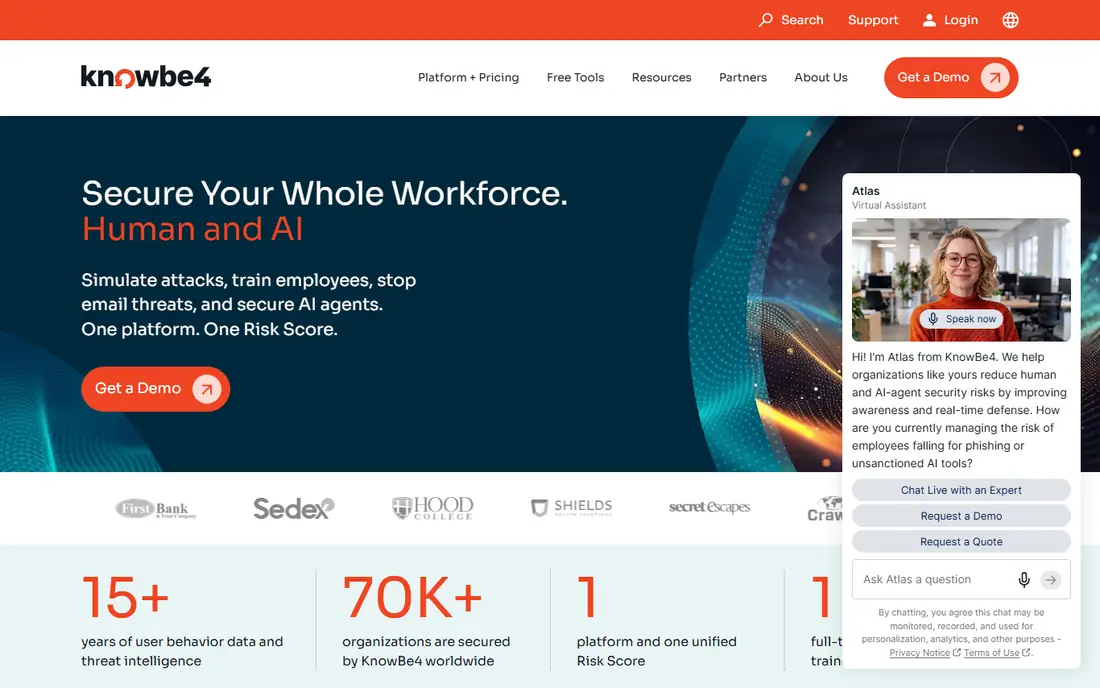
If Security training and phishing tests is the job, start here: it offers a large training library plus phishing simulations and per-user risk scoring in one platform. That combination helps teams measure change over time instead of only tracking course completion. It fits readers who want a practical option without a long setup, and it pairs well with the other choices on this list for comparison.
The honest catch is that the library size can overwhelm small admins, and pricing is by quote. Pricing is quoted rather than published as a single list price, so check the vendor site for the current figure for your setup. That balance of strengths and limits is what kept it on the list, even though it is not the right pick for every reader.
- Large training library
- Phishing simulation
- Risk scoring
- Quote-based pricing
- Library size can overwhelm
Proofpoint Security Awareness
Ideal for: Enterprise security awareness

This option suits Enterprise security awareness well, since it ties training to real threats seen in email, so lessons match the attacks employees actually face. Reporting shows which groups remain risky, which helps target follow-up training. It fits readers who want a practical option without a long setup, and it pairs well with the other choices on this list for comparison.
What holds it back a little is that enterprise pricing and a planned setup make it a bigger buy than a simple course library. Pricing is quoted rather than published as a single list price, so check the vendor site for the current figure for your setup. That balance of strengths and limits is what kept it on the list, even though it is not the right pick for every reader.
- Threat-based training
- Strong reporting
- Email security link
- Enterprise pricing
- Setup takes planning
Mimecast Awareness Training
Ideal for: Training tied to email security
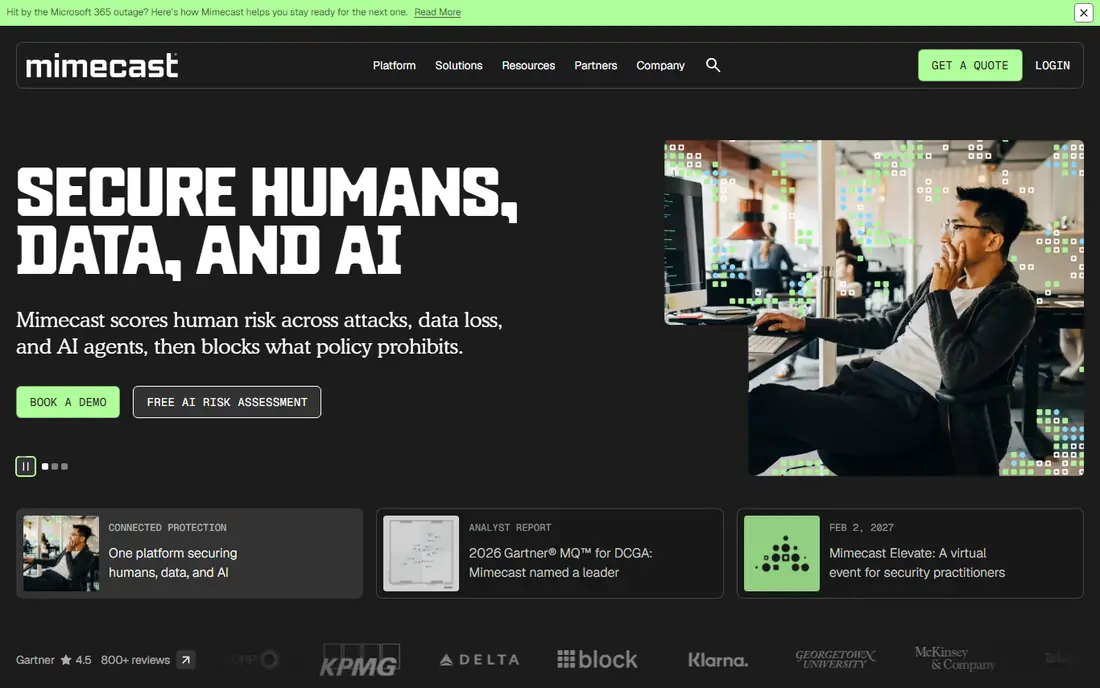
Buyers focused on Training tied to email security will find a lot to like, as it delivers short training modules with context drawn from email threats. That link to real email risk keeps lessons relevant instead of generic. It fits readers who want a practical option without a long setup, and it pairs well with the other choices on this list for comparison.
The downside to weigh is that it works best alongside Mimecast email products, and pricing is by quote. Pricing is quoted rather than published as a single list price, so check the vendor site for the current figure for your setup. That balance of strengths and limits is what kept it on the list, even though it is not the right pick for every reader.
- Short engaging modules
- Email threat context
- Analytics
- Quote-based pricing
- Best with Mimecast email products
Cofense
Ideal for: Phishing reporting and response
For teams or readers weighing Phishing reporting and response, this is a strong candidate because it focuses on getting employees to report suspicious mail quickly, then triaging those reports fast. A reporting habit matters because early reports can stop a phishing wave before it spreads. It fits readers who want a practical option without a long setup, and it pairs well with the other choices on this list for comparison.
Before you commit, note that its training library is narrower than broad awareness platforms. Pricing is quoted rather than published as a single list price, so check the vendor site for the current figure for your setup. That balance of strengths and limits is what kept it on the list, even though it is not the right pick for every reader.
- Employee reporting button
- Phishing triage
- Simulation
- Quote-based pricing
- Narrower training library
Infosec IQ
Ideal for: Training and phishing simulation
When Training and phishing simulation matters most, this option stands out for it offers role-based courses so finance staff and developers do not get the same generic lessons. Phishing tests and progress tracking show which teams still need work. It fits readers who want a practical option without a long setup, and it pairs well with the other choices on this list for comparison.
One limitation worth knowing is that the interface is functional rather than flashy, and pricing is by quote. Pricing is quoted rather than published as a single list price, so check the vendor site for the current figure for your setup. That balance of strengths and limits is what kept it on the list, even though it is not the right pick for every reader.
- Role-based courses
- Phishing tests
- Progress tracking
- Quote-based pricing
- Interface is functional rather than flashy
Hoxhunt
Ideal for: Behavior-based phishing training
For Behavior-based phishing training, this one earns a close look because it adapts phishing simulations to each person, raising difficulty as behavior improves. That adaptive approach aims at lasting behavior change rather than one-off course passes. It fits readers who want a practical option without a long setup, and it pairs well with the other choices on this list for comparison.
The trade-off is that the approach is newer than classic course libraries, so some buyers will want a longer trial. Pricing is quoted rather than published as a single list price, so check the vendor site for the current figure for your setup. That balance of strengths and limits is what kept it on the list, even though it is not the right pick for every reader.
- Adaptive simulations
- Behavior change focus
- Individual coaching
- Quote-based pricing
- Newer approach for some buyers
Living Security
Ideal for: Human risk analytics
If Human risk analytics is the job, start here: it scores human risk by person and team so leaders can see where risk actually sits. Engaging content formats help training feel less like a compliance chore. It fits readers who want a practical option without a long setup, and it pairs well with the other choices on this list for comparison.
The honest catch is that its content library is smaller than the biggest vendors, so check coverage for your topics. Pricing is quoted rather than published as a single list price, so check the vendor site for the current figure for your setup. That balance of strengths and limits is what kept it on the list, even though it is not the right pick for every reader.
- Risk scoring by person and team
- Engaging content
- Analytics
- Quote-based pricing
- Smaller content library than leaders
CultureAI
Ideal for: Behavior nudges and risk data
This option suits Behavior nudges and risk data well, since it nudges employees in the moment, such as when they are about to share sensitive data or reuse a password. Behavior analytics show whether those nudges actually change habits over time. It fits readers who want a practical option without a long setup, and it pairs well with the other choices on this list for comparison.
What holds it back a little is that it works best as a complement to training rather than a replacement for it. Pricing is quoted rather than published as a single list price, so check the vendor site for the current figure for your setup. That balance of strengths and limits is what kept it on the list, even though it is not the right pick for every reader.
- Real-time nudges
- Behavior analytics
- Integration with security tools
- Quote-based pricing
- Best as a complement to training
How we picked these
We started from the topic itself and kept only products that exist, work in October 2026, and truly fit what a reader searching this topic would want. We compared official feature pages, pricing pages, app store listings, privacy policies, and public reviews, and we left out products whose pricing or core features we could not verify. Where a price was not published clearly, we wrote See website rather than guessing a figure.
We also gave weight to fit over fame. A well-known name stayed on the list only if it matched the topic, and a smaller option earned a place when it solved the same problem well. We did not claim hands-on testing that did not happen, and we noted honest weaknesses alongside the strengths for every option.
Picking human risk software that changes behavior
Start with the risk you actually see. If phishing clicks are the problem, simulation and reporting tools matter most. If risky data sharing is the issue, behavior nudges and analytics deserve more weight. Matching the tool to the observed risk keeps the purchase focused.
Next, check reporting before you buy content. A large course library looks good in a demo, but per-person risk scores and team trends are what show whether behavior is changing. Ask to see a sample report and check how it handles new joiners and leavers.
Finally, plan for time, not just money. Short, regular training beats a yearly marathon course, and managers need to back the program openly. A tool nobody opens will not reduce risk, however good its content is.
Frequently asked questions
What is human risk management software?
It is software that measures and reduces risk from employee behavior, through training, phishing simulation, reporting tools, and behavior analytics. The aim is fewer clicks on phishing mail and safer handling of data.
Is this the same as security awareness training?
Training is one part of it. Human risk management adds risk scoring, behavior tracking, and reporting, so teams can see which people and groups still carry risk after training.
How is success measured?
Common measures include phishing click rates, report rates, training completion, and risk scores by team. A falling click rate plus a rising report rate is a good sign.
Do small companies need this?
Yes, small companies are targeted too, and a short training and simulation program fits most budgets. Start with phishing simulation and basic training, then add analytics later.
Does it replace technical email security?
No, it complements it. Email filtering and authentication block many attacks, while training and reporting handle the messages that still reach the inbox.