Best Identity Theft Protection Services in 2026: 7 Services Compared

- 1
 AuraFamily protectionVisit
- 2
 Norton LifeLockAntivirus plus identityVisit
- 3
 Identity GuardBudget protectionVisit
- 4
 IDShieldLegal help includedVisit
- 5
 Experian IdentityWorksCredit-focused protectionVisit
- Aura is our pick for family protection, with three-bureau monitoring, VPN, antivirus and up to $1 million per adult in identity theft insurance.
- Norton LifeLock suits customers who want antivirus plus identity protection in one subscription.
- Identity Guard suits budget protection, with three-bureau monitoring from a low monthly price.
- IDShield suits legal help alongside identity protection, with licensed investigators and legal consultation.
- No service can prevent identity theft entirely, so compare monitoring, alerts, resolution help and insurance together, not price alone.
Quick comparison
| Product | Ideal for | Price from | Free version | |
|---|---|---|---|---|
| Aura | Family protection | $9 per month | Free trial | Visit |
| Norton LifeLock | Antivirus plus identity | $10.42 per month | No | Visit |
| Identity Guard | Budget protection | $7.50 per month | Free trial | Visit |
| IDShield | Legal help included | $14.95 per month | No | Visit |
| Experian IdentityWorks | Credit-focused protection | Free | Yes | Visit |
 IdentityIQ | Credit monitoring | $6.99 per month | Free trial | Visit |
 NordProtect | VPN plus identity | $3.99 per month | Free trial | Visit |
The best identity theft protection services
Identity theft protection services monitor credit reports, dark web data, public records and financial accounts for signs of misuse, then alert you and help resolve problems. They cannot prevent theft entirely, but they can catch it earlier and help with recovery. The services below differ in bureaus monitored, insurance limits, family coverage and extra tools like VPN and antivirus.
Aura
Ideal for: Family protection

Aura is our pick for family protection. Three-bureau credit monitoring, dark web monitoring, financial account alerts, VPN, antivirus and a password manager cover most identity risks in one subscription. Identity theft insurance runs up to $1 million per adult, up to $5 million for family plans, with US-based resolution support.
Entry pricing can rise on renewal in some offers, so check renewal terms, and full family features need a higher tier. For families who want comprehensive protection in one app, Aura offers the most complete package here.
- Three-bureau credit monitoring
- VPN, antivirus and password manager included
- Up to $1 million per adult in identity theft insurance, up to $5 million for families
- Entry price rises on renewal in some offers
- Full family features need a higher tier
Norton LifeLock
Ideal for: Antivirus plus identity
Norton LifeLock suits customers who want antivirus and identity protection together. Norton antivirus, dark web monitoring, credit monitoring and identity theft insurance sit in one subscription, with coverage up to $3 million on higher tiers. The long track record and large customer base give confidence in resolution support.
Pricing tiers are complex, and renewal prices can exceed introductory offers, so check the renewal figure before committing. For households that already use Norton antivirus, adding LifeLock identity protection is a natural step.
- Antivirus plus identity monitoring in one subscription
- Up to $3 million in identity theft coverage on higher tiers
- Long track record
- Pricing and tiers are complex
- Renewal prices can exceed introductory prices
Identity Guard
Ideal for: Budget protection
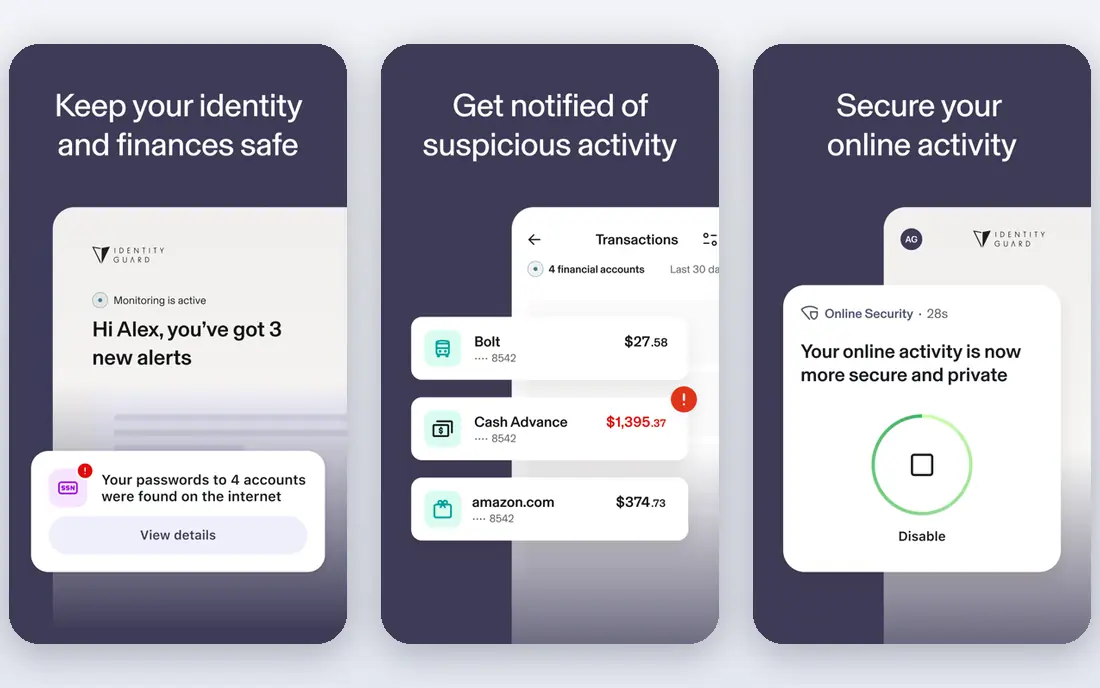
Identity Guard suits budget-conscious customers who want core protection without extra tools. Three-bureau credit monitoring, dark web monitoring and up to $1 million in identity theft insurance cover the essentials at a low entry price, with a free trial for evaluation.
VPN, antivirus and password manager features are limited compared with Aura, and family coverage needs a higher tier. For individuals who want solid monitoring at a low price, Identity Guard is the best budget choice.
- Three-bureau credit monitoring at a low entry price
- Dark web monitoring
- Up to $1 million in identity theft insurance
- Extra tools like VPN and antivirus are limited compared with Aura
- Family features need a higher tier
IDShield
Ideal for: Legal help included
IDShield suits customers who want legal help alongside identity protection. Licensed private investigators handle resolution cases, legal consultation is included for identity-related issues, and dark web and credit monitoring cover detection. That legal layer matters when identity theft involves complex fraud or legal disputes.
The entry price is higher than budget rivals, and bundled tech tools like VPN and antivirus are fewer than Aura or Norton. For customers who value legal support and investigator-led resolution, IDShield offers a distinct and valuable combination.
- Licensed private investigators for resolution
- Legal consultation included
- Dark web and credit monitoring
- Higher entry price than budget rivals
- Fewer bundled tech tools than Aura or Norton
Experian IdentityWorks
Ideal for: Credit-focused protection
Experian IdentityWorks suits customers who want credit-focused protection from a bureau itself. The free tier offers Experian credit monitoring and alerts, while paid tiers from $24.99 per month add three-bureau monitoring, dark web monitoring and up to $1 million in identity theft insurance. Direct bureau data gives confidence in alert accuracy.
The free tier covers Experian only, so full protection needs a paid tier, and the paid price is higher than budget rivals. For customers who prioritize credit monitoring accuracy and bureau-direct data, Experian IdentityWorks is a strong choice.
- Free tier with Experian credit monitoring
- Paid tiers add three-bureau monitoring and up to $1 million insurance
- Direct credit bureau data
- Free tier covers Experian only
- Paid tier needed for full three-bureau and dark web coverage
IdentityIQ
Ideal for: Credit monitoring
IdentityIQ suits customers who want low-cost credit monitoring with score tracking. Entry pricing from $6.99 per month covers credit monitoring, with higher tiers adding more bureaus, dark web monitoring and identity theft insurance. Score tracking helps customers watch credit health alongside identity risks.
Bundled tools like VPN and antivirus are fewer than Aura or Norton, and the interface is less polished than rivals. For budget credit monitoring with insurance on higher tiers, IdentityIQ offers good value.
- Low entry price
- Credit monitoring with score tracking
- Identity theft insurance on paid plans
- Fewer bundled tools than Aura
- Interface is less polished than rivals
NordProtect
Ideal for: VPN plus identity
NordProtect suits customers who already trust Nord security products and want identity protection alongside VPN. The low entry price, dark web monitoring and VPN integration make it an affordable addition for NordVPN users. Identity theft insurance and resolution support are included on paid plans, with details varying by tier.
As a newer identity service, NordProtect has less track record than Aura or LifeLock, and coverage details vary by tier, so read the plan terms carefully. For Nord users who want bundled VPN and identity protection at a low price, NordProtect is a practical choice.
- Low entry price
- VPN and identity monitoring from the Nord security family
- Dark web monitoring
- Newer identity service than Aura or LifeLock
- Coverage details vary by tier
How we picked these
We compared official pricing pages, coverage documentation and public reviews for identity theft protection services available to US customers in October 2026. We kept services with active credit or dark web monitoring, identity theft insurance, and resolution support, and we stated prices as published entry figures, noting that renewal prices may differ. This article is not financial or legal advice. We did not claim hands-on testing.
How to choose the right identity theft protection service
Start with who needs coverage. Individuals need a single plan, families need a family plan with child monitoring, and credit-focused customers may prefer a bureau-direct service like Experian IdentityWorks. Matching the plan to household size avoids paying for unused seats or missing child coverage.
Then compare monitoring breadth and resolution help, not just price. Check how many credit bureaus are monitored, whether dark web and financial account monitoring are included, what insurance limits apply, and whether resolution uses dedicated investigators or general support. Finally, check renewal pricing, since introductory prices often rise, and confirm that the service covers the risks you actually face, such as credit fraud, tax fraud or account takeover.
A free step that complements any protection service is to place a credit freeze with each major bureau, which blocks new credit accounts from being opened in your name without your approval. A freeze is free, it does not affect your existing accounts or credit score, and it can be temporarily lifted when you apply for credit yourself. Combined with monitoring alerts, a freeze covers both prevention for new credit fraud and detection for other kinds of misuse.
One more step worth taking is to review your credit reports for free each year and to check bank statements monthly, since monitoring alerts work best alongside your own regular checks.
Frequently asked questions
What is the best identity theft protection service?
Aura suits family protection, Norton LifeLock suits antivirus plus identity, Identity Guard suits budget protection, and IDShield suits legal help alongside protection. The best service depends on household size, budget and whether you want bundled VPN, antivirus or legal tools.
Can identity theft protection prevent identity theft?
No service can prevent identity theft entirely. Services monitor credit, dark web data and accounts to catch misuse earlier, alert you to suspicious activity, and help resolve problems, but they cannot stop all fraud, especially fraud that does not involve monitored data.
How much does identity theft protection cost?
Entry prices range from free for Experian basic monitoring to $3.99 to $14.95 per month for paid services, with family plans and higher tiers costing more. Renewal prices may exceed introductory prices, so check renewal terms before committing.
What does identity theft insurance cover?
Identity theft insurance typically covers out-of-pocket costs of recovery, such as legal fees, lost wages and stolen funds in some cases, up to a stated limit, often $1 million per adult. Coverage details vary by provider, so read the policy terms for exclusions and claim requirements.
Should I get identity theft protection if I already freeze my credit?
A credit freeze is a strong free protection against new credit fraud, and it complements monitoring rather than replacing it. Monitoring catches non-credit fraud, such as tax fraud, account takeover and dark web exposure, which a freeze alone does not cover. Many people use both.