Best Incident Management Software in 2026: 8 Tools Compared

- 1
 PagerDutyEnterprise incident responseVisit
- 2
 Jira Service ManagementAtlassian teamsVisit
- 3
 incident.ioSlack-first modern teamsVisit
- 4
 RootlyRunbook automationVisit
- 5
 FireHydrantService catalog plus incidentsVisit
- PagerDuty remains the enterprise incident standard, with a free tier for up to five users and Professional at $21 per user per month on annual billing.
- Jira Service Management suits Atlassian teams, with a free tier for up to three agents and strong Jira integration.
- incident.io is the best modern pick for Slack-first teams, with a free Basic plan for up to five users.
- Rootly and FireHydrant suit teams that want deeper runbook and retrospective automation.
- Note that Opsgenie is end-of-sale since 4 June 2025 and shuts down on 5 April 2027, so new buyers should not choose it; Atlassian directs users to Jira Service Management.
Quick comparison
| Product | Ideal for | Price from | Free version | |
|---|---|---|---|---|
| PagerDuty | Enterprise incident response | Free | Yes | Visit |
| Jira Service Management | Atlassian teams | Free | Yes | Visit |
| incident.io | Slack-first modern teams | Free | Yes | Visit |
| Rootly | Runbook automation | See website | Yes | Visit |
| FireHydrant | Service catalog plus incidents | Free | Yes | Visit |
 xMatters | Multi-channel alerting | Free | Yes | Visit |
 Squadcast | Affordable on-call | See website | Yes | Visit |
 Better Stack | Monitoring plus incidents | See website | Yes | Visit |
The best incident management software
These eight tools cover on-call alerting, incident coordination and post-incident learning. We compared official pricing pages, feature pages and public reviews, focusing on alerting reliability, Slack integration and the cost per responder at realistic team sizes.
PagerDuty
Ideal for: Enterprise incident response

PagerDuty is the enterprise incident standard, with mature on-call scheduling, escalation policies and deep integrations across monitoring, cloud and ITSM tools. Its AI incident summaries and automation help teams resolve incidents faster, and a free tier for up to five users lets small teams start without cost. Professional plans cost $21 per user per month on annual billing.
Pricing scales with responders, so large on-call rotations add up. For a team that needs proven reliability at scale, PagerDuty's track record and integration breadth make it the safest choice.
- Mature on-call scheduling
- Deep integrations
- AI incident summaries
- Free tier for up to five users
- Professional at $21 per user per month on annual billing
- Pricing scales with responders
Jira Service Management
Ideal for: Atlassian teams
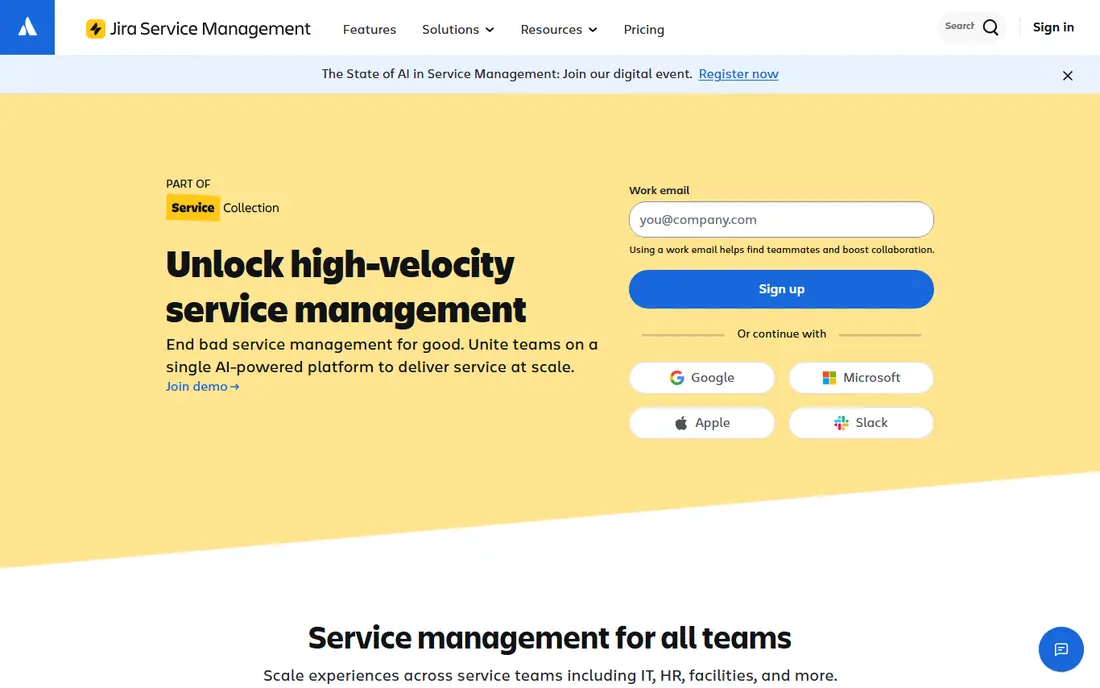
Jira Service Management suits teams already running Jira, since incident management, service requests and change tracking live in the same system as development work. A free tier covers up to three agents, with paid plans around $20 per agent per month, and Atlassian's Opsgenie migration path is built in for teams moving off Opsgenie before its 5 April 2027 shutdown.
It is heavier than a standalone pager for a small team that only needs alerting. For an Atlassian shop, though, the integration with development work makes incident tracking and follow-up far smoother.
- Strong Jira integration
- Free for up to three agents
- Opsgenie migration path built in
- Paid plans around $20 per agent per month
- Heavier than a standalone pager
incident.io
Ideal for: Slack-first modern teams
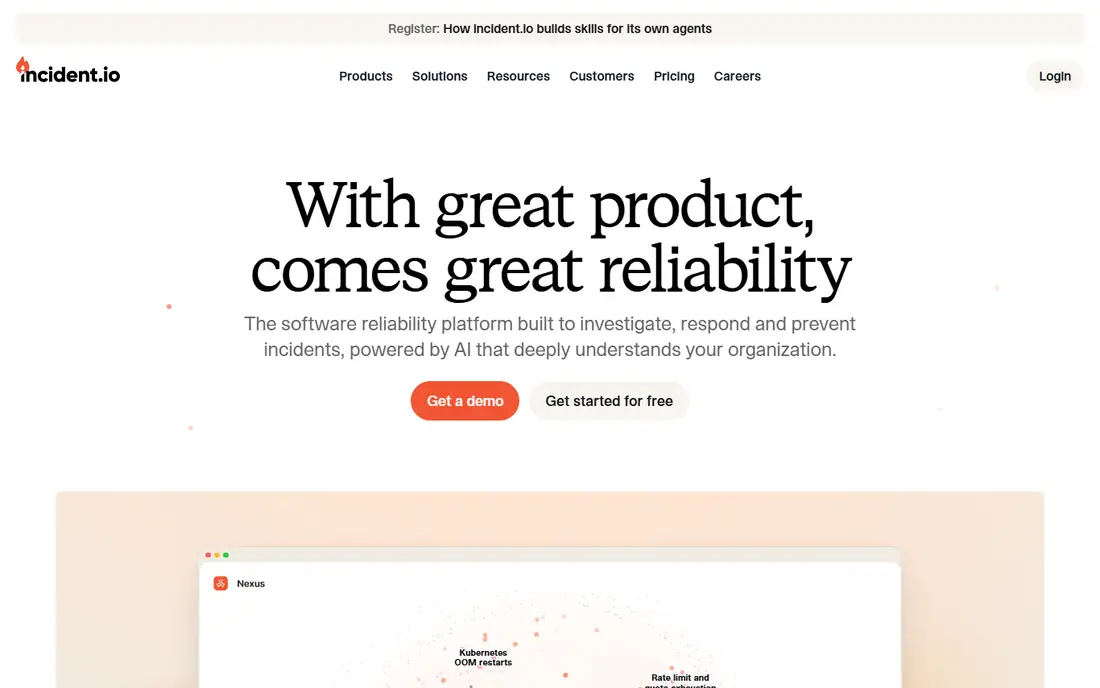
incident.io is the best modern pick for Slack-first teams, with the smoothest incident workflow inside Slack: declare, coordinate, update status and run retrospectives without leaving chat. A free Basic plan covers up to five users, while Team costs $15 per user per month, with higher tiers for larger organizations.
Its ecosystem is smaller than PagerDuty's, and enterprise features sit on higher tiers. For a startup or scale-up that lives in Slack, incident.io's speed and simplicity make incident response feel natural rather than bureaucratic.
- Best Slack experience
- Fast incident declaration
- Free Basic plan for up to five users
- Team plan at $15 per user per month
- Newer than PagerDuty, with a smaller ecosystem
Rootly
Ideal for: Runbook automation
Rootly suits teams that want to automate the repetitive parts of incident response. Its runbook automation, workflow builder and Slack and Teams support help teams execute the same steps consistently, reducing the cognitive load during an outage. A free tier covers basic use, with paid plans from $20 per user per month in recent comparisons.
Some advanced automation sits on higher tiers, and the tool rewards teams that invest in runbooks upfront. For a team with repeatable incident patterns, Rootly's automation pays off quickly.
- Strong runbook automation
- Slack and Teams support
- Workflow automation for repetitive steps
- Pricing from $20 per user per month in comparisons
- Some features need higher tiers
FireHydrant
Ideal for: Service catalog plus incidents
FireHydrant ties incident management to a service catalog, so teams can see which services are affected, who owns them and what their dependencies are, all during an incident. Runbooks, status pages and retrospectives round out the workflow, and a free tier covers up to ten responders. Paid plans start from $25 per responder per month.
The service catalog needs setup effort to deliver its full value. For a team with many services and unclear ownership, FireHydrant's catalog-first approach clarifies incidents faster than a pager alone.
- Service catalog tied to incidents
- Runbooks and retrospectives
- Free for up to ten responders
- Paid plans from $25 per responder per month
- Service catalog needs setup effort
xMatters
Ideal for: Multi-channel alerting
xMatters suits organizations that need alerting across many channels, including phone, SMS, push and email, with escalation that reaches the right person even if one channel fails. A free tier covers up to five users, with paid plans from $15 per user per month, and enterprise integrations cover ITSM and monitoring tools.
Some teams find the interface dated compared with incident.io or Rootly. For a regulated or distributed organization where multi-channel reach matters more than Slack polish, xMatters is a dependable choice.
- Multi-channel alerting across phone, SMS and push
- Free for up to five users
- Enterprise integrations
- Paid plans from $15 per user per month
- Interface feels dated to some teams
Squadcast
Ideal for: Affordable on-call
Squadcast is the affordable on-call pick for teams that need reliable scheduling and alerting without enterprise pricing. It integrates with Slack and Teams, offers incident response workflows and status pages, and a free tier covers basic use. Paid plans start from $9 per user per month in recent comparisons.
The ecosystem is smaller than PagerDuty's, and advanced automation is thinner. For a small or mid-size team that wants dependable on-call at a low price, Squadcast is a strong value.
- Affordable on-call scheduling
- Slack and Teams integration
- Incident response workflows
- Pricing from $9 per user per month in comparisons
- Smaller ecosystem than PagerDuty
Better Stack
Ideal for: Monitoring plus incidents
Better Stack suits teams that want monitoring and incident management together, without buying two tools. It monitors uptime and logs, pages responders on incidents, and includes status pages, which covers the full loop from detection to communication. A free tier covers basic monitoring, with responder pricing from $29 per month in recent comparisons.
Incident workflows are less deep than PagerDuty or incident.io, so large on-call teams may outgrow it. For a small team that wants one tool for monitoring and paging, Better Stack is a practical, low-friction choice.
- Monitoring plus incident management in one tool
- Status pages included
- Simple pricing
- Responder pricing from $29 per month in comparisons
- Less deep than dedicated incident tools
How we picked these
We compared official pricing pages, feature pages and public reviews for incident management tools available in October 2026. We favored tools with a working free tier or trial, current pricing and a real user base, and we weighed alerting reliability, Slack integration, runbook automation and cost per responder, since those decide how fast a team actually resolves incidents.
What to check before you choose incident management software
Start with your alerting path, not the dashboard. Test that a critical alert reaches the on-call engineer by phone, SMS and push within a minute, even at night, and confirm escalation if they do not acknowledge. A beautiful dashboard that pages slowly is worse than a plain pager that pages fast.
Then check Slack and runbook fit. If your team lives in Slack, incident.io or Rootly will feel natural. If your team needs a service catalog to find owners, FireHydrant helps. If you run Jira, Jira Service Management keeps follow-up work in the same system. Choose the workflow your team will actually use during a 3am outage.
Finally, price per responder at your real rotation size, and check the free tier limits. A tool that is free for five users but $25 per responder beyond that can jump sharply as you grow. Also confirm the Opsgenie migration path if you are moving off it before April 2027, since Atlassian's timeline is fixed.
If you are still unsure, trial the top two options from this list with a real project before committing to a paid plan, since hands-on use reveals fit faster than any feature list. Check how each option handles your everyday tasks, how quickly support answers a question, and how easy it is to export your data if you later switch. A short trial with real work gives you evidence that no comparison table can, and it protects you from paying for features you will never use.
Frequently asked questions
What is the best incident management software?
PagerDuty remains the enterprise standard, Jira Service Management suits Atlassian teams, and incident.io is the best modern pick for Slack-first teams. Rootly and FireHydrant suit teams wanting deeper automation and service catalogs.
Is Opsgenie still available?
Opsgenie is end-of-sale since 4 June 2025 and shuts down on 5 April 2027. New buyers should not choose it, and existing users should migrate to Jira Service Management or another tool in this list before the shutdown.
How much does incident management software cost?
Free tiers cover small teams on PagerDuty, Jira Service Management, incident.io, FireHydrant and xMatters. Paid plans run from $9 per user per month for Squadcast to $21 for PagerDuty and $25 per responder for FireHydrant on annual billing.
What is the difference between on-call and incident management?
On-call scheduling decides who gets paged, while incident management covers the full lifecycle: declaration, coordination, communication, resolution and retrospective. Most tools in this list cover both, with different strengths.
Do I need incident management software for a small team?
Yes, even a small team benefits from a clear on-call rotation, a single incident channel and a retrospective habit. Free tiers from PagerDuty, incident.io and FireHydrant cover small teams without cost.