Influencer Management Platforms in 2026: A Guide to 7 Tools

- 1
 TraackrData-driven creator vettingVisit
- 2
 Later InfluenceAmbassador and community programsVisit
- 3
 GRINDTC brands scaling creator programsVisit
- 4
 ModashCreator discovery and vettingVisit
- 5
 Shopify CollabsShopify merchants starting freeVisit
- The list opens with Traackr, aimed at data-driven creator vetting.
- Upfluence is the one to check for finding influencers among your customers.
- The lowest published monthly entry price here is $199/month, from Modash.
- One limit worth knowing about Modash: campaign management features are entry-level.
- Free plans exist at 2 of 7 tools (GRIN, Shopify Collabs).
Direct answer
If you need data-driven creator vetting, Traackr is the first tool to look at here. For a different need, Later Influence covers ambassador and community programs and GRIN covers DTC brands scaling creator programs. The other 4 tools in the list cover narrower or pricier cases.
Quick comparison
| Product | Ideal for | Price from | Free version | |
|---|---|---|---|---|
| Traackr | Data-driven creator vetting | See website | No | Visit |
| Later Influence | Ambassador and community programs | See website | No | Visit |
| GRIN | DTC brands scaling creator programs | $200/month (Starter) | Yes | Visit |
| Modash | Creator discovery and vetting | $199/month (billed yearly) | Free trial (14 days) | Visit |
| Shopify Collabs | Shopify merchants starting free | Free | Yes | Visit |
 CreatorIQ | Enterprise global programs | See website | No | Visit |
 Upfluence | Finding influencers among your customers | See website | No | Visit |
Influencer Management Platforms compared in detail
Short on time? The summary and table above give the quick view of 7 influencer management platforms, and the profiles that follow give the detail behind each entry.
Traackr
Ideal for: Data-driven creator vetting
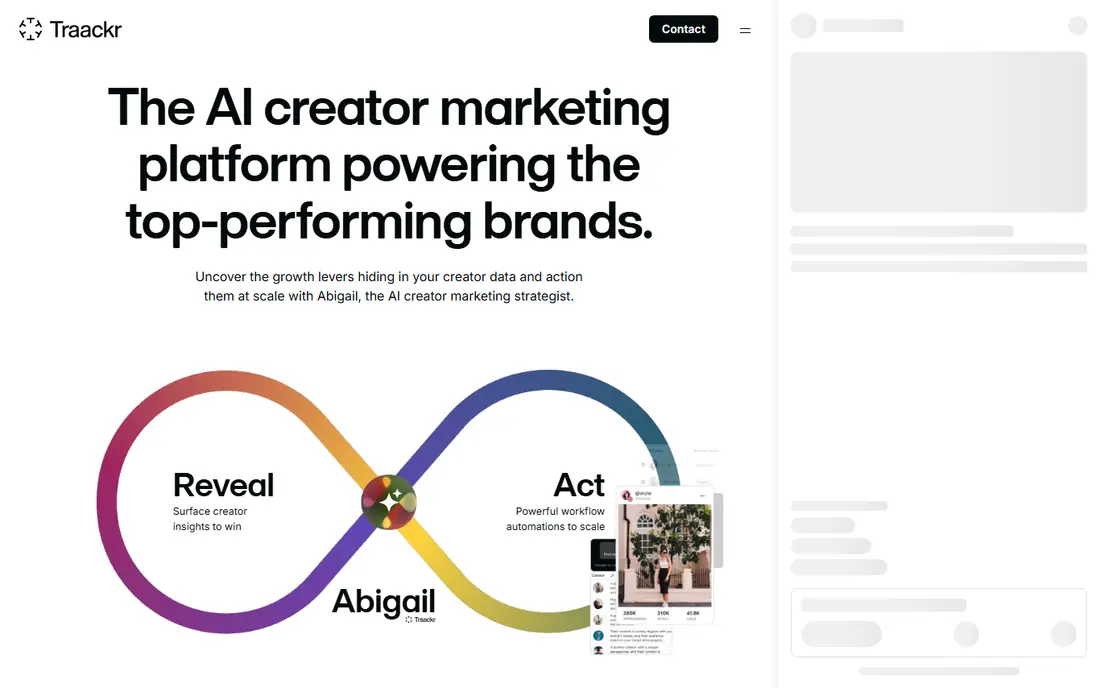
Traackr is designed for data-driven creator vetting. Pricing is quote-based with annual contracts.
Downsides: Quote-based annual pricing.
From a buyer's view, for teams where the question is "which creators are safe and genuinely influential" instead of "how do we run 200 affiliates," Traackr's analytics lead. Traackr shows no starting price here, so confirm the cost on the vendor site. No free plan comes with Traackr.
- Among the most solid influencer vetting and audience-quality analytics
- Solid competitive benchmarking
- The analytics depth needs dedicated users
Later Influence
Ideal for: Ambassador and community programs
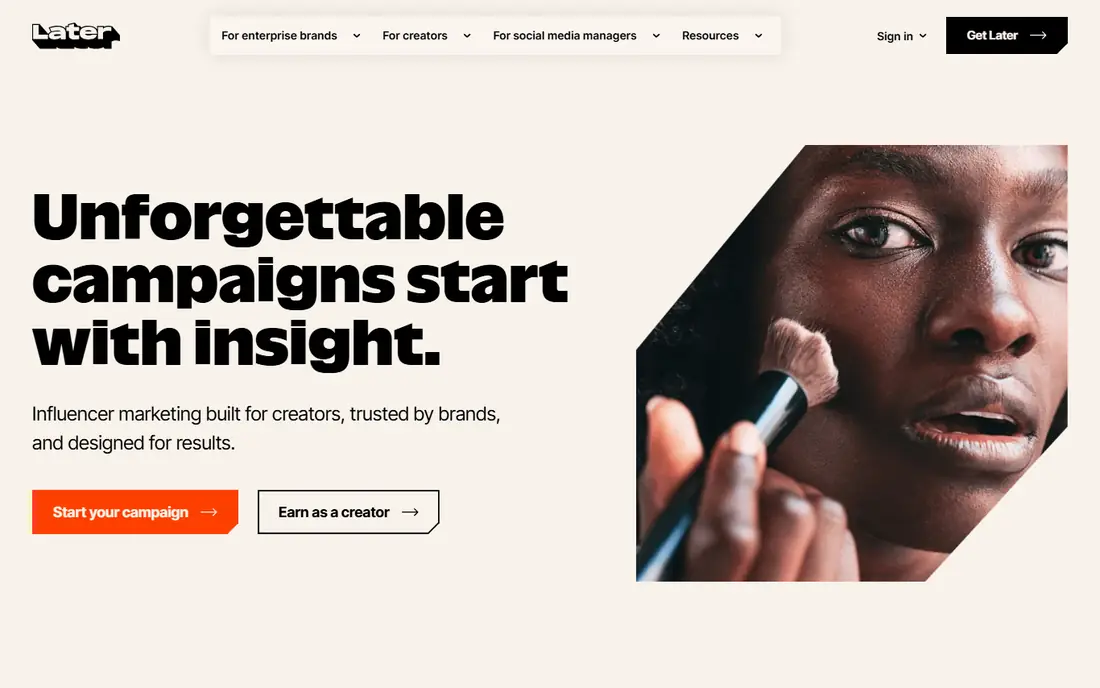
In short, Later Influence is for ambassador and community programs. Later Influence (formerly Mavrck, now part of Later) targets the always-on end of the market: brands running ambassador communities of thousands, with referral programs, product feedback loops and content rights management for turning creator posts into premium ads.
Later Influence does not show a starting price in this comparison, so check the vendor site for current pricing. There is no free plan with Later Influence.
Honest limits: Geared toward big programs, not campaign-by-campaign buyers.
- Referral and feedback tooling
- Digital rights management for repurposing creator content
- Custom enterprise pricing
GRIN
Ideal for: DTC brands scaling creator programs
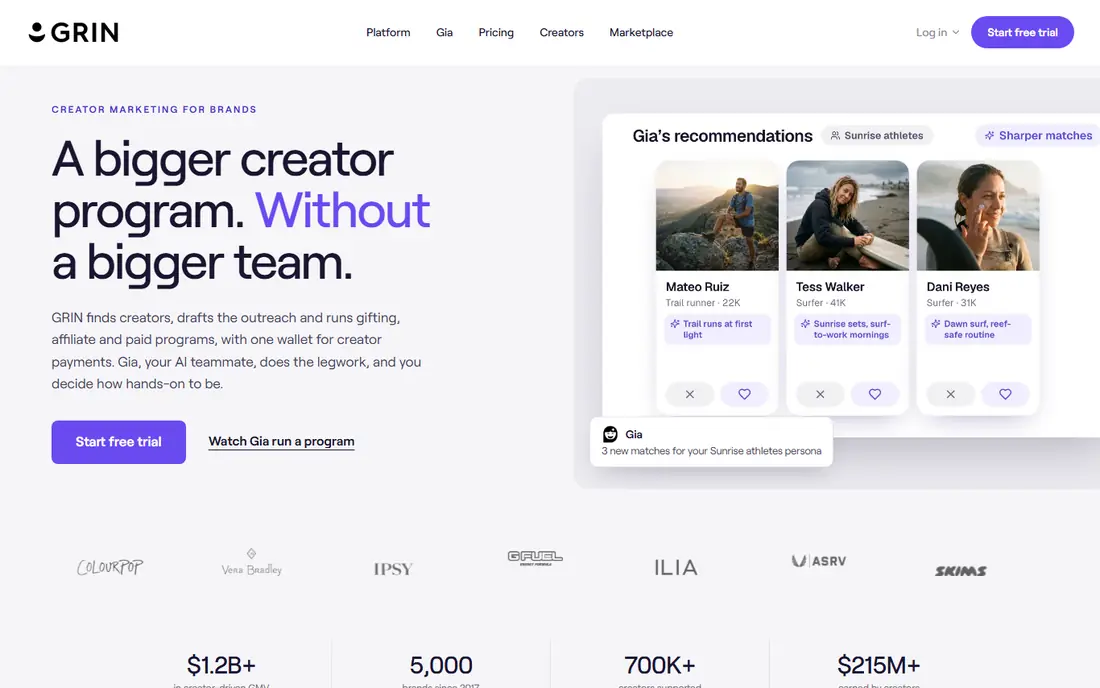
GRIN is built with DTC brands scaling creator programs in mind. Annual-contract competitors now have to explain why they still hide their prices.
On cost, GRIN starts like this: $200/month. You can start on GRIN without paying.
The main drawbacks: Real program management needs the premium levels. What works well: Deep Shopify and WooCommerce integrations tying creators to order revenue.
- Built-in seeding
- Payments and 1099 processing
- Enterprise features still cost more
Modash
Ideal for: Creator discovery and vetting
Modash works best for creator discovery and vetting. Modash is a discovery-first tool: the clearest example of self-serve influencer software.
Where it is weaker: Restricted e-commerce integrations.
More specifically, the limitation is scope: Modash finds and vets creators but does not handle the relationship. You register, search 250M+ creator profiles with in-depth audience analytics, check authenticity scores and fake-follower rates, and export lists. What you pay to start with Modash: $199/month. As for free access: Free trial (14 days).
Where it shines: A 250M+ creator database with solid fake-follower detection.
- Self-serve signup with no sales call
- Transparent pricing at $199/month annual
- Campaign management features are entry-level
Shopify Collabs
Ideal for: Shopify merchants starting free
Shopify Collabs makes the most sense for Shopify merchants starting free. Prove the channel here, then graduate.
Limits to weigh: less for flat-fee campaigns; Only handy inside the Shopify ecosystem.
As for the details, for keeps testing whether creator partnerships drive revenue, it removes every excuse. The starting price for Shopify Collabs: Free. A free plan is available with Shopify Collabs.
- Free for Shopify merchants with no system fee
- Creators apply through an application page
- Discovery and analytics are lighter than dedicated products
CreatorIQ
Ideal for: Enterprise global programs
CreatorIQ serves enterprise global programs. CreatorIQ is what large enterprises buy when influencer marketing becomes a global program: direct product API integrations for steady data, configurable dashboards, multi-market campaign management, payment processing with tax compliance, and the security reviews enterprise procurement demands. As for the details, big brands and their agencies standardize on it.
Where it is weaker: Overkill for programs under 50 creators.
Under that scale, it is too much system and too much contract. In practice, if you run influencer programs across regions with hundreds of creators, CreatorIQ is the shortlist. For everyday use, there is no trial and no self-serve path. Everything about the commercial model is enterprise: custom quotes, annual commitments, implementation managers. Check the vendor site for CreatorIQ pricing; none is listed in this comparison. CreatorIQ has no permanent free option.
- The enterprise standard with direct API integrations to Meta
- Configurable reporting and global payment infrastructure
- Quote-only pricing with annual (commonly multi-year) contracts
Upfluence
Ideal for: Finding influencers among your customers
Think of Upfluence for finding influencers among your customers. Upfluence's distinctive idea is that your best creators might already be customers. Its integrations with Shopify, WooCommerce and Klaviyo surface influential people inside your existing buyer and subscriber lists, and Live Capture spots creators browsing your site.
Trade-offs to know: Modular pricing gets complicated; everything through sales on annual contracts.
More specifically, everyone else should compare GRIN's published pricing first. In practice, the buying experience is the category's worst habit: no public pricing, demo-gated sales, annual contracts. More specifically, for e-commerce brands whose customer base is the creator pool, the discovery angle justifies the sales call. From a buyer's view, reported entry points range from a handful of hundred to a handful of thousand a month based on modules. No starting price is listed for Upfluence here; confirm pricing on the vendor site. Upfluence has no free tier.
- Deep Shopify
- Full campaign workflow with payments
- User reports put entry around $800-$3,500/month
How we chose
Ainotely used vendor pricing pages and product documentation as the base, then compared plans, free access and documented limits for 7 tools. Seat minimums, billing terms and add-ons can move the real cost, so the starting prices here are a guide and not a quote. Position on the page reflects fit for a typical buyer first, with price clarity and free access breaking ties. Treat it as a guide, not a ruling.
Before you commit
- Confirm the entry price on the vendor page. For Traackr, Later Influence, CreatorIQ and Upfluence that means a quote rather than a fixed price.
- Check what the free option really includes: GRIN and Shopify Collabs offer a free plan, and usage caps differ.
- Take the trial from Modash and push a live task through it before you pay.
- Read the limits listed for Traackr first: quote-based annual pricing.
- Before rolling out Later Influence, verify the integrations your workflow depends on.
- Find out what support Upfluence includes on your plan, and whether onboarding help costs extra.
Frequently asked questions
How do you measure influencer ROI?
Track promo-code redemptions and UTM-attributed revenue per creator as the baseline, add brand-lift signals (follower growth, engagement, content reuse value), and compare against the all-in cost: system fees plus creator payments plus product costs.
What is the cheapest option for influencer management platforms in this list?
On published monthly entry prices, Modash is the lowest here at $199/month. Entry price is only part of the cost, because seats, add-ons and billing terms can change the total.
How do products detect fake followers?
They analyze engagement patterns, follower growth anomalies, audience authenticity signals and comment quality using system API data. No detection is perfect, but dedicated tools (Modash, Traackr, HypeAuditor) are meaningfully better than eyeballing follower counts.
Do these tools publish their prices?
Not all of them. Traackr, Later Influence, CreatorIQ and Upfluence publish no starting price, so expect a quote request for those. The rest, GRIN included, show a starting price, though seats and billing terms still change the final cost.
Which options for influencer management platforms have a free plan?
On this list, GRIN and Shopify Collabs include a free plan. Caps on seats, usage or features are common, so test the free plan against your real workload. One other tool offers a trial instead.
How are the tools for influencer management platforms ordered?
The order follows typical fit for influencer management platforms, with Traackr first and Upfluence last, then price clarity and free access. It is editorial judgement, not a score, so another team could rank the tools differently.