Best Insurance Policy Administration Software in 2026: 8 Systems Compared

- 1
 Guidewire PolicyCenterCarriers that want a proven policy core systemVisit
- 2
 Duck Creek PolicyCarriers that want configurable policy administrationVisit
- 3
 Majesco PolicyInsurers that want cloud policy with analyticsVisit
- 4
 Sapiens PolicyLife, P and C, and specialty carriersVisit
- 5
 Insurity PolicyP and C carriers and MGAs that want speedVisit
- Guidewire PolicyCenter stands out for carriers that want a proven policy core system, which makes it a strong starting point for that need.
- Duck Creek Policy stands out for carriers that want configurable policy administration, which makes it a strong starting point for that need.
- Majesco Policy stands out for insurers that want cloud policy with analytics, which makes it a strong starting point for that need.
- Sapiens Policy stands out for life, p and c, and specialty carriers, which makes it a strong starting point for that need.
- Prices and free plans vary widely across this list, so check the vendor pricing page for your team size or usage before you commit.
Please note: This article is for general information only and is not insurance advice. Rating rules and coverage needs vary by state and carrier, so speak to a qualified professional before you decide.
Quick comparison
| Product | Ideal for | Price from | Free version | |
|---|---|---|---|---|
| Guidewire PolicyCenter | Carriers that want a proven policy core system | See website | No | Visit |
| Duck Creek Policy | Carriers that want configurable policy administration | See website | No | Visit |
| Majesco Policy | Insurers that want cloud policy with analytics | See website | No | Visit |
| Sapiens Policy | Life, P and C, and specialty carriers | See website | No | Visit |
| Insurity Policy | P and C carriers and MGAs that want speed | See website | No | Visit |
 EIS | Carriers building customer-first digital products | See website | No | Visit |
 Socotra | Insurers that want modern, API-first policy admin | See website | No | Visit |
 Origami Risk | Carriers and MGAs that want policy plus risk tools | See website | No | Visit |
The best insurance policy administration software
We compared official feature pages, pricing pages, app store listings, privacy policies, and public reviews to build this list, and we focused on tools that truly fit best insurance policy administration software rather than general tools with a passing connection. The eight options below cover different budgets, team sizes, and priorities, so start with the best-for notes and read the full write-up for any tool that matches your situation.
Guidewire PolicyCenter
Ideal for: Carriers that want a proven policy core system

Guidewire PolicyCenter is the policy core system many large carriers run on. It covers quoting, underwriting, issuance, endorsements, renewals, and cancellations in one workflow, with rating and rules engines built in. That depth suits carriers with complex products and high volumes.
Implementation is a major project and pricing is quote-based, so smaller carriers may find it heavy. For large insurers that need a proven, scalable core, PolicyCenter remains the benchmark others are measured against.
Before you commit, check the current pricing page and trial terms for your team size, since plans change and the right tier depends on how many people will actually use the tool daily.
- Full policy lifecycle from quote to renewal
- Strong rating and underwriting tools
- Enterprise implementation
- Pricing is quote-based
Duck Creek Policy
Ideal for: Carriers that want configurable policy administration
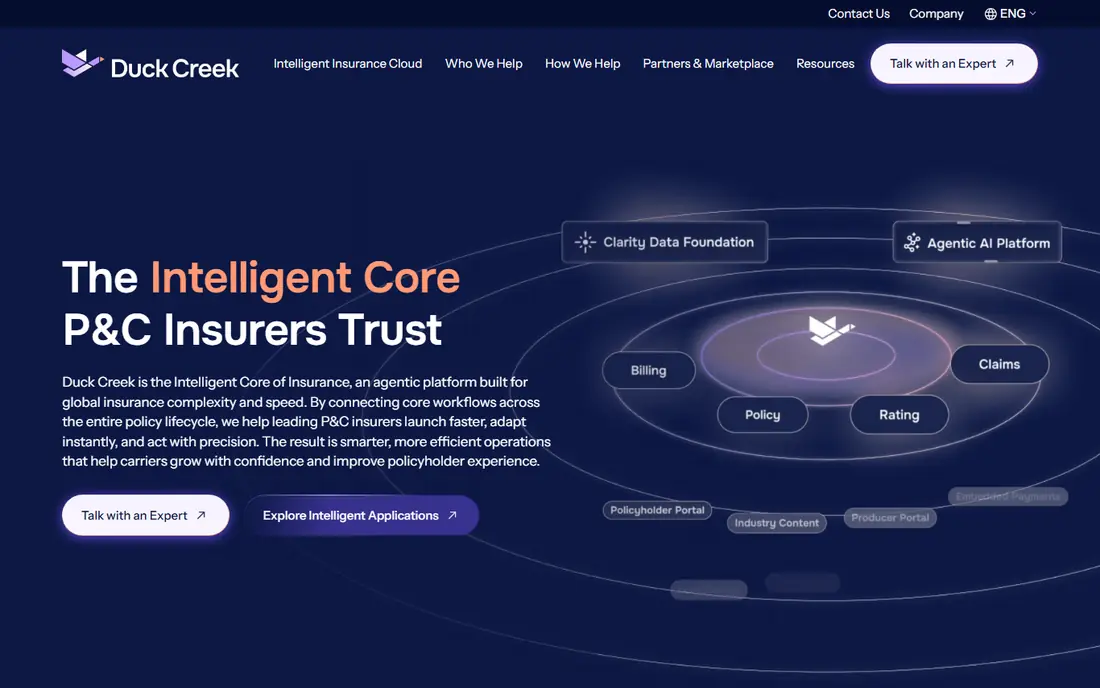
Duck Creek Policy gives carriers a configurable policy platform for property and casualty lines, with product setup tools that let business users change coverages and rating without heavy coding. Cloud delivery keeps upgrades steadier than on-premise cores. It suits carriers launching or changing products often.
Configuration still needs skilled teams, and enterprise scope means longer projects. Carriers that value product flexibility and cloud operations tend to rate Duck Creek highly. Smaller MGAs should check whether a lighter platform fits better.
Before you buy, run a short trial with your real data and your real workflow, since a demo with sample data hides the friction points that matter once the whole team is involved.
- Highly configurable product setup
- Cloud delivery
- Strong for P and C lines
- Enterprise scope
- Configuration needs skilled teams
Majesco Policy
Ideal for: Insurers that want cloud policy with analytics
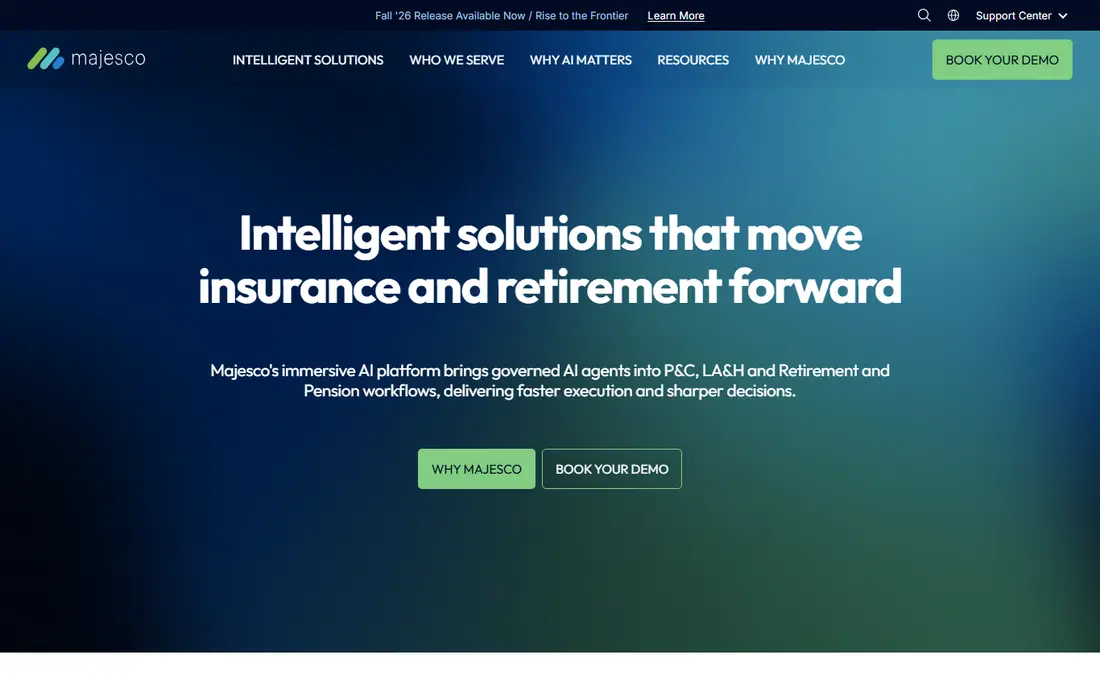
Majesco offers cloud policy administration across several lines, with analytics that help carriers see loss, premium, and retention patterns. Its platform suits insurers modernizing a legacy core without rebuilding everything from scratch. Integration tools connect policy data to billing and claims.
Pricing is enterprise and quote-based, and implementation needs careful data work. For carriers that want cloud delivery plus usable analytics out of the box, Majesco is a credible alternative to the largest vendors. Confirm your lines of business are covered in a demo.
Before you decide, confirm integration with the tools you already use and check what support hours and onboarding help are included, since those details matter more than a feature list once you are live.
- Cloud policy administration
- Built-in analytics
- Supports several lines of business
- Enterprise pricing
- Implementation planning matters
Sapiens Policy
Ideal for: Life, P and C, and specialty carriers
Sapiens provides policy administration across life, property and casualty, and specialty lines, with a strong international footprint. Carriers with mixed portfolios or overseas operations benefit from one vendor covering several lines. Its platform handles complex products and reinsurance links.
US carriers may find Guidewire or Duck Creek have deeper local ecosystems, and implementation remains enterprise-scale. For carriers with global or multi-line needs, Sapiens breadth is a real advantage. Check local support and references for your market.
Before you commit, ask for a quote that covers every user, module, and add-on you need, and compare that total against at least one other tool on this list for the same scope.
- Broad line coverage including life and P and C
- Strong international presence
- Enterprise implementation
- Smaller US presence than Guidewire
Insurity Policy
Ideal for: P and C carriers and MGAs that want speed
Insurity focuses on property and casualty carriers and MGAs that need to move fast. Its cloud tools support policy, billing, and claims workflows, with deployment options aimed at quicker go-live than traditional cores. MGAs launching programs value that speed and the program business expertise.
The focus is mainly P and C, so life or specialty carriers should look elsewhere. Depth varies across its product set, so confirm the exact modules for your lines. For P and C carriers and MGAs, Insurity speed and program knowledge stand out.
Before you commit, check the current pricing page and trial terms for your team size, since plans change and the right tier depends on how many people will actually use the tool daily.
- Fast deployment options for P and C
- Cloud-native tools
- MGA-friendly
- Focus is mainly P and C
- Enterprise depth varies by product
EIS
Ideal for: Carriers building customer-first digital products
EIS offers a cloud-native policy core built for digital customer experiences, with policy, billing, and claims in one platform. Carriers launching direct or embedded products benefit from APIs and digital journeys that let customers buy, change, and claim online. It suits insurers redesigning around the customer, not the back office.
EIS is an enterprise platform, so small carriers may find it more than they need. For carriers committed to digital transformation, the modern architecture and customer tools are the draw. Expect a serious implementation and plan data migration early.
Before you buy, run a short trial with your real data and your real workflow, since a demo with sample data hides the friction points that matter once the whole team is involved.
- Cloud-native core
- Strong digital and customer experience tools
- Enterprise scope
- Best for carriers committed to digital transformation
Socotra
Ideal for: Insurers that want modern, API-first policy admin
Socotra is a modern, API-first policy platform that lets insurers launch products quickly and connect to other systems cleanly. Its cloud-native design suits insurtechs and carriers building new products without legacy constraints. Product configuration and policy lifecycle tools are built for speed.
As a newer vendor, its ecosystem and reference base are smaller than the established cores. Carriers that need deep legacy line coverage should verify fit carefully. For new products and digital-first insurers, Socotra speed and architecture are compelling.
Before you decide, confirm integration with the tools you already use and check what support hours and onboarding help are included, since those details matter more than a feature list once you are live.
- API-first, cloud-native platform
- Fast product launches
- Modern architecture
- Newer vendor
- Ecosystem smaller than Guidewire or Duck Creek
Origami Risk
Ideal for: Carriers and MGAs that want policy plus risk tools
Origami Risk combines policy administration with risk management and claims tools, which suits carriers and MGAs that manage risk data alongside policies. Configurable workflows let teams shape underwriting, billing, and reporting to their programs. It works well for organizations that want one risk platform, not just a policy core.
Buyers that only need policy administration may find the wider platform more than they want. For MGAs and carriers where risk data and policy data belong together, Origami offers a joined-up view that pure policy cores do not. Demo your actual program workflow before deciding.
Before you commit, ask for a quote that covers every user, module, and add-on you need, and compare that total against at least one other tool on this list for the same scope.
- Policy administration plus risk and claims tools
- Configurable workflows
- Broader risk platform, so pure policy buyers may find extra breadth
How we picked these
We started from the topic itself and looked for products that genuinely serve it, not tools that mention it in passing. For each candidate we checked the vendor's own feature and pricing pages, app store listings where relevant, privacy and security pages, and public user reviews, and we dropped any product we could not verify as real and available in October 2026.
We then compared the remaining tools on fit for the stated need, pricing transparency, free or trial options, ease of adoption, and honest weaknesses. Every list below mixes well-known leaders with strong smaller options, and every write-up names a real trade-off, since no tool is best for every team.
Choosing a policy core without regret
Start with your product and volume reality. List your lines of business, policy counts, and how often products change, then match that to vendor strength. A core built for personal auto may struggle with specialty commercial lines, and vice versa.
Next, test product setup and rating in the demo. Ask business users, not just IT, to build a product change and rate a real policy. If only engineers can change a coverage, your product team will bottleneck every launch.
Finally, plan migration and total cost honestly. Data cleanup, integration with billing and claims, and training often cost as much as licenses. Ask for references from carriers of your size and lines, and compare three-year total cost, not first-year license fees.
Frequently asked questions
What is policy administration software?
It is the core system insurers use to manage policies from quote and underwriting through issuance, endorsements, renewals, and cancellation. It also connects to billing, claims, and rating so policy data stays consistent.
How is it different from agency management software?
Policy administration is the carrier system of record for policies, while agency management serves brokers and agents selling those policies. Carriers need the former, agencies need the latter, and the two often integrate.
How long does implementation take?
Enterprise cores often take many months to over a year, including data migration and product setup. Cloud and MGA-focused platforms can go live faster, but product complexity still drives the timeline.
Can small MGAs use these platforms?
Yes, especially Insurity, Socotra, and Origami, which target MGAs and faster launches. Large cores like Guidewire suit big carriers better than small programs.
What should carriers check in a demo?
Run your real products, rating rules, and endorsement cases through the demo. Product setup speed, billing integration, and reporting matter more than a polished dashboard.