Top 7 Interview Scheduling Software Options for 2026, Compared

- Paradox is the opening pick, best for AI conversational scheduling.
- The cheapest monthly starting price in the list is $12/user/month, offered by Calendly.
- Prelude fits candidate experience.
- Just one of the 7 tools, Calendly, has a free plan.
Direct answer
This list puts Paradox first for AI conversational scheduling. Yello is the stronger choice for campus and high-volume recruiting, while GoodTime suits high-volume interview coordination. All 7 tools are compared below on price, free plan and limits.
Quick comparison
| Product | Ideal for | Price from | Free version | |
|---|---|---|---|---|
 Paradox | AI conversational scheduling | See website | No | Visit |
 Yello | Campus and high-volume recruiting | See website | No | Visit |
 GoodTime | High-volume interview coordination | See website | No | Visit |
 ModernLoop | Collaborative hiring teams | See website | No | Visit |
 Calendly | Straightforward interview booking | $12/user/month | Yes | Visit |
 Spark Hire | Video screening workflow | See website | Free trial | Visit |
 Prelude | Candidate experience | See website | No | Visit |
Tool-by-tool breakdown
Choosing interview scheduling software usually comes down to price, fit and limits. This Ainotely guide sets 7 tools side by side on those three points, with the facts kept short and checkable.
Paradox
Ideal for: AI conversational scheduling
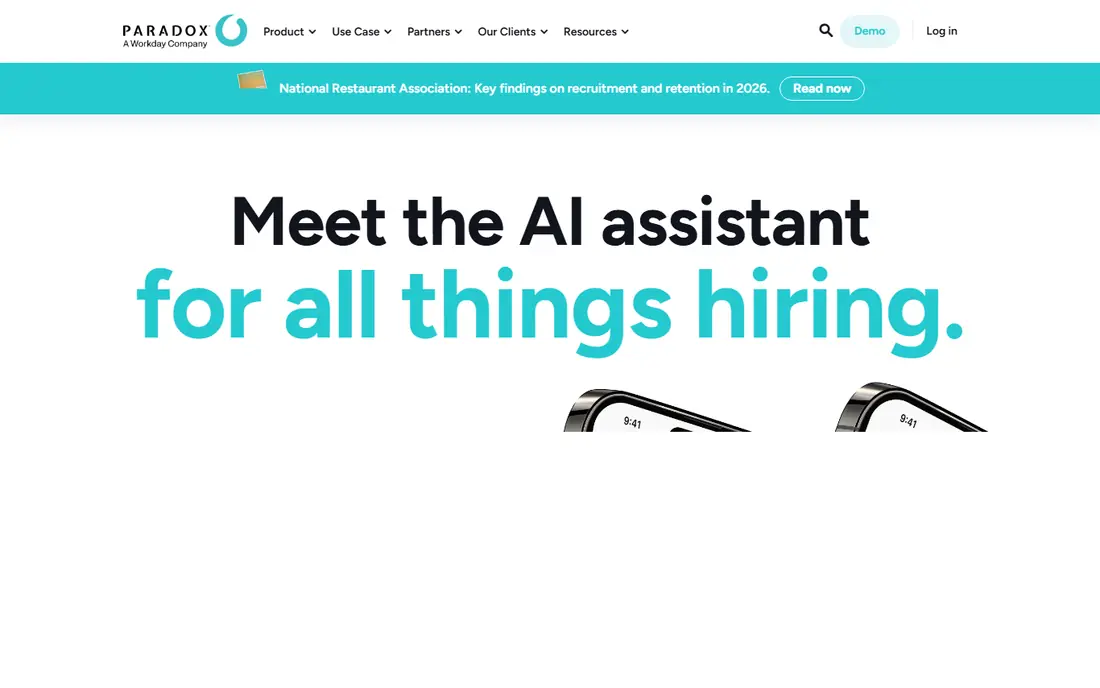
Where Paradox fits: AI conversational scheduling. Pricing is enterprise and quote-based.
Where it is weaker: Enterprise pricing.
Worth adding: for retail, hospitality, healthcare and warehouse hiring at scale, Paradox's automation is transformative. White-collar executive hiring may prefer human touch. Pricing for Paradox is not stated here, so ask the vendor for current figures. Paradox does not include a free plan.
What works well: A good match for hourly hiring.
- Olivia AI assistant schedules over chat and text
- 24/7 responsiveness
- Conversational UI is not for every role
Yello
Ideal for: Campus and high-volume recruiting
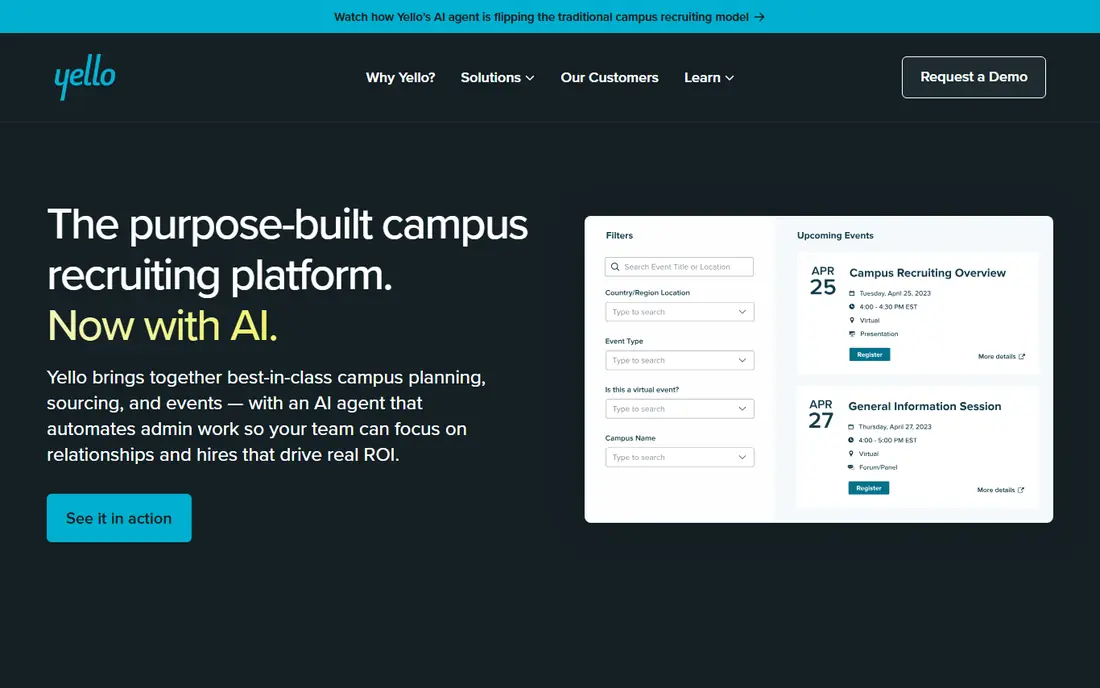
Choose Yello for campus and high-volume recruiting. Yello serves campus recruiting and high-volume hiring: career fair follow-up, event management and interview scheduling tuned for recruiting at scale. Also, University relations teams get workflows made for their world.
On top of that, pricing is quote-based. For businesses hiring hundreds of graduates annually, Yello's specialized workflows beat general tools. Check the vendor site for Yello pricing; none is listed in this comparison. Yello has no permanent free option.
Where it falls short: Quote-based pricing.
- Aimed at campus recruiting
- High-volume workflows
- Niche focus
GoodTime
Ideal for: High-volume interview coordination
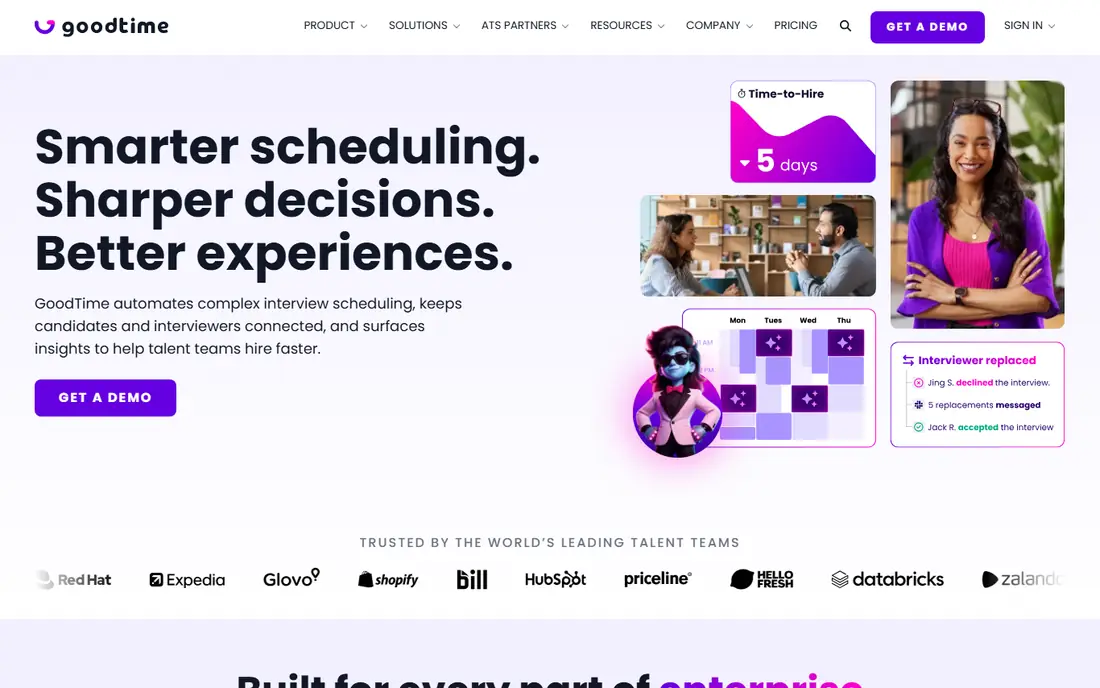
GoodTime was built for high-volume interview coordination. GoodTime automates the painful parts of interview scheduling: finding times across interviewers, sending invites, rescheduling, and balancing interviewer load. On top of that, for talent teams where scheduling is a full-time job, GoodTime automates most of it.
What to check first: Geared toward high-volume teams.
Pricing is quote-based and pitched at mid-market and enterprise hiring volumes. Integrations with major ATS products keep everything synced. Check the vendor site for GoodTime pricing; none is listed in this comparison. GoodTime has no free tier.
- Intelligent automation reduces coordinator work
- Interviewer load balancing
- Quote-based pricing
ModernLoop
Ideal for: Collaborative hiring teams
In short, ModernLoop is for collaborative hiring teams. ModernLoop coordinates the interviewers, not just the calendar: panel scheduling, interviewer prep, feedback collection and debrief organization. The vendor is smaller than GoodTime or Paradox, so reference checks matter.
Where it falls short: Smaller vendor.
In practice, pricing is quote-based. For collaborative hiring cultures where interviewer coordination is the bottleneck, ModernLoop suits. Check the vendor site for ModernLoop pricing; none is listed in this comparison. ModernLoop has no permanent free option.
- Clean interface
- A decent match for panel interviews
- Quote-based pricing
Calendly
Ideal for: Straightforward interview booking
Calendly is aimed squarely at straightforward interview booking. Calendly is the scheduling tool everyone already understands: share a link, candidates pick a time, invites and reminders go out. On top of that, for small teams doing straightforward phone screens and hiring manager chats, Calendly is enough.
More specifically, deployment takes minutes. At scale, coordinators still do manual work. On cost, Calendly starts like this: $12/user/month. Calendly has a free plan.
Trade-offs to know: Not recruiting-specific.
- Free level works
- Everyone knows it
- Manual coordination at scale
Spark Hire
Ideal for: Video screening workflow
Think of Spark Hire for video screening workflow. Spark Hire popularized one-way video interviews: candidates record answers to your questions, and you review them before scheduling live interviews.
Points against: Scheduling features lighter than specialists.
Scheduling automation is lighter than GoodTime or Prelude. This comparison lists no price for Spark Hire; ask the vendor. As for free access: Free trial.
- Straightforward one-way video interviews
- Simple for candidates
- Smaller system
Prelude
Ideal for: Candidate experience
Where Prelude fits: candidate experience. Prelude concentrates on the candidate's experience of scheduling: elegant self-scheduling, smart reminders that cut no-shows, and coordination that feels human instead of robotic. From a buyer's view, pricing needs a conversation.
Points against: Quote-based.
The feature set is narrower than GoodTime's coordination depth. Recruiters get automation without the experience feeling automatic. Prelude does not show a starting price in this comparison, so check the vendor site for current pricing. No free plan comes with Prelude.
- Cuts no-shows
- Beautiful candidate-facing scheduling
- Narrower than full-suite products
What went into this list
Ainotely used vendor pricing pages and product documentation as the base, then compared plans, free access and documented limits for 7 tools. Treat prices as a snapshot: vendors change plans often, so check the vendor site for the figure that applies today. Order on the page follows fit for the typical buyer first, then price transparency and free access. Your own requirements should decide the final pick.
What to check before you buy
- Confirm the entry price on the vendor page. For Paradox, Yello, GoodTime and others that means a quote rather than a fixed price.
- Look at the free plan from Calendly closely: its caps decide whether it is usable for real work.
- Take the trial from Spark Hire and push a live task through it before you pay.
- Before choosing Paradox, weigh its main limit: enterprise pricing.
- Look at the help docs and support options for Spark Hire before you commit.
- Ask the daily users to test Prelude on a live task before you roll it out to everyone.
Frequently asked questions
What is the cheapest option for interview scheduling software in this list?
On published monthly entry prices, Calendly is the lowest here at $12/user/month. Entry price is only part of the cost, because seats, add-ons and billing terms can change the total.
Can candidates reschedule themselves?
Yes, and they should be able to. Self-service rescheduling within your rules cuts no-shows and coordinator emails. Every serious tool here bundles it; verify the rules are customizable.
Which options for interview scheduling software have a free plan?
Calendly is the only tool in this list with a free plan. Free plans usually cap users, projects or features, so check the limits on the vendor page. One other tool offers a trial instead.
How much does interview scheduling software cost?
Calendly begins at $12 per user a month with a free level. Dedicated products (GoodTime, Prelude, ModernLoop, Paradox) are quote-based, typically hundreds to thousands monthly based on hiring volume.
How are the tools for interview scheduling software ordered?
The order follows typical fit for interview scheduling software, with Paradox first and Prelude last, then price clarity and free access. It is editorial judgement, not a score, so another team could rank the tools differently.
Is Paradox the right pick for everyone comparing interview scheduling software?
No single tool suits every team. Paradox comes first because it fits AI conversational scheduling, while Yello suits campus and high-volume recruiting and GoodTime suits high-volume interview coordination. Match the tool to your own size, budget and workflow before deciding.