Best Investing Apps For Beginners in 2026: 8 Options Compared

- Fidelity and Schwab lead for beginners who want education plus low costs.
- Acorns and Stash suit people who want to start with small automatic amounts.
- Robinhood and SoFi offer simple starts, with less research depth.
- Investing carries risk; start with money you can leave invested for years.
Quick comparison
| Product | Ideal for | Price from | Free version | |
|---|---|---|---|---|
 Fidelity | Beginner investing with education and low costs | See website | Yes | Visit |
 Charles Schwab | Beginners who want research and support | See website | Yes | Visit |
 Acorns | Automatic spare change investing | See website | No | Visit |
 Stash | Guided investing with small amounts | See website | No | Visit |
 Robinhood | Simple mobile investing for beginners | See website | Yes | Visit |
 SoFi Invest | Beginners wanting an all in one finance app | See website | Yes | Visit |
 Betterment | Hands off automated investing | See website | No | Visit |
 Webull | Beginners who want to learn charting | See website | Yes | Visit |
The best best investing apps for beginners
Beginner investing apps should teach as they let you invest, with low minimums and clear fees. The apps below cover hands on trading, automatic investing, and spare change saving, so pick the style that fits your habits.
Fidelity
Ideal for: Beginner investing with education and low costs
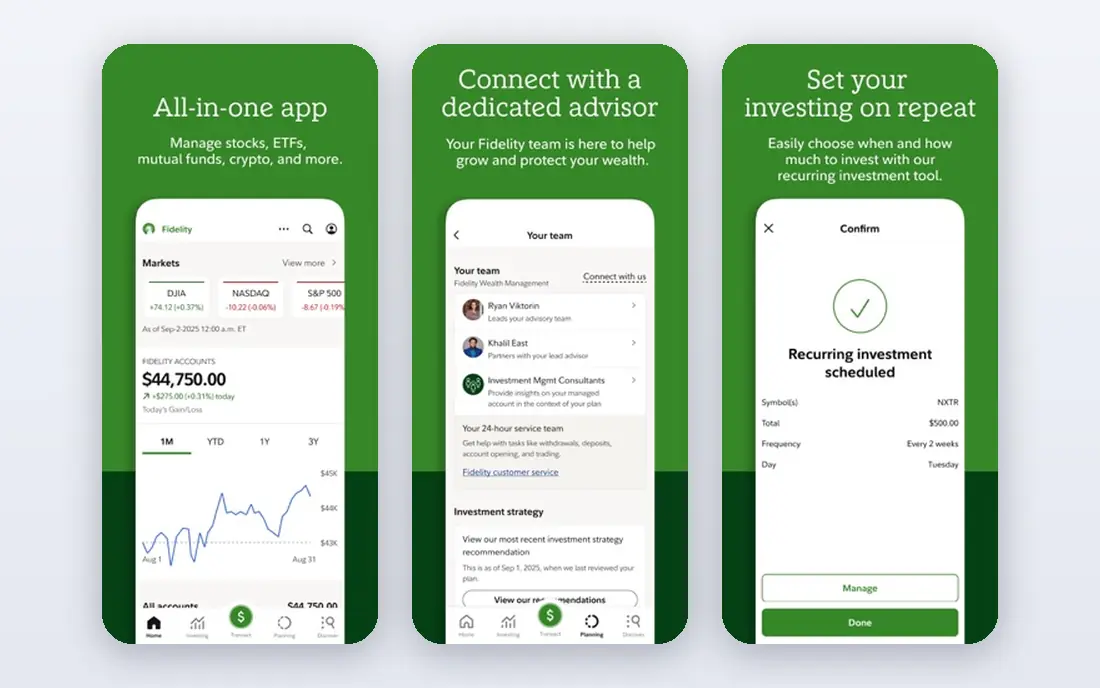
Fidelity gives beginners no commission trades, fractional shares, and education that explains investing plainly. Retirement accounts and low cost funds make it a solid long term home. Support is available by phone and online.
The app packs in many features, which can feel dense at first. For beginners who want depth plus low costs, Fidelity is our pick.
- No commission stock and ETF trades
- Fractional shares
- Strong education
- App can feel dense for newcomers
Charles Schwab
Ideal for: Beginners who want research and support
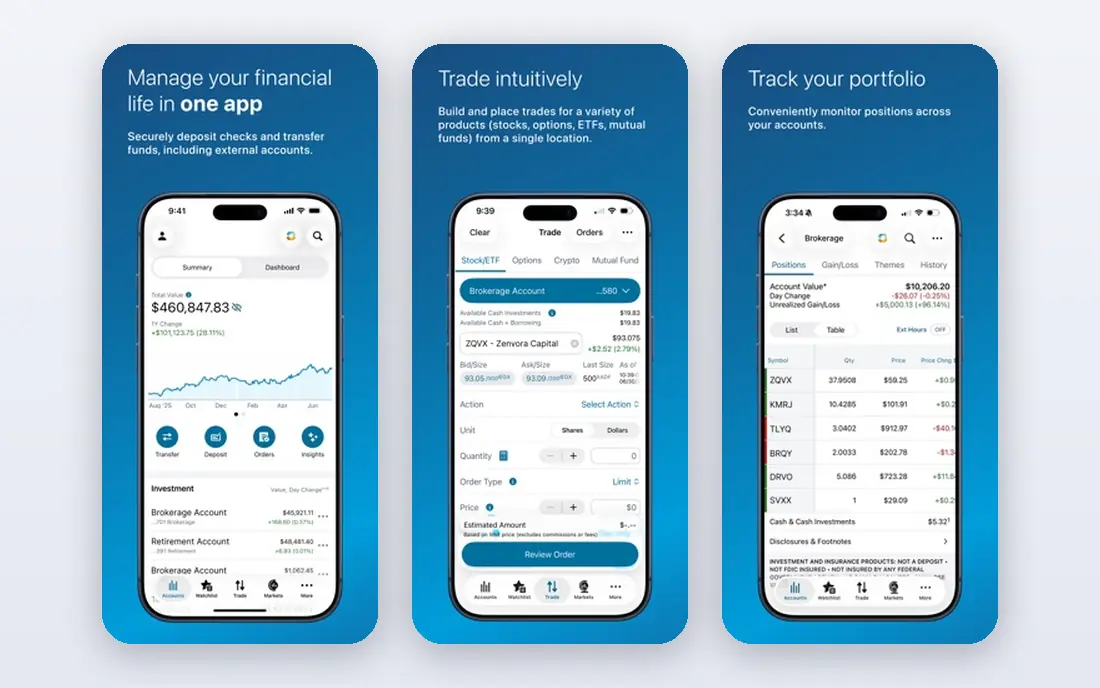
Schwab pairs no commission trading with research, education, and human support by phone and in branches. Fractional shares let beginners start small. Its fund range covers low cost index options.
Moving between platforms can feel disjointed. For beginners who value support, Schwab is excellent.
- No commission trades
- Fractional shares
- Strong research and support
- Interface varies across platforms
Acorns
Ideal for: Automatic spare change investing
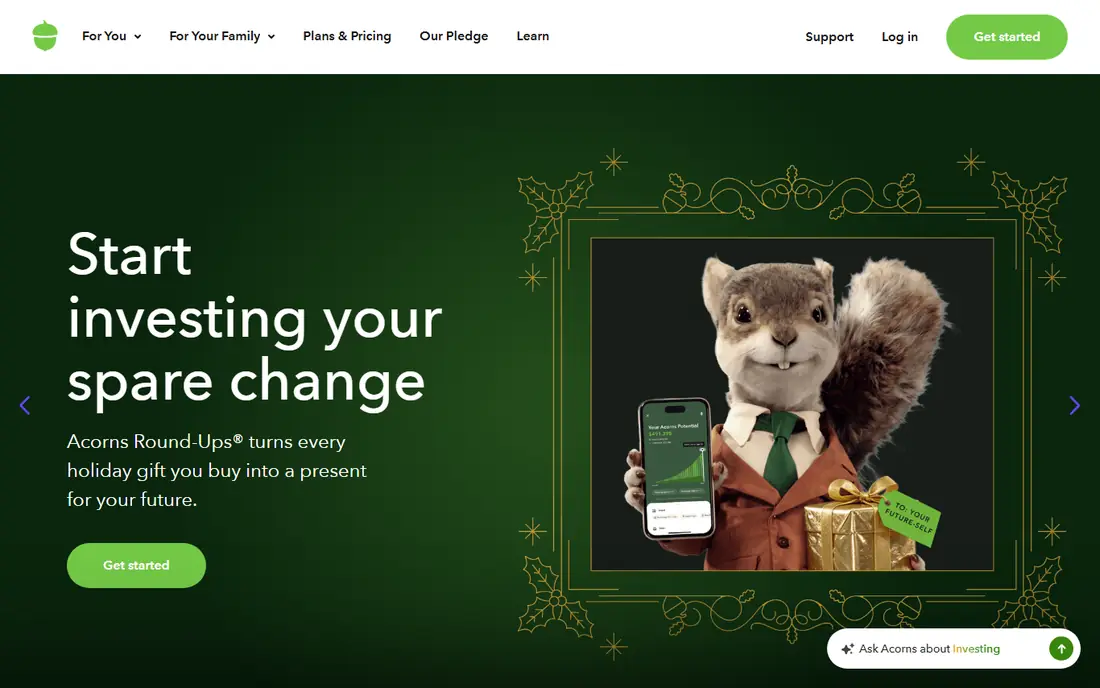
Acorns rounds up purchases and invests the spare change in diversified portfolios, making investing automatic. It suits people who struggle to save regularly. The app keeps choices simple with a few portfolio options.
A monthly subscription applies, which weighs on small balances, and stock picking is limited. For automatic starting, Acorns is friendly.
- Automatic round ups
- Diversified portfolios
- Simple start
- Monthly subscription
- Limited stock picking
Stash
Ideal for: Guided investing with small amounts
Stash lets beginners buy fractional shares, explore themed investments, and learn with built in education. It suits people who want guidance while choosing their own stocks and funds. Banking features add convenience.
A monthly subscription applies, so compare the cost against your balance. For guided small amount investing, Stash is a good fit.
- Fractional shares
- Themed investments
- Education content
- Monthly subscription
- Fees matter on small balances
Robinhood
Ideal for: Simple mobile investing for beginners
Robinhood makes starting simple, with fractional shares, no commission stock trades, and a clean mobile app. It suits beginners who want to place first trades quickly. Retirement accounts are also offered.
Education and research are thinner than at larger brokers. For a simple mobile start, Robinhood is popular.
- Easy app
- Fractional shares
- No commission stock trades
- Education is thinner than Fidelity or Schwab
SoFi Invest
Ideal for: Beginners wanting an all in one finance app
SoFi Invest offers fractional shares and automated investing inside an app that also covers banking and loans. It suits beginners who want investing next to everyday money tools. The interface stays simple.
Research is basic and active trading tools are limited. For simple all in one investing, SoFi is a good match.
- Fractional shares
- Automated investing
- Linked banking
- Research is basic
- Active tools are limited
Betterment
Ideal for: Hands off automated investing
Betterment builds and manages diversified portfolios for your goals, rebalancing automatically. It suits beginners who want investing handled for them. Goal planning and tax features add value.
A management fee applies, and you have less control over individual picks. For hands off investing, Betterment is a strong choice.
- Automated diversified portfolios
- Goal planning
- Tax features
- Management fee applies
- Less control over picks
Webull
Ideal for: Beginners who want to learn charting
Webull offers paper trading to practice without risk, plus detailed charts for learners who want to understand markets. No commission stock trades keep costs low. It suits beginners who want to learn actively.
The data heavy design can overwhelm newcomers. For learning with practice trading, Webull is useful.
- Paper trading
- Detailed charts
- No commission stock trades
- Data heavy design can overwhelm beginners
How we picked these
We compared official pricing pages, feature lists, and education sections for each app, checking minimums, fractional shares, fees, and account types. We favored apps with plain fee terms and learning content. This is not financial advice; investing carries risk and you can lose money.
We also checked whether each option is still offered and supported, and we left out products with unclear pricing, broken pages, or a poor fit for the topic. Where a price or free tier could not be confirmed from the vendor site, we wrote See website rather than guessing. Readers should still check the vendor page before buying, since prices and plans change.
How to start investing as a beginner
Start with a diversified fund, not a single stock. Broad index funds spread risk across many companies, which suits beginners better than betting on one winner. Many apps offer fractional shares and low cost ETFs, so you can start with a small amount.
Set up automatic investing if you can. A small regular amount builds a habit and smooths market ups and downs over time. Apps such as Acorns and Stash automate this, while brokers such as Fidelity and Schwab support recurring investments too.
Learn the fees before you invest. Some apps charge monthly subscriptions, while brokers may charge for certain trades or services. A monthly fee matters more on a small balance, so compare the total cost at your account size.
Keep an emergency fund separate. Investing works best with money you do not need soon, since markets fall as well as rise. Build a small cash buffer first, then invest steadily for long term goals such as retirement.
Before you pay, confirm the total cost for the first year, including any add ons, renewal prices, and fees that only appear at checkout. A low starting price can hide a higher renewal rate, and a free tier can limit the feature you need most. Write down the features you will use weekly, and pay only for those.
After you choose, give the option a fair trial with your real workload, not just a quick tour. Set a reminder to review it after two to four weeks, and note what worked, what annoyed you, and what you never used. That review tells you whether to keep, upgrade, or switch before a renewal locks you in.
If the option disappoints, switch sooner rather than later. Export your data first, check whether you can keep your account history or settings, and confirm any cancellation terms. A good provider makes leaving straightforward, and a difficult exit is itself useful information about the service.
Talk to people who already use the option before you commit, especially for a business purchase. A short conversation with a current user reveals support quality, setup effort, and daily friction that marketing pages omit. Ask what surprised them after the first month, since early impressions often differ from longer use.
Keep a simple record of why you chose the option, including the price you were quoted and the features that mattered. That note makes renewal talks easier and helps a colleague or future you understand the decision. If the price rises or a key feature changes, the note shows whether the original reasons still hold.
Finally, plan the first week of use before you pay. List the setup steps, the data you need to move, and the people who need access. A clear first week plan turns a promising choice into a working routine, and it exposes missing features while you can still change your mind.
Save the vendor support page and the cancellation instructions in the same place as your receipt. When something goes wrong, you will want support details at hand rather than searching for them under pressure. A tidy record saves time and keeps a small problem from becoming a long one.
Keep notes on the first month of use, including any issues and how support handled them. Those notes give you clear evidence if you need a refund, an upgrade, or a switch, and they help you advise a friend or colleague who asks about the same choice later.
Frequently asked questions
Which investing app is best for beginners?
Fidelity is our pick for beginners who want education, low costs, and fractional shares in one broker. Acorns suits people who want automatic spare change investing. Schwab is a close second with strong research and support.
How much money do I need to start investing?
Many apps let you start with very little, thanks to fractional shares and spare change features. Acorns starts with spare change, while brokers such as Fidelity and Schwab allow small fractional trades. The amount matters less than starting steadily.
Are investing apps safe?
Reputable US brokers are SIPC members, which protects securities up to certain limits if the firm fails, but does not cover market losses. Check SIPC membership and read disclosures. Keep passwords strong and use two factor authentication.
Should beginners buy stocks or index funds?
Most beginners do better starting with diversified index funds or ETFs, which spread risk across many companies. Single stocks can be exciting but carry higher risk. Learn the basics before trading individual stocks actively.
Do beginner investing apps charge fees?
Some charge monthly subscriptions, such as Acorns and Stash, while brokers such as Fidelity and Schwab charge no commission on stock and ETF trades. Compare subscription fees against your balance, since a monthly fee weighs more on small accounts.
How often should I review my choice?
Review it at least once a year, and sooner if your needs, budget, or team size change. Prices, features, and policies shift over time, and a better fit may appear. A short yearly check, comparing your current option with two alternatives, keeps you from paying for features you no longer use.