Best Investment Apps in 2026: 8 Apps Compared

- This is not financial advice. Investing carries risk, including loss of principal, and past performance does not predict future results.
- Fidelity and Schwab suit long-term investors who want low costs and broad account types, while Robinhood and Webull suit active traders.
- Acorns and SoFi suit beginners who want automated investing, while Vanguard suits index-focused long-term investors.
- Check fees, account types, fractional shares, and whether the app offers retirement accounts before you invest.
Quick comparison
| Product | Ideal for | Price from | Free version | |
|---|---|---|---|---|
 Fidelity | Best all-round investment app | See website | No | Visit |
 Charles Schwab | Strong all-round broker with service | See website | No | Visit |
 Robinhood | Simplest app for new investors | See website | No | Visit |
 Webull | Low-cost app for active traders | See website | No | Visit |
 Vanguard | Best for low-cost index investing | See website | No | Visit |
 Acorns | Automated investing for beginners | See website | No | Visit |
 SoFi Invest | Investing plus banking in one app | See website | No | Visit |
 E*TRADE | Strong app for investors and traders | See website | No | Visit |
The best investment apps
We compared official feature pages, pricing pages, app store listings, privacy policies and public reviews to build this list, focusing on products that fit the topic closely and are still available in October 2026.
Fidelity
Ideal for: Best all-round investment app
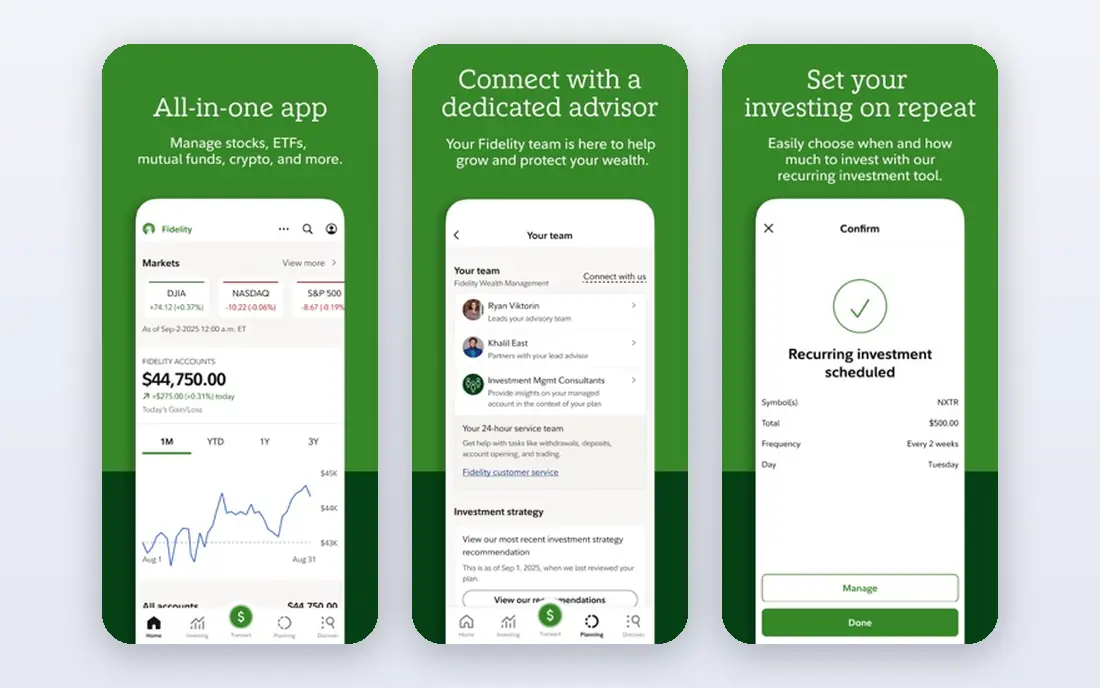
Fidelity is the best all-round investment app for most long-term investors. It offers commission-free stock and ETF trades, IRAs, 529 plans, and managed options, with research that helps beginners learn. Fractional shares let you invest small amounts in expensive stocks, and customer service is well regarded.
The app and website can feel dense for a first-time investor, with many menus and tools. Fidelity suits investors who want a full-service broker in one app, from a first IRA to a taxable account. Beginners who want automation may prefer Acorns or SoFi first, then move to Fidelity as they learn.
- Commission-free stock and ETF trades
- Broad account types including IRAs
- Strong research
- Interface can feel dense for beginners
- Some advanced tools are desktop focused
Charles Schwab
Ideal for: Strong all-round broker with service
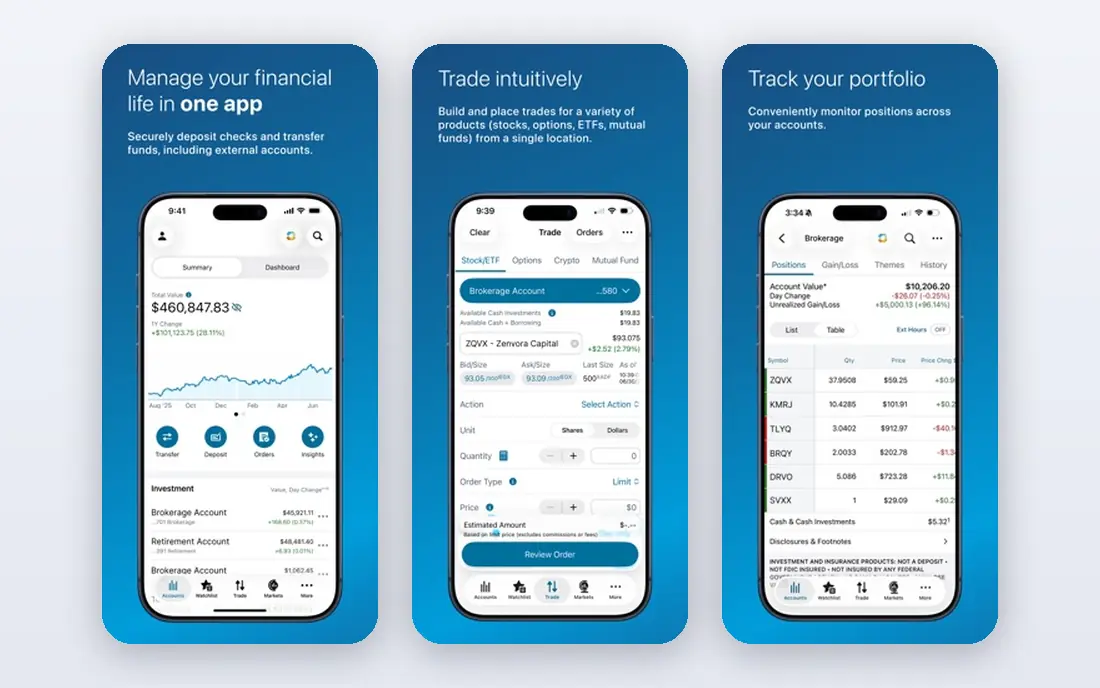
Charles Schwab suits long-term investors who want a trusted broker with good service and broad accounts. Commission-free stock and ETF trades, IRAs, and 529 education accounts cover most goals, and research helps you compare funds and stocks. The thinkorswim platform adds advanced tools for active traders in the same account.
The app is less playful than Robinhood, which some beginners may find less engaging, though that is also a strength for serious investing. Schwab suits investors who want reliability, service, and a wide account range. Compare it with Fidelity, since both are strong and the choice often comes down to interface preference.
- Commission-free stock and ETF trades
- IRAs and 529s
- Strong research and service
- App is less playful than Robinhood
- Some features need the desktop platform
Robinhood
Ideal for: Simplest app for new investors
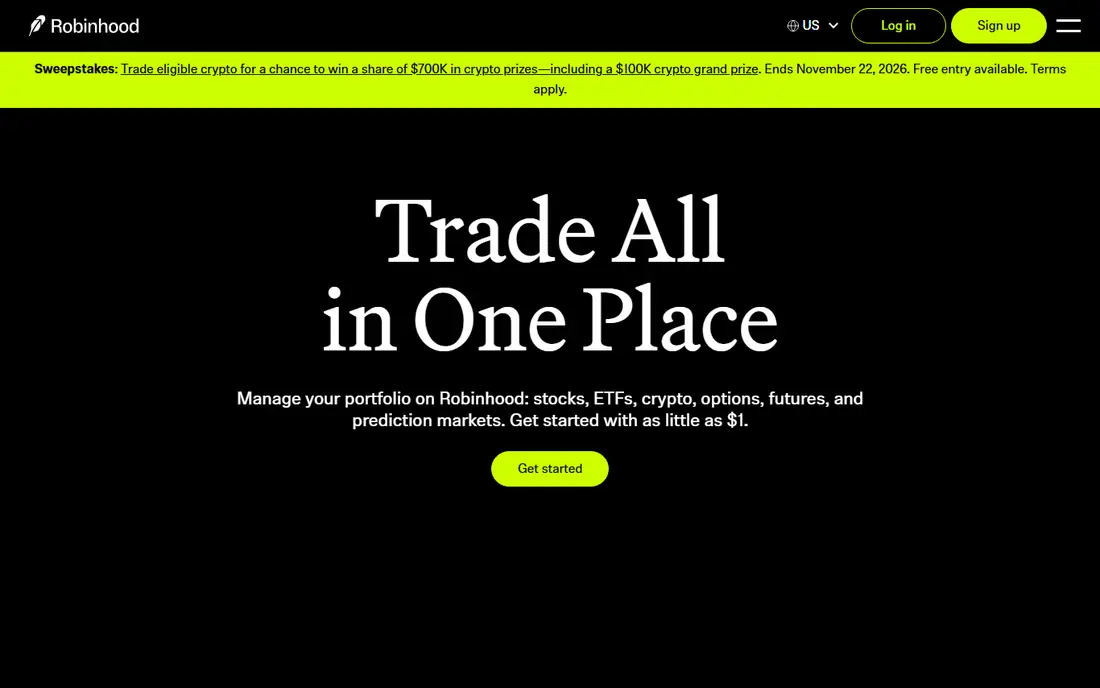
Robinhood is the simplest investment app to start with, with a clean interface, commission-free trades, and fractional shares that let you invest small amounts. For a beginner who wants to buy a first ETF or stock, Robinhood lowers the barrier and makes the process clear.
Research is thinner than Fidelity or Schwab, and Robinhood has faced outages and regulatory scrutiny in the past. Crypto trading is volatile and margin trading carries high risk. Robinhood suits beginners with small, careful investments, especially in diversified ETFs, not as a sole tool for serious research.
- Very simple app
- Commission-free stock, ETF, options, and crypto trades
- Fractional shares
- Limited research
- Past outages concern some users
- Crypto and margin carry high risk
Webull
Ideal for: Low-cost app for active traders
Webull suits active traders who want strong mobile charts at low cost. Commission-free stock, ETF, and options trades, extended hours trading, and paper trading help traders practise and analyse on a phone. The charting tools are stronger than Robinhood for technical traders.
Research, retirement planning, and banking features lag Fidelity and Schwab, and support can be slower at busy times. Webull suits traders who focus on stocks and options and want mobile tools. Long-term investors who want IRAs, planning, and advice should compare Fidelity or Schwab first.
- Commission-free stock, ETF, and options trades
- Strong mobile charts
- Paper trading
- Research and retirement planning lag Fidelity
- Support can be slower
Vanguard
Ideal for: Best for low-cost index investing
Vanguard suits long-term, index-focused investors who want low costs above all. Its index funds and ETFs are among the cheapest available, and IRAs, 401k rollovers, and 529 plans cover retirement and education goals. The philosophy is simple: diversify, keep costs low, and stay invested.
The app is simpler and less modern than Fidelity or Robinhood, and active trading tools are thin. Vanguard suits patient investors who buy diversified funds regularly and do not trade often. If you want active trading or a playful app, Fidelity or Webull will feel better, but for index investing Vanguard is hard to beat.
- Low-cost index funds and ETFs
- IRAs and 529s
- Strong long-term focus
- App is simpler and less modern than rivals
- Active trading tools are thin
Acorns
Ideal for: Automated investing for beginners
Acorns suits beginners who struggle to start investing. Round-ups invest spare change from everyday purchases into a diversified portfolio, with recurring investments and retirement options on higher plans. That automation turns a habit you already have, spending, into a habit of investing.
A monthly subscription fee can matter on a small balance, since a few dollars a month is a larger percentage of $100 than of $10,000. Investment choice is also limited to preset portfolios. Acorns suits beginners who need automation to start, and who will grow the balance over time. Larger investors should compare Fidelity or Vanguard costs.
- Round-ups invest spare change automatically
- Diversified portfolios
- Retirement options
- Monthly subscription fee
- Investment choice is limited
- Fees matter on small balances
SoFi Invest
Ideal for: Investing plus banking in one app
SoFi Invest suits readers who want investing, banking, and loans in one app. Commission-free stock and ETF trades, automated portfolios, fractional shares, and IRAs cover many goals, while SoFi banking and credit products sit alongside. That all-in-one approach appeals to younger investors building a financial life.
Research lags Fidelity and Schwab, and crypto and margin products carry high risk and should be used cautiously. SoFi suits beginners and intermediate investors who value convenience and automated options. Serious researchers should keep a Fidelity or Schwab account for deeper analysis.
- Commission-free stock and ETF trades
- Automated investing
- Banking and loans in same app
- Research lags Fidelity
- Crypto and margin carry risk
- Some features need SoFi membership
E*TRADE
Ideal for: Strong app for investors and traders
ETRADE suits investors who want both long-term accounts and active trading tools. Commission-free stock and ETF trades, IRAs, and managed portfolios cover investing, while Power ETRADE adds charts and options tools for traders. The mobile app is solid for everyday trades.
The split between the main app and Power ETRADE can confuse new users, and research depth varies by tool. ETRADE suits investors who will use both sides over time, from a first IRA to occasional options trading. Beginners who want one simple app may prefer Fidelity or Robinhood first.
- Commission-free stock and ETF trades
- Power E*TRADE for active traders
- IRAs and managed options
- Two-app split can confuse beginners
- Research depth varies by tool
How we picked these
We compared official feature pages, pricing pages, app store listings, privacy policies and public reviews for each option in this guide. We checked that each product is still offered in October 2026, that its homepage loads, and that its price or free tier could be confirmed or marked as See website when it could not. We did not claim hands-on testing. We favoured products that fit the topic closely, explain their limits clearly, and give readers a practical way to try them before paying. Where prices change often, we say so and point readers to the vendor page for the current figure.
How to choose an investment app
Start with your goal and time horizon. Retirement and long-term wealth suit diversified ETFs in an IRA at Fidelity, Schwab, or Vanguard. Short-term trading suits Webull or Robinhood, but carries higher risk and tax complexity. Check fees, fractional shares, account types, and whether the app offers automated investing, then start small and learn before increasing amounts.
Before you pay,try the free tier or trial first and check the exact limits that matter to you, such as device support, export options, or cancellation terms. Read the privacy policy for any app that handles personal, financial, or health data, and check whether your data can be exported or deleted. The cheapest option is not always the best value if it lacks a feature you will use every week, and the most expensive option is rarely worth it if you only need the basics.
Frequently asked questions
What is the best investment app for beginners?
Fidelity and Schwab are the best all-round beginner brokers, while Acorns suits beginners who need automation and Robinhood suits beginners who want the simplest app. Start with diversified ETFs rather than single stocks if you are new.
Is investing risky?
Yes, investing carries risk, including loss of principal, and values can fall. Diversified funds, a long time horizon, and an emergency fund reduce risk, but they do not remove it. Only invest money you do not need soon, and consider professional advice for large decisions.
Do investment apps charge commissions?
Many US brokers offer commission-free stock and ETF trades, but options contracts, margin interest, and fund expense ratios still apply. Check the full fee schedule and the expense ratio of any fund you buy.
What is the difference between a brokerage account and an IRA?
A brokerage account is taxable, while an IRA offers tax advantages for retirement, subject to contribution limits and rules. Many investors hold both: an IRA for retirement and a brokerage account for other goals.
Should I pick stocks or ETFs?
ETFs offer instant diversification across many stocks, which lowers single-company risk for beginners. Single stocks can offer higher returns but also higher risk and require research. Most beginners should start with diversified ETFs.