7 Strong IoT Device Management Platforms in 2026

- 1
 CumulocityIndustrial AI operations at scaleVisit
- 2
 Azure IoT HubAzure-based fleets and edge AIVisit
- 3
 ParticleHardware plus connectivity plus cloudVisit
- 4
 DatacakeLoRaWAN sensor monitoringVisit
- 5
 LosantLow-code industrial workflowsVisit
- Cumulocity is the opening pick, best for industrial AI operations at scale.
- ThingsBoard fits open industrial dashboards and OTA.
- One limit worth knowing about Cumulocity: enterprise pricing with no public rates.
- 2 of 7 tools offer a free plan: Datacake, ThingsBoard.
- Cumulocity, Azure IoT Hub, Particle and others: pricing is by quote only, so plan time for a sales conversation.
Direct answer
This list puts Cumulocity first for industrial AI operations at scale. Azure IoT Hub fits Azure-based fleets and edge AI; Particle fits hardware plus connectivity plus cloud. Details, prices and limits for the rest of the 7 tools are below.
Quick comparison
| Product | Ideal for | Price from | Free version | |
|---|---|---|---|---|
| Cumulocity | Industrial AI operations at scale | See website | No | Visit |
| Azure IoT Hub | Azure-based fleets and edge AI | See website | No | Visit |
| Particle | Hardware plus connectivity plus cloud | See website | No | Visit |
| Datacake | LoRaWAN sensor monitoring | Free | Yes | Visit |
| Losant | Low-code industrial workflows | See website | No | Visit |
 AWS IoT Device Management | AWS-based fleets at scale | See website | No | Visit |
 ThingsBoard | Open industrial dashboards and OTA | Free | Yes | Visit |
Our 7 IoT device management platforms
If you are comparing IoT device management platforms, this page covers 7 tools in one place: what each is best for, what it costs to start, whether it has a free plan, and the main limit to know about.
Cumulocity
Ideal for: Industrial AI operations at scale
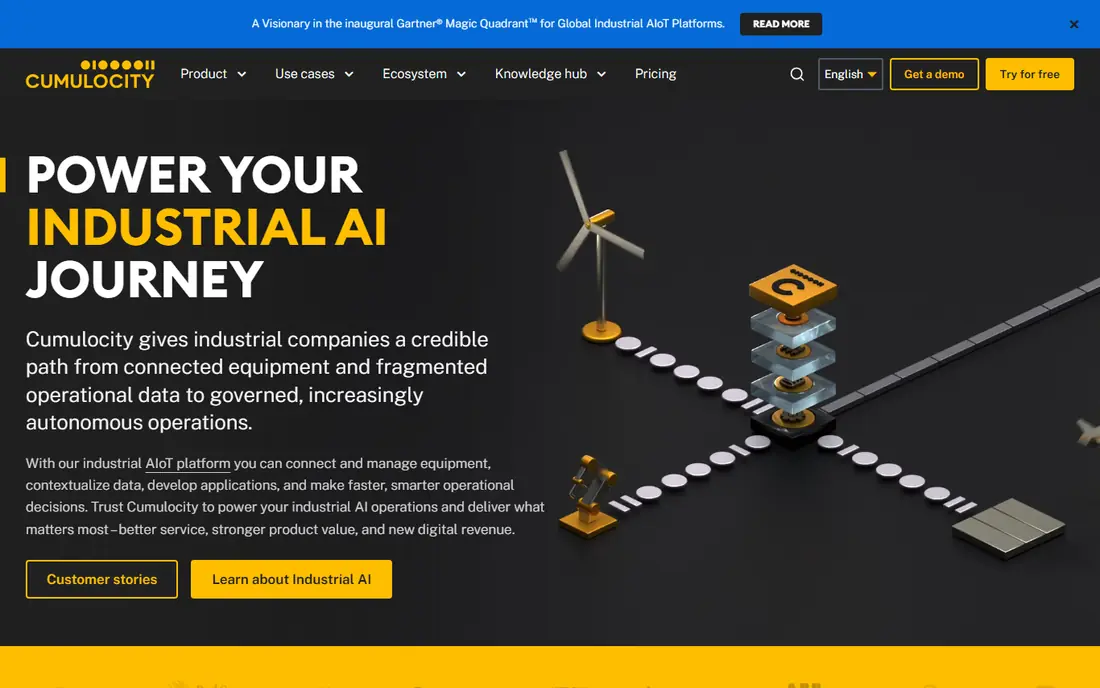
For industrial AI operations at scale, Cumulocity is a natural candidate. Cumulocity is an industrial AIoT product that provides industrial businesses a path from connected equipment and fragmented operational data to governed, increasingly autonomous operations.
Where it is weaker: Enterprise pricing with no public rates.
Teams securely onboard, monitor, update and handle devices throughout their lifecycle, contextualize machine data with a semantic layer, and use condition monitoring, anomaly detection and predictive maintenance to catch failures early. Check the vendor site for Cumulocity pricing; none is listed in this comparison. No free plan comes with Cumulocity.
- On-premises and air-gapped
- Semantic layer grounds AI in operational reality
- Industrial focus may be more than smaller fleets need
Azure IoT Hub
Ideal for: Azure-based fleets and edge AI
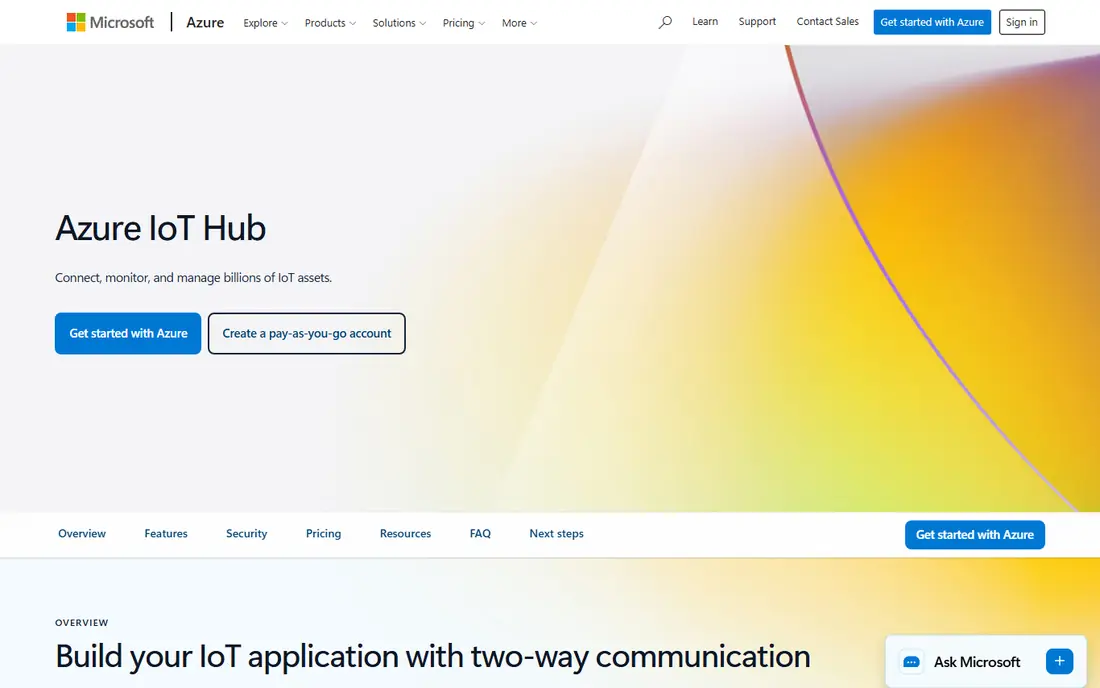
Azure IoT Hub was built for Azure-based fleets and edge AI. Teams should size their message level carefully, since pricing scales with message volume and device count, and confirm the current levels on the Azure pricing page.
From a buyer's view, for Microsoft shops, IoT Hub pairs naturally with Azure analytics, AI and edge computing. Azure IoT Hub does not show a starting price in this comparison, so check the vendor site for current pricing. Azure IoT Hub has no free tier.
Drawbacks to consider: Azure skills required.
Upsides: IoT Edge modules distribute AI and analytics to devices.
- Two-way communication with per-device authentication
- Device Update for IoT Hub manages over-the-air updates from sensors to gateways
- Pricing is tiered by message volume and needs scoping
Particle
Ideal for: Hardware plus connectivity plus cloud
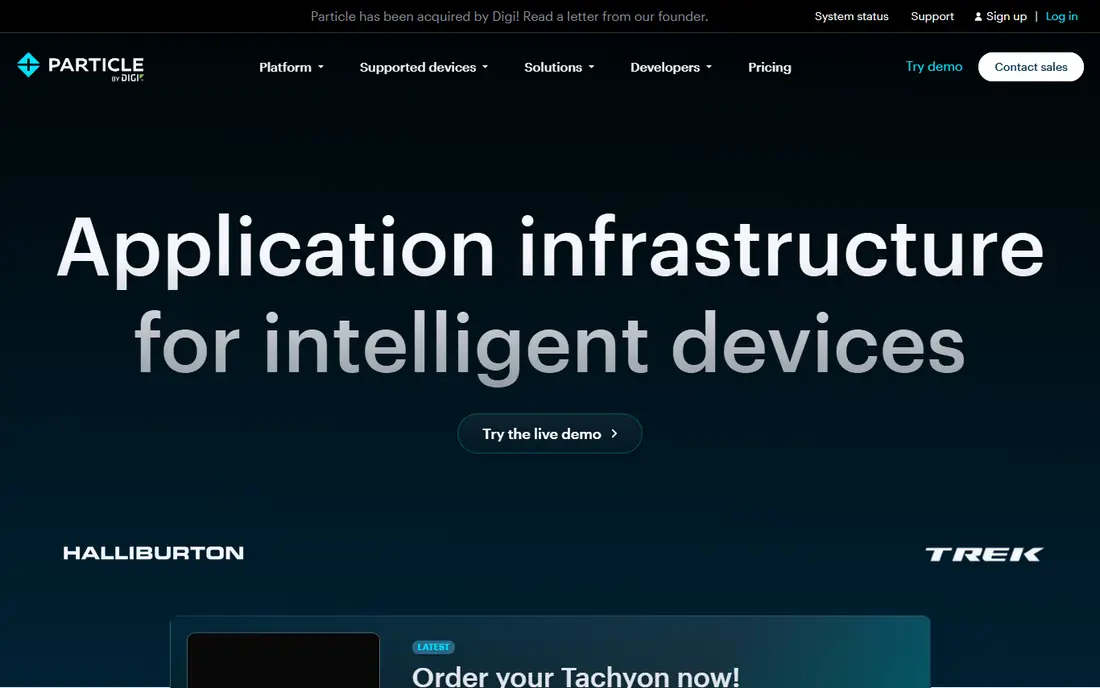
Particle is aimed squarely at hardware plus connectivity plus cloud. The console watches and runs every device, every bit of software and every ounce of data through a single portal, with software releases, security and compliance controls and device vitals for fleet health. More specifically, Particle is an integrated IoT platform as a service built to ship software to hardware, with developer productivity, observability and reliability as its stated goals.
More specifically, teams with existing non-Particle hardware should confirm compatibility in a demo, and pricing needs a conversation with Particle's team. For everyday use, for teams building connected products on Particle hardware, the integrated stack removes the work of stitching connectivity, cloud and updates together. Particle does not show a starting price in this comparison, so check the vendor site for current pricing. No free plan comes with Particle.
Honest limits: Performs best with Particle hardware.
- Connectivity and cloud
- Integrated platform handling hardware
- Some console features marked as coming soon
Datacake
Ideal for: LoRaWAN sensor monitoring
Datacake was built for LoRaWAN sensor monitoring. Datacake is the LoRaWAN monitoring platform that turns sensors into live dashboards, alerts and reports, handling cold-chain, air quality and environmental monitoring end to end. In daily use, the free plan comes with 5 devices forever, the full LoRaWAN Network Server with no per-gateway fees, dashboards, alerts and the device template library.
Teams can migrate from The Things Stack, ChirpStack or Loriot without re-flashing hardware. On top of that, with 400 plus device templates from 124 plus manufacturers, including Milesight, Dragino and TEKTELIC. An AI assistant that answers plain-language questions about sensor data, Datacake is the fastest start for LoRaWAN monitoring projects. Datacake cost at the entry level: Free. Datacake includes a free tier.
The main drawbacks: LoRaWAN focus means less for Wi-Fi or cellular fleets.
Best features of Datacake: 400 plus device templates with payload decoders.
- White-label and multi-tenancy for integrators
- AI assistant answers questions about sensor data
- AI assistant premium plan costs 20 euros per user a month
Losant
Ideal for: Low-code industrial workflows
Losant is designed for low-code industrial workflows. Losant is an enterprise IoT system whose low-code workflow engine freely collects, centralizes and integrates data from all connected devices and systems, turning products into intelligent assets with custom branding, API integration and easy multi-tenancy. Its edge agent links up with PLCs, CRMs and Azure or AWS, with automatic provisioning and digital twin capabilities.
Drawbacks to consider: Losant is joining SUSE, so roadmap and support may change.
In daily use, the platform deals with millions of data points per second and contains a Connected Product Foundation template that cuts development time for connected products. For everyday use, note that Losant's homepage announces it is joining SUSE to build an open process automation product for industrial IoT, so buyers should confirm support, pricing and roadmap with the team before committing. Losant does not show a starting price in this comparison, so check the vendor site for current pricing. Losant has no free tier.
- Included in the 2024 Gartner Magic Quadrant for global industrial IoT products
- Multi-tenancy with custom branding
- Pricing not published on the homepage
AWS IoT Device Management
Ideal for: AWS-based fleets at scale
AWS IoT Device Management is built with AWS-based fleets at scale in mind. For fleets already on AWS, it is the natural choice: device data flows into the rest of AWS without new integration work.
Limits to weigh: Pricing is usage-based and needs the AWS pricing page to scope.
As for the details, teams outside AWS should weigh the ramp-up time and usage-based pricing, and confirm costs on the AWS pricing page before committing to a large fleet. No starting price is listed for AWS IoT Device Management here; confirm pricing on the vendor site. AWS IoT Device Management has no free tier.
- Z-Wave and Wi-Fi devices
- Fleet health monitoring with policy alerts
- Smaller standalone device management story outside AWS
ThingsBoard
Ideal for: Open industrial dashboards and OTA
ThingsBoard is aimed squarely at open industrial dashboards and OTA. The product ships 600 plus widgets for live dashboards, supports white-labeling and multi-tenancy, and runs either as managed ThingsBoard Cloud with a free start on shared infrastructure or self-hosted on your own infrastructure, including air-gapped deployments.
ThingsBoard starts at: Free. ThingsBoard has a free plan.
Points against: Enterprise support needs a conversation.
- All-in-one system with device management
- OTA updates by device profile
- Advanced features like Trendz analytics are extras
How we compared the tools
Ainotely used vendor pricing pages and product documentation as the base, then compared plans, free access and documented limits for 7 tools. Where a price is missing, the vendor does not list one publicly or ties it to a quote. Always confirm before budgeting. Order on the page follows fit for the typical buyer first, then price transparency and free access. Your own requirements should decide the final pick.
Questions to settle before buying
- Ask Cumulocity, Azure IoT Hub, Particle and others for a written quote, since no starting price is shown.
- Read the fine print on the free plans from Datacake and ThingsBoard; seat, project and feature caps differ.
- Before choosing Cumulocity, weigh its main limit: enterprise pricing with no public rates.
- Look at which plan of Cumulocity unlocks the features you need; entry tiers are often cut down.
- Confirm minimum seats and billing terms with Datacake before you commit to an annual plan.
Frequently asked questions
Do these tools publish their prices?
Not all of them. Cumulocity, Azure IoT Hub, Particle and others publish no starting price, so expect a quote request for those. The rest, Datacake included, show a starting price, though seats and billing terms still change the final cost.
How are the tools for IoT device management platforms ordered?
The order follows typical fit for IoT device management platforms, with Cumulocity first and ThingsBoard last, then price clarity and free access. It is editorial judgement, not a score, so another team could rank the tools differently.
What happens to Google Cloud IoT Core?
Teams migrating from it should look at AWS IoT Device Management, Azure IoT Hub or ThingsBoard, based on their cloud and hardware.
Is Cumulocity the right pick for everyone comparing IoT device management platforms?
No single tool suits every team. Cumulocity comes first because it fits industrial AI operations at scale, while Azure IoT Hub suits Azure-based fleets and edge AI and Particle suits hardware plus connectivity plus cloud. Match the tool to your own size, budget and workflow before deciding.
Which IoT system is a good match for beginners?
The first pick on this list is Cumulocity, because it suits industrial AI operations at scale. Azure IoT Hub is better for Azure-based fleets and edge AI, and Particle for hardware plus connectivity plus cloud. Check price and limits against your own needs before choosing.
Can I try these options before paying?
Often, yes. Datacake and ThingsBoard have a free plan. Use your own data and a real task during the test, and check what the free tier or trial limits before you rely on it.