Best IoT Management Platforms (2026): 6 Options Compared

- 1
 UbidotsDashboards and alerts without infrastructure workVisit
- 2
 BalenaManaging Linux device fleets with containersVisit
- 3
 AWS IoT CoreDevice fleets inside the AWS ecosystemVisit
- 4
 ThingsBoardTeams that want open-source controlVisit
- 5
 KaaIoTLow-cost enterprise-grade IoT without hyperscaler complexityVisit
- Ubidots takes the first slot, best suited to dashboards and alerts without infrastructure work.
- The lowest published monthly entry price here is $99/month, from KaaIoT.
- A free plan is available from 4 of the 6 tools: Balena, AWS IoT Core, ThingsBoard, Particle.
- ThingsBoard comes with a trade-off: self-hosting needs DevOps effort.
Direct answer
Our first pick is Ubidots, best for dashboards and alerts without infrastructure work. Balena is better for managing Linux device fleets with containers, and AWS IoT Core is better for device fleets inside the AWS ecosystem. The remaining 3 options are covered below with prices and limits.
Quick comparison
| Product | Ideal for | Price from | Free version | |
|---|---|---|---|---|
| Ubidots | Dashboards and alerts without infrastructure work | See website | Free trial | Visit |
| Balena | Managing Linux device fleets with containers | Free (first 10 devices); premium plans available | Yes | Visit |
| AWS IoT Core | Device fleets inside the AWS ecosystem | Pay-as-you-go (per million messages) | Yes | Visit |
| ThingsBoard | Teams that want open-source control | Free (Community Edition); Cloud plans available | Yes | Visit |
| KaaIoT | Low-cost enterprise-grade IoT without hyperscaler complexity | $99/month (Kaa Cloud, 100 endpoints) | Free trial | Visit |
 Particle | Cellular and Wi-Fi connected hardware products | See website | Yes | Visit |
Tool-by-tool breakdown
If you are comparing IoT management platforms, this page covers 6 tools in one place: what each is best for, what it costs to start, whether it has a free plan, and the main limit to know about.
Ubidots
Ideal for: Dashboards and alerts without infrastructure work
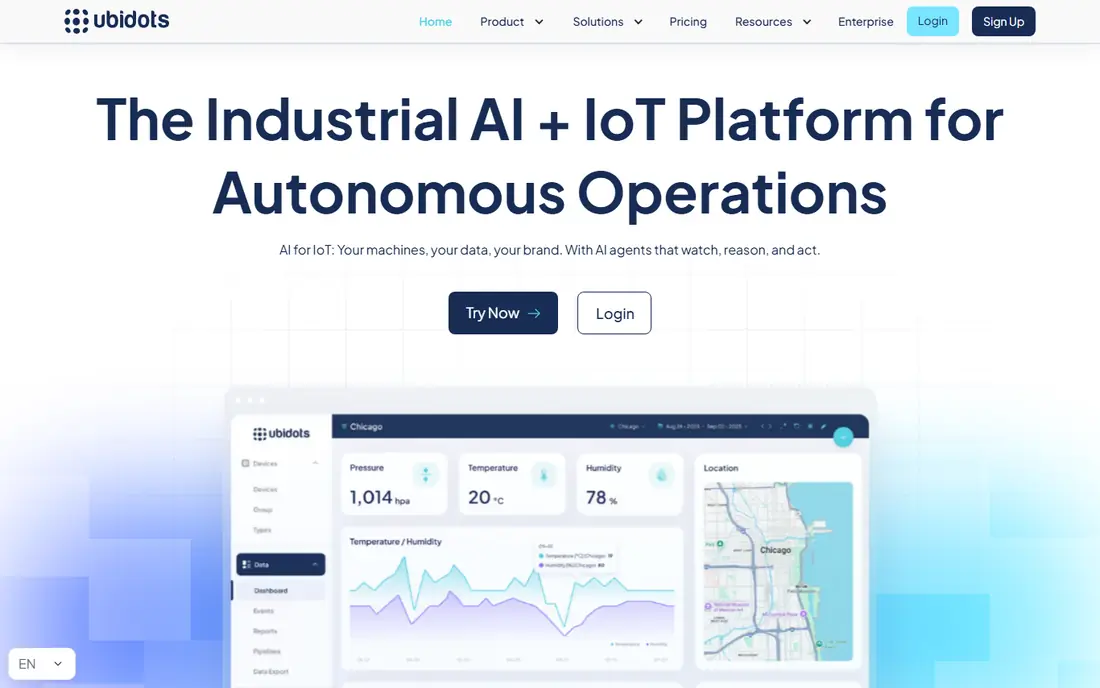
Ubidots is designed for dashboards and alerts without infrastructure work. Link devices over MQTT or HTTP, build visualizations with drag-and-drop, and set alerts for threshold breaches. Ubidots gets sensor data onto a dashboard quick.
On top of that, when the job is "see my data and get alerted," few tools are quicker. For everyday use, the trial lets you validate the fit rapidly. Ubidots does not show a starting price in this comparison, so check the vendor site for current pricing. Free plan details: Free trial.
Honest limits: Advanced features need higher plans.
- Decent alerting and reporting
- Approachable pricing levels
- Restricted device management depth
Balena
Ideal for: Managing Linux device fleets with containers
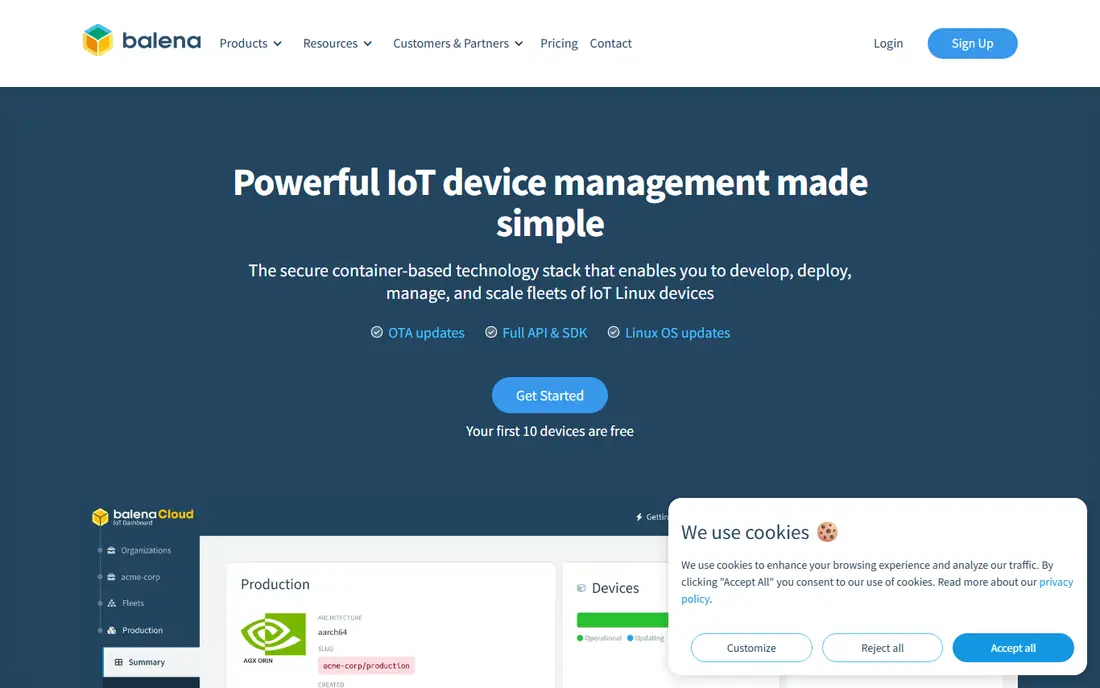
Balena was built for managing Linux device fleets with containers. The first ten devices are free, which handles pilots and small deployments completely.
What to check first: Linux-focused.
It assumes Linux devices and a container mindset, so microcontroller-class hardware is out of scope. Balena pricing: Free. Balena offers a free plan.
- First 10 devices free
- Solid fleet tooling
- Costs grow with fleet size
AWS IoT Core
Ideal for: Device fleets inside the AWS ecosystem
AWS IoT Core is designed for device fleets inside the AWS ecosystem. If your backend already runs on AWS, IoT Core is the path of least resistance.
Limits to weigh: Pricing is complicated and metered.
The metered pricing rewards careful architecture and punishes chatty devices, so model message volume early. AWS IoT Core starts at: Pay-as-you-go. A free plan is available with AWS IoT Core.
- Capable security with device certificates
- Deep integration with the AWS stack
- Needs AWS expertise to operate well
ThingsBoard
Ideal for: Teams that want open-source control
Choose ThingsBoard for teams that want open-source control. ThingsBoard packs device management, data collection, visualization and a rule engine into one open-source system you can run yourself. Worth adding: the premium cloud and professional editions remove that burden for a fee.
Where it falls short: Professional features sit behind premium levels.
It is the pragmatic open-source choice in a category full of black boxes. On top of that, for teams with engineering capacity and solid opinions about data ownership, the Community Edition goes remarkably far. What you pay to start with ThingsBoard: Free. ThingsBoard has a free plan.
- Active community
- Full-featured open-source core
- Self-hosting needs DevOps effort
KaaIoT
Ideal for: Low-cost enterprise-grade IoT without hyperscaler complexity
KaaIoT is designed for budget-friendly enterprise-grade IoT without hyperscaler complexity. KaaIoT positions as the middle path: enterprise features like device management, rule engine and OTA without hyperscaler pricing puzzles.
Limits to weigh: Brand less known.
For mid-sized deployments that want predictable bills, it deserves a look. KaaIoT cost at the entry level: $99/month. Trial and free access: Free trial.
- Self-hosting choice
- Published pricing from $99/month
- Smaller ecosystem than hyperscalers
Particle
Ideal for: Cellular and Wi-Fi connected hardware products
For cellular and Wi-Fi connected hardware products, Particle is a natural candidate. Particle sells the entire stack: microcontrollers with built-in cellular, a device cloud, and OTA updates that do not brick fleets.
Trade-offs to know: Less adaptable for non-Particle hardware.
On top of that, if you are building a connected product instead of managing arbitrary devices, the cohesion is worth it. Particle does not show a starting price in this comparison, so check the vendor site for current pricing. You can start on Particle without paying.
- Hardware plus cloud designed together
- Decent developer experience
- Pricing scales with fleet size
Our selection method
The comparison looks at four things: starting price, free access, how well the feature set matches IoT management platforms, and the main limit of each tool. Prices and plan limits come from vendor pages and can change, so confirm them on the vendor site before you buy. Order on the page follows fit for the typical buyer first, then price transparency and free access. Your own requirements should decide the final pick.
What to check before you buy
- Confirm the entry price on the vendor page. For Ubidots and Particle that means a quote rather than a fixed price.
- Look at free plan limits closely: Balena, AWS IoT Core, ThingsBoard and Particle have one, and the caps decide whether it is usable for real work.
- Run a trial of Ubidots and KaaIoT with real work before paying for a year; your own workflow is the best test.
- Read the limits listed for Ubidots first: restricted device management depth.
- Check the integration list for ThingsBoard against the tools you run today, and note which ones need a higher plan.
- Verify that exporting from Balena is possible on your plan and covers all your records.
Frequently asked questions
Is Ubidots the right pick for everyone comparing IoT management platforms?
No single tool suits every team. Ubidots comes first because it fits dashboards and alerts without infrastructure work, while Balena suits managing Linux device fleets with containers and AWS IoT Core suits device fleets inside the AWS ecosystem. Match the tool to your own size, budget and workflow before deciding.
Can I try these options before paying?
Often, yes. Balena, AWS IoT Core, ThingsBoard and Particle have a free plan and Ubidots and KaaIoT offer a free trial. Use your own data and a real task during the test, and check what the free tier or trial limits before you rely on it.
What protocols should the system support?
MQTT is the standard for device messaging, with HTTP for straightforward integrations and CoAP or LoRaWAN for constrained devices. Confirm support for your specific hardware before committing.
Should I use AWS IoT Core or a dedicated IoT product?
Use the hyperscaler if your stack already lives there and you have cloud engineers. Plenty of businesses start dedicated and migrate later.
What is an IoT management system?
Software that links, watches and runs fleets of connected devices: onboarding, configuration, data collection, dashboards, alerts and firmware updates, typically across thousands or millions of units.
Do these tools publish their prices?
Not all of them. Ubidots and Particle publish no starting price, so expect a quote request for those. The rest, Balena included, show a starting price, though seats and billing terms still change the final cost.