6 IoT Platforms for Factory Automation Options Ranked for 2026

- Number one here is Tulip, a fit for no-code apps for frontline workers.
- Tulip, Siemens Insights Hub and the 4 others all need a premium plan or a trial, since no free plan is listed.
- Siemens Insights Hub suits large manufacturers standardizing on Siemens.
- Check the limits for Braincube before you commit: costly, implementation effort, needs data quality, enterprise focus.
- Tulip, Siemens Insights Hub and the 4 others all sell by quote; expect sales conversations before you see a price.
Direct answer
Start with Tulip if you need no-code apps for frontline workers. Litmus fits unifying shop-floor data at the edge; Augury fits predicting machine failures before they happen. The full list of 6 tools follows, with prices and free plan facts.
Quick comparison
| Product | Ideal for | Price from | Free version | |
|---|---|---|---|---|
 Tulip | No-code apps for frontline workers | See website | No | Visit |
 Litmus | Unifying shop-floor data at the edge | See website | No | Visit |
 Augury | Predicting machine failures before they happen | See website | No | Visit |
 Braincube | AI-driven manufacturing analytics | See website | No | Visit |
 MachineMetrics | Getting machine monitoring live rapidly | See website | No | Visit |
 Siemens Insights Hub | Large manufacturers standardizing on Siemens | See website | No | Visit |
Our 6 picks for IoT platforms for factory automation
Ainotely put together this guide to IoT platforms for factory automation for readers who want a clear shortlist without reading every vendor page. It compares 6 tools on starting price, free plans, who each one suits and where each one falls short.
Tulip
Ideal for: No-code apps for frontline workers
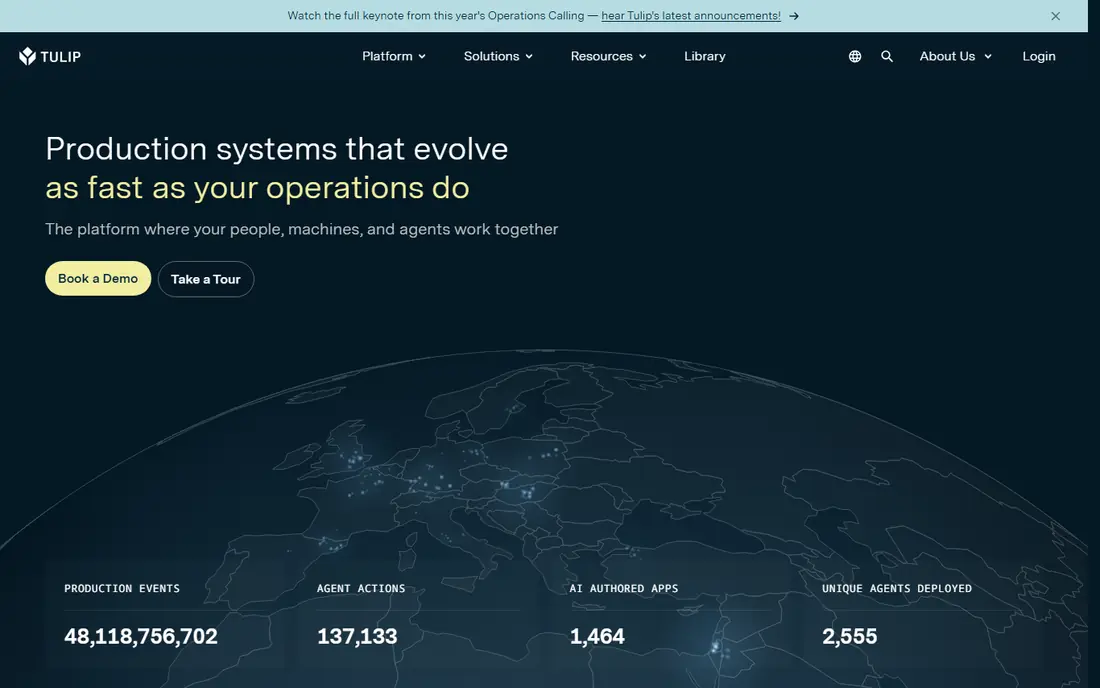
For no-code apps for frontline workers, Tulip is a natural candidate. For human-centered factory digitalization, Tulip leads. That closed loop is where pilots prove value.
In practice, frontline adoption is the strength. Tulip lets engineers build apps for operators: digital work instructions, quality checks, andon alerts and machine dashboards, all no-code. This comparison lists no price for Tulip; ask the vendor. No free plan comes with Tulip.
- A good match for work instructions
- Frontline focus
- No free plan, per-station pricing, analytics moderate, needs process design
Litmus
Ideal for: Unifying shop-floor data at the edge
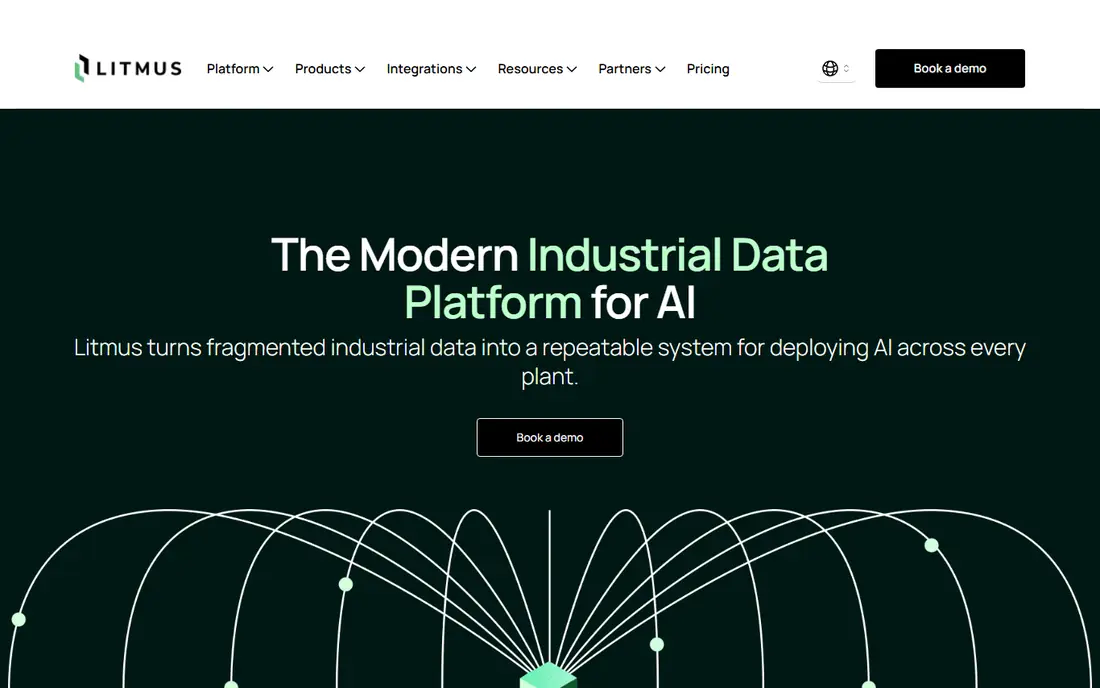
Litmus is designed for unifying shop-floor data at the edge. Litmus Edge connects to virtually any industrial equipment and normalizes the data for cloud systems and applications.
Beyond that, analytics depth is lighter than Braincube. As the connectivity and edge layer, Litmus is very good. Litmus shows no starting price here, so confirm the cost on the vendor site. Litmus does not include a free plan.
What works well: Capable edge product.
- 250+ drivers
- Fast deployment
- No free plan, pricing per site, analytics lighter, smaller brand
Augury
Ideal for: Predicting machine failures before they happen
Think of Augury for predicting machine failures before they happen. Augury's managed diagnostics mean the pilot does not need in-house vibration expertise.
Augury shows no starting price here, so confirm the cost on the vendor site. Augury does not include a free plan.
Drawbacks to consider: Hardware sensors needed, service model costs.
- Proven downtime reduction
- Very good vibration analytics
- Scope is machine health, enterprise pricing
Braincube
Ideal for: AI-driven manufacturing analytics
In short, Braincube is for AI-driven manufacturing analytics. Braincube applies AI to manufacturing data for quality prediction, process optimization and digital twins.
Also, the twin pays for itself the first time it stops a bad experiment. Also, Braincube's digital twin of the pilot line lets engineers test changes virtually before touching production. Braincube does not show a starting price in this comparison, so check the vendor site for current pricing. No free plan comes with Braincube.
- Capable analytics and AI
- A decent match for process industries
- Costly, implementation effort, needs data quality, enterprise focus
MachineMetrics
Ideal for: Getting machine monitoring live rapidly
Choose MachineMetrics for getting machine monitoring live rapidly. MachineMetrics links CNC and industrial machines quick, delivering OEE, downtime and production dashboards in weeks.
Let the data pick the pilot equipment, not politics. Check the vendor site for MachineMetrics pricing; none is listed in this comparison. MachineMetrics has no free plan.
- Quick deployment
- Capable OEE dashboards
- No free plan, monitoring-focused, advanced analytics tiered, per-machine pricing
Siemens Insights Hub
Ideal for: Large manufacturers standardizing on Siemens
Siemens Insights Hub is aimed squarely at large manufacturers standardizing on Siemens. Siemens Insights Hub, formerly MindSphere, is the industrial IoT product for Siemens-heavy plants: link machines, run analytics apps, and plug into the Siemens automation stack. Beyond that, the ecosystem of apps spans typical manufacturing use cases.
What Siemens Insights Hub does well: solid edge choices.
Cost and complexity are enterprise-grade. Siemens Insights Hub's app store approach lets pilot lines start with prebuilt applications for typical use cases. Pricing for Siemens Insights Hub is not stated here, so ask the vendor for current figures. Siemens Insights Hub does not include a free plan.
- Wide app ecosystem
- Deep industrial heritage
- Pricey, complicated, Siemens-centric, implementation project
More on IoT platforms for factory automation
IoT systems for factory automation link machines, sensors and systems: collecting data from PLCs and equipment, monitoring production in live, predicting failures before they stop lines, and feeding ERP and MES systems. Beyond that, the goal is the classic manufacturing trio: less downtime, higher throughput, better quality. Beyond that, the tools here span those layers differently.
More specifically, we compared machine connectivity breadth, edge capabilities, analytics and AI, deployment choices, integration with manufacturing systems, and pricing for plant-scale rollouts.
How the list was put together
Pricing pages, product documentation and feature lists were the main sources, and every entry carries at least one honest drawback. Prices and plan limits come from vendor pages and can change, so confirm them on the vendor site before you buy. Tools are placed by general fit for IoT platforms for factory automation, with price clarity and free access as tie-breakers. A different team can reasonably rank them differently.
Things to verify first
- Ask each vendor, from Tulip to Siemens Insights Hub, for a written quote; none of them publishes a starting price.
- Read the limits listed for Tulip first: no free plan, per-station pricing, analytics moderate, needs process design.
- Before rolling out Litmus, verify the integrations your workflow depends on.
- Pick one real project and run it in Braincube first; a small pilot shows fit faster than a checklist.
- The entry price of Augury is only the starting point; model the full cost with seats and extras.
Frequently asked questions
How are the tools for IoT platforms for factory automation ordered?
The order follows typical fit for IoT platforms for factory automation, with Tulip first and Siemens Insights Hub last, then price clarity and free access. It is editorial judgement, not a score, so another team could rank the tools differently.
Is Tulip the right pick for everyone comparing IoT platforms for factory automation?
No single tool suits every team. Tulip comes first because it fits no-code apps for frontline workers, while Litmus suits unifying shop-floor data at the edge and Augury suits predicting machine failures before they happen. Match the tool to your own size, budget and workflow before deciding.
Do these tools publish their prices?
No. None of the tools, from Tulip to Siemens Insights Hub, shows a fixed starting price here, so budget time for quotes.
Can I try these tools before paying?
Not by default. None of the tools, from Tulip to Siemens Insights Hub, lists a free plan or a free trial here, so ask each vendor for a demo before committing.