Best Keyword Rank Checker Tool in 2026: 8 Tools Compared

- Ahrefs is our pick for teams that already use Ahrefs, with rank tracking inside a full SEO suite from 129 dollars per month.
- Semrush suits all-in-one SEO teams, with rank tracking plus keyword, backlink and site tools from 139 dollars per month.
- AccuRanker and SE Ranking suit rank-focused teams that want fast daily updates and clean reporting without paying for a full suite.
- Rank data varies by location, device and personalisation, so track the same locations and devices consistently and judge trends, not single days.
Quick comparison
| Product | Ideal for | Price from | Free version | |
|---|---|---|---|---|
 Ahrefs | Suite users tracking ranks | $129 per month | No | Visit |
 Semrush | All-in-one SEO tracking | $139 per month | No | Visit |
 Moz Pro | Beginner-friendly tracking | See website | No | Visit |
 Serpstat | Budget suite tracking | See website | No | Visit |
 AccuRanker | Fast rank-focused tracking | See website | No | Visit |
 SE Ranking | Value rank tracking | See website | No | Visit |
 Nightwatch | Clean agency reporting | See website | No | Visit |
 Wincher | Simple small-site tracking | See website | No | Visit |
The best keyword rank checker tool
A rank checker tracks where your pages sit in search results for chosen keywords, over time, by location and device. Good tools also track competitors, SERP features and local packs, since a position number alone hides much of what searchers see. We compared update frequency, location options, competitor tracking, reporting and pricing.
Ahrefs
Ideal for: Suite users tracking ranks
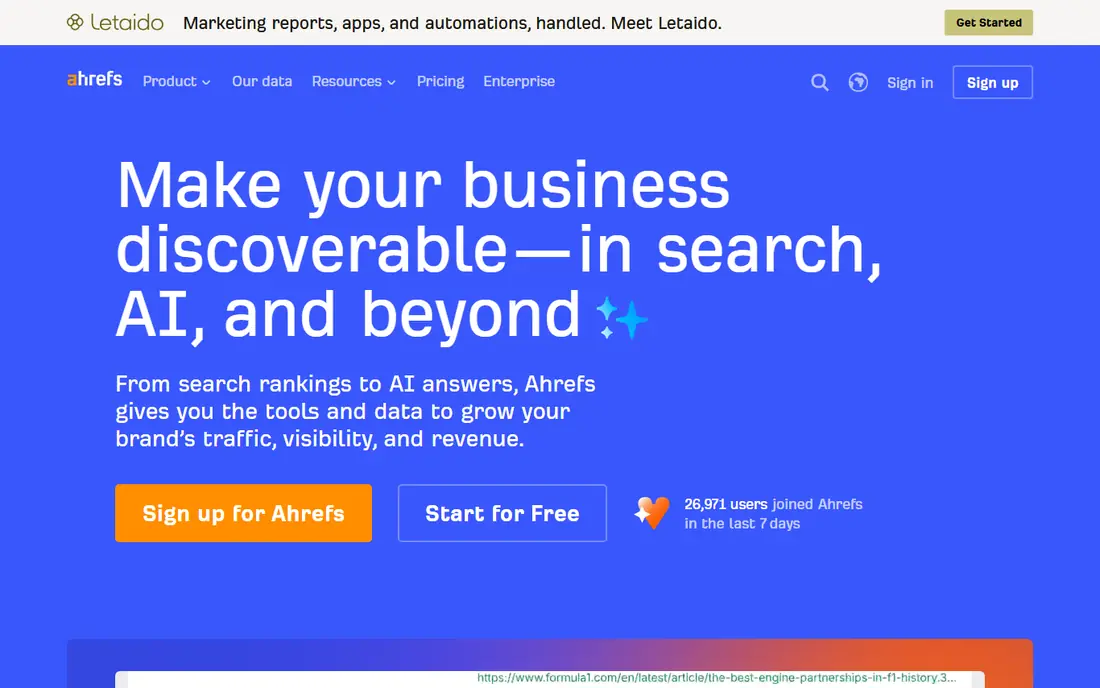
Ahrefs suits teams already paying for Ahrefs research. Its Rank Tracker follows keywords daily, shows position history, SERP features and competitor movement, and sits beside keyword research, backlink data and site audits in one workflow. Published pricing lists entry plans from about 129 dollars per month, with rank limits rising by tier.
The catch is cost for rank-only use. If you only need to check positions and never use backlink or content tools, a dedicated tracker such as AccuRanker or SE Ranking costs less. Ahrefs fits teams that use the suite daily and want ranks in the same place as research.
- Rank tracking inside a deep SEO suite
- Huge keyword and backlink data beside ranks
- SERP feature tracking
- Entry price is high if you only need rank tracking
- Rank limits vary by plan
Semrush
Ideal for: All-in-one SEO tracking
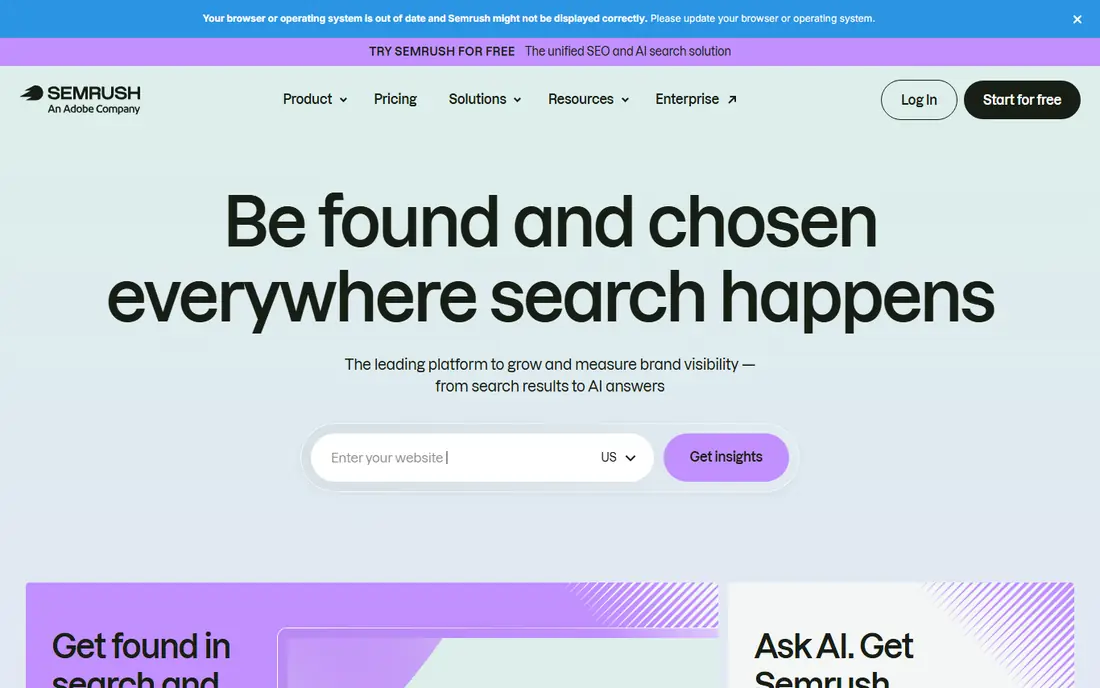
Semrush suits all-in-one SEO teams. Its Position Tracking tool follows keywords by location and device, tracks competitors, SERP features and visibility trends, and feeds reports that clients and managers can read. Published pricing lists entry plans from about 139 dollars per month, with higher tiers adding more keywords and projects.
The weakness is the same as Ahrefs: suite price for a rank-only job. Semrush earns its fee when the team also uses keyword research, audits and competitor tools weekly, not when ranks are the only need.
- Rank tracking plus keyword, backlink, site and competitor tools
- Position Tracking with local and device options
- Reporting templates
- Entry price is high for rank-only users
- Interface can feel dense for beginners
Moz Pro
Ideal for: Beginner-friendly tracking
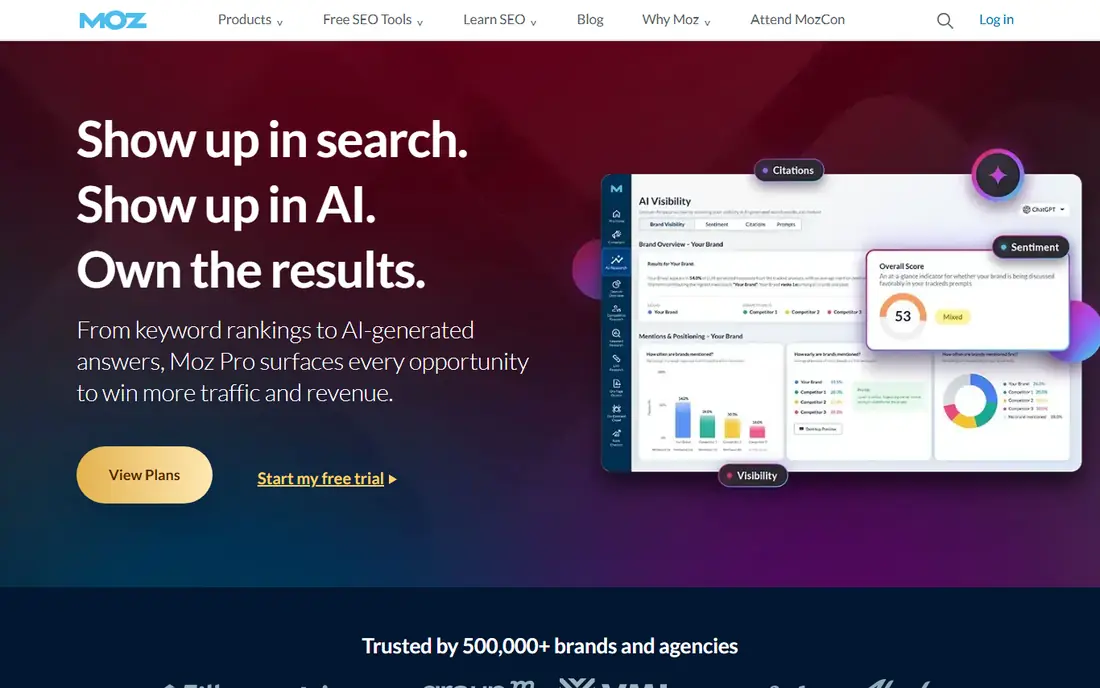
Moz Pro suits beginners and small teams that want rank tracking without a steep learning curve. Its campaigns organise keywords, pages and competitors clearly, and domain authority context helps a new SEO understand why a site ranks where it does. Rank data updates regularly, with history and reporting for clients.
The limit is speed and scale. Moz rank updates and keyword limits trail dedicated trackers such as AccuRanker for high-volume tracking, so agencies with thousands of keywords may prefer a specialist. Moz fits a small team learning SEO with a manageable keyword set.
- Friendly interface for beginners
- Rank tracking with campaign organisation
- Domain authority context beside ranks
- Update frequency and keyword limits trail dedicated trackers
- Pricing should be confirmed on the vendor site
Serpstat
Ideal for: Budget suite tracking
Serpstat suits budget-conscious teams that want a suite, not just a tracker. It covers rank tracking, keyword research, backlink checks and site audits at a lower entry price than Ahrefs or Semrush, which helps small agencies and in-house teams with limited budgets. Rank data covers major search engines and locations.
The weakness is depth. Serpstat keyword and backlink data are thinner than Ahrefs or Semrush, so research-heavy teams may still need a larger suite. For a team that mainly tracks ranks and does light research, Serpstat offers good value.
- Rank tracking inside a budget SEO suite
- Keyword and competitor data beside ranks
- Lower entry cost than Ahrefs or Semrush
- Data depth trails larger suites
- Interface and reporting feel less polished
AccuRanker
Ideal for: Fast rank-focused tracking
AccuRanker suits rank-focused teams and agencies that live by daily position data. Its updates are fast, its reporting is clean, and its local, mobile and desktop tracking helps teams that serve local clients or mobile-first audiences. Data exports and API access suit agencies that build custom client dashboards.
The catch is scope. AccuRanker tracks ranks brilliantly, but keyword research, backlinks and audits need other tools, so total stack cost can approach a suite price. AccuRanker fits teams where rank accuracy and reporting speed are the top priority.
- Very fast daily rank updates
- Clean reporting and data exports
- Strong local and device tracking
- Rank-only focus means research tools sit elsewhere
- Pricing is quote based for larger keyword sets
SE Ranking
Ideal for: Value rank tracking
SE Ranking suits value buyers who want rank tracking plus a light suite. It covers daily rank updates, competitor tracking, site audits and keyword research at prices below the large suites, with white-label reporting that agencies can brand for clients. That combination makes it popular with small agencies.
The limit is research depth. SE Ranking research data is thinner than Ahrefs or Semrush, so a research-heavy team may still need a larger tool. For a rank-first agency with light research needs, SE Ranking is one of the best value picks here.
- Strong value for rank tracking plus light suite tools
- Daily updates
- White-label reporting for agencies
- Data depth trails Ahrefs and Semrush for research
- Higher keyword volumes need higher tiers
Nightwatch
Ideal for: Clean agency reporting
Nightwatch suits agencies that prize clean reporting. Its rank tracking covers local and global positions, its dashboards are easy to read, and its reports suit client meetings without heavy customisation. That clarity helps agencies that report ranks weekly and need clients to understand movement at a glance.
The weakness is suite breadth. Nightwatch research and audit tools are lighter than Semrush or Ahrefs, so a full-service SEO team may pair it with a research tool. For a rank-reporting agency, Nightwatch clarity is a genuine advantage.
- Clean rank tracking and reporting
- Local and global tracking
- Agency-friendly dashboards
- Suite depth is lighter than Semrush
- Pricing should be confirmed on the vendor site
Wincher
Ideal for: Simple small-site tracking
Wincher suits small site owners who want simple rank tracking without a suite. Setup takes minutes, position history is clear, and competitor comparison shows whether movement is site-specific or market-wide. That simplicity appeals to owners who check ranks weekly rather than daily.
The limit is scale. Wincher covers the core rank job well, but agencies with thousands of keywords or deep research needs will prefer AccuRanker, SE Ranking or a suite. For a small site with a focused keyword set, Wincher is the least overwhelming pick.
- Simple rank tracking for small sites
- Easy setup
- Clear position history and competitor comparison
- Feature set is narrower than suite tools
- Large keyword volumes need higher tiers
How we picked these
We compared update frequency, location and device options, competitor tracking, SERP feature coverage, reporting and pricing for tools still operating in October 2026. We kept suite trackers and dedicated trackers in the list, since teams buy ranks in different ways. We did not run a rank accuracy audit, since rank data varies by location, device and time, and we did not repeat vendor accuracy claims as measured facts.
What to check before you buy
Start with location and device consistency. Track the same cities, regions, mobile and desktop settings every week, since a rank in one city on mobile can differ sharply from a national desktop rank. Changing locations mid-campaign makes trends unreadable, so lock settings before you start.
Next, separate positions from visibility. A page can hold position five yet win a featured snippet, a local pack or an AI answer, while a position two page can lose clicks to SERP features above it. Check SERP feature data and click trends beside raw positions, and judge success by traffic and conversions, not by a single number.
Finally, size keyword limits honestly. Count head terms, local variants, branded terms and competitor terms you will actually track, then pick the tier that covers that total with room to grow. A cheap tier that forces you to drop keywords mid-campaign costs more in lost insight than the next tier costs in dollars.
Frequently asked questions
What is the best keyword rank checker tool?
Ahrefs is our pick for suite users, Semrush for all-in-one teams, AccuRanker for rank-focused speed, and SE Ranking for value. The best tool depends on whether you need a suite, a dedicated tracker or a simple small-site checker.
How often do rank checkers update?
Dedicated trackers such as AccuRanker update daily, while suite trackers update daily or weekly depending on plan. Daily updates suit agencies and competitive niches, while weekly updates suit small sites with stable rankings.
Why do rank checkers show different positions for the same keyword?
Ranks vary by location, device, personalisation, time of day and data centre, so two tools can show different positions for the same keyword. Track consistent locations and devices, compare trends over weeks, and treat single-day differences as noise.
Do I need to track competitors too?
Yes. Competitor tracking shows whether your movement is site-specific or market-wide, and it reveals which rivals win SERP features or local packs. Most tools in this list include competitor tracking, so add your top three rivals before judging your own movement.
Is free rank checking reliable?
Free tools and trials suit a quick check, but they usually limit keywords, locations and history. Serious tracking needs a paid plan with consistent daily updates, location control and exports, so budget for a tracker if ranks drive decisions.