Best Keyword Tools for Cleaning Services in 2026: 8 Tools Compared

- 1
 SemrushDeepest keyword researchVisit
- 2
 AhrefsKeyword and competitor dataVisit
- 3
 Google Keyword PlannerFree Google Ads keyword dataVisit
- 4
 Moz Keyword ExplorerGuided keyword researchVisit
- 5
 UbersuggestAffordable keyword ideasVisit
- Cleaning service keywords are mostly local: service plus city or neighborhood terms drive the calls that matter, not broad national terms.
- Semrush and Ahrefs give the deepest keyword data, while Google Keyword Planner is free and directly tied to Google Ads.
- Moz, Ubersuggest, and KWFinder suit smaller budgets, with simpler interfaces for a cleaning business owner or marketer.
- AnswerThePublic and Keywords Everywhere help find the questions customers actually ask, which make good FAQ and service page content.
- Our pick for most cleaning businesses is Semrush for depth, with Google Keyword Planner as the free starting point.
Quick comparison
| Product | Ideal for | Price from | Free version | |
|---|---|---|---|---|
| Semrush | Deepest keyword research | See website | Free trial | Visit |
| Ahrefs | Keyword and competitor data | See website | No | Visit |
| Google Keyword Planner | Free Google Ads keyword data | See website | Yes | Visit |
| Moz Keyword Explorer | Guided keyword research | See website | Free trial | Visit |
| Ubersuggest | Affordable keyword ideas | See website | Free trial | Visit |
 AnswerThePublic | Customer questions | See website | Free trial | Visit |
 Keywords Everywhere | Browser keyword data | See website | No | Visit |
 KWFinder | Low-competition keywords | See website | Free trial | Visit |
The best keyword tools for cleaning services
A cleaning business wins customers by ranking for the terms people type when they need help now, such as house cleaning in a specific city or office cleaning near a neighborhood. The tools below were compared on keyword data quality, local search features, ease of use, and price for a small service business.
Semrush
Ideal for: Deepest keyword research
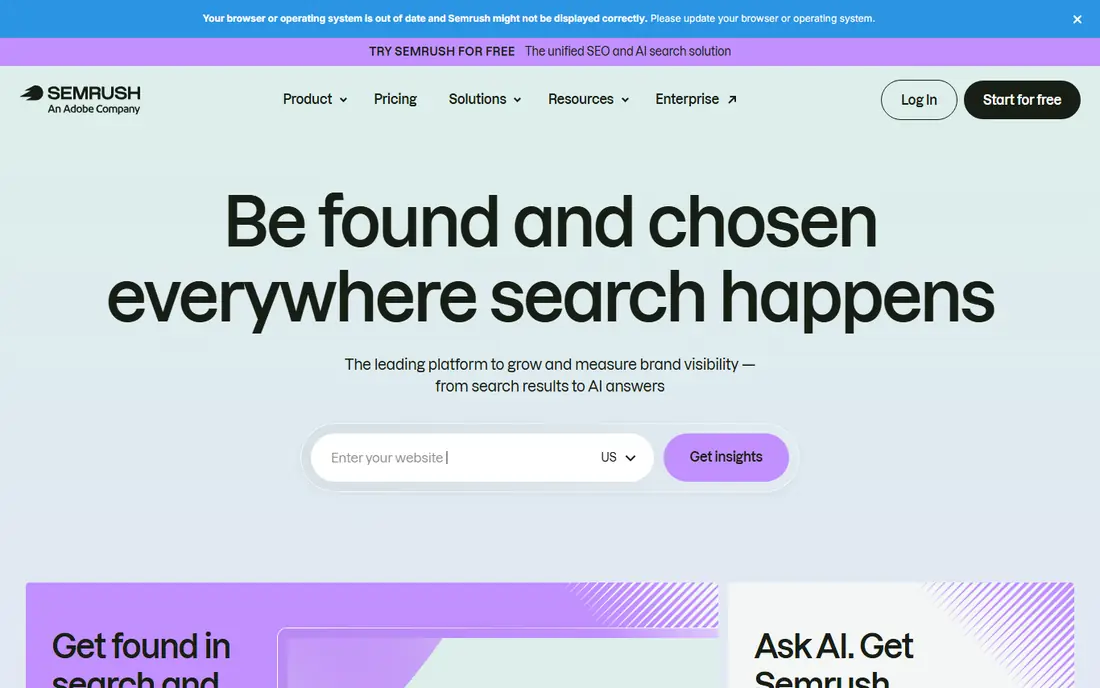
Semrush gives the deepest keyword research available to a cleaning business, with search volumes, difficulty scores, and competitor data for service and city terms. A cleaner can see which terms rival companies rank for, find service variations like deep cleaning or move-out cleaning, and track rankings for the terms that bring calls. Its local tools also help with listings and reviews.
The price is high for a single small business, and much of its toolkit goes unused by a local service company. For a cleaning business with an agency or a marketer handling SEO, Semrush is the most capable tool, and its trial lets a business test real local terms before paying.
- Very large keyword database
- Local and competitor keyword data
- Rank tracking included
- Price is high for a single small business
- Breadth exceeds what most cleaners need
Ahrefs
Ideal for: Keyword and competitor data
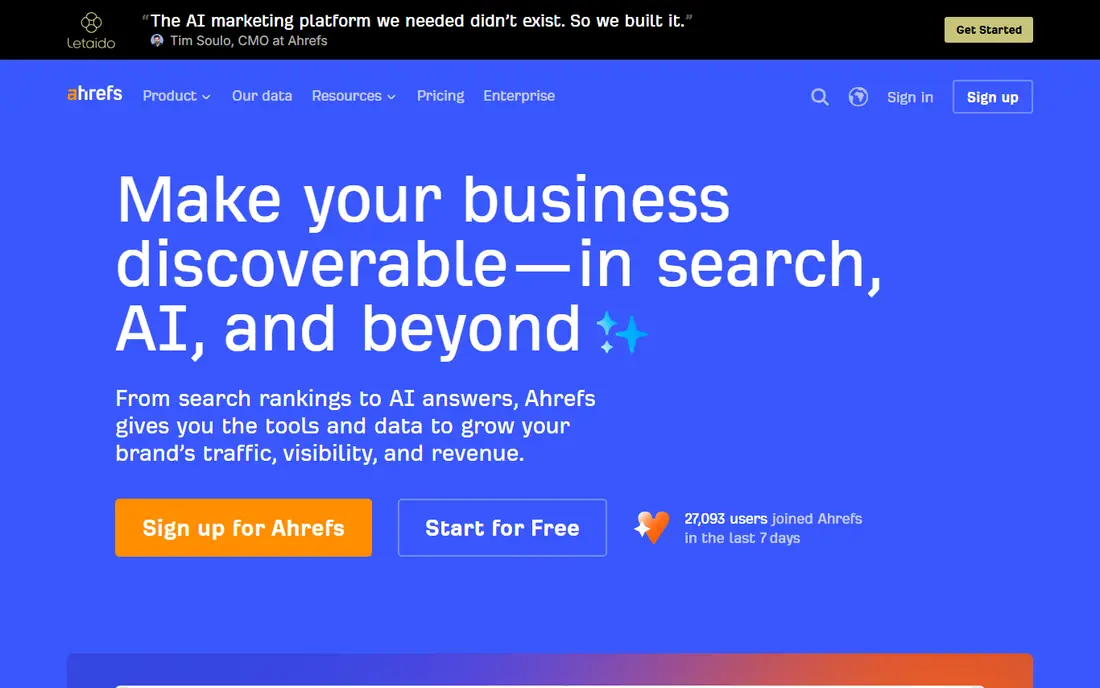
Ahrefs excels at showing what competitors rank for and where the gaps are, which is practical for a cleaning business: if rivals rank for carpet cleaning in your city and you do not, that is a page to build. Its keyword data is deep, and its rank tracking shows whether local pages are climbing. For a marketer serving several cleaning clients, it is a strong tool.
Its cost is high for a single small business, and there is no free plan. A cleaning company working with an agency may benefit indirectly, while an owner doing their own SEO may prefer a cheaper tool.
- Strong keyword and backlink data
- Clear competitor gap reports
- Reliable rank tracking
- No free plan
- Cost is high for a small local business
Google Keyword Planner
Ideal for: Free Google Ads keyword data
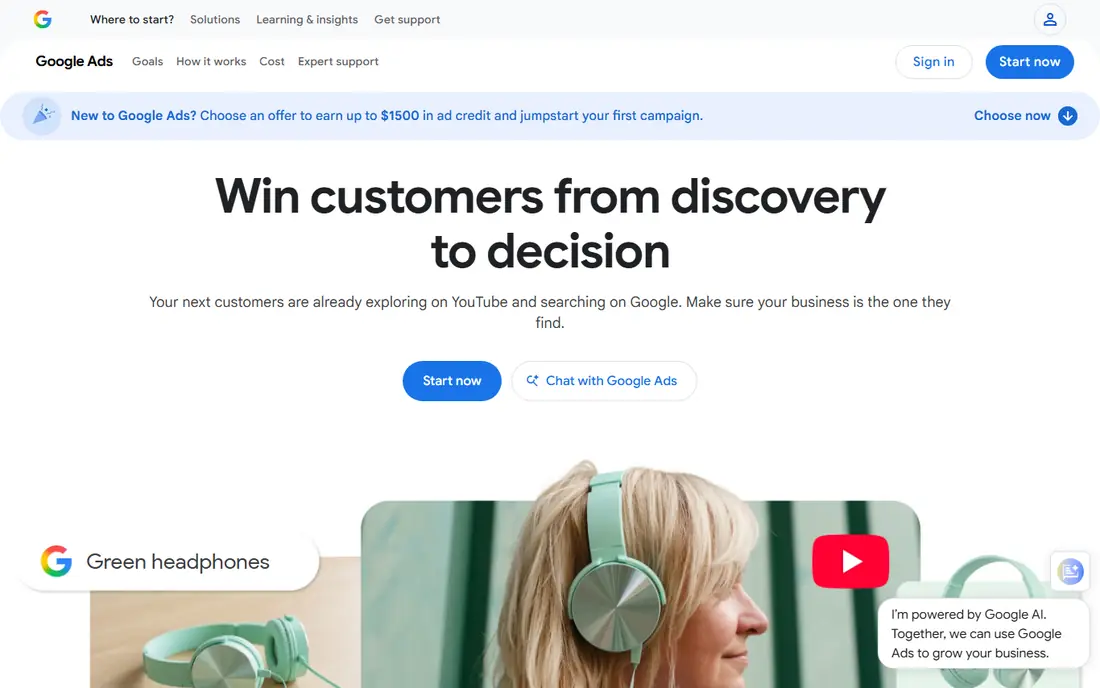
Google Keyword Planner is free with a Google Ads account and gives keyword ideas and volume ranges directly from Google, which makes it the best free starting point for a cleaning business. An owner can enter house cleaning plus a city and get related terms, volumes, and competition levels for ads, which also guide SEO content. For a business with no SEO budget, it is the essential first tool.
Free accounts see broad volume ranges rather than precise numbers, and it lacks competitor gap features. Paired with a paid tool later, or used alone for basic planning, Keyword Planner covers the fundamentals well.
- Free with a Google Ads account
- Data straight from Google
- Good for local service terms
- Volume ranges are broad for free accounts
- Fewer competitor features
Moz Keyword Explorer
Ideal for: Guided keyword research
Moz Keyword Explorer presents keyword research in a guided, approachable way, with difficulty and opportunity scores that help a non-expert judge which terms are worth targeting. For a cleaning business owner doing their own marketing, that clarity matters: it is easier to pick ten realistic local terms than to sort through thousands of raw suggestions. Its suggestions also surface related service terms.
Its database is smaller than the leaders, and local features are thinner. For a small business that wants understandable keyword guidance without a steep learning curve, Moz is a good fit.
- Clear difficulty and opportunity scores
- Guided suggestions
- Approachable interface
- Database smaller than Semrush or Ahrefs
- Fewer local features
Ubersuggest
Ideal for: Affordable keyword ideas
Ubersuggest, from Neil Patel, offers affordable keyword research with ideas, volume estimates, and content suggestions in a simple interface. A cleaning business can enter a service term and get related keywords, questions, and content ideas without a large subscription. Its price makes it accessible to owners who cannot justify an enterprise tool.
Data depth is lighter than the leaders, and some features feel basic. For a small cleaning business on a tight budget, Ubersuggest covers the essentials at a price that makes sense.
- Affordable pricing
- Simple keyword ideas and content suggestions
- Good for small budgets
- Data depth is lighter than Semrush or Ahrefs
- Some features are basic
AnswerThePublic
Ideal for: Customer questions
AnswerThePublic visualizes the questions people ask around a topic, such as how much house cleaning costs or what deep cleaning includes. Those questions make excellent FAQ sections and service page headings for a cleaning business, since they match real customer language. Its visual maps make brainstorming content fast and intuitive.
It is not a full keyword volume or difficulty tool, so it pairs best with a tool like Semrush or Keyword Planner. For content ideas grounded in customer questions, AnswerThePublic is a valuable complement.
- Shows questions customers ask
- Great for FAQ and service page ideas
- Visual keyword maps
- Not a full keyword volume tool
- Limited free searches
Keywords Everywhere
Ideal for: Browser keyword data
Keywords Everywhere is a browser extension that shows search volume, cost-per-click, and related keywords directly inside Google search results and YouTube. For a cleaning business owner who already searches Google for competitors and terms, it adds data to a familiar workflow without opening a separate platform. Its credit-based pricing is cheap for light use.
It is a browser overlay, not a full research platform, so deep competitor analysis needs another tool. As a convenient, low-cost way to check terms while browsing, it is hard to beat.
- Shows keyword data inside Google search and YouTube
- Cheap pay-as-you-go credits
- Convenient
- Browser-only view
- Less depth than full platforms
KWFinder
Ideal for: Low-competition keywords
KWFinder, part of the Mangools suite, specializes in finding low-competition keywords, which is exactly what a local cleaning business needs: terms it can realistically rank for without competing against national brands. Its interface is simple, showing difficulty scores and local volumes clearly. For a small business owner, that focus on winnable terms is practical.
Data depth is lighter than Semrush or Ahrefs, and it works best as part of the Mangools suite. For finding realistic local keywords on a budget, KWFinder is a strong choice.
- Finds low-competition local keywords
- Simple interface
- Good for small businesses
- Part of Mangools suite
- Data depth is lighter than leaders
How we picked these
We compared official feature pages, pricing pages, and documentation for keyword research tools, focusing on data quality for local service terms, ease of use for small businesses, and price. We favored tools that help a cleaning business find realistic, local, service-based terms rather than broad national keywords.
What to check before you choose
Start with your service area and services: list every service you offer and every city or neighborhood you serve, then research terms for each combination. That local grid matters more than any single national keyword. Also check search intent: a term like house cleaning prices signals a buyer, while cleaning tips signals a reader, and your pages should match the intent.
Test tools with your real city and services before paying, since data quality varies by location. Finally, build pages for the terms you target: keyword research without a page to rank is wasted effort.
One more factor worth weighing is how the option you choose will feel after the first month, not just on day one. A tool or service that looks strong in a demo can become a burden if setup is fiddly, support is slow, or everyday tasks take more clicks than they should. That is why we suggest using a trial with your real workload, your real data, and the people who will actually use it every day. Watch for friction in the first week, since that friction rarely disappears on its own. Also consider what happens when your needs change: can you upgrade, downgrade, or leave without losing your work? A flexible option that grows with you is usually worth more than a slightly cheaper one that locks you into a plan you will outgrow. Finally, talk to at least one current user if you can, since a short honest conversation often reveals more than a polished sales page.
Frequently asked questions
What are the best keywords for a cleaning service?
The best keywords combine a service with a location, such as house cleaning in your city, office cleaning near a neighborhood, or deep cleaning plus a city name. Also target specific services like move-out cleaning, carpet cleaning, and post-construction cleaning.
Should a cleaning business target national or local keywords?
Local keywords, almost always. Customers hire cleaners nearby, so city and neighborhood terms bring calls, while national terms bring readers who cannot hire you.
How do I find keywords my competitors rank for?
Use Semrush or Ahrefs to enter a competitor's website and see its ranking keywords, then look for service and city terms it ranks for that you do not. Those gaps are pages worth building.
Is Google Keyword Planner enough for a small cleaning business?
It is enough to start, especially for basic planning and Google Ads. As SEO becomes more important, a paid tool adds competitor data, difficulty scores, and rank tracking that Planner lacks.
How many keywords should a cleaning service target?
Start with ten to twenty realistic local terms covering your main services and areas, build a page for each, and expand from there. A focused set that ranks beats a huge list that never gets pages.
What is the first step when choosing best keywords for cleaning services?
Start by writing down what you need the product or service to do, how many people will use it, and what budget you can sustain for a year. That short brief makes comparisons far easier, since you can test each option against the same requirements instead of being swayed by the longest feature list. Then run a trial of your top two or three choices with real tasks, and pick the one your team actually enjoys using, since adoption matters as much as features.