Best Kubernetes security platforms for cloud in 2026: 8 Options Compared

- 1
 Aqua Securityfull lifecycle Kubernetes securityVisit
- 2
 Sysdigruntime security and monitoring for KubernetesVisit
- 3
 Prisma Cloudcloud security with Kubernetes controlsVisit
- 4
 Wizcloud security with Kubernetes visibilityVisit
- 5
 Tigeranetwork security for Kubernetes with CalicoVisit
- Our pick for most readers is Aqua Security, thanks to its balance of features, clear pricing path, and broad fit for Kubernetes security platforms for cloud.
- Sysdig is the strongest alternative when you want a different approach to Kubernetes security platforms for cloud without giving up core features.
- Free plans differ a lot across this list, so check what is actually included before you commit to a paid tier.
- The cheapest option is rarely the best value once you count setup time, limits, and the features your team will use every week.
Quick comparison
| Product | Ideal for | Price from | Free version | |
|---|---|---|---|---|
| Aqua Security | full lifecycle Kubernetes security | See website | No | Visit |
| Sysdig | runtime security and monitoring for Kubernetes | See website | No | Visit |
| Prisma Cloud | cloud security with Kubernetes controls | See website | No | Visit |
| Wiz | cloud security with Kubernetes visibility | See website | No | Visit |
| Tigera | network security for Kubernetes with Calico | See website | Yes | Visit |
 Anchore | container image scanning and policy | See website | Yes | Visit |
 Falco | open source runtime threat detection | See website | Yes | Visit |
 Kyverno | Kubernetes policy engine | See website | Yes | Visit |
The best Kubernetes security platforms for cloud
We compared official feature pages, pricing pages, app-store listings, privacy policies, and public reviews to build this list of Kubernetes security platforms for cloud. The products below cover different budgets and team sizes, so the right pick depends on how you plan to use it day to day.
Aqua Security
Ideal for: full lifecycle Kubernetes security

For full lifecycle Kubernetes security, Aqua Security is a strong place to start. We found broad container and kubernetes coverage to be its clearest strength, and that matters because it shapes how the product feels in daily use. Runtime protection adds to the appeal, especially for readers who want a tool that works without a long setup project. On pricing, the listing shows see website, with a free plan marked as no. That combination makes it worth a trial run with your real workflow, rather than judging it from a feature page alone. Check the current pricing page before you buy, since tiers and limits change over time. The honest catch is that enterprise pricing. Setup needs platform team time is also worth weighing. Even so, for readers focused on full lifecycle Kubernetes security, Aqua Security remains a credible pick, and it compares well with the rest of this list on balance.
- Broad container and Kubernetes coverage
- Runtime protection
- Clear policies
- Enterprise pricing
- Setup needs platform team time
Sysdig
Ideal for: runtime security and monitoring for Kubernetes
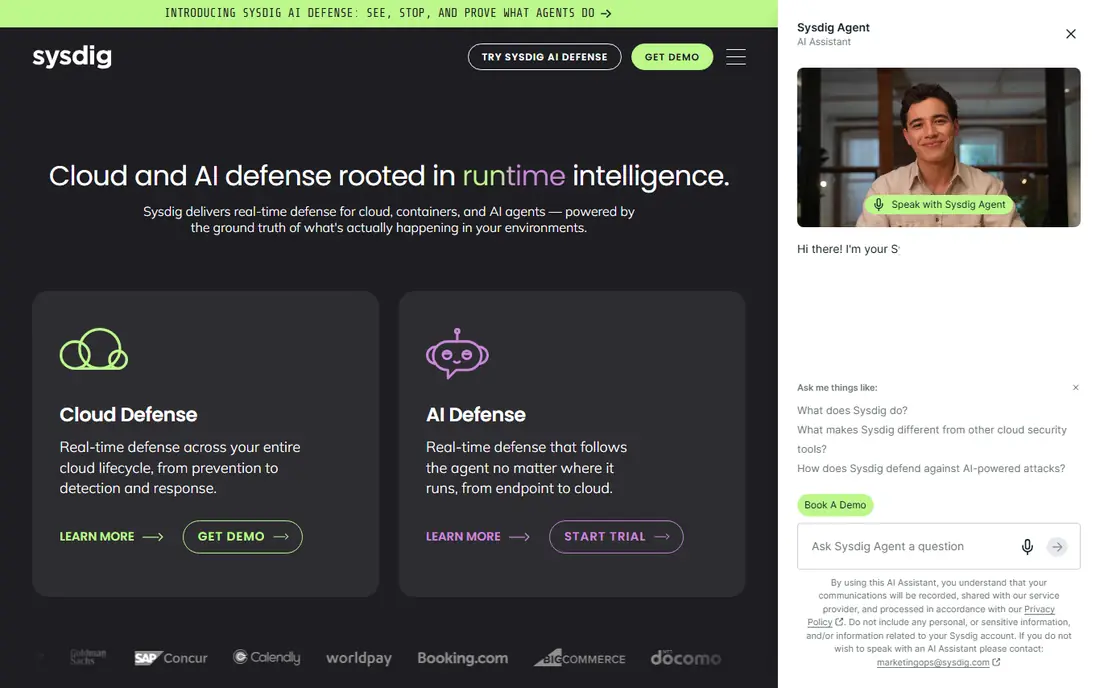
Sysdig is built around runtime security and monitoring for Kubernetes, and that focus shows in the details. We found strong runtime visibility to be its clearest strength, and that matters because it shapes how the product feels in daily use. Falco roots adds to the appeal, especially for readers who want a tool that works without a long setup project. On pricing, the listing shows see website, with a free plan marked as no. That combination makes it worth a trial run with your real workflow, rather than judging it from a feature page alone. Check the current pricing page before you buy, since tiers and limits change over time. The honest catch is that pricing is quoted. Breadth needs tuning is also worth weighing. Even so, for readers focused on runtime security and monitoring for Kubernetes, Sysdig remains a credible pick, and it compares well with the rest of this list on balance.
- Strong runtime visibility
- Falco roots
- Good cloud pairing
- Pricing is quoted
- Breadth needs tuning
Prisma Cloud
Ideal for: cloud security with Kubernetes controls

If cloud security with Kubernetes controls is your priority, Prisma Cloud deserves a close look. We found broad cloud security to be its clearest strength, and that matters because it shapes how the product feels in daily use. Kubernetes posture adds to the appeal, especially for readers who want a tool that works without a long setup project. On pricing, the listing shows see website, with a free plan marked as no. That combination makes it worth a trial run with your real workflow, rather than judging it from a feature page alone. Check the current pricing page before you buy, since tiers and limits change over time. The honest catch is that suite cost. Complexity for small clusters is also worth weighing. Even so, for readers focused on cloud security with Kubernetes controls, Prisma Cloud remains a credible pick, and it compares well with the rest of this list on balance.
- Broad cloud security
- Kubernetes posture
- Palo Alto support
- Suite cost
- Complexity for small clusters
Wiz
Ideal for: cloud security with Kubernetes visibility
Wiz earns its place here through cloud security with Kubernetes visibility. We found fast cloud-wide visibility to be its clearest strength, and that matters because it shapes how the product feels in daily use. Clear risk prioritization adds to the appeal, especially for readers who want a tool that works without a long setup project. On pricing, the listing shows see website, with a free plan marked as no. That combination makes it worth a trial run with your real workflow, rather than judging it from a feature page alone. Check the current pricing page before you buy, since tiers and limits change over time. The honest catch is that quote-based pricing. Best at cloud scale is also worth weighing. Even so, for readers focused on cloud security with Kubernetes visibility, Wiz remains a credible pick, and it compares well with the rest of this list on balance.
- Fast cloud-wide visibility
- Clear risk prioritization
- Agentless options
- Quote-based pricing
- Best at cloud scale
Tigera
Ideal for: network security for Kubernetes with Calico
Teams that need network security for Kubernetes with Calico often land on Tigera. We found strong network policy to be its clearest strength, and that matters because it shapes how the product feels in daily use. Calico open source roots adds to the appeal, especially for readers who want a tool that works without a long setup project. On pricing, the listing shows see website, with a free plan marked as yes. That combination makes it worth a trial run with your real workflow, rather than judging it from a feature page alone. Check the current pricing page before you buy, since tiers and limits change over time. The honest catch is that network focus, not full cnapp. Enterprise features cost more is also worth weighing. Even so, for readers focused on network security for Kubernetes with Calico, Tigera remains a credible pick, and it compares well with the rest of this list on balance.
- Strong network policy
- Calico open source roots
- Observability tools
- Network focus, not full CNAPP
- Enterprise features cost more
Anchore
Ideal for: container image scanning and policy
Anchore takes a practical approach to container image scanning and policy. We found strong image scanning to be its clearest strength, and that matters because it shapes how the product feels in daily use. Policy enforcement adds to the appeal, especially for readers who want a tool that works without a long setup project. On pricing, the listing shows see website, with a free plan marked as yes. That combination makes it worth a trial run with your real workflow, rather than judging it from a feature page alone. Check the current pricing page before you buy, since tiers and limits change over time. The honest catch is that narrower than full platforms. Ui is functional is also worth weighing. Even so, for readers focused on container image scanning and policy, Anchore remains a credible pick, and it compares well with the rest of this list on balance.
- Strong image scanning
- Policy enforcement
- Open source option
- Narrower than full platforms
- UI is functional
Falco
Ideal for: open source runtime threat detection
Among this group, Falco is a solid choice for open source runtime threat detection. We found free open source detection to be its clearest strength, and that matters because it shapes how the product feels in daily use. Strong community adds to the appeal, especially for readers who want a tool that works without a long setup project. On pricing, the listing shows see website, with a free plan marked as yes. That combination makes it worth a trial run with your real workflow, rather than judging it from a feature page alone. Check the current pricing page before you buy, since tiers and limits change over time. The honest catch is that needs operator skill. No vendor support by default is also worth weighing. Even so, for readers focused on open source runtime threat detection, Falco remains a credible pick, and it compares well with the rest of this list on balance.
- Free open source detection
- Strong community
- Flexible rules
- Needs operator skill
- No vendor support by default
Kyverno
Ideal for: Kubernetes policy engine
Kyverno stands out for Kubernetes policy engine. We found native kubernetes policies to be its clearest strength, and that matters because it shapes how the product feels in daily use. Validation and mutation adds to the appeal, especially for readers who want a tool that works without a long setup project. On pricing, the listing shows see website, with a free plan marked as yes. That combination makes it worth a trial run with your real workflow, rather than judging it from a feature page alone. Check the current pricing page before you buy, since tiers and limits change over time. The honest catch is that policy-only scope. Needs other tools for runtime security is also worth weighing. Even so, for readers focused on Kubernetes policy engine, Kyverno remains a credible pick, and it compares well with the rest of this list on balance.
- Native Kubernetes policies
- Validation and mutation
- Open source
- Policy-only scope
- Needs other tools for runtime security
How we picked these
We started from the topic itself, best kubernetes security platforms for cloud, and kept only products that exist, work in October 2026, and truly fit that topic. We read official feature and pricing pages, checked app-store listings where they exist, and scanned privacy policies and public reviews for problems that a feature page would not mention. Products that did not fit, or whose official homepage did not check out, were left out rather than padded into the list. We favored a mix of well-known leaders and strong smaller options, and we weighed everyday usability alongside price. A product that is powerful but hard to set up scores lower here than one your team will actually use. Prices marked as See website mean the vendor quotes by plan, seat, or usage, so the pricing page is the reliable source.
How to pick the right option for your needs
Start with the job you need done, not the longest feature list. Write down the two or three tasks you will do every week, then test the shortlisted products against those tasks during a trial. A short trial with real data tells you more than a demo ever will.
Match the product to your size and budget
Small teams often do best with a simple plan and a clear upgrade path, while larger teams need admin controls, permissions, and support that small plans rarely include. Compare the total cost, including seats, add-ons, and any usage limits, before you sign up.
Check support, privacy, and exit options
Read the privacy policy, check how your data can be exported, and confirm what support you get on the plan you will actually buy. If switching later would be painful, that is a cost too, and it should count in your decision.
Run a short trial before you commit
Set a trial goal, invite the people who will use the product daily, and review the results together. If the product saves time on your real tasks and the team likes using it, it is a good sign. If it needs constant workarounds, keep looking.
Frequently asked questions
What is the best option for Kubernetes security platforms for cloud?
For most readers, Aqua Security is our starting point because it balances features, usability, and pricing. Your best choice still depends on budget, team size, and the specific tasks you need, so use the comparison table above to narrow the list to two or three options and trial them.
Are there free options for Kubernetes security platforms for cloud?
Yes, several products on this list offer a free tier or a free starting point, though limits apply. Free plans usually cap users, usage, or advanced features, so check what is included and what moves to a paid plan before you build your workflow around one.
How much should I expect to pay?
Pricing varies widely, from free tiers to quote-based enterprise plans, and many vendors price by seat or usage. The table above shows starting prices where vendors publish them, and See website means you should check the vendor pricing page for the plan that fits your team.
How do I choose between the top products?
List your must-have features, then trial your top two choices with real tasks for at least a week. Pay attention to setup time, support quality, and how the product handles your data, since those factors matter more over time than a small price gap.
Can I switch products later if I change my mind?
In most cases yes, but switching costs time, especially if your data, templates, or integrations are tied to one product. Before you commit, check export options and confirm that your key data can move, so a future switch stays practical rather than painful.