Best Laboratory Management Software in 2026: 8 Tools Compared

- 1
 LabWare LIMSLarge regulated labsVisit
- 2
 STARLIMSEnterprise lab informaticsVisit
- 3
 Thermo Scientific SampleManagerRegulated enterprise labsVisit
- 4
 BenchlingResearch and biotech teamsVisit
- 5
 LabguruResearch lab managementVisit
- LabWare LIMS and STARLIMS lead for large, regulated labs that need deep workflow control and instrument integration.
- Benchling and Labguru suit research teams that want a modern system combining notebooks, inventory, and sample tracking.
- QBench and CloudLIMS offer faster setup for smaller testing labs that cannot afford a year-long implementation.
- Compliance needs should drive the shortlist, since standards such as ISO 17025 and 21 CFR Part 11 rule out many tools.
- A LIMS succeeds when bench staff use it daily, so trial it with real samples and real reports, not a sales demo.
Quick comparison
| Product | Ideal for | Price from | Free version | |
|---|---|---|---|---|
| LabWare LIMS | Large regulated labs | See website | No | Visit |
| STARLIMS | Enterprise lab informatics | See website | No | Visit |
| Thermo Scientific SampleManager | Regulated enterprise labs | See website | No | Visit |
| Benchling | Research and biotech teams | See website | Free trial | Visit |
| Labguru | Research lab management | See website | Free trial | Visit |
 SciNote | ELN plus lab inventory | See website | Free trial | Visit |
 QBench | Fast cloud LIMS setup | See website | Free trial | Visit |
 CloudLIMS | SaaS testing labs | See website | Free trial | Visit |
The best laboratory management software
Laboratory management software, often called a LIMS, tracks samples from receipt to result, manages instruments and inventory, and produces reports that auditors can trust. Research labs, testing labs, and quality control labs all use the term, but their needs differ a lot. The tools below cover that range, from enterprise platforms to modern cloud systems for smaller labs.
LabWare LIMS
Ideal for: Large regulated labs
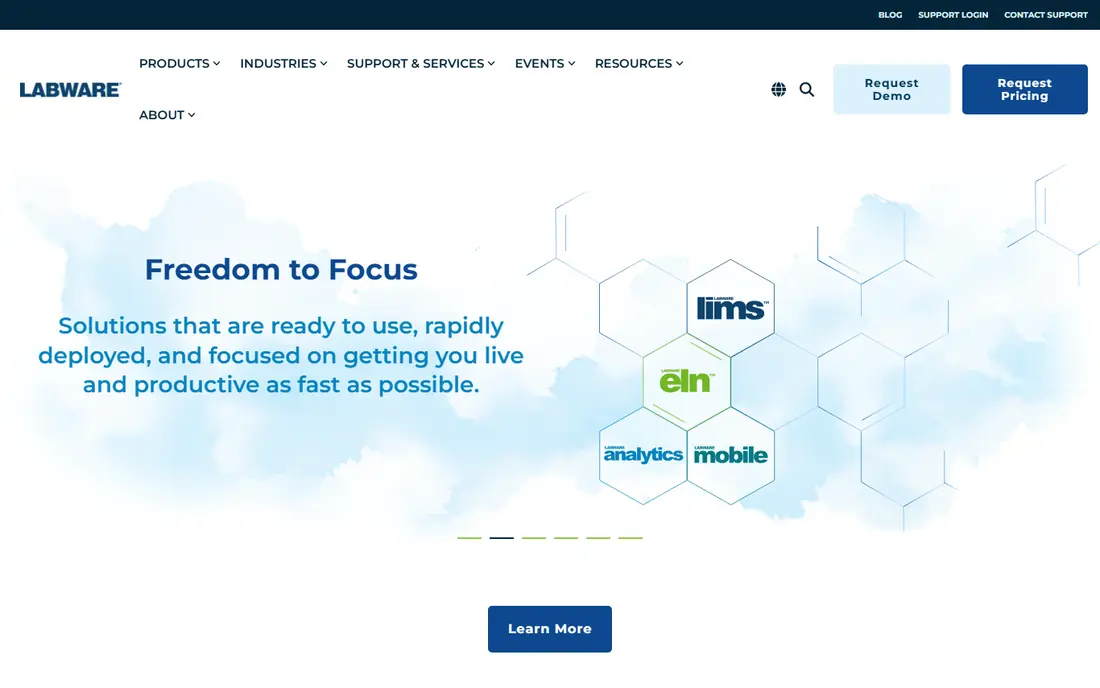
LabWare presents itself as a unified laboratory informatics platform covering LIMS, electronic notebooks, mobile, and AI, with a focus on automating workflows and connecting systems. Its homepage stresses ready-to-use solutions and integration across complex IT environments, which matters for labs with many instruments and systems. For a large quality control or manufacturing lab, that breadth is the main attraction.
The trade-off is effort. LabWare is an enterprise platform, and implementation is a project with configuration, validation, and training. Smaller labs will find it heavy, but for a regulated lab that must prove data integrity at audit, LabWare is one of the safest choices in this list.
- Unified LIMS and ELN platform
- Deep instrument integration
- Long track record in regulated industries
- Enterprise scope and implementation effort
- Pricing is quote based and aimed at larger labs
STARLIMS
Ideal for: Enterprise lab informatics
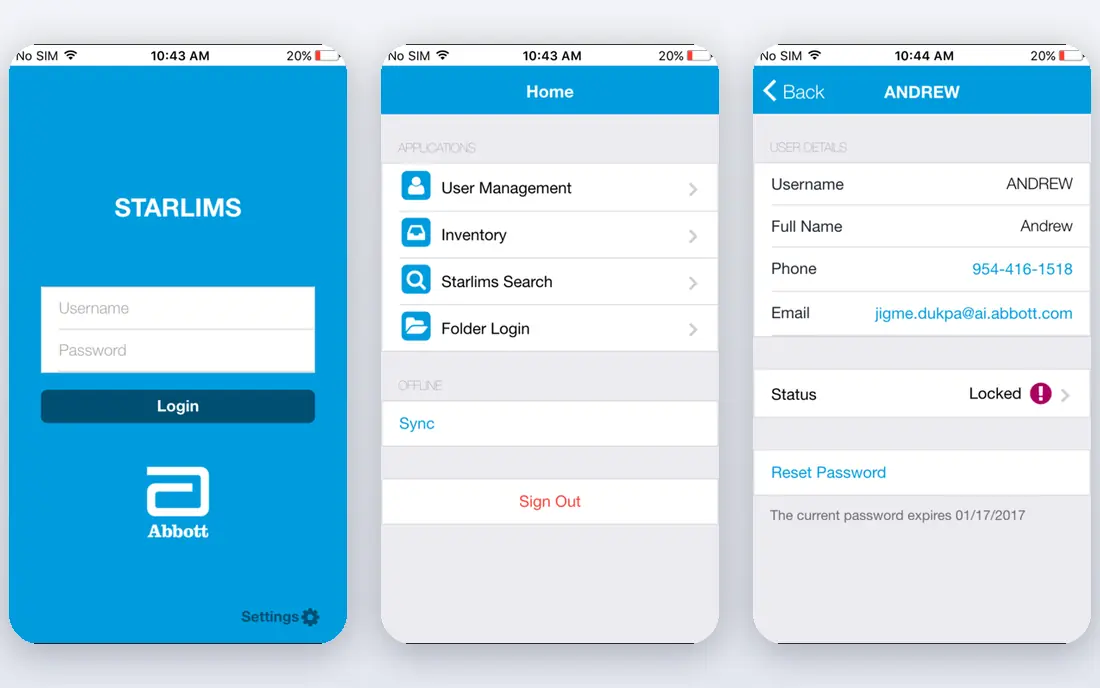
STARLIMS has sold laboratory informatics since the 1980s and now covers quality manufacturing, clinical, and public health labs with LIMS, ELN, and analytics in one platform. Its homepage stresses end-to-end sample traceability and data integrity, which are the features auditors ask about first. That history gives buyers confidence that the vendor will still be supporting the system in a decade.
As with LabWare, the cost is scope. STARLIMS suits organizations with complex, regulated workflows and many users. A small testing lab should compare it with QBench or CloudLIMS first, and only move up if compliance or scale demands it.
- Long history across R and D, quality, public health, and clinical labs
- End-to-end sample traceability
- Broad platform including ELN and analytics
- Enterprise pricing and rollout time
- Smaller labs may use only a fraction of the platform
Thermo Scientific SampleManager
Ideal for: Regulated enterprise labs
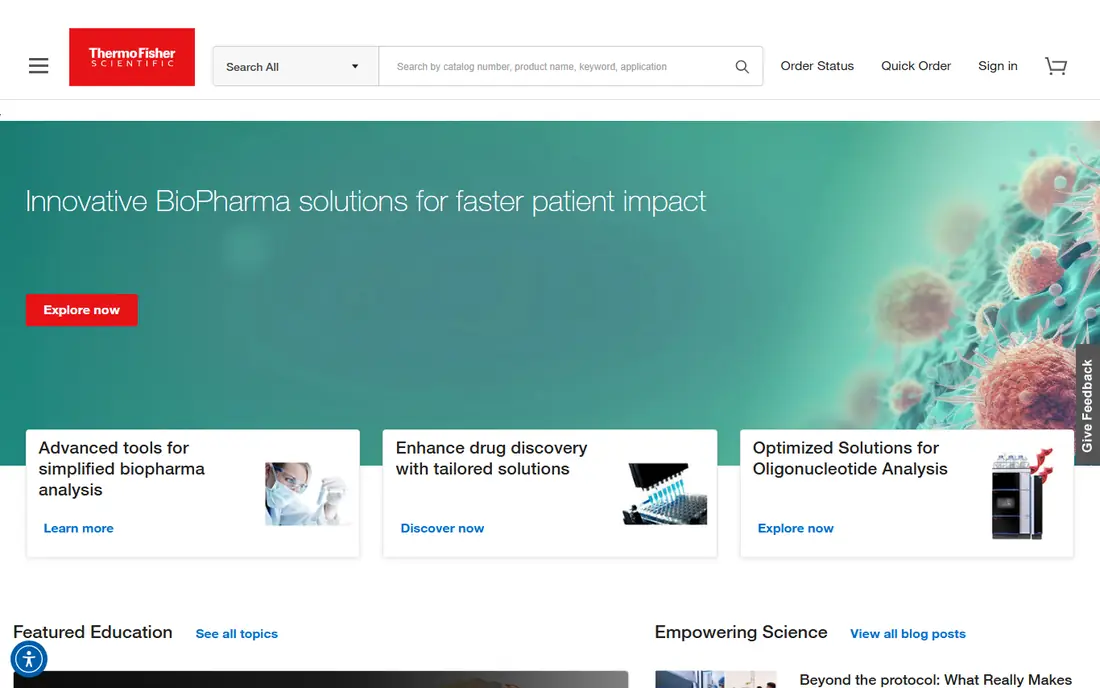
Thermo Scientific SampleManager is the LIMS from Thermo Fisher, a vendor that also sells instruments and enterprise software, which gives it a natural fit for labs already using Thermo equipment. It covers sample management, workflow, and data handling for regulated quality and manufacturing labs, with integration to chromatography data systems and enterprise tools.
The honest catch is that SampleManager is a large system, and buyers should expect a serious implementation project. For a pharmaceutical or food quality lab with strict regulatory needs and Thermo instruments, that integration is a strong reason to shortlist it. For a small lab, it will be more system than needed.
- Deep LIMS plus chromatography and enterprise integration
- Strong fit for pharma and manufacturing quality labs
- Global support network
- Enterprise price and complexity
- Implementation needs specialist help
Benchling
Ideal for: Research and biotech teams
Benchling is a cloud platform built for life science research, combining an electronic notebook, molecular biology tools, sample registry, and workflows. Research teams like it because it feels like a modern app rather than a legacy system, and it handles the messy, changing work of discovery better than a rigid testing LIMS. For a biotech startup or an academic group, Benchling is often the first system to try.
Testing labs should check fit carefully. Benchling excels at research, but a commercial testing lab that needs certificates of analysis, client portals, and billing may find QBench or CloudLIMS a closer match. Judge it on your own workflow during a trial, not on its research strengths alone.
- Modern interface that scientists enjoy using
- Notebook, registry, and workflow tools in one system
- Strong fit for biotech R and D
- Research focus means testing lab features such as billing and certificates need checking
- Pricing is quote based
Labguru
Ideal for: Research lab management
Labguru combines an electronic lab notebook, LIMS, inventory management, and automation in a single cloud platform, aimed at research labs that want one system for daily work. Its homepage stresses streamlining operations, preventing data loss, and speeding research outcomes, with automation tools for routine workflows. That combination suits labs tired of juggling notebooks, spreadsheets, and separate inventory tools.
The limit is similar to Benchling: research strength does not guarantee testing lab depth. If your lab issues commercial reports and invoices, confirm those workflows in a trial. For a research group, Labguru is a strong, well-supported choice.
- ELN, LIMS, inventory, and automation in one platform
- Compliance features including 21 CFR Part 11 support
- Good onboarding support
- Research focus, like Benchling, so commercial testing features need checking
- Pricing is quote based
SciNote
Ideal for: ELN plus lab inventory
SciNote is a cloud electronic lab notebook with lab inventory, compliance, and team management tools, used by scientists in many countries. Its structure mirrors how research happens, with projects, experiments, and tasks, plus protocol templates and auto-generated reports. That clarity makes it easy for new team members to learn, and its free tier lets small groups start without a purchase order.
The catch is scope. SciNote is an ELN with inventory, not a full high-volume testing LIMS, so a commercial lab processing hundreds of samples a day should look at QBench or CloudLIMS instead. For academic and small research teams, SciNote offers excellent value.
- Clear project, experiment, and task structure
- Lab inventory and compliance tools
- Free tier for small teams
- ELN first, so full LIMS depth for high-volume testing is limited
- Advanced features need paid plans
QBench
Ideal for: Fast cloud LIMS setup
QBench is a cloud LIMS built around configurability, letting labs adapt workflows, fields, automations, and reports without large custom code projects. Its homepage stresses fast implementation and avoiding drawn-out legacy setups, which is a direct answer to the most common LIMS complaint. For a growing testing lab that needs to go live in weeks rather than months, that speed matters.
The trade-off is vendor scale. QBench is younger than the enterprise names, so buyers should ask about support, roadmap, and data export. On product merit, though, it is one of the best modern options for small and mid-size testing labs, and its trial is worth running on real orders.
- Highly configurable without heavy custom code
- Fast implementation compared with legacy LIMS
- No-code automation and reporting
- Newer and smaller than LabWare or STARLIMS, so check long-term roadmap
- Enterprise depth needs a careful trial
CloudLIMS
Ideal for: SaaS testing labs
CloudLIMS is a web-based SaaS LIMS aimed at biobanks, clinical, research, and testing labs, with workflow configuration, instrument integration, report templates, and data migration presented as included services. Its homepage now stresses AI features for flagging anomalies and forecasting demand, alongside portals for clients and patients. For a lab that wants a managed cloud system without a large upfront project, that package is attractive.
Buyers should test the AI claims on their own data and confirm compliance support for their exact standards, since lab regulations vary by industry and region. If the core LIMS fits, the included configuration and migration help can lower the total cost of switching.
- Web-based SaaS with no upfront cost claim
- Workflow configuration and instrument integration included
- Client and patient portals
- The AI-first marketing needs testing on your own data
- Check compliance coverage for your specific regulations
How we picked these
We compared official feature pages, pricing pages, and public reviews for laboratory management systems still sold in October 2026. We kept systems with sample tracking, workflow, and reporting as core features, and we left out single-purpose tools such as standalone inventory apps, tools with no clear vendor homepage, and systems no longer sold. Because LIMS pricing is almost always quoted, we used See website rather than inventing figures.
How to run a useful trial
Start with ten real samples that cover your hardest cases, such as a rush job, a retest, and a sample that fails a specification. Run them through the trial system from receipt to report, and watch where staff get stuck or work around the system. A tool that handles routine samples well but struggles with exceptions will cause daily friction.
Next, check reporting and audit trails. Ask for a certificate or report in your format, check the audit trail for a changed result, and confirm user permissions prevent unauthorized edits. Finally, ask about data export and migration. A LIMS holds years of results, and you should know how you would leave, how historical data migrates in, and what validation the vendor provides for regulated work.
Frequently asked questions
What is laboratory management software?
Laboratory management software, often called a LIMS, tracks samples, tests, results, and reports in a lab. It replaces spreadsheets and paper logs with a system that enforces workflows, records who did what, and produces reports that auditors can check. Some systems also include notebooks, inventory, and instrument connections.
What is the difference between a LIMS and an ELN?
A LIMS focuses on samples, tests, and results, especially in testing and quality labs. An ELN, or electronic lab notebook, focuses on recording experiments and research notes. Many modern platforms combine both, which suits research labs, while testing labs usually need LIMS depth first.
How much does LIMS software cost?
Most LIMS vendors quote per user or per lab, with implementation and validation extra, so costs vary widely. Cloud systems for smaller labs are usually cheaper and faster to start, while enterprise platforms cost more but cover complex regulated workflows. Always get a quote for your user count and sample volume.
Do small labs need a LIMS?
A small lab with a handful of samples a week may manage with spreadsheets and a notebook, though the risk of errors grows with volume. Once samples, clients, or compliance needs grow, a LIMS saves time and reduces mistakes. Cloud options such as QBench, CloudLIMS, and SciNote lower the entry cost.
How long does LIMS implementation take?
Cloud systems for smaller labs can go live in weeks, while enterprise platforms for regulated labs can take months, including configuration, validation, and training. The timeline depends on workflow complexity, instrument connections, and data migration, so ask vendors for a realistic plan during evaluation.