Best Landlord Apps in 2026: 7 Apps Compared

- Our pick for most people is Avail, which stands out for small landlords who want a free start.
- Buildium is the strongest alternative if you want property managers with growing portfolios, and it is worth comparing side by side with our top pick.
- 4 of the 7 options here offer a free plan, so you can test the core features before paying anything.
- Prices vary widely, and several options use quote based pricing, so check the official pricing page for your team size before you decide.
- The right choice depends on your budget, your must have features, and how much setup time you can spare, so use the buying guide below to narrow the list to two or three finalists.
Quick comparison
| Product | Ideal for | Price from | Free version | |
|---|---|---|---|---|
 Avail | Small landlords who want a free start | Free | Yes | Visit |
 Buildium | Property managers with growing portfolios | See website | Free trial | Visit |
 RentRedi | Landlords who want mobile first management | See website | No | Visit |
 TenantCloud | Landlords who want a free tier with accounting | Free | Yes | Visit |
 Stessa | Landlords focused on rental finances | Free | Yes | Visit |
 Landlord Studio | Landlords who want simple bookkeeping | See website | Free trial | Visit |
 TurboTenant | Landlords who want free listings and applications | Free | Yes | Visit |
The best landlord apps
We compared 7 options for best landlord app, looking at features, pricing, free plans, and honest weaknesses, so you can choose with confidence. The list below mixes well known leaders with smaller options that punch above their weight, and every product block sets out who it fits best and where it falls short.
Avail
Ideal for: Small landlords who want a free start
Avail is built for independent landlords, with a free tier that covers listings, applications, leases, and rent collection. Tenant screening and maintenance tracking sit in the same dashboard, so a landlord with a few units can run most tasks without a monthly bill.
Larger portfolios and advanced accounting push you toward paid plans, and payment timing depends on the method used. Avail fits landlords who want a gentle start and are willing to pay only as their portfolio grows.
Before you commit to Avail, weigh the trade offs in the pros and cons above against your own priorities, and use the free plan to test it with a real task. Free access makes it easy to check the core experience, but watch for the limits that matter to you, such as the drawbacks noted above, before you build a routine around it.
- Free core plan for small landlords
- Rent collection and screening
- Lease templates
- Paid features for larger portfolios
- Payment processing times vary
Buildium
Ideal for: Property managers with growing portfolios
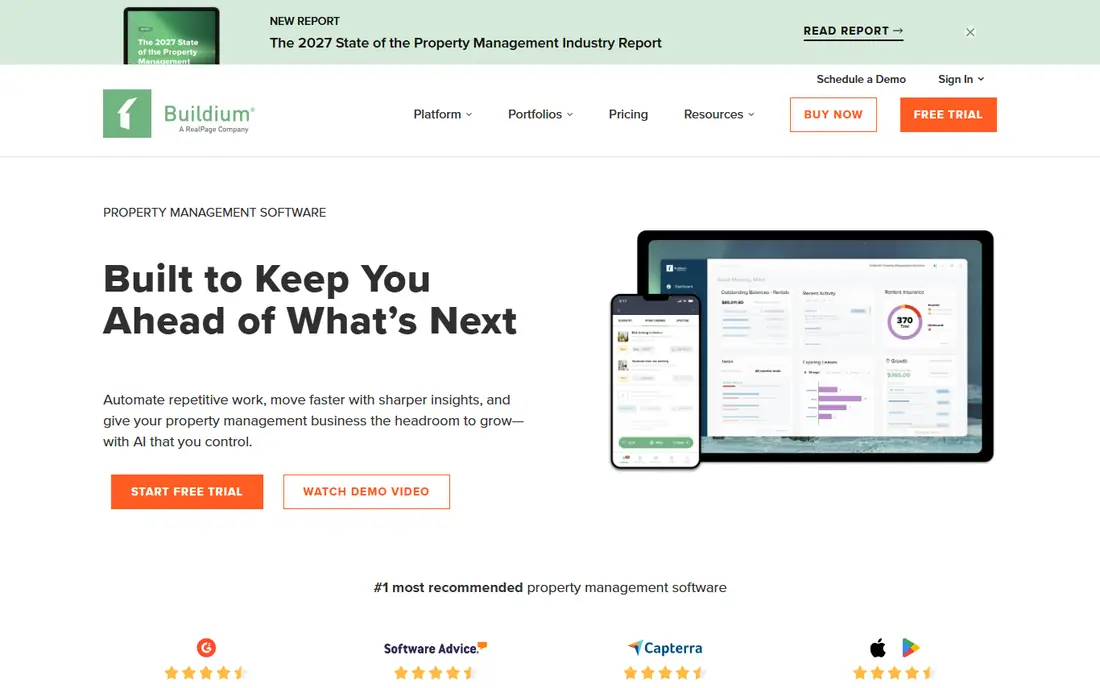
Buildium serves property managers and larger landlords with accounting, owner portals, and maintenance workflows in one system. It handles many units and owners, with reporting that suits professional management better than a simple rent app.
Pricing scales with your portfolio, and setup is a real project. Buildium is overkill for one rental, but managers juggling dozens of units and owners will use the depth. Try the trial with your real workflow before committing.
Before you commit to Buildium, weigh the trade offs in the pros and cons above against your own priorities, and use the free trial to test it with a real task. A trial is the best way to learn whether the strengths outweigh the drawbacks noted above, so run it with your actual workload rather than a sample project.
- Scales to many units
- Accounting and owner portals
- Maintenance workflows
- Price rises with units
- Setup takes effort
RentRedi
Ideal for: Landlords who want mobile first management
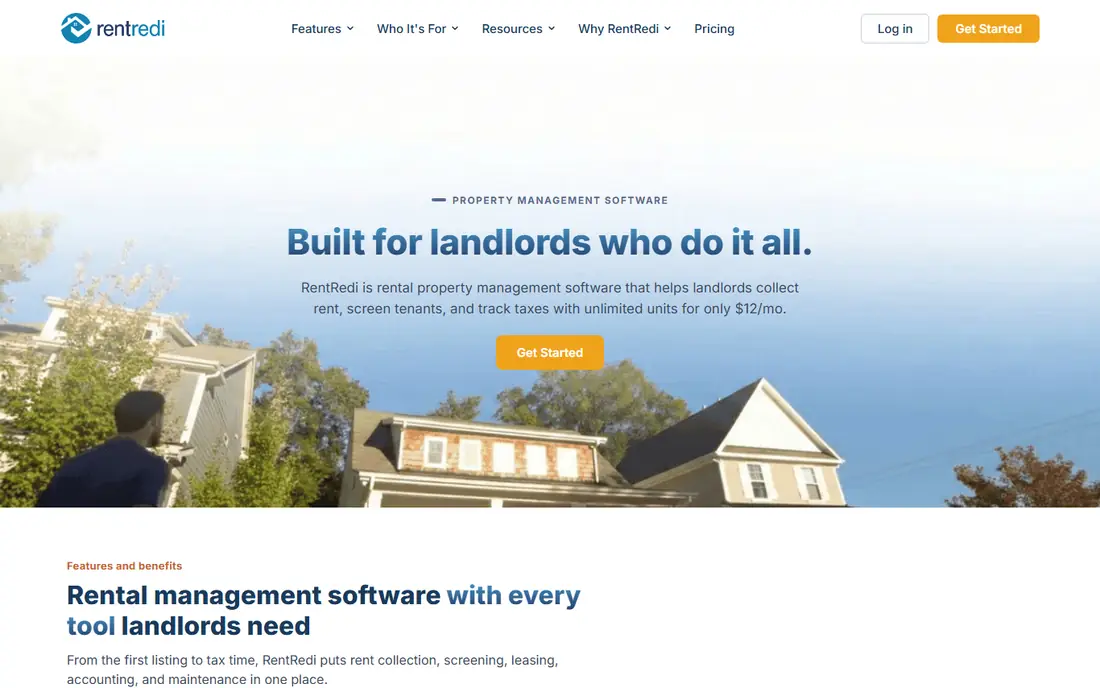
RentRedi leans mobile first, letting landlords collect rent, handle maintenance requests, and message tenants from a phone. Tenant screening and lease tools are included, and the app feels designed for landlords who manage properties on the move.
There is no free plan, so cost starts from day one. The trade is a polished mobile experience and features that smaller free apps charge extra for. Landlords who live on their phone tend to like the balance.
Before you commit to RentRedi, weigh the trade offs in the pros and cons above against your own priorities, and ask for a demo or a clear quote for your size. With no free plan, the sales conversation matters more, so pin down the total cost, the setup help included, and the contract terms before you sign.
- Strong mobile app
- Rent collection and maintenance
- Tenant screening included
- No free plan
- Pricing is per landlord tiers
TenantCloud
Ideal for: Landlords who want a free tier with accounting
TenantCloud combines rent collection, accounting, and maintenance tracking, with a free plan for landlords starting out. It suits owners who want bookkeeping in the same place as tenant management, rather than exporting data to another tool.
The interface packs in a lot, and some features sit behind paid tiers. Landlords who want accounting depth without paying for a full property management suite will find it a practical middle option.
Before you commit to TenantCloud, weigh the trade offs in the pros and cons above against your own priorities, and use the free plan to test it with a real task. Free access makes it easy to check the core experience, but watch for the limits that matter to you, such as the drawbacks noted above, before you build a routine around it.
- Free plan available
- Accounting and rent collection
- Maintenance tracking
- Some features need paid plans
- Interface can feel busy
Stessa
Ideal for: Landlords focused on rental finances
Stessa focuses on the money side: rental income, expenses, and tax ready reports, with dashboards that show how each property performs. It is free for core accounting, which makes it appealing to landlords who already handle tenants elsewhere.
Stessa does not screen tenants or manage leases, so it is a finance tool rather than a full landlord platform. Pair it with a tenant app if you need both sides. For owners who mainly want clean books, it is strong.
Before you commit to Stessa, weigh the trade offs in the pros and cons above against your own priorities, and use the free plan to test it with a real task. Free access makes it easy to check the core experience, but watch for the limits that matter to you, such as the drawbacks noted above, before you build a routine around it.
- Free rental accounting
- Income and tax reports
- Property performance dashboards
- No tenant screening or leasing
- Now part of Roofstock
Landlord Studio
Ideal for: Landlords who want simple bookkeeping
Landlord Studio keeps bookkeeping simple, with income and expense tracking, rent reminders, and reports aimed at tax time. The mobile app lets landlords log expenses on the spot, which beats reconstructing them months later.
Tenant facing features are basic compared with full management platforms. Landlord Studio fits owners whose main pain is messy rental finances, not tenant communication.
Before you commit to Landlord Studio, weigh the trade offs in the pros and cons above against your own priorities, and use the free trial to test it with a real task. A trial is the best way to learn whether the strengths outweigh the drawbacks noted above, so run it with your actual workload rather than a sample project.
- Simple income and expense tracking
- Rent reminders
- Mobile app
- Smaller feature set than Buildium
- Tenant portal is basic
TurboTenant
Ideal for: Landlords who want free listings and applications
TurboTenant offers free rental listings across major sites, plus applications and screening in one flow. Lease templates and state specific forms help small landlords stay organized without hiring help for every vacancy.
Rent collection and some extras require paid upgrades, and support is largely online. For landlords whose biggest job is filling vacancies well, the free listing and screening flow is a strong draw.
Before you commit to TurboTenant, weigh the trade offs in the pros and cons above against your own priorities, and use the free plan to test it with a real task. Free access makes it easy to check the core experience, but watch for the limits that matter to you, such as the drawbacks noted above, before you build a routine around it.
- Free listings and applications
- Tenant screening
- Lease templates
- Rent collection and extras are paid
- Support is mostly online
How we picked these
We compared official feature pages, pricing pages, app store listings, privacy policies, and public reviews for each option, and we checked that every product website listed here loads and belongs to that product. We did not claim hands-on testing we did not do, and we favored products that are clearly available now, with pricing or free plan details we could verify or honestly mark as quote based.
We also weighed fit for the topic over raw popularity. A famous product that only partly covers the need lost ground to a smaller option built for the job, and we kept an eye on pricing at realistic team or household sizes rather than headline discounts that few buyers actually get.
How to choose a landlord app for your portfolio
Start with your must have features
Write down the three features you cannot do without, then score each finalist against that short list. A long feature list looks impressive, but most buyers use a small set of features daily, and the product that nails those three will serve you better than a broader tool with a weak core. Check the free plan or trial limits against your real workload, not a demo, so you learn about caps before you commit.
Compare total cost, not just the headline price
Look at the price at your actual size, including per user fees, add ons, and payment or transaction charges. A free plan can be the cheapest start, but it can also cost time if it lacks a feature you need every week. Ask what happens when you grow: does the next tier jump sharply, and does the product still fit at that size?
Test before you commit
Run a short trial with a real task from your daily work, not a sample project. Invite the people who will use the product every day, and watch where they get stuck. A tool that feels easy in a sales demo but confusing in daily use will cost you adoption, so trust the trial more than the brochure.
Check support and the exit route
Look at how you get help when something breaks: live chat, email, phone, or community forums, and whether support hours match your working hours. Also check how you export your data if you leave, since a tool that locks your work inside is a long term risk. A clear export path and responsive support are worth more than a small price difference.
Frequently asked questions
What do landlord apps do?
Landlord apps collect rent, track expenses, screen tenants, and store leases and maintenance requests in one place. Some add bookkeeping and tax reports. The goal is to replace spreadsheets and scattered messages with one system you and your tenants both use.
Are landlord apps free?
Several offer free core plans for small portfolios, with paid upgrades for more units or features. Tenant screening and payment processing sometimes carry separate fees. Compare the cost at your unit count, not just the headline free plan.
Can tenants pay rent through these apps?
Yes, most support bank transfers and often card payments. Card payments may carry a processing fee, sometimes paid by the tenant. Automatic reminders and late fee settings help reduce chasing.
Do landlord apps screen tenants?
Many offer credit, background, and eviction history screening, sometimes through a partner. Screening rules vary by location, so check local law before you reject an applicant. Some apps let the applicant pay the screening fee.
Which landlord app is best for a single rental?
A free plan from a simple app is usually enough for one unit. You need rent collection, expense tracking, and a place to store the lease. Upgrade only when extra units or bookkeeping features start saving you real time.