Best Language Learning App for Japanese in 2026: 8 Apps Compared

- Duolingo and LingoDeer suit structured Japanese courses, with LingoDeer offering stronger grammar explanations.
- WaniKani and Bunpro suit kanji and grammar in depth, with WaniKani for kanji and Bunpro for grammar points.
- Memrise and Rosetta Stone suit vocabulary and immersion, with Memrise for memory and Rosetta Stone for context.
- italki and JapanesePod101 suit speaking and listening, with italki for live tutors and JapanesePod101 for audio lessons.
Quick comparison
| Product | Ideal for | Price from | Free version | |
|---|---|---|---|---|
 Duolingo | Free structured Japanese | See website | Yes | Visit |
 WaniKani | Kanji learning | See website | Yes | Visit |
 Bunpro | Japanese grammar | See website | Yes | Visit |
 LingoDeer | Grammar-rich courses | See website | Yes | Visit |
 Memrise | Japanese vocabulary | See website | Yes | Visit |
 Rosetta Stone | Immersive Japanese | See website | Yes | Visit |
 italki | Live Japanese tutors | See website | Yes | Visit |
 JapanesePod101 | Audio Japanese lessons | See website | Yes | Visit |
The best language learning app for japanese
We compared official feature pages, pricing pages, and app listings to find Japanese learning apps with real Japanese courses, covering hiragana, katakana, kanji, grammar, and conversation in October 2026.
Duolingo
Ideal for: Free structured Japanese
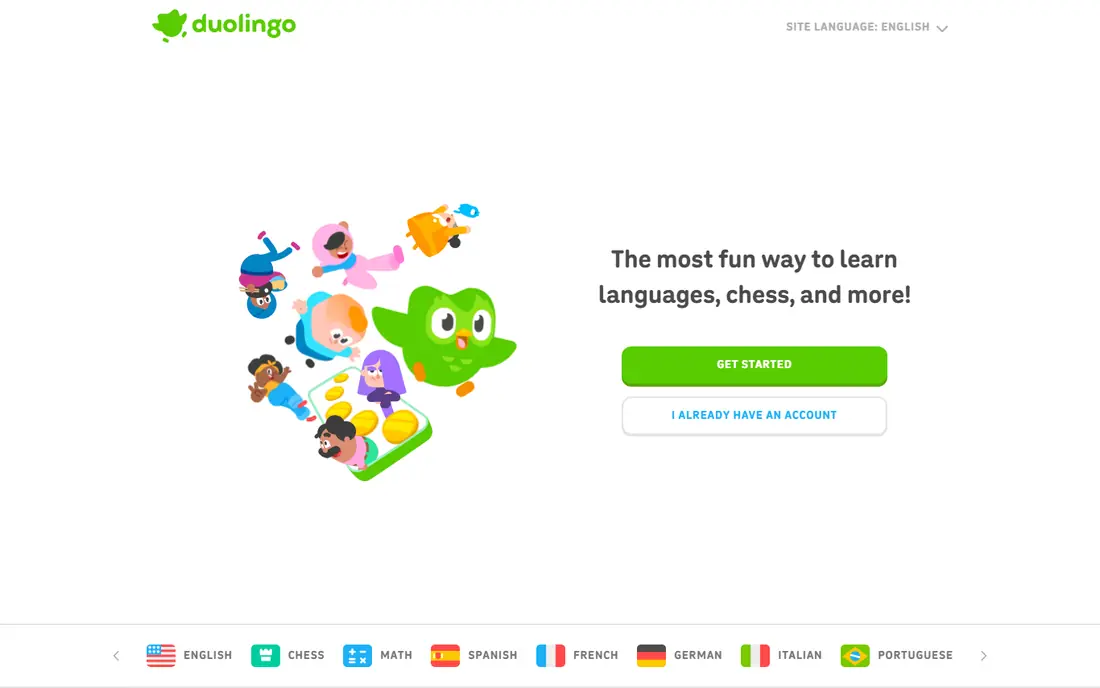
Duolingo offers a free Japanese course that introduces hiragana, katakana, and basic kanji alongside vocabulary and sentences. Short, game-like lessons make daily practice easy, and streaks help many learners keep going. The course covers travel, daily life, and basic conversation, giving beginners a solid base.
Grammar explanations are lighter than LingoDeer or Bunpro, and speaking practice is limited, so advanced learners will need more. Still, as a free starting point, Duolingo is our pick for building a daily Japanese habit.
- Free Japanese course
- Kana and kanji introductions
- Streaks and gamification
- Grammar explanations are light
- Speaking practice is limited
WaniKani
Ideal for: Kanji learning
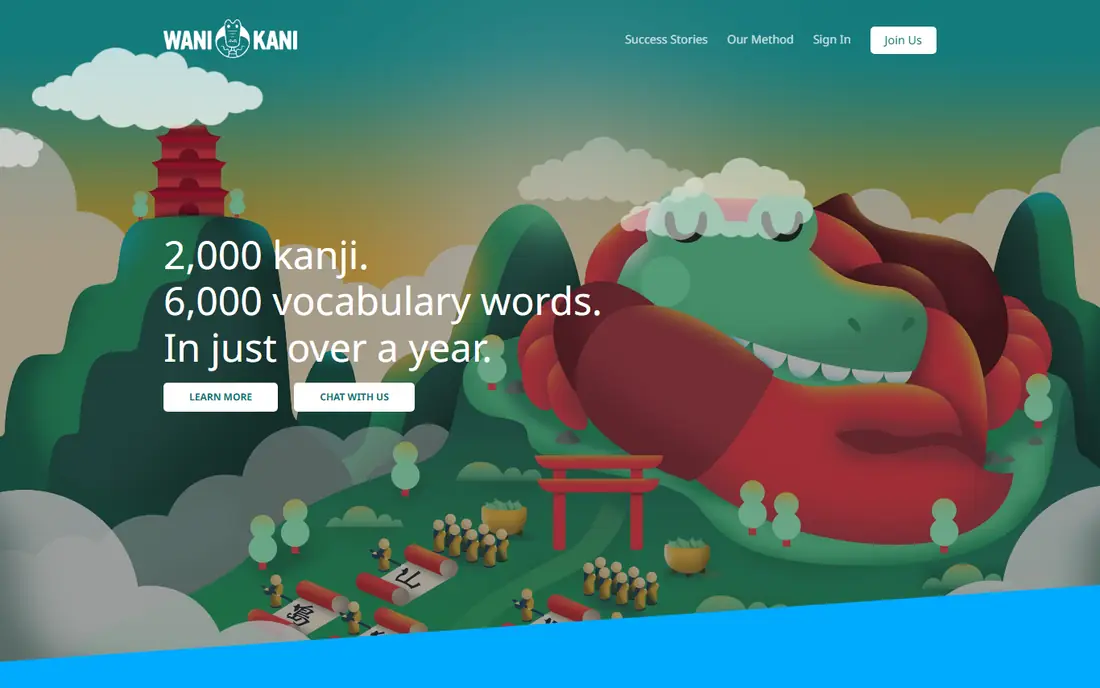
WaniKani teaches kanji through radicals, mnemonics, and spaced repetition, organized into levels that build from simple characters to complex ones. That structure suits learners who find kanji the hardest part of Japanese, since it breaks a huge task into small, ordered steps. Vocabulary tied to each kanji helps you see characters in real words.
WaniKani covers kanji and vocabulary only, not grammar or conversation, so pair it with a course app. Free levels cover the start, while full access needs a paid plan. If kanji blocks your progress, WaniKani is our pick for a focused, proven system.
- Structured kanji levels
- Mnemonics and radicals
- Spaced repetition
- Kanji only, not a full course
- Paid plan needed beyond early levels
Bunpro
Ideal for: Japanese grammar
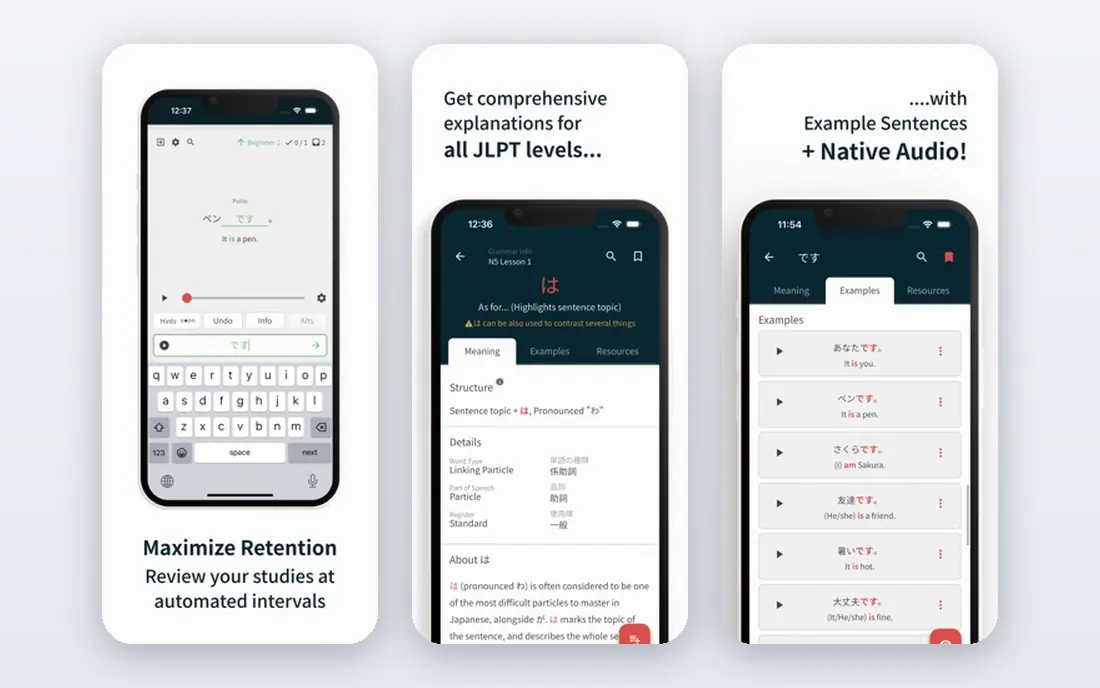
Bunpro organizes Japanese grammar by JLPT level, from N5 to N1, with example sentences, links to explanations, and spaced repetition reviews. That level structure helps learners track grammar progress clearly and fill gaps before an exam. You can also track vocabulary and kanji alongside grammar, though grammar remains the core.
Bunpro is a grammar tool, not a full course, so it works best alongside Duolingo, LingoDeer, or a tutor for speaking and listening. A free tier covers part of the system, while full access needs a paid plan. For grammar depth, Bunpro is our pick.
- Grammar points by JLPT level
- Example sentences
- Spaced repetition reviews
- Grammar focus only
- Needs a course or tutor for speaking
LingoDeer
Ideal for: Grammar-rich courses
LingoDeer is built with Asian languages in mind, and its Japanese course includes grammar notes that explain structures as you learn them. That grammar focus sets it apart from Duolingo, especially for learners who want to understand sentence patterns rather than just repeat them. Speaking, listening, and writing practice are built into lessons.
The community is smaller than Duolingo's, and full course access needs a paid plan. Still, for a structured Japanese course with real grammar teaching, LingoDeer is our pick.
- Strong grammar notes
- Asian language focus
- Speaking and listening practice
- Smaller community than Duolingo
- Full course needs a paid plan
Memrise
Ideal for: Japanese vocabulary
Memrise uses spaced repetition and native speaker videos to help Japanese vocabulary stick, which is useful for kana, everyday words, and phrases. Seeing and hearing native speakers helps with pronunciation and natural usage, beyond just reading a word list. You can focus on specific word sets for travel, work, or JLPT levels.
Memrise is less structured as a complete course than Duolingo or LingoDeer, and grammar coverage is limited. Use it as a vocabulary companion, not your only tool. If remembering words is your weak point, Memrise is our pick.
- Spaced repetition for vocabulary
- Native speaker videos
- Useful for kana and words
- Less structured as a full course
- Grammar coverage is limited
Rosetta Stone
Ideal for: Immersive Japanese
Rosetta Stone teaches Japanese through pictures, audio, and context, without translation, so you build meaning directly in Japanese. Speech recognition checks pronunciation, and the program covers everyday topics in a gradual sequence. That immersion suits learners who want to think in Japanese rather than translating from English.
The lack of direct grammar explanation can frustrate learners who want rules spelled out, and the price is higher than free apps. Progress can feel slower at first. If immersion suits you, Rosetta Stone is our pick for a proven method.
- Immersive picture-based method
- Speech recognition
- Long track record
- No direct grammar translation
- Price is higher
- Slower for some learners
italki
Ideal for: Live Japanese tutors
italki connects you with live Japanese tutors and professional teachers for one-to-one video lessons, covering conversation, JLPT preparation, and business Japanese. Live practice is the fastest way to improve speaking and listening, since a tutor can correct pronunciation and grammar in real time. Prices vary, so you can start with affordable community tutors.
Tutor quality varies, so read reviews and try a trial lesson first. Frequent lessons also add up in cost. Still, for speaking progress, italki is our pick, and it pairs well with WaniKani and Bunpro for kanji and grammar.
- Live lessons with Japanese tutors
- Flexible prices
- JLPT and conversation focus
- Quality varies by tutor
- Costs add up with frequent lessons
JapanesePod101
Ideal for: Audio Japanese lessons
JapanesePod101 offers a huge library of audio and video lessons for Japanese, organized by level from absolute beginner to advanced. Lessons cover conversation, grammar, and culture, with notes and transcripts that help you follow along. That audio focus suits commuters and listeners who learn best by hearing Japanese in context.
Reading and writing practice is lighter than in a course app, so pair it with WaniKani or a textbook for kanji. Full features need a paid plan beyond the free tier. If you learn best by listening, JapanesePod101 is our pick for audio lessons.
- Huge audio lesson library
- Cultural notes
- Lessons by level
- Audio focus means less reading practice
- Full features need a paid plan
How we picked these
We compared official feature pages, pricing pages, and app listings for Japanese learning tools live in October 2026. We favored apps with a real Japanese course or a distinct Japanese strength, whether kanji, grammar, or audio, rather than generic language apps with thin Japanese content. We left out apps with no Japanese course or no usable free tier or trial.
What to check before you choose
Start with your level and goal. Beginners suit Duolingo or LingoDeer, kanji learners suit WaniKani, grammar learners suit Bunpro, and speakers suit italki. Most learners need two tools: one course app and one specialist app for their weak area.
Next, learn kana early. Hiragana and katakana take a few weeks of daily practice, but they open up reading and make every other tool more useful. Do not rely on romaji alone for long, since it slows real reading progress.
Finally, practice speaking and listening from the start, even if you feel shy. A weekly tutor lesson or daily audio lesson builds confidence faster than months of silent study. Track JLPT levels if you want a clear measure of progress.
Before you commit to one option, spend a short trial period with your top two choices from this list. Use each one for a real task from your own work or daily routine, not just a demo, and note where you get stuck, what feels slow, and which features you actually open twice. Check the official pricing page again at that point, since free plans and paid tiers change, and confirm that the plan you need covers the users, projects, or devices you will use. Read the privacy and support pages too, especially for tools that hold personal or work data, and confirm how to export your work if you later switch. A tool that fits your routine in a two-week trial is a far better choice than a more powerful option you avoid opening, so let daily use, not a feature list alone, decide your final pick for best language learning app for japanese.
Frequently asked questions
What is the best language learning app for Japanese overall?
LingoDeer is our pick for a grammar-rich course, while Duolingo is our pick for a free start. Add WaniKani for kanji, Bunpro for grammar, and italki for speaking to cover all skills.
Is there a free app to learn Japanese?
Yes, Duolingo offers a free Japanese course, and WaniKani, Bunpro, LingoDeer, Memrise, and JapanesePod101 all have free tiers. italki is free to browse, though lessons are paid. Start free and pay for the specialist tool you need most.
Which app is best for learning kanji?
WaniKani is our pick for kanji, with structured levels, mnemonics, and spaced repetition. It covers kanji and related vocabulary only, so pair it with a course app for grammar and conversation.
Which app is best for Japanese grammar?
Bunpro is our pick for grammar, organized by JLPT level with example sentences and reviews. LingoDeer also teaches grammar well inside a full course. Use Bunpro for depth and LingoDeer for course structure.
How long does it take to learn Japanese with an app?
Basic conversation can take six months to a year of daily practice, while comfortable intermediate Japanese usually takes two years or more, largely because of kanji. Daily practice plus speaking lessons speeds progress a lot.
How do I pick between the free and paid plans in this list?
Start with the free plan or trial for any best language learning app for japanese option that offers one, and use it for at least two weeks on real tasks. Upgrade only when you hit a clear limit, such as a missing feature, a user cap, or a storage limit, rather than paying on day one for features you may never use. Compare the paid tier against the next option in this list as well, since a different tool's free plan may already cover what the first tool charges for.