Apollo.io leads the list, best for connected AI go-to-market execution. Listed starting prices: Leadfeeder from €79 a month. Lusha fits buyer ranking and signal-based outreach; ZoomInfo fits all-in-one enterprise GTM data and AI. The other 2 tools in the list cover narrower or pricier cases.
This Ainotely guide covers 5 options for lead generation software for enterprise. Each profile lists a starting price, free plan details, strengths and drawbacks, so you can drop poor fits quickly.
Key takeaways
Apollo.io takes the first slot, best suited to connected AI go-to-market execution.
For website visitor identification and activation, Leadfeeder is worth a look.
The main caution on ZoomInfo: large system may need onboarding time.
Expect to ask for a quote from Apollo.io, Lusha, ZoomInfo and SalesIntel; the other tools show a starting price.
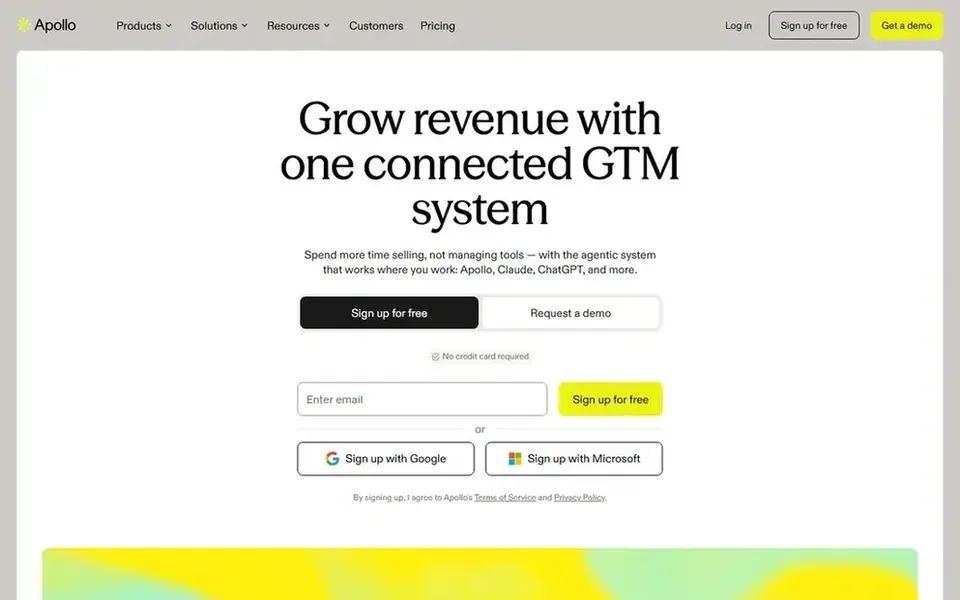
Apollo.io is a good fit for connected AI go-to-market execution. Apollo.io describes itself as an AI sales product rebuilt as one connected go-to-market system. Its stated focus is data, intelligence, and execution across the whole go-to-market motion.
Drawbacks to consider: Less specialized for pure web analytics.
Beyond that, organizations seeking only visitor identification or pure data enrichment may prefer a more focused tool. Since Apollo spans multiple functions, teams should map their workflows before rollout to avoid overlap with existing systems. Pricing for Apollo.io is not stated here, so ask the vendor for current figures. Trial and free access: Free trial.
Lusha is aimed squarely at buyer ranking and signal-based outreach. Consider Lusha when buyer ranking and signal-driven outreach are central to your motion. Lusha presents itself as B2B data and intelligence for go-to-market teams and AI agents.
Enterprise teams exploring AI-assisted prospecting may value that combination of contact data and buyer prioritization. Organizations needing deep account-based marketing workflows should compare broader suites. Lusha does not show a starting price in this comparison, so check the vendor site for current pricing. On free options: Not stated.
What to check first: Signal features may need workflow setup.
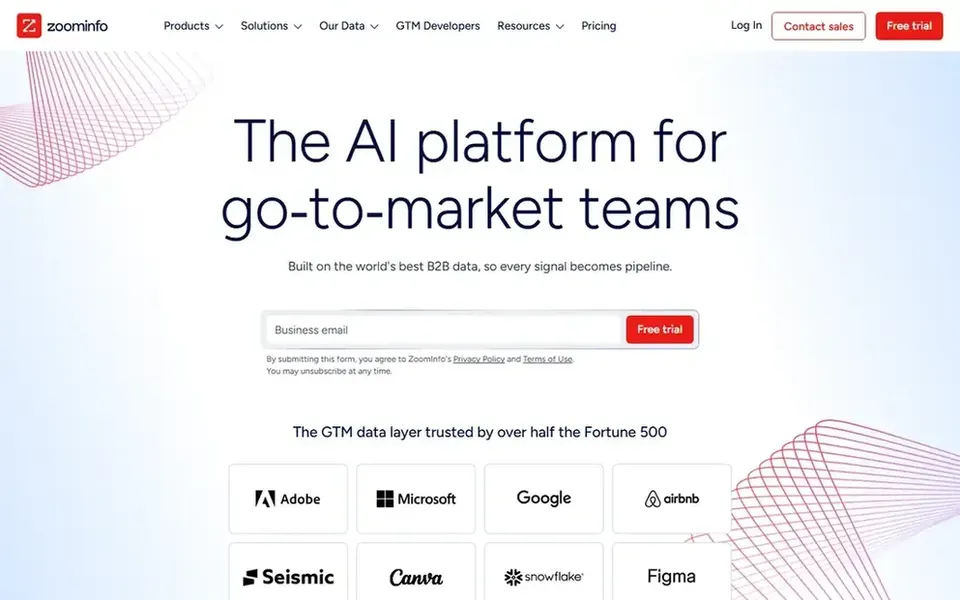
ZoomInfo makes the most sense for all-in-one enterprise GTM data and AI. ZoomInfo presents itself as a go-to-market product that merges marketing and sales AI with B2B data.
Downsides: Large product may need onboarding time.
More specifically, the product's broad feature set can need meaningful setup and training before teams see full value. Check the vendor site for ZoomInfo pricing; none is listed in this comparison. On free options: Free trial.
Best for: Buying signals and verified contact data
SalesIntel serves buying signals and verified contact data. SalesIntel positions itself around turning B2B buying signals into pipeline, with AI and human-verified contacts and AI agents powering go-to-market workflows for sales, marketing, and revenue operations teams. Enterprises that prioritize signal-based pipeline generation and verified contact data may find this combination relevant to their lead generation strategy.
Points against: Smaller brand recognition.
More specifically, teams wanting a single vendor for data and full engagement may have to integrate extra tools. SalesIntel is less widely known than some bigger products, so buyers should review its documented coverage against their target markets. Consider SalesIntel when buying signals and verified contacts are the core requirement. This comparison lists no price for SalesIntel; ask the vendor. Trial and free access: Not stated.
Best for: Website visitor identification and activation
Leadfeeder is a good fit for website visitor identification and activation. Leadfeeder spots the companies visiting your website, presents what brought them there, and helps activate the best-fit ones so more become leads. This visitor identification and B2B web analytics focus fits enterprise marketing teams that want to convert anonymous site traffic into actionable account lists for sales follow-up.
Limits to weigh: Needs traffic volume to be handy.
As for the details, pick Leadfeeder when website visitor intelligence is the missing piece in your lead generation program. Beyond that, firms with low web traffic may see restricted value. Beyond that, Leadfeeder centers on website behavior instead of offering a wide contact database. So it generally complements instead of replaces a data provider. Entry price for Leadfeeder: €79 per month. Free access exists with Leadfeeder.
Ask Apollo.io, Lusha, ZoomInfo and SalesIntel for a written quote, since no starting price is shown.
Look at the free plan from Leadfeeder closely: its caps decide whether it is usable for real work.
Take the trial from Apollo.io and ZoomInfo and push a live task through it before you pay.
Before choosing Apollo.io, weigh its main limit: wide scope may need process design.
Ask Apollo.io which support channels and response times come with the plan you would buy.
Read the plan comparison for SalesIntel carefully; key features often start on a higher tier.
How we picked
For each of the 5 tools we noted price, free plan or trial, fit for lead generation software for enterprise and the main limit, using vendor pages and documentation. Where a vendor does not publish a price, the entry says quote. Where a price depends on seats or billing term, the entry says so. The order reflects how well each tool fits the most common buying scenario for lead generation software for enterprise, then price clarity, then free plan access. It is a starting point, not a verdict.
Every price and plan detail on this page comes from the vendors’ own websites. We did not run hands-on tests unless the text says so, and we do not publish star ratings or review scores. See how we score and our disclosure.
Keep your shortlist in one place
Paste prices, trial dates and notes from this guide into Ainotely, our AI note app. It files them into a topic and pulls out tasks like “cancel trial by Friday”. Free 7-day trial, no card needed.
Not all of them. Apollo.io, Lusha, ZoomInfo and SalesIntel publish no starting price, so expect a quote request for those. The rest, Leadfeeder included, show a starting price, though seats and billing terms still change the final cost.
Is Apollo.io the right pick for everyone comparing lead generation software for enterprise?
No single tool suits every team. Apollo.io comes first because it fits connected AI go-to-market execution, while Lusha suits buyer ranking and signal-based outreach and ZoomInfo suits all-in-one enterprise GTM data and AI. Match the tool to your own size, budget and workflow before deciding.
What should enterprises look for in lead generation software?
Enterprises should prioritize data coverage and quality, compliance terms, CRM integration, and the capacity to act on buying signals. Confirm details on each vendor site before deciding.
Which options for lead generation software for enterprise have a free plan?
Leadfeeder is the only tool in this list with a free plan. Free plans usually cap users, projects or features, so check the limits on the vendor page. Several others offer a trial instead.
Can I try these tools before paying?
Often, yes. Leadfeeder has a free plan and Apollo.io and ZoomInfo offer a free trial. Use your own data and a real task during the test, and check what the free tier or trial limits before you rely on it.