Best Life Sciences Software in 2026: 8 Platforms Compared

- 1
 BenchlingBiotech R and D platformVisit
- 2
 Veeva VaultEnterprise life sciences cloudVisit
- 3
 LabguruLab notebook and LIMSVisit
- 4
 Sapio SciencesAI-native lab platformVisit
- 5
 ScispotCloud lab operating systemVisit
- Benchling, Labguru, and SciNote lead for research labs that need electronic notebooks, sample tracking, and experiment management.
- Veeva Vault and Medidata Rave suit larger organizations running clinical, regulatory, and quality work at enterprise scale.
- Sapio Sciences and Scispot offer modern lab platforms that combine notebook, LIMS, and sample management for growing biotech firms.
- LabArchives suits academic and institutional labs that need a proven, affordable electronic notebook with compliance controls.
Quick comparison
| Product | Ideal for | Price from | Free version | |
|---|---|---|---|---|
| Benchling | Biotech R and D platform | See website | Free trial | Visit |
| Veeva Vault | Enterprise life sciences cloud | See website | No | Visit |
| Labguru | Lab notebook and LIMS | See website | Free trial | Visit |
| Sapio Sciences | AI-native lab platform | See website | Free trial | Visit |
| Scispot | Cloud lab operating system | See website | Free trial | Visit |
 LabArchives | Academic electronic notebook | See website | Free trial | Visit |
 SciNote | Open lab notebook and inventory | Free | Yes | Visit |
 Medidata Rave | Clinical trial data capture | See website | No | Visit |
The best life sciences software
Life sciences software covers a wide field, from research notebooks and lab management to clinical trials, regulatory documents, and quality systems. No single tool covers all of it well, so this list spans research, lab, and clinical platforms, and the right choice depends on which stage of the pipeline you work in. We compared official product pages, documentation, and public reviews, focusing on research, lab, clinical, and compliance fit.
Note: this article covers business and research software for life sciences organizations. It is not medical advice, and software choices for regulated work should be validated with quality and compliance teams before use.
Benchling
Ideal for: Biotech R and D platform
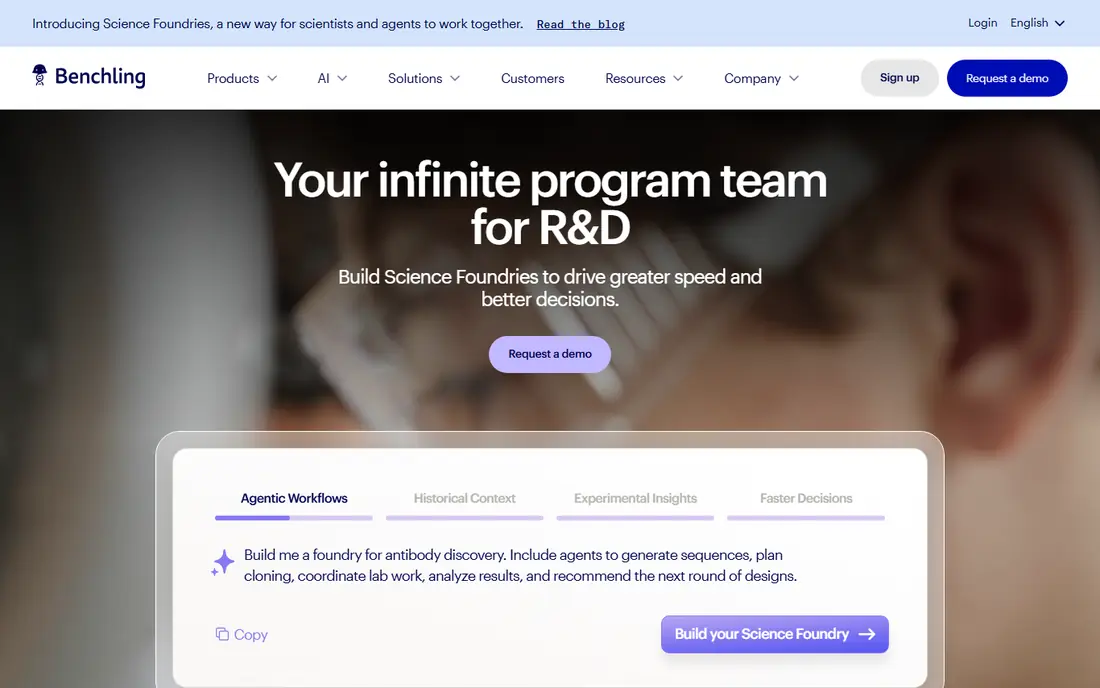
Benchling is a cloud platform for biotech research and development, combining electronic lab notebooks, molecular biology tools, sample tracking, and workflow management. Its strength is that research data, sequences, plasmids, and experiment records live in one system designed for biotech, rather than in generic documents and spreadsheets. Integrations with instruments and other lab tools extend that central record.
Commercial pricing is enterprise and quote-based, while academic use has different terms, so teams should confirm the plan that applies to them. Implementation also takes data migration and workflow design. For biotech R and D teams, Benchling is a leading platform and our pick for research labs.
- Modern R and D cloud for notebooks, sequences, and samples
- Strong biotech workflows
- Good integrations
- Enterprise pricing for commercial teams
- Free academic use differs from commercial plans
Veeva Vault
Ideal for: Enterprise life sciences cloud
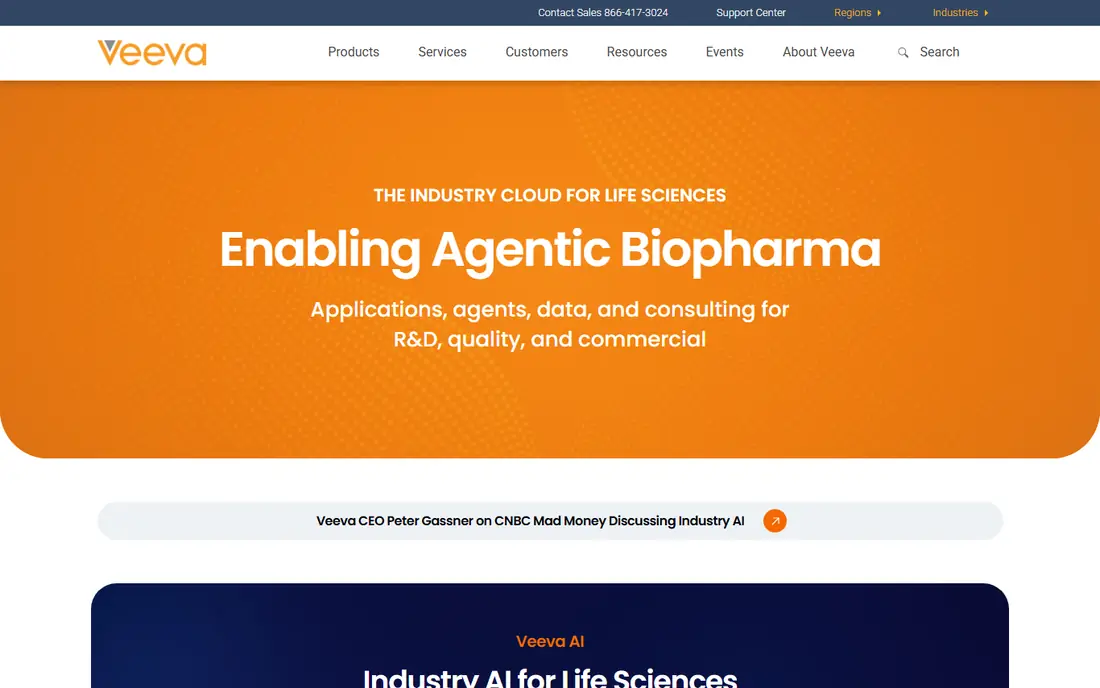
Veeva Vault is the industry-standard cloud platform for life sciences content and data, covering clinical, regulatory, quality, safety, and commercial work through its Vault applications. Its strength is that regulated documents, submissions, trial data, and quality records can be managed in one validated environment, with audit trails and controls that regulators expect. Most large pharma companies use Veeva in some form.
Pricing is enterprise, implementation is a major project, and smaller organizations will find Veeva more than they need. For large life sciences companies with regulatory and quality requirements, Veeva Vault is the default choice.
- Industry-standard Vault for clinical, regulatory, and quality
- Broad application suite
- Global scale
- Enterprise pricing and implementation
- Complex for smaller organizations
Labguru
Ideal for: Lab notebook and LIMS

Labguru, from Cenevo, combines an electronic lab notebook with laboratory information management, sample tracking, inventory, and equipment management for small to mid-size labs. That combination suits labs that need experiment records and sample operations in one system without buying separate notebook and LIMS products. Pricing is more accessible than enterprise platforms.
Very large or highly regulated labs may need the depth of Benchling or Veeva, and feature depth varies by plan. For growing labs, Labguru is a practical and well-rounded choice.
- Electronic notebook plus LIMS and inventory
- Good for small to mid-size labs
- Affordable entry
- Feature depth varies by plan
- Enterprise labs may need broader platforms
Sapio Sciences
Ideal for: AI-native lab platform
Sapio Sciences offers an AI-native lab platform combining electronic notebook, LIMS, and sample management, with configurable workflows for research, bioprocessing, and diagnostics labs. Its configurability lets labs adapt the system to their processes rather than forcing a fixed workflow, and AI features help with data entry and analysis. An academic edition is available for research institutions.
Configuration takes effort, and pricing is quote-based, so buyers should run a pilot with their real workflows. For labs that want a modern, configurable platform, Sapio is a strong option.
- Combined ELN and LIMS with AI features
- Configurable workflows
- Academic edition available
- Implementation and configuration take effort
- Pricing by quote
Scispot
Ideal for: Cloud lab operating system
Scispot positions itself as a cloud-native lab operating system, covering electronic notebooks, sample management, inventory, and workflows in one modern interface. Its appeal is simplicity for growing biotech labs: one system for daily lab work, with integrations to instruments and other tools, without the complexity of an enterprise suite. That focus helps small teams adopt quickly.
Scispot is newer than Benchling or Veeva, so buyers should check references, validation support, and long-term roadmap during a pilot. Pricing is quote-based. For growing labs that want a modern lab OS, Scispot is worth evaluating.
- Cloud-native lab OS for notebooks, samples, and inventory
- Modern interface
- Good integrations
- Newer vendor than Benchling or Veeva
- Pricing by quote
LabArchives
Ideal for: Academic electronic notebook
LabArchives is a widely used electronic lab notebook for academic and institutional labs, with experiment records, version control, audit trails, and sharing controls that support research integrity and compliance. Institutional plans make it affordable for universities, and its long track record gives research offices confidence. It also covers inventory and scheduling in related products.
Biotech-specific workflow depth, such as sequence and plasmid tools, is lighter than Benchling, and the interface is functional rather than modern. For academic labs that need a proven notebook, LabArchives is a solid choice.
- Proven electronic notebook for academia
- Compliance and audit features
- Affordable institutional plans
- Less biotech-specific workflow depth than Benchling
- Interface is functional
SciNote
Ideal for: Open lab notebook and inventory
SciNote is an open-core electronic lab notebook with inventory, protocol management, and team collaboration, offering a free tier for individual users and paid plans for regulated and team use. Its open approach and audit trails suit research labs that want transparency and control, and its inventory tools help track samples and reagents alongside experiments.
Advanced compliance, validation, and team features require paid plans, and support varies by tier. For labs that want an open, affordable notebook to start with, SciNote is a good pick.
- Open-core electronic notebook
- Inventory and protocol management
- Free tier for individuals
- Regulated and team features need paid plans
- Support varies by plan
Medidata Rave
Ideal for: Clinical trial data capture
Medidata Rave is the industry-standard electronic data capture system for clinical trials, used by sponsors and research sites to collect, clean, and manage trial data. It sits within Medidata's wider clinical platform, covering randomization, trial management, and patient data, with global support for multicountry trials. For clinical-stage organizations, Rave is a proven and expected choice.
Pricing is enterprise and quote-based, and Rave is clinical-only, so research labs should look at Benchling or Labguru instead. For clinical trial data capture, Medidata Rave is a leading platform.
- Industry-standard electronic data capture for trials
- Broad clinical suite
- Global trial support
- Enterprise pricing
- Clinical-only scope, not a general lab tool
How we picked these
We compared official product pages, documentation, and public reviews for software used in life sciences research, lab management, clinical trials, and regulatory work. We covered different pipeline stages, since no single tool fits all, and we noted where pricing is quote-based rather than published. Tools without a clear life sciences focus were left out.
What to check before you choose life sciences software
Start with your pipeline stage and regulatory needs. Research labs need notebooks and sample tracking, while clinical and quality teams need validated systems with audit trails and compliance controls. A tool that works for discovery may not meet clinical or manufacturing requirements, so confirm validation and compliance support early.
Next, pilot with real experiments, samples, or trial data, and check instrument integrations, data migration, and user adoption by bench scientists, not just managers. Finally, confirm total cost, including implementation, validation, training, and ongoing support, since enterprise life sciences software costs extend well beyond licenses. A pilot with quality and IT teams involved will surface issues before a full rollout.
Also check data export and long-term access, since research records must remain readable for years after a project ends. Confirm that experiments, samples, and audit trails can be exported in usable formats, and what happens to data if you switch vendors. For academic labs, check institutional licensing and single sign-on, since university IT requirements often decide which tools can be adopted, regardless of feature quality.
Frequently asked questions
What is life sciences software?
Life sciences software supports research, lab work, clinical trials, regulatory submissions, and quality management for pharma, biotech, medical device, and academic organizations. It includes electronic notebooks, LIMS, clinical data capture, regulatory platforms, and quality systems.
What is the best life sciences software for a research lab?
Benchling leads for biotech R and D, Labguru suits small to mid-size labs, and LabArchives and SciNote suit academic labs. The best choice depends on lab size, workflow type, and whether biotech-specific tools such as sequence management matter.
What is the difference between an ELN and a LIMS?
An electronic lab notebook, or ELN, records experiments, procedures, and results, while a laboratory information management system, or LIMS, tracks samples, tests, inventory, and workflows. Many modern platforms, including Benchling, Labguru, and Sapio, combine both.
Do life sciences tools need validation?
Tools used for regulated work, such as clinical trials, quality, and manufacturing, usually need validation to show they work as intended and meet regulatory requirements. Confirm validation support, audit trails, and electronic signature features with the vendor and your quality team.
How much does life sciences software cost?
Costs range from free tiers for academic and individual use to enterprise quote-based pricing for Benchling, Veeva, and Medidata. Implementation, validation, and training add to license costs, so request a full quote for your use case.