Best M and A Software in 2026: 8 Platforms Compared

- DealRoom is our pick for most deal teams because it combines pipeline, diligence, and project management in one platform.
- Datasite suits large, complex deals that need a secure data room plus diligence workflows.
- DealCloud suits firms that want deal management inside a CRM-style system with strong reporting.
-
Security, permission control, and workflow fit matter more than feature counts, since deals involve sensitive data.
-
Permission hygiene during diligence prevents leaks, so test how fast you can revoke a buyer access when talks end.
Quick comparison
| Product | Ideal for | Price from | Free version | |
|---|---|---|---|---|
 DealRoom | Pipeline and diligence in one | See website | Free trial | Visit |
 Datasite | Large complex deals | See website | Free trial | Visit |
 Intralinks | Secure deal collaboration | See website | Free trial | Visit |
 Firmex | Mid-market data rooms | See website | Free trial | Visit |
 Midaxo | Deal lifecycle management | See website | Free trial | Visit |
 Devensoft | Integration management | See website | Free trial | Visit |
 DealCloud | CRM-style deal management | See website | Free trial | Visit |
 Affinity | Relationship and pipeline tracking | See website | Free trial | Visit |
The best m&a software
M and A software covers the deal lifecycle: sourcing targets, managing a pipeline, running due diligence, and tracking integration. Security is central, since deal documents are sensitive and access must be tightly controlled. We compared official feature pages, pricing pages, and public reviews for the options below.
DealRoom
Ideal for: Pipeline and diligence in one
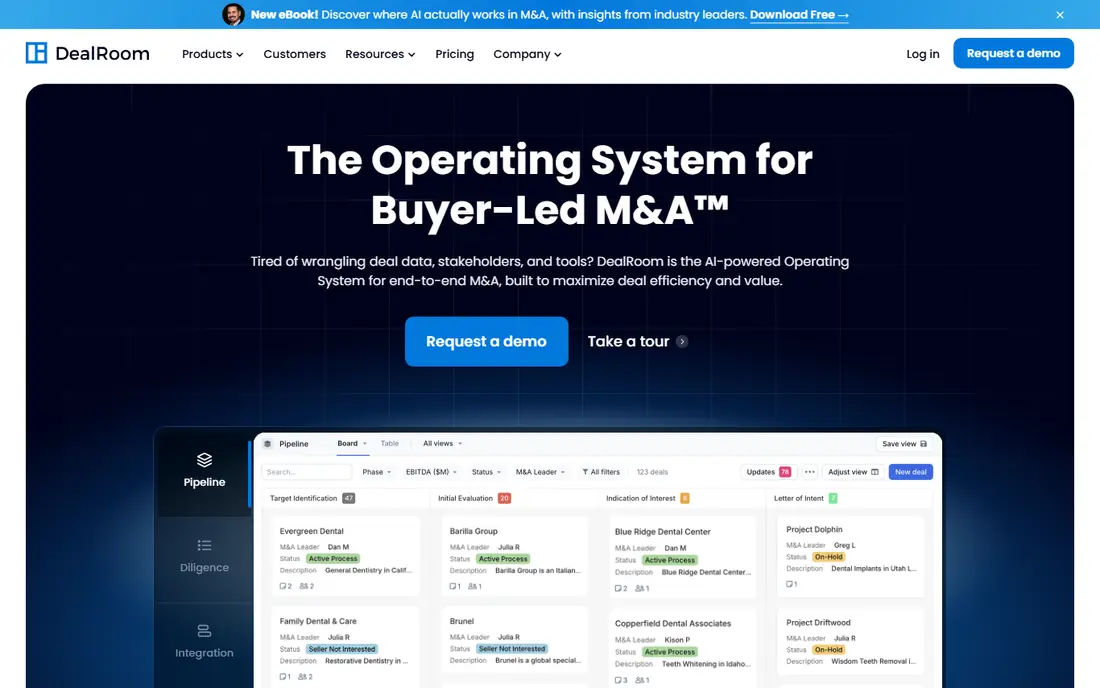
DealRoom combines deal pipeline management, due diligence, and project tracking in one platform. Teams can manage targets, run diligence request lists, track document uploads, and coordinate tasks without switching tools. Collaboration features help buyers, sellers, and advisers work in one place with controlled access.
Pricing is quote-based, and smaller firms may find the full platform broad for a single deal. For deal teams that want pipeline through diligence in one system, DealRoom is our top pick.
- Pipeline, diligence, and project tools in one system
- Document requests and tracking
- Good collaboration
- Pricing is quote-based
- Smaller firms may find it broad
Datasite
Ideal for: Large complex deals
Datasite is a leading virtual data room provider for large, complex deals, with diligence workflows, AI-assisted document handling, and analytics on buyer activity. Deal teams can see which documents draw interest, control permissions finely, and manage Q and A securely. That depth suits high-stakes transactions.
Enterprise pricing and scale make Datasite more than small deals need. For large deals where security, analytics, and diligence depth matter most, Datasite is a leading choice.
- Secure data rooms at scale
- Diligence workflows
- Strong analytics on buyer interest
- Enterprise pricing
- More system than small deals need
Intralinks
Ideal for: Secure deal collaboration
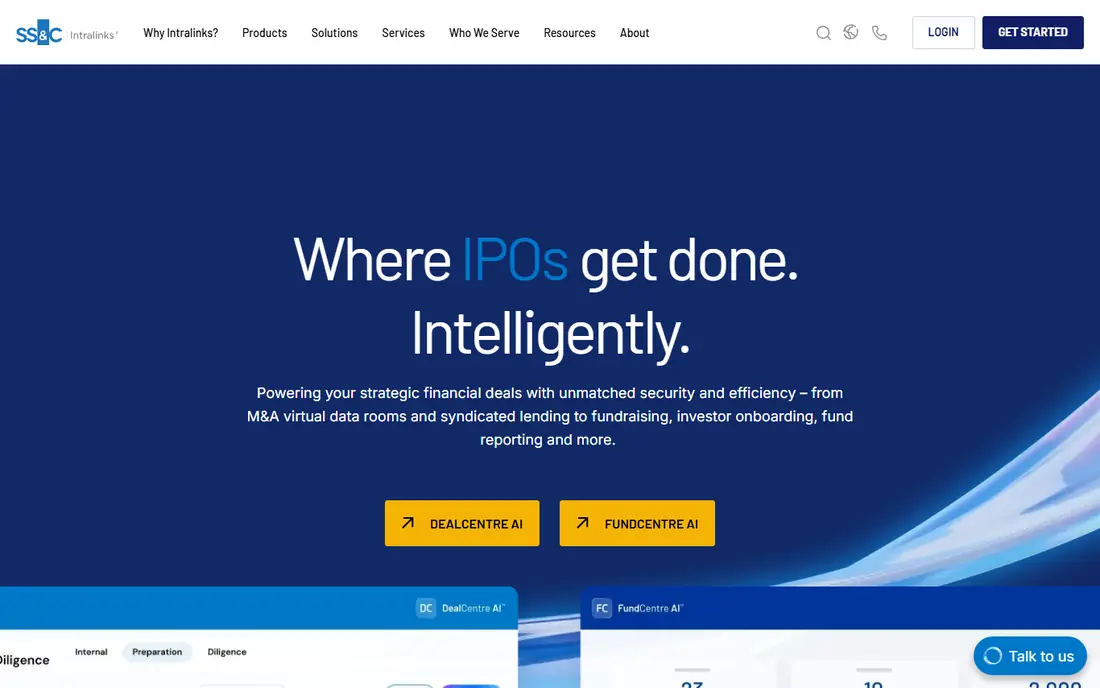
Intralinks has a long history in secure deal collaboration, offering virtual data rooms with fine permission controls, document protection, and audit trails. Banks, law firms, and corporates trust it for sensitive transactions. Collaboration tools support Q and A and staged document release.
The interface feels enterprise-heavy to some users, and pricing is quote-based. For teams that rank security track record first, Intralinks remains a respected, dependable option.
- Long-trusted secure data rooms
- Permission controls
- Deal collaboration tools
- Interface feels enterprise-heavy
- Pricing is quote-based
Firmex
Ideal for: Mid-market data rooms
Firmex offers virtual data rooms with a focus on simplicity and security for mid-market deals. Setup is fast, permissions are clear, and support earns good reviews. Teams that mainly need a secure room for diligence, rather than a full pipeline system, will find Firmex straightforward.
Pipeline and integration tools are fewer than DealRoom offers, and advanced analytics vary by plan. For mid-market deals that need a secure, simple data room, Firmex is a practical pick.
- Simple, secure data rooms
- Clear pricing options
- Good support
- Fewer pipeline tools than DealRoom
- Advanced analytics vary
Midaxo
Ideal for: Deal lifecycle management
Midaxo covers the deal lifecycle from sourcing through diligence to integration, with workflow tools for each stage. Teams can track tasks, documents, and integration milestones in one system, and reporting shows deal progress clearly. That breadth suits corporate development teams running several deals.
The learning curve is real, and pricing is quote-based. For corporate teams that want lifecycle management beyond a data room, Midaxo is a strong choice.
- End-to-end deal lifecycle tools
- Diligence and integration tracking
- Good reporting
- Learning curve
- Pricing is quote-based
Devensoft
Ideal for: Integration management
Devensoft focuses on post-close integration: planning, task tracking, synergy capture, and reporting for merged companies. Teams that struggle most after signing will value its structure for integration workstreams, owners, and deadlines. That post-close focus sets it apart.
Pre-deal sourcing and diligence tools are narrower than DealRoom or Datasite. For teams that want integration discipline after close, Devensoft is a focused, useful pick, often alongside a data room.
- Integration planning and tracking
- Synergy tracking
- Good for post-close work
- Narrower pre-deal tools
- Smaller vendor than Datasite
DealCloud
Ideal for: CRM-style deal management
DealCloud, from Intapp, offers deal and relationship management in a CRM-style system built for private equity, investment banking, and professional services. Pipeline tracking, contact management, and reporting help firms see deal flow and coverage clearly. Integration with other Intapp tools adds depth.
Implementation needs planning, and pricing is quote-based. For funds and banks that want deal management with CRM depth, DealCloud is a leading choice.
- Deal CRM with pipeline and reporting
- Relationship tracking
- Strong for funds and banks
- Implementation needs planning
- Pricing is quote-based
Affinity
Ideal for: Relationship and pipeline tracking
Affinity tracks relationships and deal pipelines automatically, pulling contact and interaction data from email and calendars to show who knows whom. Sourcing teams use it to find warm introductions to targets and to manage pipeline stages. That relationship intelligence is its edge.
Diligence and data room depth trail DealRoom and Datasite, so Affinity suits sourcing and pipeline work best. For teams that win deals through relationships, Affinity is a smart, modern pick.
- Automated relationship data
- Pipeline tracking
- Good for sourcing teams
- Less diligence depth
- Pricing varies by team size
How we picked these
We compared official feature pages, pricing pages, and public reviews, and we kept only M and A software operating in October 2026 with real deal pipeline, diligence, or integration tools. We favored platforms with strong security, permission controls, and workflow depth. We left out generic project tools with no deal features and data rooms with no diligence workflow.
We also weighed mobile access for deal teams, since diligence questions arrive outside office hours and on travel days. Platforms with usable mobile review and approval scored higher than desktop-only tools.
What to check before you choose M and A software
Start with your deal stage pain. Sourcing teams need pipeline and relationship tools, diligence teams need secure rooms and request tracking, and integration teams need post-close task management. One platform rarely excels at all three, so match the tool to your bottleneck.
Next, check security and permissions carefully. Confirm granular access controls, watermarking, audit trails, and data residency options, and test how quickly you can revoke access. Finally, run a pilot on a real or mock deal. Document upload, Q and A, and reporting speed under real pressure tell you more than any demo.
Adviser coordination is another practical test. Buyers, sellers, lawyers, and bankers all need different access levels, and a platform that handles staged releases and Q and A cleanly saves weeks of email chaos. Run a mock deal with your advisers before a live transaction, and confirm that permission changes, watermarking, and audit trails behave as promised under real pressure.
Questions to ask before you commit
Ask vendors how their platform handles multi-party access when advisers join and leave during a deal. Confirm that permission templates cover buyers, sellers, lawyers, and bankers separately, and that access revocation is instant and auditable. Deals move fast, and permission lag creates real leak risk.
Ask about document version control during diligence, since sellers update files while buyers review them. Confirm that buyers see clearly labeled versions, that prior versions remain accessible when needed, and that Q and A threads link to specific document versions. Version confusion wastes diligence time and can cause disputes later.
Ask how the platform supports post-close obligations such as purchase price adjustments and escrow tracking. Some tools end at signing, while others carry tasks into integration, and the right fit depends on whether your team manages post-close work in the same system. Confirm closeout and archiving behavior before you commit.
Frequently asked questions
What is the best M and A software?
DealRoom is our pick for most deal teams because it combines pipeline, diligence, and project tools in one platform. Datasite suits large complex deals, while DealCloud suits firms that want CRM-style deal management.
What is a virtual data room in M and A?
A virtual data room is a secure online space where sellers share diligence documents with vetted buyers under controlled access. Permissions, watermarking, and audit trails protect sensitive data, and Q and A tools manage buyer questions securely.
Do small firms need M and A software?
Small firms doing occasional deals can manage with a simple data room such as Firmex plus spreadsheets. Firms running several deals, or deals with many documents and parties, benefit from pipeline and diligence platforms that track tasks and access centrally.
How is M and A software priced?
Most platforms here use quote-based pricing tied to deal size, users, data volume, and project length. Request quotes for your deal profile, and confirm what happens to data and access after a deal closes.
Can M and A software help after a deal closes?
Yes. Tools such as Midaxo and Devensoft track integration tasks, synergy targets, and milestones after close. That structure helps merged teams avoid dropped tasks during the busy first months after signing.
How long should a data room stay open after a deal closes?
Most sellers close buyer access at signing or closing, then archive documents for the retention period required by the deal and by law. Confirm archiving, export formats, and who retains access after close before launch, since post-close disputes sometimes need the diligence record. A clear closeout plan avoids lingering access to sensitive files.