Our first pick is Amazon RDS, best for managed relational engines on AWS. Look at Google AlloyDB for demanding PostgreSQL-compatible workloads, and at Amazon DynamoDB for serverless key-value NoSQL at scale. All 6 tools are compared below on price, free plan and limits.
If you are comparing managed cloud database platforms, this page covers 6 tools in one place: what each is best for, what it costs to start, whether it has a free plan, and the main limit to know about.
Key takeaways
This list starts with Amazon RDS, which is built for managed relational engines on AWS.
Only 2 of the 6 tools have a free plan (Amazon RDS, MongoDB Atlas), so check the caps.
MongoDB Atlas suits document and AI application workloads.
Pricing across the list, from Amazon RDS to MongoDB Atlas, is by quote only.
Amazon RDS serves managed relational engines on AWS. If your infrastructure lives elsewhere, a provider-native managed database may be a better operational fit. On top of that, organizations migrating existing relational applications frequently find the engine choice handy.
RDS is built around relational engines, so key-value and document workloads belong on DynamoDB or another NoSQL service. It also assumes a degree of comfort with AWS operations and networking. Amazon RDS shows no starting price here, so confirm the cost on the vendor site. A free plan is available with Amazon RDS.
Best for: Demanding PostgreSQL-compatible workloads
Google AlloyDB is built with demanding PostgreSQL-compatible workloads in mind. It fits teams that have standardized on PostgreSQL and need a managed choice tuned for heavier enterprise use, whereas keeping compatibility with the PostgreSQL ecosystem and tooling they already know.
It also runs within Google Cloud, which matters if your workloads live elsewhere. Google AlloyDB shows no starting price here, so confirm the cost on the vendor site. Free plan details: Not stated.
Where it falls short: PostgreSQL compatibility only.
For serverless key-value NoSQL at scale, Amazon DynamoDB is a natural candidate. Amazon DynamoDB is a completely managed serverless key-value NoSQL database built to run high-performance applications at any scale, with built-in security, continuous backups and automatic multi-region replication.
When your data is relational or you need ad hoc query adaptability, Amazon RDS is the more natural fit. Amazon DynamoDB does not show a starting price in this comparison, so check the vendor site for current pricing. Free options: Not stated.
Best for: Managed MySQL, PostgreSQL and SQL Server
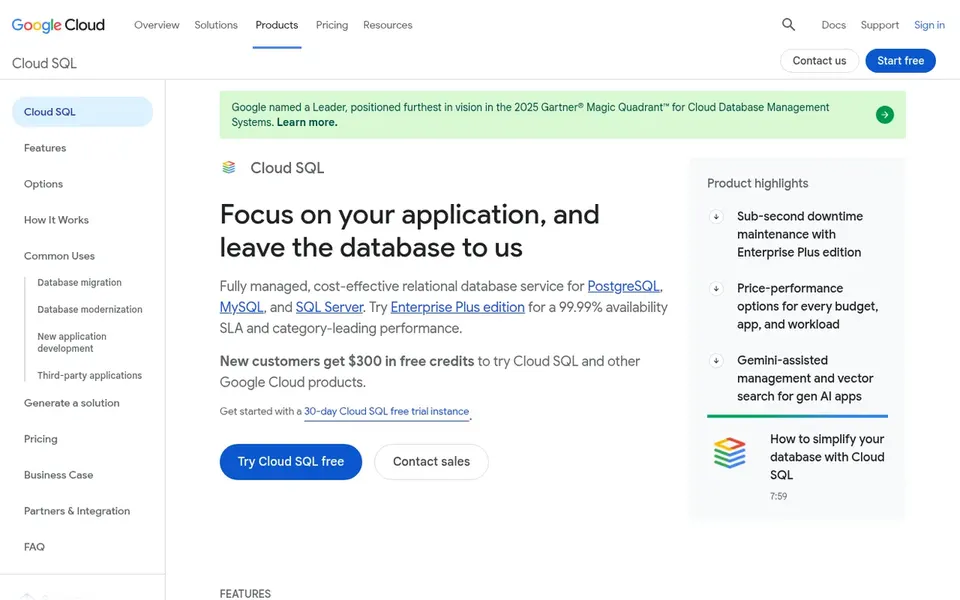
Google Cloud SQL was built for managed MySQL, PostgreSQL and SQL Server. Google Cloud SQL is a completely managed relational database service for MySQL, PostgreSQL and SQL Server.
In daily use, if your stack is built around another cloud provider or you need a NoSQL engine, compare the other choices before committing. Check the vendor site for Google Cloud SQL pricing; none is listed in this comparison. Free plan details: Not stated.
Best for: Microsoft-centric relational applications
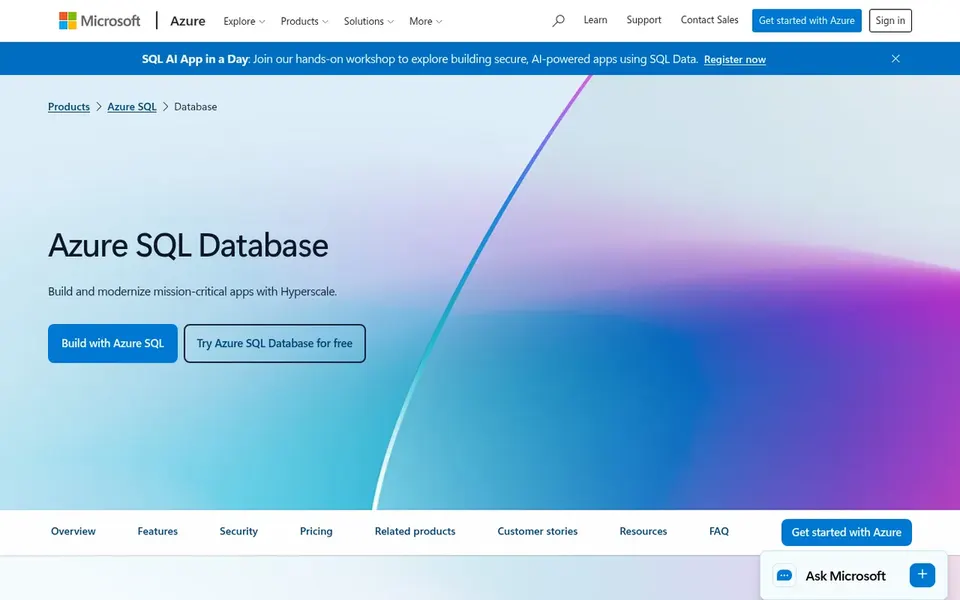
Azure SQL Database serves Microsoft-centric relational applications. Azure SQL Database is a completely managed cloud relational database designed for high performance and reliability.
Also, Microsoft positions it around automation, letting teams build and scale applications without manual database administration. It also makes most sense within the Azure ecosystem. Azure SQL Database does not show a starting price in this comparison, so check the vendor site for current pricing. Free access: Not stated.
Pick MongoDB Atlas if this describes you: document and AI application workloads. If your workload is strictly relational with complicated joins, a managed SQL service may be more straightforward.
Where it falls short: Needs MongoDB familiarity.
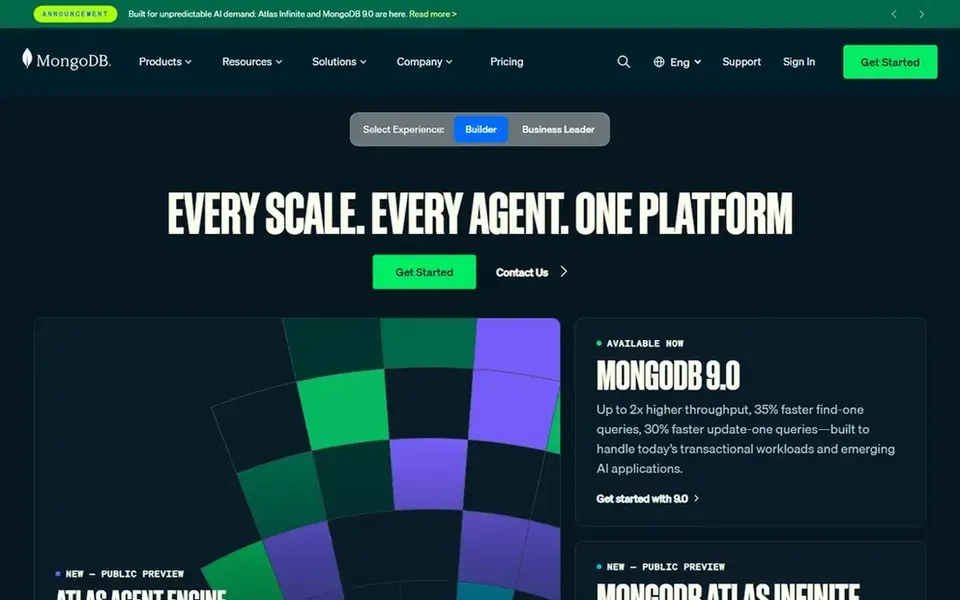
Worth adding: MongoDB Atlas is a managed product for document-oriented data, presented by MongoDB as a run-anywhere product that brings together live data, intelligent retrieval and governed action for AI applications and agents. This comparison lists no price for MongoDB Atlas; ask the vendor. MongoDB Atlas has a free plan.
Confirm the entry price with every vendor: no tool from Amazon RDS to MongoDB Atlas shows a fixed starting price.
Check what the free option really includes: Amazon RDS and MongoDB Atlas offer a free plan, and usage caps differ.
Read the limits listed for Amazon RDS first: Relational focus only.
Work out what Google Cloud SQL costs with your real seat count, add-ons and usage, not just the entry price.
A short pilot of Azure SQL Database with your real workflow tells you more than a feature table.
How we picked
We compared the tools on published pricing, free plan or trial availability, feature coverage for managed cloud database platforms, and the limits each vendor documents. Treat prices as a snapshot: vendors change plans often, so check the vendor site for the figure that applies today. Tools are placed by general fit for managed cloud database platforms, with price clarity and free access as tie-breakers. A different team can reasonably rank them differently.
Every price and plan detail on this page comes from the vendors’ own websites. We did not run hands-on tests unless the text says so, and we do not publish star ratings or review scores. See how we score and our disclosure.
Keep your shortlist in one place
Paste prices, trial dates and notes from this guide into Ainotely, our AI note app. It files them into a topic and pulls out tasks like “cancel trial by Friday”. Free 7-day trial, no card needed.
A managed cloud database product is a service where the provider takes care of routine administration like provisioning, patching and backups whereas you focus on schema and application logic.
Can I try these options before paying?
Often, yes. Amazon RDS and MongoDB Atlas have a free plan. Use your own data and a real task during the test, and check what the free tier or trial limits before you rely on it.
Which options for managed cloud database platforms have a free plan?
On this list, Amazon RDS and MongoDB Atlas include a free plan. Caps on seats, usage or features are common, so test the free plan against your real workload.
Do these tools publish their prices?
No. None of the tools, from Amazon RDS to MongoDB Atlas, shows a fixed starting price here, so budget time for quotes.
Is Amazon RDS the right pick for everyone comparing managed cloud database platforms?
No single tool suits every team. Amazon RDS comes first because it fits managed relational engines on AWS, while Google AlloyDB suits demanding PostgreSQL-compatible workloads and Amazon DynamoDB suits serverless key-value NoSQL at scale. Match the tool to your own size, budget and workflow before deciding.