Top 6 Mass Email Marketing Software Options for 2026, Compared

- 1
 BrevoSenders with big lists who mail selectivelyVisit
- 2
 OmnisendEcommerce keeps on Shopify or WooCommerceVisit
- 3
 AWeberSmall companies that want email plus a landing pageVisit
- 4
 Campaign MonitorDesign-conscious brands and agencies sending beautiful campaignsVisit
- 5
 MailchimpBeginners and small companies that want the safe, well-known choiceVisit
- Number one here is Brevo, a fit for senders with big lists who mail selectively.
- For the cheapest start, look at Brevo: $9/month.
- Constant Contact suits nonprofits, associations and traditional small companies.
- Free plans exist at 4 of 6 tools (Brevo, Omnisend, AWeber, Mailchimp).
- A fair warning about Brevo: marketing automation only starts on Standard ($18 a month).
Direct answer
If you need senders with big lists who mail selectively, Brevo is the first tool to look at here. If your case is different, Omnisend suits ecommerce stores on Shopify or WooCommerce and AWeber suits small firms that want email plus a landing page and simple automation. Details, prices and limits for the rest of the 6 tools are below.
Quick comparison
| Product | Ideal for | Price from | Free version | |
|---|---|---|---|---|
| Brevo | Senders with big lists who mail selectively | $9/month (Starter plan, 5,000 emails per month) | Yes | Visit |
| Omnisend | Ecommerce keeps on Shopify or WooCommerce | See website | Yes | Visit |
| AWeber | Small companies that want email plus a landing page | $15/month (Lite plan) | Yes | Visit |
| Campaign Monitor | Design-conscious brands and agencies sending beautiful campaigns | See website | No | Visit |
| Mailchimp | Beginners and small companies that want the safe, well-known choice | See website | Yes | Visit |
 Constant Contact | Nonprofits, associations and traditional small firms | See website | No | Visit |
The best mass email marketing software
Ainotely put together this guide to mass email marketing software for readers who want a clear shortlist without reading every vendor page. It compares 6 tools on starting price, free plans, who each one suits and where each one falls short.
Brevo
Ideal for: Senders with big lists who mail selectively
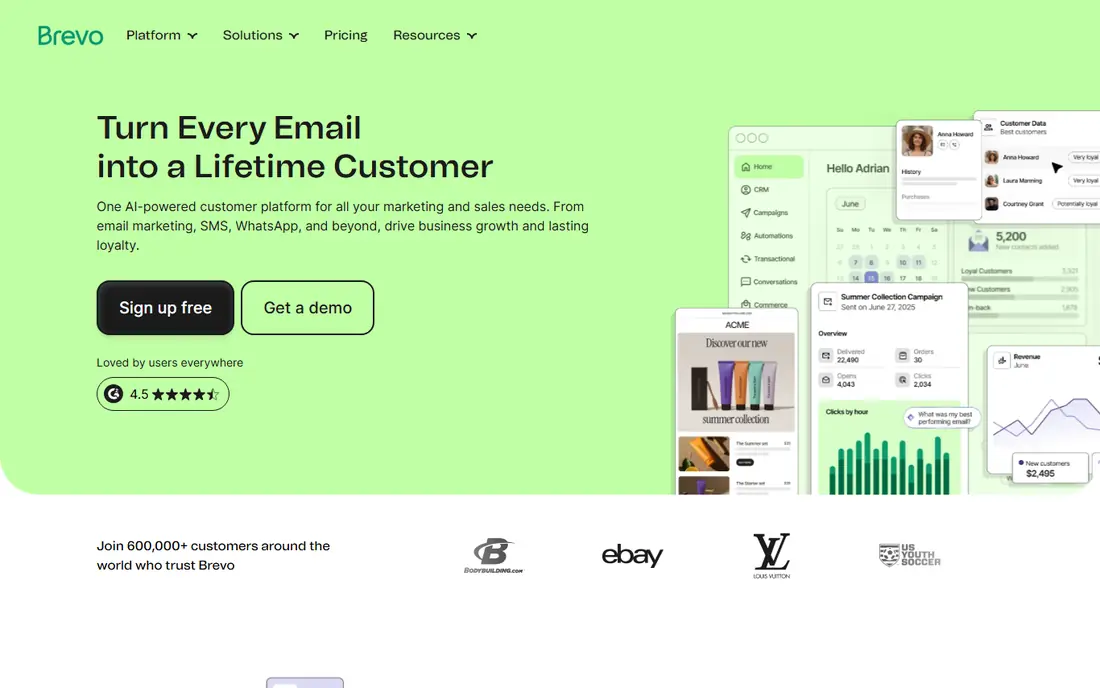
Brevo is designed for senders with big lists who mail selectively. Brevo (formerly Sendinblue) flips the usual pricing logic: you pay for emails sent, not contacts stored. In daily use, a 50,000-person list mailed once per month costs the same as a 5,000-person list mailed weekly, which makes it the value pick for companies with large, quiet databases.
Limits to weigh: Deliverability and support quality can be uneven on the free and lower levels.
More specifically, if you mail often to a small list, per-contact tools may price better. If your list dwarfs your send volume, Brevo wins. The free plan permits 300 emails a day to unlimited contacts, and Starter at $9 a month handles 5,000 monthly emails. Starting cost for Brevo: $9/month. A free plan is available with Brevo.
- Per-send pricing (not per contact) with unlimited contacts on every plan
- Starter at $9 per month is the cheapest premium entry on this list
- The interface and templates feel less refined than Mailchimp's
Omnisend
Ideal for: Ecommerce keeps on Shopify or WooCommerce
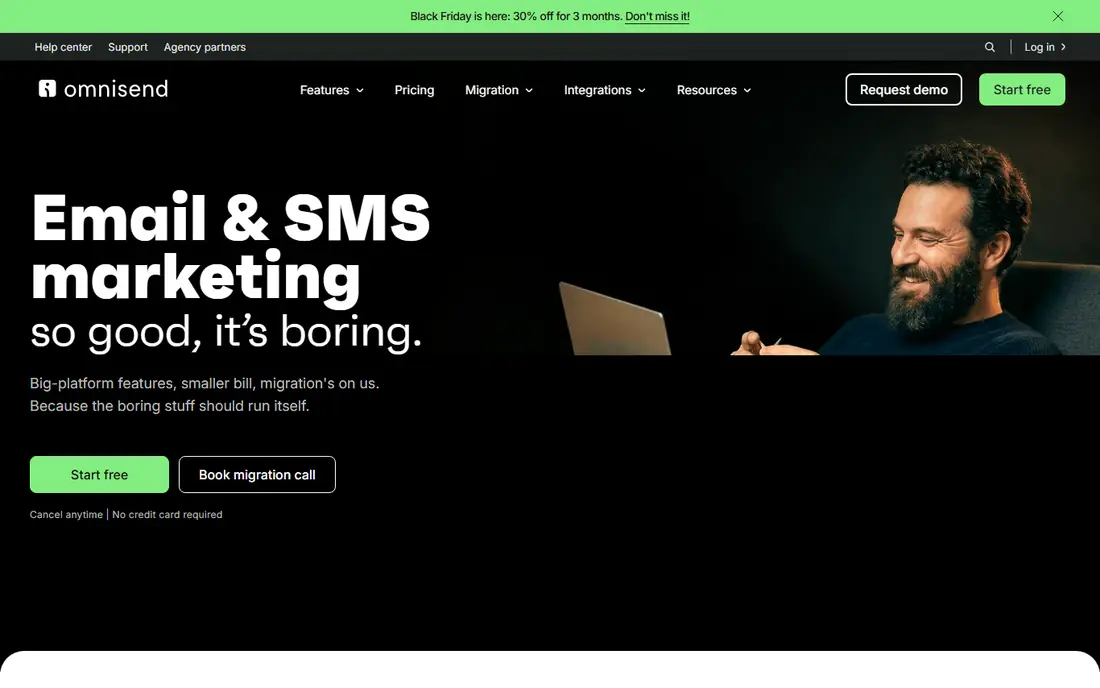
Omnisend is aimed squarely at ecommerce keeps on Shopify or WooCommerce. Ecommerce first, everything else second.
For everyday use, Omnisend does one thing and does it well: turn store visitors into repeat buyers. Pricing for Omnisend is not stated here, so ask the vendor for current figures. Omnisend offers a free plan.
Downsides: No published prices on the homepage.
- Purpose-built for ecommerce: abandoned-cart
- Positions itself as up to 35 percent less expensive than Klaviyo with free migration
- Advanced reporting and segmentation depth trail ActiveCampaign
AWeber
Ideal for: Small companies that want email plus a landing page
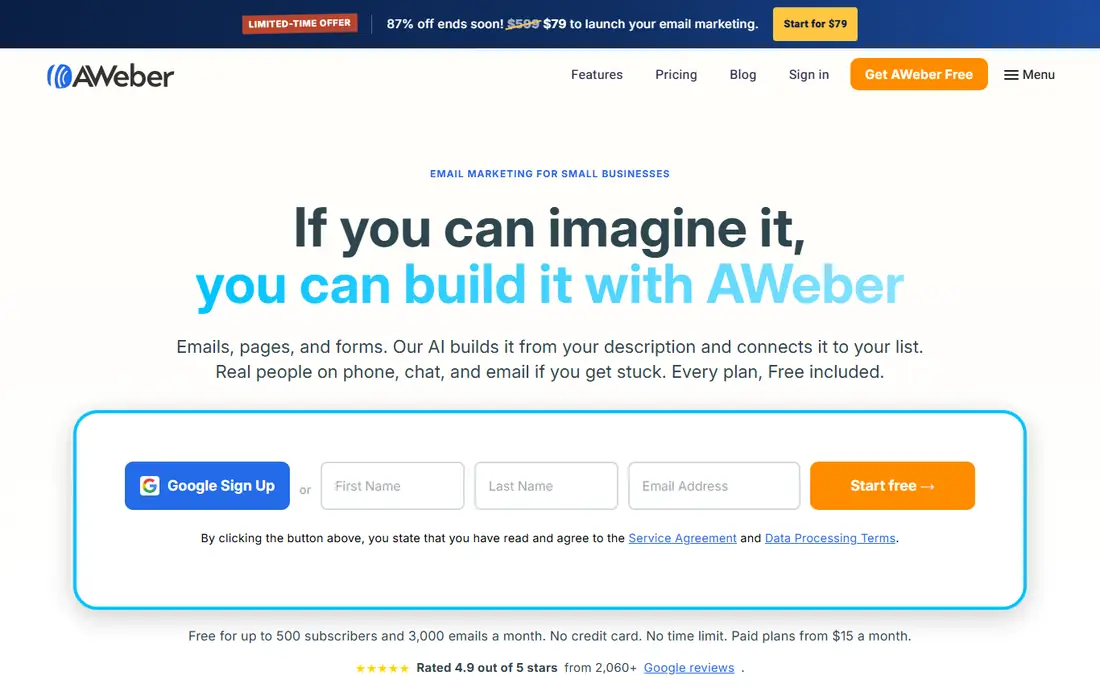
AWeber is designed for small businesses that want email plus a landing page and straightforward automation. The free plan includes 500 subscribers and 3,000 emails per month permanently. More specifically, AWeber manages newsletters, welcome sequences and entry-level automation well, but marketers who require complicated branching journeys, predictive send-time or deep ecommerce triggers will outgrow it.
The homepage FAQ states all of this plainly, which is rarer than it should be in this category. The honest catch is ceiling. For a small business that wants to send a decent newsletter and automate the basics without a ramp-up time, the free plan alone may be enough. AWeber starts at: $15/month. AWeber offers a free plan.
Downsides: Advanced segmentation and reporting lag the automation-first tools.
- 750-plus integrations and free migration from competitors
- Published pricing with Lite at $15 and Plus at $30 a month
- Template design feels dated next to Mailchimp and Omnisend
Campaign Monitor
Ideal for: Design-conscious brands and agencies sending beautiful campaigns
In short, Campaign Monitor is for design-conscious brands and agencies sending beautiful campaigns. Campaign Monitor has always led on design, and the 2026 homepage doubles down: Marketing Studio produces complete on-brand campaigns with custom visuals, and the AI Email Booster suggests measurable improvements before you send.
Downsides: No published pricing on the homepage and no free plan.
For everyday use, agencies get client management tooling, and the template library is genuinely the prettiest here. On top of that, you pay for the polish. Check the vendor site for Campaign Monitor pricing; none is listed in this comparison. Campaign Monitor has no free tier.
- Capable agency features for managing client accounts
- AI tools (Marketing Studio, AI Email Booster) that create on-brand campaigns quick
- The premium positioning means higher prices than budget rivals for similar send volumes
Mailchimp
Ideal for: Beginners and small companies that want the safe, well-known choice
Mailchimp was built for beginners and small companies that want the safe, well-known choice. Mailchimp remains the default recommendation for first-time email marketers.
Where it falls short: No published prices render on the pricing page without interacting with the plan quiz; Automation depth trails ActiveCampaign and Brevo.
The free plan is genuinely usable: up to 250 contacts, 500 emails per month, popup forms and entry-level templates. For everyday use, if your list is big but you mail seldom, Brevo's per-send pricing will beat Mailchimp. This comparison lists no price for Mailchimp; ask the vendor. Mailchimp has a free plan.
- A real free plan for up to 250 contacts
- The largest template library and integration ecosystem in the category (300-plus integrations)
- Quiet lists (unsubscribed contacts count too)
Constant Contact
Ideal for: Nonprofits, associations and traditional small firms
For nonprofits, associations and traditional small companies, Constant Contact is a natural candidate. The Lite, Standard and Premium levels (homepage presents annual-billing prices) handle email, social, events and SMS, with the Standard level recommended for most businesses. As for the details, if you want to send a professional newsletter, promote an event and collect donations without learning marketing automation, Constant Contact's hand-holding is the feature.
Limits to weigh: Automation and segmentation are entry-level compared to ActiveCampaign or Brevo.
Beyond that, Constant Contact is the steady incumbent for organizations that want marketing handled, not a marketing hobby. From a buyer's view, the trade-off is sophistication. If you want behavioral triggers, predictive analytics or deep ecommerce automation, look elsewhere. No starting price is listed for Constant Contact here; confirm pricing on the vendor site. No free plan comes with Constant Contact.
What works well: 460,000-plus small-business customers and decades of stability.
- Capable nonprofit and franchise feature set
- The most guided experience on this list: templates
- The interface feels dated next to newer rivals
Comparing the main differences
Litmus puts the average return at $36 for every $1 spent, which is why every business ends up needing a bulk sender eventually. These nine include the real market, with the pricing-model differences spelled out.
Selection criteria
Each tool was reviewed on what its vendor publishes: price, plan limits, core features and stated drawbacks. We did not run hands-on tests. Plan names, prices and limits change often. Treat the figures here as a starting point and verify them with the vendor. We ordered the tools by general fit, then by how clearly pricing is shown, then by free access. A buyer with unusual needs may reorder them.
Things to verify first
- Get a written quote from Omnisend, Campaign Monitor, Mailchimp and Constant Contact; the list shows no starting price for them.
- Check what the free option really includes: Brevo, Omnisend, AWeber and Mailchimp offer a free plan, and usage caps differ.
- Read the limits listed for Brevo first: marketing automation only starts on Standard ($18 a month).
- Ask the daily users to test Campaign Monitor on a live task before you roll it out to everyone.
- Confirm that Omnisend connects to the apps your team already uses, on the plan you would actually buy.
Frequently asked questions
How are the tools for mass email marketing software ordered?
The order follows typical fit for mass email marketing software, with Brevo first and Constant Contact last, then price clarity and free access. It is editorial judgement, not a score, so another team could rank the tools differently.
Is there really free mass email software?
Yes, with limits. Mailchimp's free plan includes 250 contacts and 500 emails per month. As for the details, Brevo's free plan lets 300 emails a day to unlimited contacts. Free levels typically bundle the vendor's branding and cap automations, so expanding senders upgrade.
How much does mass email marketing software cost?
Free plans handle up to 250-500 contacts (Mailchimp, AWeber) or 300 emails a day (Brevo). Premium entry points run $9 a month (Brevo Starter, 5,000 emails), $15 a month (AWeber Lite), with most tools scaling by list size or send volume from there.
Can I try these options before paying?
Often, yes. Brevo, Omnisend, AWeber and Mailchimp have a free plan. Use your own data and a real task during the test, and check what the free tier or trial limits before you rely on it.
Should I choose Mailchimp or Brevo?
Choose Brevo if your contact list is large relative to your send volume, since per-send pricing with unlimited contacts will cost less, or if you want transactional email included. Both have genuinely handy free plans, so trial both with your real list before deciding.
What is the cheapest option for mass email marketing software in this list?
On published monthly entry prices, Brevo is the lowest here at $9/month. Entry price is only part of the cost, because seats, add-ons and billing terms can change the total.