Best Medical Parts Procurement Platform Software

- GHX is the only platform here built for healthcare supply chains, with a network of hospitals and suppliers already trading on it.
- Precoro is the only platform here with a published starting price, at 499 dollars per month for Core billed annually.
- Coupa, JAGGAER, GEP SMART, Ivalua, Procurify and Zycus all hide prices behind a sales call, so budget for a quote process and a long implementation.
- Implementation times in this category run from 8 weeks to 12 months, so plan the rollout around your current contracts.
- Check whether a platform supports medical device catalogs, punchout and vendor onboarding before you shortlist it.
Quick comparison
| Product | Ideal for | Price from | Free version | |
|---|---|---|---|---|
 GHX | Healthcare supply chains and hospitals | quote only | No | Visit |
 Precoro | Mid-size teams that want a published price | $499 per month | No | Visit |
 Coupa | Large enterprise spend control | quote only | No | Visit |
 JAGGAER | Complex sourcing programs | quote only | No | Visit |
 GEP SMART | Unified source-to-pay suites | quote only | No | Visit |
 Ivalua | Full procure-to-pay programs | quote only | No | Visit |
 Procurify | Purchasing plus expenses for growing teams | quote only | No | Visit |
 Zycus | AI-led procurement suites | quote only | No | Visit |
The best medical parts procurement platform software
GHX
Ideal for: Healthcare supply chains and hospitals
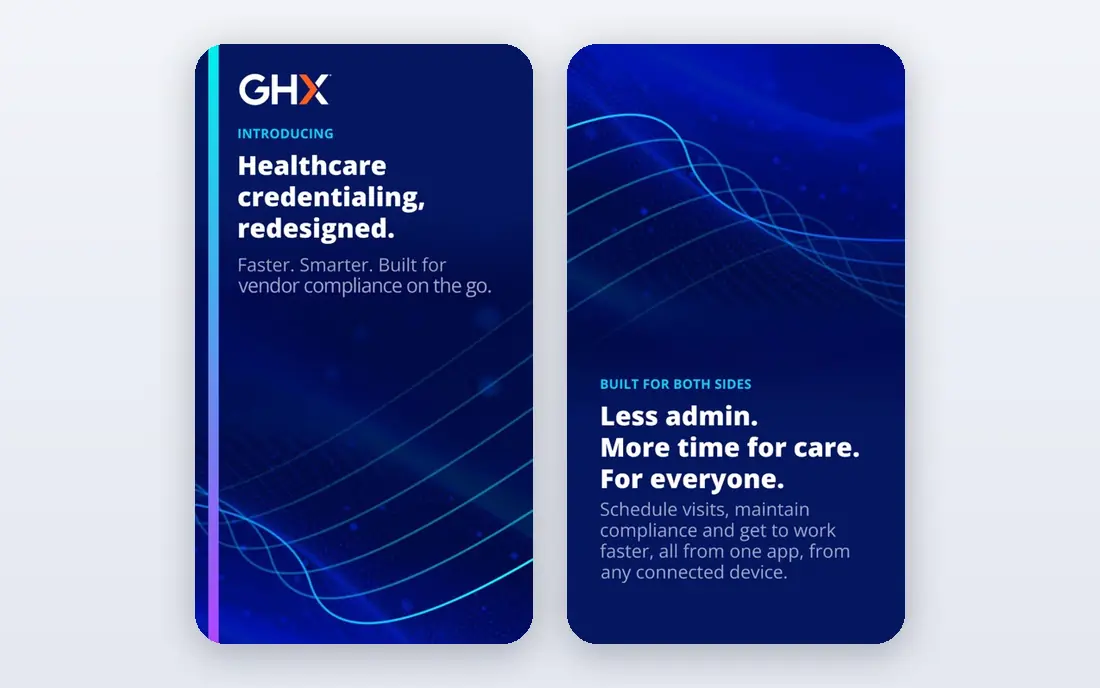
GHX is the healthcare specialist in this list. It runs a network where hospitals, health systems and medical suppliers trade with each other, exchanging orders, invoices and product data in standard formats. For a buyer sourcing medical parts, that network effect is the point: when your suppliers are already on GHX, orders flow with less manual entry, fewer errors and cleaner data on what was bought, at what price and from whom.
The limits are real. GHX sells an enterprise subscription plus initial implementation fees, with no self-serve entry and no published price, so you will need a sales process to learn the cost. The value also depends on your trading partners being on the network, so a hospital whose suppliers are not on GHX will see less benefit at first. GHX fits a hospital or health system that buys medical parts at volume and wants a healthcare-specific network, and it is less suited to a small clinic that needs a quick, low cost start.
- Healthcare-only network with hospitals and suppliers trading on one platform
- Built for medical supply data
- Healthcare-only network with an enterprise subscription plus initial implementation fees and no self-serve entry, and value depends on trading partners also being on the GHX network
Precoro
Ideal for: Mid-size teams that want a published price
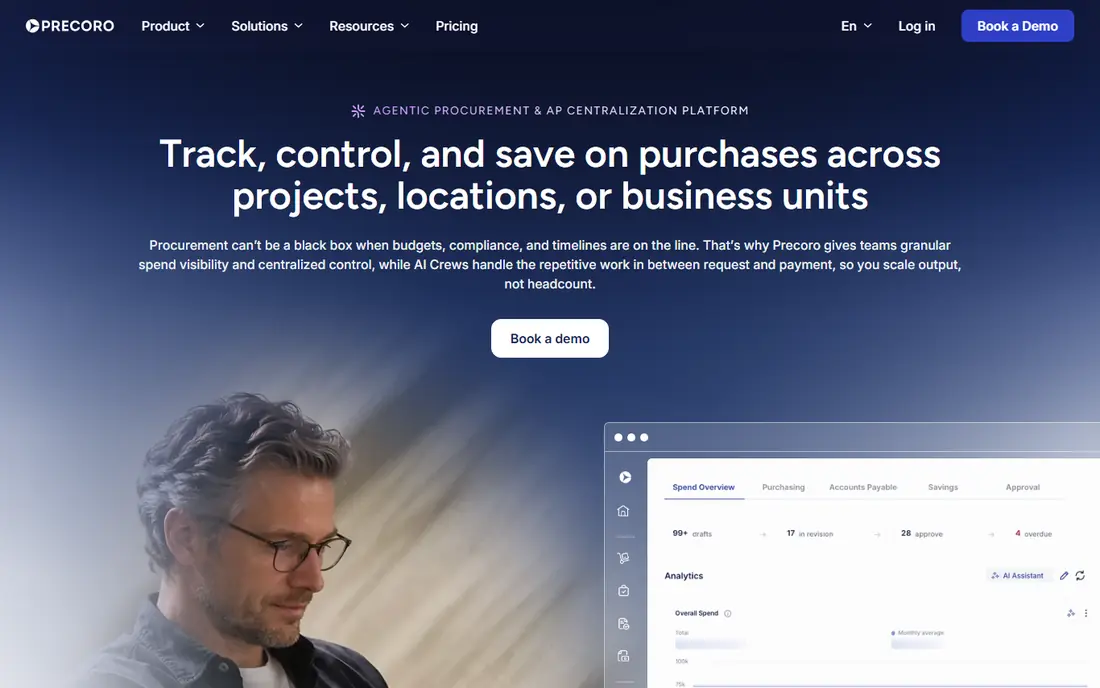
Precoro is the only platform in this comparison with a published starting price, which makes it the easiest to evaluate. The Core plan is 499 dollars per month billed annually, and it covers purchasing, approvals and budgets in one place, so a mid-size team can move from spreadsheets and email approvals to a real system without a long sales cycle. The interface is built for teams that need control over spend without a full enterprise suite.
The catch is the tier split. Intake management, vendor onboarding, PunchOut catalogs and RFPs are only on the 999 dollar per month Automation tier, not on Core, so a team that needs punchout catalogs for medical parts will pay twice the entry price. Published plans are also billed annually only, with no monthly option. Precoro fits a mid-size healthcare or medical business that wants a clear price and a fast start, and it needs the Automation tier when punchout and vendor onboarding matter.
- Published pricing with a clear entry tier
- Purchasing, approvals and budgets in one place
- Intake management, vendor onboarding, PunchOut catalogs and RFPs are only on the 999 dollar per month Automation tier, not the 499 dollar Core tier, and published plans are billed annually only
Coupa
Ideal for: Large enterprise spend control
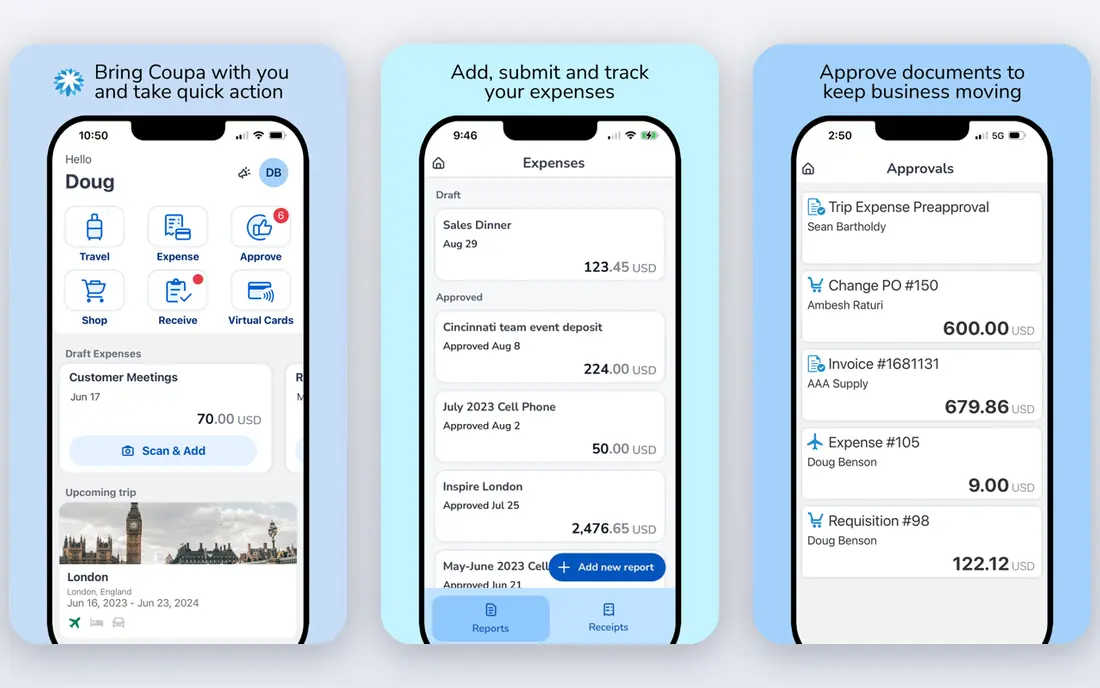
Coupa is one of the largest spend management platforms, covering sourcing, procurement, invoicing, expenses and payments in one suite. A large hospital system or medical device company can use it to control spend across many departments, enforce approval rules and see where money goes in real time. Its supplier network includes a free portal for suppliers, which lowers the barrier for vendors to join and trade electronically.
The price is fully quote-based. Coupa publishes no price or plan tiers, and pricing is modular by modules, users and spend volume, with implementation typically running months rather than weeks. There is no free plan for buyers, though suppliers can use the Coupa Supplier Portal at no cost. Coupa fits a large organisation that wants one suite for all spend and can fund a long implementation, and it is not a fit for a small team that needs a price today and a start this month.
- Broad spend management suite covering procurement, invoicing and expenses
- Large supplier network
- No published price or plan tiers, pricing is modular and quote-based by modules, users and spend volume, with implementation typically running months
JAGGAER
Ideal for: Complex sourcing programs
JAGGAER is built for complex sourcing, with tools for supplier management, category strategy, contracts and spend analysis that suit organisations buying many types of medical parts across many suppliers. It handles the structure that regulated buying needs, including approval chains, audit trails and supplier qualification, which matters when parts affect patient care and must meet strict standards.
The implementation is heavy. Onboarding is set up by the JAGGAER Professional Services team before customer staff gain configuration access, and implementation typically runs 4 to 12 months, so this is a long project with consulting costs on top of the subscription. There is no published price and no free plan. JAGGAER fits a large buyer with complex sourcing needs and the time to implement properly, and it is the wrong pick for a team that needs to start buying through a system within weeks.
- Deep sourcing and supplier management for complex categories
- Strong for regulated buying
- Onboarding is set up by its Professional Services team before customer staff gain configuration access, and implementation is typically 4 to 12 months
GEP SMART
Ideal for: Unified source-to-pay suites
GEP SMART is a unified source-to-pay platform that covers sourcing, procurement, supplier management and analytics in one system. A medical parts buyer can run sourcing events, manage contracts, place orders and track supplier performance without moving between tools, and the analytics show spend patterns that help a team negotiate better terms. The platform is designed for large teams that want one suite rather than a set of point tools.
The drawbacks are cost and flexibility. Reviewers cite limits in customising the platform to very specific processes, and a premium cost versus competing procurement options, so a team with unusual workflows may need to adapt its process to the tool. There is no published price and no free plan, and pricing comes through a demo and sales discussion. GEP SMART fits a large organisation that wants a unified suite and can pay a premium, and it is less suited to a team with highly specific processes or a tight budget.
- One platform for sourcing, procurement and supplier management
- Strong analytics
- Reviewers cite limits in customising the platform to very specific processes, and a premium cost versus competing procurement options
Ivalua
Ideal for: Full procure-to-pay programs
Ivalua covers the full procure-to-pay cycle, from sourcing and supplier management through contracts, ordering, invoicing and spend analytics. It is known for flexible configuration, so a large buyer can shape approval flows, catalogs and supplier rules around its own process rather than adopting a fixed template. That flexibility is valuable for medical parts buying, where categories, approvals and compliance rules vary by department.
The cost of that flexibility is complexity. Reviewers most frequently cite a steep learning curve and a complex initial implementation, and a full procure-to-pay and analytics deployment can take 6 to 12 months or more. There is no published price and no free plan, and pricing comes through sales. Ivalua fits a large organisation that wants a configurable full-cycle platform and has the team to implement it, and it is not a fit for a small team that needs a simple tool fast.
- Complete procure-to-pay coverage with strong supplier and contract tools
- Flexible configuration
- Reviewers most frequently cite a steep learning curve and complex initial implementation, and full procure-to-pay and analytics deployment can take 6 to 12 months or more
Procurify
Ideal for: Purchasing plus expenses for growing teams
Procurify gives growing teams a clear purchasing workflow, with purchase requests, budgets, approvals and receiving in one place. It suits a medical business that has outgrown spreadsheets and email approvals and wants control over who can buy what, at what price and within which budget. The base Purchasing plan covers the core workflow, and the vendor offers add-ons for the rest.
The add-on model is the limit to watch. Accounts Payable, Expense and Card, Guided Intake and Contracts are add-ons that cost extra on top of the Purchasing base, so the real cost is higher than the base quote when you need those features. Standard implementation is planned over 8 weeks, or 12 weeks for Standard NetSuite, so this is still a project, not a same-day setup. Procurify fits a growing team that wants structured purchasing with optional extras, and it needs a full quote before you can compare it with the published prices in this list.
- Clear purchasing workflows with budgets and approvals
- Useful add-ons for expenses and contracts
- Accounts Payable, Expense and Card, Guided Intake and Contracts are add-ons that cost extra on top of the Purchasing base, and standard implementation is planned over 8 weeks, or 12 weeks for Standard NetSuite
Zycus
Ideal for: AI-led procurement suites
Zycus is a procurement suite that puts AI features across sourcing, supplier management and spend analysis, aiming to automate routine work such as intake, supplier discovery and contract review. For a medical parts buyer, that automation can cut the time spent on manual tasks and surface savings that a spreadsheet would miss. The suite covers the full cycle, so a team can run sourcing, ordering and supplier management from one vendor.
The user feedback points to three limits: rigid customisation, friction when integrating with ERP systems, and thin pre-built reporting, which means some teams need extra work to get the reports they need. There is no public pricing page, and the vendor routes buyers to a personalised demo, so pricing comes only through sales. Zycus fits a team that wants AI-led automation across the procurement cycle and can work through ERP integration, and it is less suited to a buyer that needs flexible customisation or ready-made reports on day one.
- AI features across sourcing and supplier management
- Broad suite coverage
- Users point to rigid customisation, ERP integration friction, and thin pre-built reporting
How we chose
We compared the vendor pricing pages, product pages and docs for each platform, and we checked that every homepage listed here loads. Prices in this guide come from the vendor pricing pages we opened on 12 November 2026. Only Precoro publishes a starting price, at 499 dollars per month for Core billed annually, and every other platform in this list hides its price behind a sales call, so we wrote quote only rather than copying a third-party figure. We looked at medical fit, including healthcare networks, punchout catalogs, vendor onboarding and approval controls, and we noted implementation times and contract terms. We did not claim hands-on testing, and we did not use review scores or customer counts to rank the tools.
What to check before you buy
Use this decision table to match a platform to your organisation size and budget before you book a demo.
| Your situation | Best match | Why |
|---|---|---|
| Hospital or health system, high volume | GHX | Healthcare network, suppliers already trading on it |
| Mid-size team, needs a published price | Precoro Core | 499 dollars per month, fast to evaluate |
| Mid-size team, needs punchout catalogs | Precoro Automation | PunchOut and RFPs, 999 dollars per month |
| Large enterprise, all spend in one suite | Coupa or GEP SMART | Broad suite, modular pricing, long implementation |
| Complex sourcing, regulated buying | JAGGAER or Ivalua | Deep sourcing and supplier tools, 4 to 12 month rollout |
Before you sign, ask for the full implementation plan in writing, including the timeline, the consulting fees and who configures the system. Confirm whether medical device catalogs, punchout and UNSPSC coding are included in your tier, because those features often sit on higher plans. Ask how supplier onboarding works and whether your current suppliers are already on the network, since network value depends on it. Check the renewal terms and any fees for extra users, extra suppliers or extra modules. Finally, run a pilot with one category of medical parts and a small supplier set before you roll out across the whole organisation.
Frequently asked questions
Which procurement platform is best for medical parts?
GHX is the best fit for most healthcare buyers because it is built for medical supply chains, with hospitals and suppliers trading on one network. Precoro is the best fit when you need a published price and a fast start, at 499 dollars per month for Core. Large enterprises with complex sourcing should look at Coupa, JAGGAER or Ivalua, and budget for a long implementation.
How much does medical parts procurement software cost?
Only Precoro publishes a price in this list, at 499 dollars per month for Core billed annually, or 999 dollars per month for Automation. Coupa, JAGGAER, GEP SMART, Ivalua, Procurify, Zycus and GHX all quote through sales, with enterprise subscriptions plus implementation fees. Ask for a written quote that lists the tier, the term and the implementation cost.
Does any medical procurement platform offer a free plan?
No. None of the eight platforms in this guide offers a free plan for buyers. Coupa offers a free supplier portal for vendors, but buyers pay for the platform. If you need a no-cost start, look at general purchasing tools with a free tier, and check whether they support the medical catalogs and approvals you need.
How long does it take to implement procurement software?
It varies widely. Procurify plans a standard implementation over 8 weeks, or 12 weeks for Standard NetSuite. JAGGAER typically takes 4 to 12 months, and Ivalua can take 6 to 12 months or more for a full deployment. Precoro is faster because it is a lighter tool. Ask for a written timeline and a named implementation contact before you sign.
What features matter most for medical parts procurement?
PunchOut catalogs, vendor onboarding, approval controls and spend visibility matter most, along with healthcare-specific data standards and supplier networks. GHX offers the healthcare network, while Precoro Automation adds PunchOut and RFPs. Check that your tier includes the catalog and onboarding features you need, because they are often locked to higher plans.