8 Best Medical Practice Management Software for Modern Practices

- 1
 athenahealthOverall EHR and practice managementVisit
- 2
 AdvancedMDIndependent practices that want a unified cloud suiteVisit
- 3
 DrChronoMobile-first practices and simple billingVisit
- 4
 Practice FusionSmall practices on a budgetVisit
- 5
 TebraPrivate practices that want EHR, billing, and growth toolsVisit
- athenahealth is the best overall pick, with EHR, practice management, and patient engagement in one AI-powered platform.
- AdvancedMD suits independent practices that want a unified cloud suite with fast support and strong billing tools.
- DrChrono suits mobile-first practices, with a top-rated mobile EHR and simple billing profiles.
- Practice Fusion suits small practices on a budget, starting at $199 per month per provider.
- Tebra, formerly Kareo, suits private practices that want EHR, billing, scheduling, and reputation tools together.
- SimplePractice suits therapists and wellness professionals, with telehealth and insurance tools built in.
- NextGen and eClinicalWorks suit specialty and larger practices that need population health, interoperability, and scale.
Quick comparison
| Product | Ideal for | Price from | Free version | |
|---|---|---|---|---|
| athenahealth | Overall EHR and practice management | See website | No | Visit |
| AdvancedMD | Independent practices that want a unified cloud suite | See website | No | Visit |
| DrChrono | Mobile-first practices and simple billing | See website | No | Visit |
| Practice Fusion | Small practices on a budget | $199 per month | No | Visit |
| Tebra | Private practices that want EHR, billing, and growth tools | See website | No | Visit |
 SimplePractice | Therapists and wellness professionals | See website | No | Visit |
 NextGen | Specialty practices and population health | See website | No | Visit |
 eClinicalWorks | Large and specialty practices that need scale | See website | No | Visit |
The best medical practice management software
athenahealth
Ideal for: Overall EHR and practice management
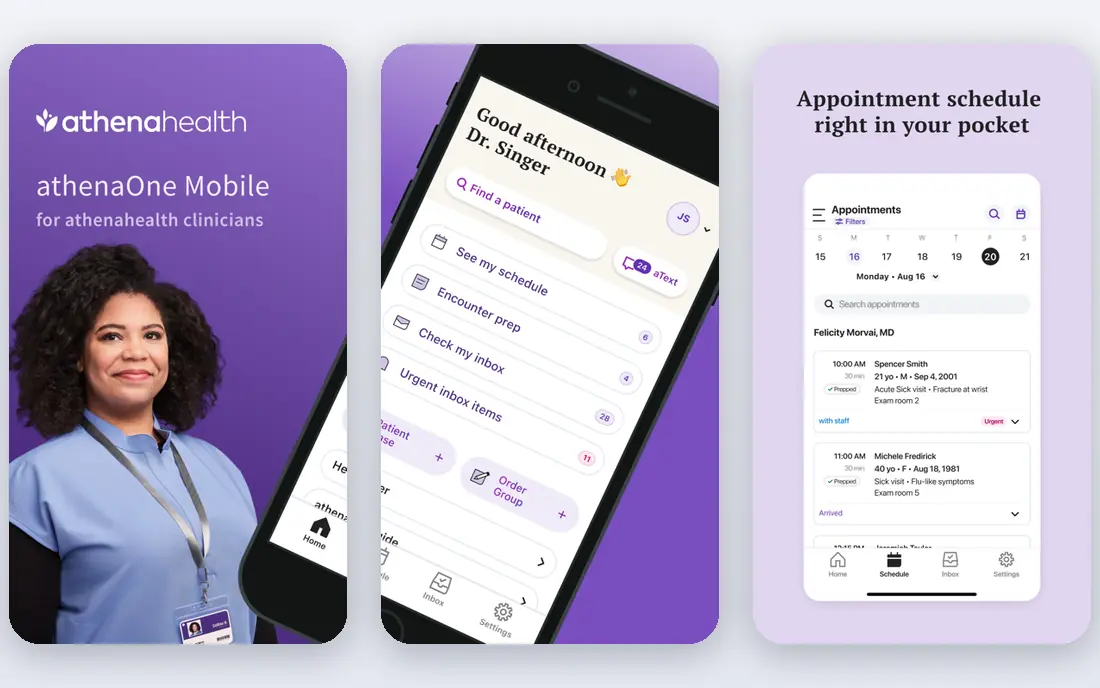
athenahealth offers athenaOne, an AI-powered solution combining EHR, practice management, and patient engagement for ambulatory practices, with tailorable documentation, billing, and patient communication tools. It reports more than 170,000 clinicians use the platform, and practices rated it Best in KLAS Overall Independent Physician Practice Suite for the third straight year.
athenahealth is our top pick because it covers the full practice in one system: documentation, claims, scheduling, and patient engagement share data, and specialty workflows adapt to how clinicians actually work. The embedded ambient documentation tool also cuts charting time, a common burnout driver.
- EHR, practice management, and patient engagement in one platform, specialty workflows, ambient documentation, strong ratings
- Pricing by demo and quote, broad platform takes time to learn, best for ambulatory practices
AdvancedMD
Ideal for: Independent practices that want a unified cloud suite
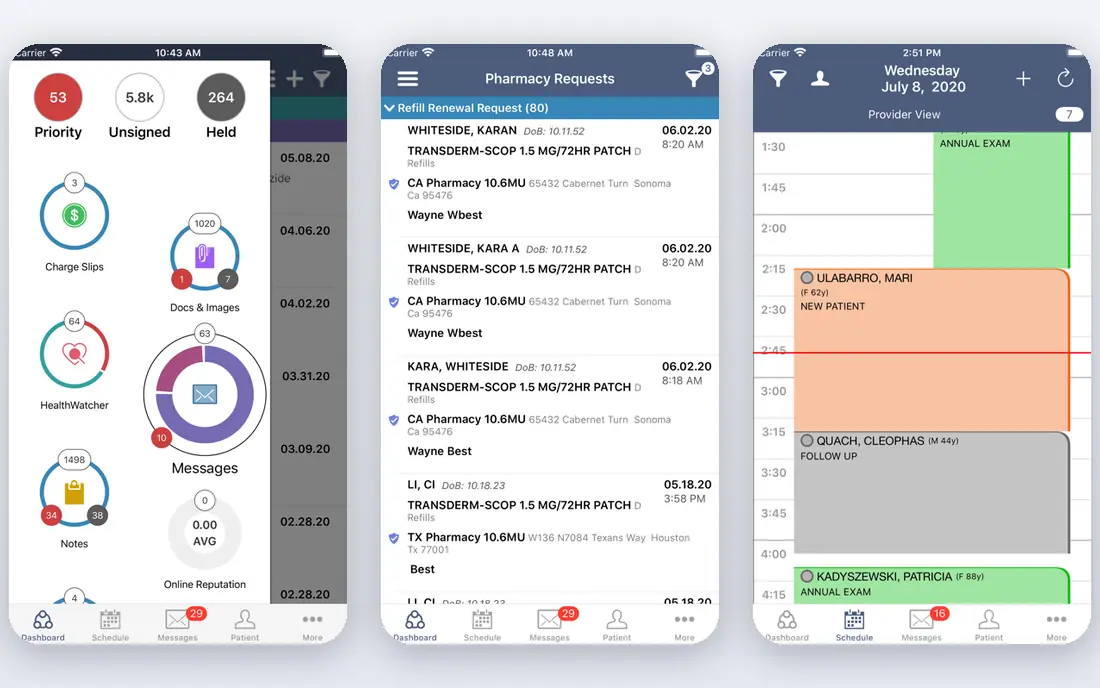
AdvancedMD is a cloud-based platform for independent practices, unifying EHR, practice management, and patient engagement, with configurable specialty workflows, AI-enabled charting, real-time eligibility checks, automated claim scrubbing, and revenue tracking. It reports more than 13,000 practices use the platform and 9.5 million claims processed every month.
AdvancedMD suits independent practices tired of disconnected tools: scheduling, documentation, billing, and patient communication live in one place, and support averages a 90-second response time with 24/7 live chat. It is a strong choice for practices that want one vendor for the whole workflow.
- Unified EHR, practice management, and patient engagement, AI charting, automated claim scrubbing, 24/7 support, HIPAA supported
- Pricing by quote, feature depth takes time to learn, some tools need higher tiers
DrChrono
Ideal for: Mobile-first practices and simple billing
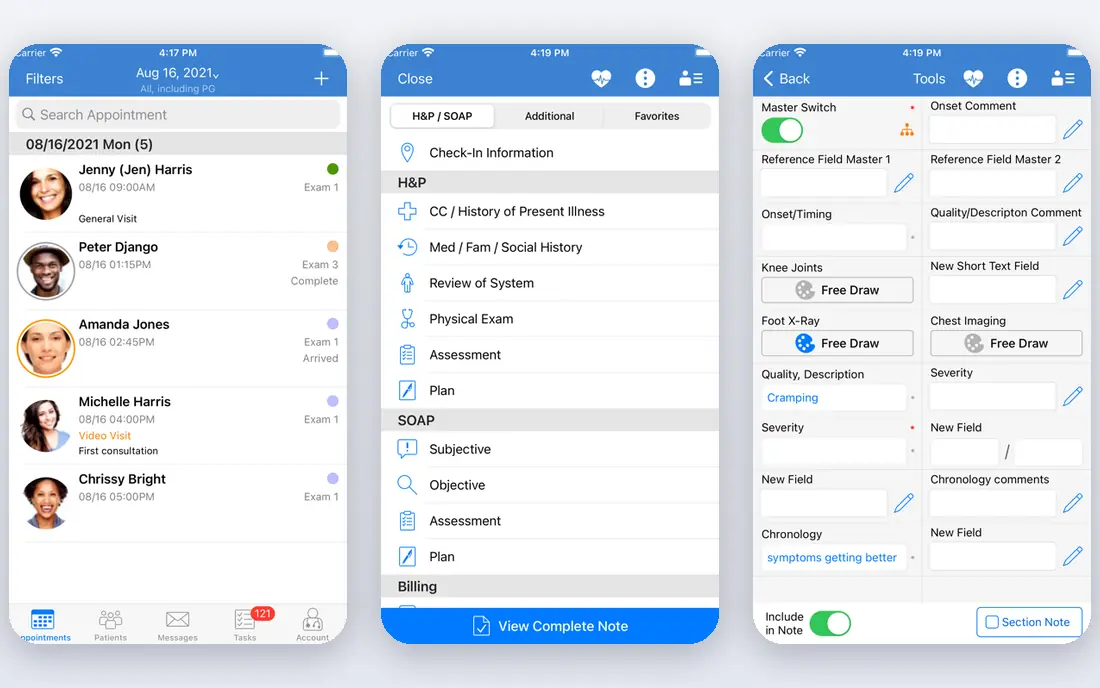
DrChrono is an all-in-one mobile EHR and practice management platform for independent practices, combining clinical workflows, patient engagement, and revenue management, with customizable specialty templates, automated eligibility checks, AI-powered documentation, and telehealth that launches from within the chart.
DrChrono stands out for mobility and billing simplicity: it was voted the number one mobile EHR by physicians, and its billing profiles can cut billing work by pre-filling common procedure sets. Practices that chart on tablets or move between rooms will value the mobile-first design.
- Mobile EHR, specialty templates, billing profiles, telehealth built in, patient portal, implementation support
- Pricing by quote, mobile focus may suit some specialties better, add-ons vary by plan
Practice Fusion
Ideal for: Small practices on a budget
Practice Fusion is a cloud EHR with billing services for small practices, covering streamlined charting, e-prescribing, patient connection tools, and practice billing, with a free trial that needs no credit card. Its EHR service starts at $199 per month per provider, excluding taxes, with an annual commitment.
Practice Fusion suits small practices that want a clear price and a simple system: the starting cost is published, the trial lets you test before committing, and the billing services package adds revenue support without hiring a biller. Larger practices may need deeper tools, but for a small office, it is a strong value pick.
- Clear starting price, EHR with billing services, e-prescribing, free trial, simple setup
- Price excludes taxes and needs an annual commitment, smaller feature set than enterprise rivals, billing services cost extra
Tebra
Ideal for: Private practices that want EHR, billing, and growth tools
Tebra, formerly Kareo, is an EHR and practice management platform for private practices, connecting care, billing, scheduling, and reputation management in one system, with AI Note Assist for faster charting, electronic prescriptions, telehealth, labs, and scheduling. Its homepage now presents the Tebra brand at the Kareo domain, and it states HIPAA compliance with encryption, privacy controls, and a Business Associate Agreement where applicable.
Tebra suits private practices that want clinical and business tools together: billing and claims, smart scheduling, and review management sit alongside the EHR, so fewer tasks fall through gaps. The onboarding team helps with setup, migration, and training, with most practices going live in days.
- EHR plus billing, scheduling, and reputation tools, AI note assist, telehealth, HIPAA compliant, onboarding support
- Pricing by demo, Kareo name now redirects to Tebra, growth tools may exceed small practice needs
SimplePractice
Ideal for: Therapists and wellness professionals
SimplePractice is an EHR for health and wellness professionals, including therapists, with integrated telehealth, a template library, insurance tools, and practice management features for running a therapy or wellness practice. It offers a free 30-day trial with no credit card required, plus free credentialing with up to two payers on signup.
SimplePractice suits solo and small therapy practices: the templates, telehealth, and insurance tools match how therapists work, and the trial lets you test the full system before paying. Larger medical practices will need a broader platform, but for wellness professionals, it is a focused fit.
- Built for therapists and wellness pros, integrated telehealth, template library, insurance tools, free 30-day trial, free credentialing offer
- Health and wellness focus, pricing not shown on the homepage, less suited to large medical groups
NextGen
Ideal for: Specialty practices and population health
NextGen Healthcare offers a cloud EHR and practice management platform for specialty practices, with a virtual front door covering scheduling, reminders in more than 33 languages, and bill pay, plus population health tools for risk stratification and care-gap outreach, a mobile EHR, and secure data exchange across the care spectrum.
NextGen suits specialty practices and groups managing populations: the scheduling, reminder, and population health tools help practices reach patients proactively, while the mobile EHR lets providers document anywhere. It is a strong choice for practices planning to grow or manage value-based care.
- Cloud EHR and practice management, virtual front door, population health, mobile EHR, connected data exchange, AWS hosting
- Pricing by quote, enterprise scale may exceed small practice needs, implementation takes planning
eClinicalWorks
Ideal for: Large and specialty practices that need scale
eClinicalWorks is a cloud EHR, telehealth, and practice management platform, with specialty solutions, patient engagement tools, an AI scribe from Sunoh.ai for documentation, and healow Genie, an AI-powered contact center that answers patient calls around the clock. It reports more than 180,000 physicians and nurse practitioners, 850,000 healthcare professionals, and 110,000 facilities use the platform.
eClinicalWorks suits large practices and groups that need proven scale: the platform covers many specialties, the patient engagement tools are mature, and the AI tools cut documentation and phone work. Small practices may prefer a simpler system, but for scale, eClinicalWorks is a safe choice.
- Large cloud EHR, specialty solutions, telehealth, patient engagement, AI scribe, AI contact center, huge user base
- Pricing by quote, scale may overwhelm small practices, implementation needs planning
How we picked these
We compared official homepages, feature pages, and pricing pages for practice management software live in October 2026. We favored platforms with EHR, scheduling, billing, and patient engagement, and we covered the main use cases: independent practices, mobile-first practices, small practices, therapists, specialty practices, and large groups. We kept only products whose official homepages we could load and confirm, and we wrote "See website" for prices not shown on those homepages rather than guessing. Kareo now presents as Tebra, and we list it under the Tebra name with the Kareo domain. We did not claim hands-on testing, and we treated vendor claims about user counts and results as claims, not verified results.
Choosing the right practice management software
Start with your practice size and specialty. Solo therapists and wellness professionals should shortlist SimplePractice, while small medical practices should look at Practice Fusion for its clear price and DrChrono for mobile charting. Independent practices that want one system for everything should compare athenahealth, AdvancedMD, and Tebra, and larger or specialty groups should look at NextGen and eClinicalWorks.
Check compliance and billing carefully. Confirm the vendor offers a Business Associate Agreement, encryption, and the certifications your practice needs, and ask how claims, denials, and eligibility checks work in daily use. A demo with your own workflows, not a generic script, reveals whether the system fits how your team actually works.
Finally, plan the switch. Ask about data migration, staff training, and go-live support, since a rushed switch disrupts patient care. Most vendors on this list offer onboarding help, and a trial or demo period is the best time to test scheduling, charting, and billing with your real cases.
Frequently asked questions
What is the best medical practice management software?
athenahealth is our top pick for most practices, thanks to its combined EHR, practice management, and patient engagement platform. AdvancedMD suits independent practices, Practice Fusion suits small practices on a budget, and SimplePractice leads for therapists.
How much does practice management software cost?
Prices vary widely and are often quoted per practice. Practice Fusion publishes a starting price of $199 per month per provider, excluding taxes, with an annual commitment, while most rivals price by demo and quote, so check current pricing for your practice size.
What is the difference between an EHR and practice management software?
An EHR holds clinical records, charting, and prescriptions, while practice management covers scheduling, billing, claims, and patient administration. Most platforms on this list combine both, so you do not need separate systems for clinical and business work.
Is practice management software HIPAA compliant?
Vendors on this list describe HIPAA-supported or HIPAA-compliant platforms, and Tebra states it provides a Business Associate Agreement where applicable. Always confirm the agreement, encryption, and security controls in writing before signing, since compliance depends on your setup as well as the vendor.
Can I switch from another EHR or practice system?
Yes. Most vendors offer migration help, onboarding managers, and staff training, with Tebra noting most practices go live in days. Ask about data migration, downtime, and training time before committing, since a smooth switch matters for patient care.
Does practice management software include telehealth?
Many platforms do: DrChrono, Tebra, SimplePractice, and eClinicalWorks all include telehealth, while others offer it as an add-on. Confirm whether telehealth is included in your plan or priced separately, and whether it works from within the chart.