Best Meditation App for Kids in 2026: 8 Apps Compared

- 1
 Smiling Mindfree, structured mindfulness for ages 5 to 12Visit
- 2
 Moshigetting younger kids to sleepVisit
- 3
 Headspaceparents who already use Headspace and want kids' sessions tooVisit
- 4
 Calmfamilies who want one subscription for parents and kidsVisit
- 5
 Breathe, Think, Do with Sesamepreschoolers aged 2 to 5Visit
- Smiling Mind is our top free pick: it is run by an Australian not-for-profit, costs nothing, and has children's collections for ages 5 to 12.
- For bedtime, Moshi and Calm stand out. Moshi lists more than 400 audio tracks for $49.99 a year, and Calm has kids' Sleep Stories with characters such as Peppa Pig.
- Headspace splits its kids' content into three age groups (3 to 5, 6 to 8 and 9 to 12), which makes it easy to pick the right session, but it needs a subscription ($12.99 a month or $69.99 a year on the US App Store).
- For preschoolers, Breathe, Think, Do with Sesame is free, made by Sesame Workshop, and built for ages 2 to 5.
- These apps teach calming skills. They are not treatment for anxiety, ADHD or sleep disorders, so talk to your pediatrician if you are worried.
Quick comparison
| Product | Ideal for | Price from | Free version | |
|---|---|---|---|---|
| Smiling Mind | free, structured mindfulness for ages 5 to 12 | Free | Yes | Visit |
| Moshi | getting younger kids to sleep | $9.99 per month | Free trial (7 days) | Visit |
| Headspace | parents who already use Headspace and want kids' sessions too | $12.99 per month | Free trial (14 days) | Visit |
| Calm | families who want one subscription for parents and kids | See website | Free trial | Visit |
| Breathe, Think, Do with Sesame | preschoolers aged 2 to 5 | Free | Yes | Visit |
 GoNoodle | kids who cannot sit still for meditation | Free | Yes | Visit |
 Insight Timer | parents who want free kids' tracks plus a huge adult library | Free | Yes | Visit |
 Medito | a truly free app for older kids, teens and parents | Free | Yes | Visit |
The best meditation apps for kids
A quick note before the list: these apps are tools for building calm habits, not medical care. If your child has ongoing anxiety, sleep trouble or big mood changes, speak to a pediatrician or a licensed child therapist. Always preview content first and use the parent settings on your child's device.
Smiling Mind
Ideal for: free, structured mindfulness for ages 5 to 12
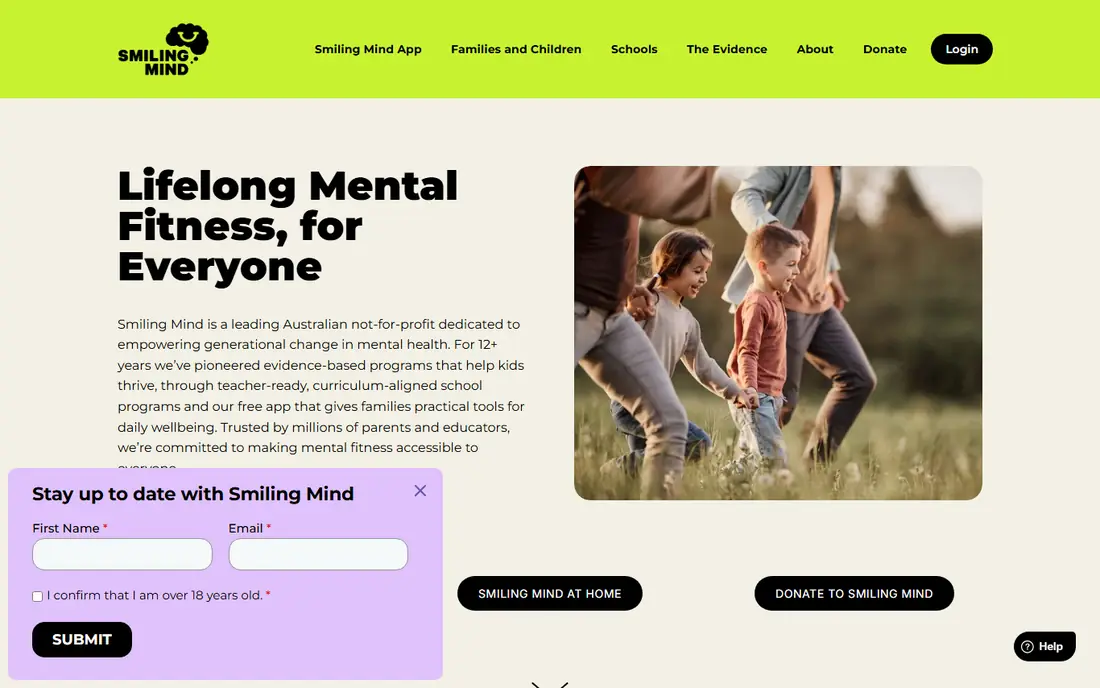
Smiling Mind is our first recommendation for parents who want a free app that feels designed for children rather than adapted from an adult app. It is made by an Australian not-for-profit that says its earned funds go back into its mission, and the app itself is free.
The App Store listing describes children's collections for ages 5 to 12, plus family programs covering sleep, emotional skills and going back to school. It holds a 4.8 rating from about 5,000 App Store ratings. The organization also runs school programs, so the lessons are structured more like a curriculum than a random playlist.
The catch is that it is quieter and plainer than the paid apps. Kids who want characters and animation may lose interest, and the bedtime library is smaller than what Moshi or Calm offer.
- Completely free app from a not-for-profit
- Children's collections for ages 5 to 12
- Developed with psychologists and educators
- Australian voices and school references may feel less familiar to US kids
- Fewer sleep stories than Moshi or Calm
Moshi
Ideal for: getting younger kids to sleep
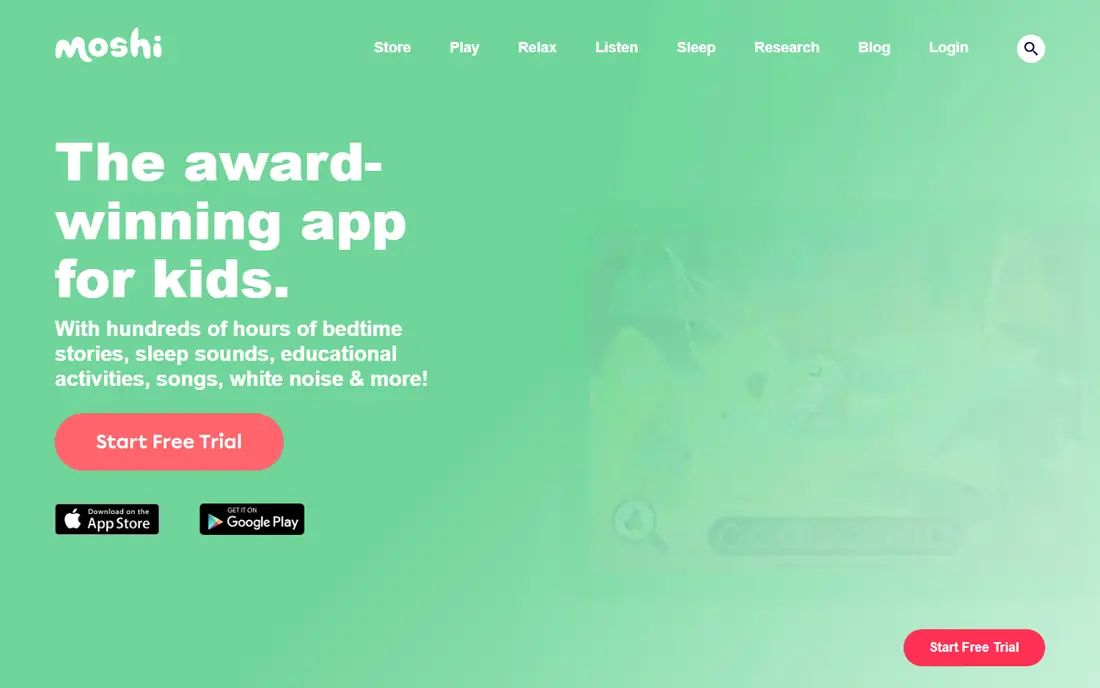
Moshi, from Mind Candy, is the app many parents end up using at bedtime. Its site lists sleep and bedtime stories, meditations, sounds and music, plus "Moments," which are 5 to 15 minute audio clips for managing big feelings such as worry or anger.
Pricing is clear: $49.99 per year or $9.99 per month, each with a 7-day free trial, and you can cancel anytime. Moshi also cites a 2021 survey of 108 teachers in which 93% said it helps improve focus, which is a vendor claim worth weighing as such.
The honest weakness is focus. Moshi mixes meditation with games and coloring, which is great for some families and a distraction for others. If you want pure mindfulness practice, Smiling Mind or Headspace are more direct.
- More than 400 audio tracks, including sleep stories, meditations and music
- Short "Moments" clips for big feelings
- Games and activities included
- Subscription only after the trial
- Meditation is one part of a broader sleep and play app
Headspace
Ideal for: parents who already use Headspace and want kids' sessions too
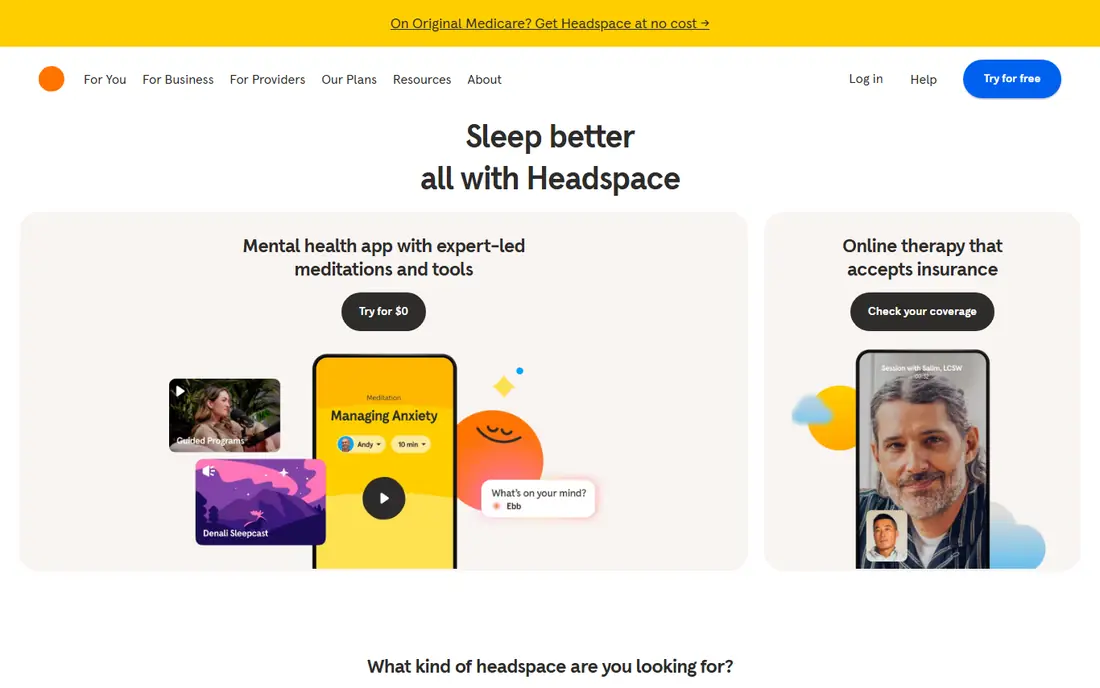
Headspace's kids' section is well organized. Sessions are split into three age groups, and topics are short and concrete: a breathing exercise called Calm, Cool Off for anger and frustration, Kindness and Appreciation visualizations, and Goodnight and Sleep Tight for bedtime. A Stay Positive session for worry is offered to the 6 to 8 and 9 to 12 groups.
The US App Store lists Headspace at $12.99 per month or $69.99 per year, and the kids' page offers a 14-day free trial. The same subscription gives parents the full adult library, which makes it better value if you will use it yourself.
Because the main app is rated 13+ and is built for adults, it works best when a parent picks the session and hands over the device, rather than giving a child free rein.
- Kids' sessions grouped into ages 3 to 5, 6 to 8 and 9 to 12
- Short, specific topics such as Cool Off, Kindness and Goodnight
- Parents get the full adult library too
- Needs a paid subscription
- The main app is rated 13+ on the App Store, so a parent should set it up
Calm
Ideal for: families who want one subscription for parents and kids
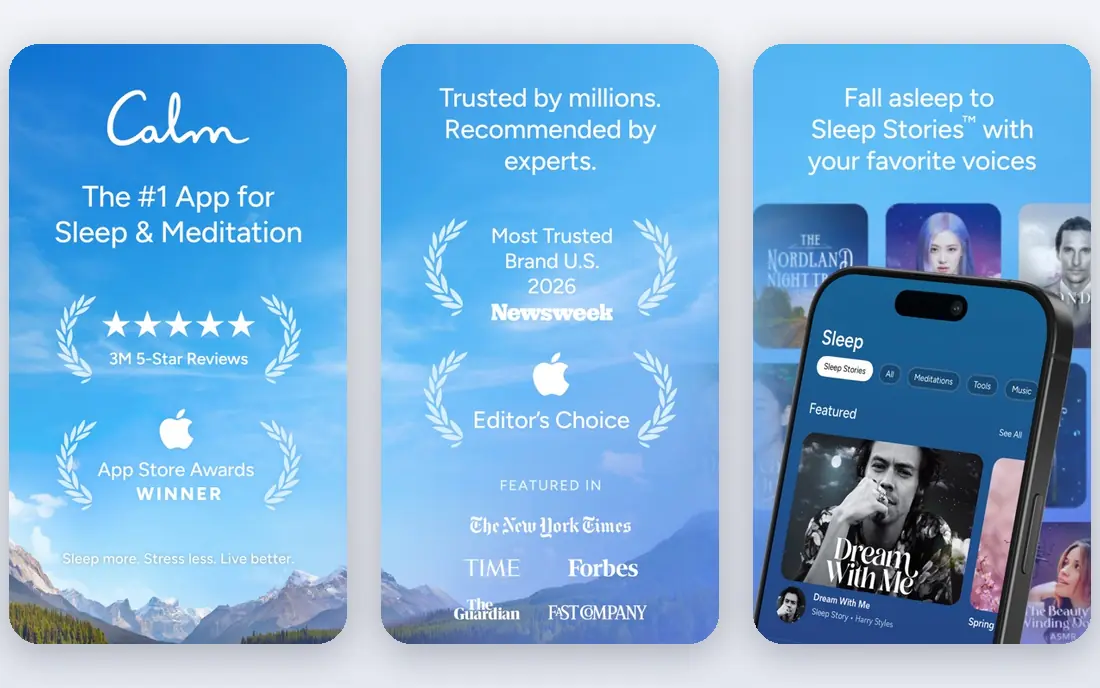
Calm is best known for its Sleep Stories, and its site says the library of more than 500 includes stories for kids, with exclusive ones featuring characters such as Peppa Pig. Calm Kids gathers this content in one place.
Calm also points to its own study of more than 900 US parents who use Calm Kids weekly, where 74% said it helped lower their parenting stress. That is company research, so treat it as encouraging rather than proof.
Pricing is our main complaint. The US App Store shows several Calm Premium in-app purchases between $14.99 and $79.99 without labeling which is monthly or yearly, so check the exact price on Calm's site before the trial ends.
- Calm Kids section with kids' Sleep Stories, including familiar characters such as Peppa Pig
- Over 500 Sleep Stories in total
- Useful for parents' own stress and sleep
- Price not clearly labeled on the App Store listing
- The main app is pitched at adults
Breathe, Think, Do with Sesame
Ideal for: preschoolers aged 2 to 5
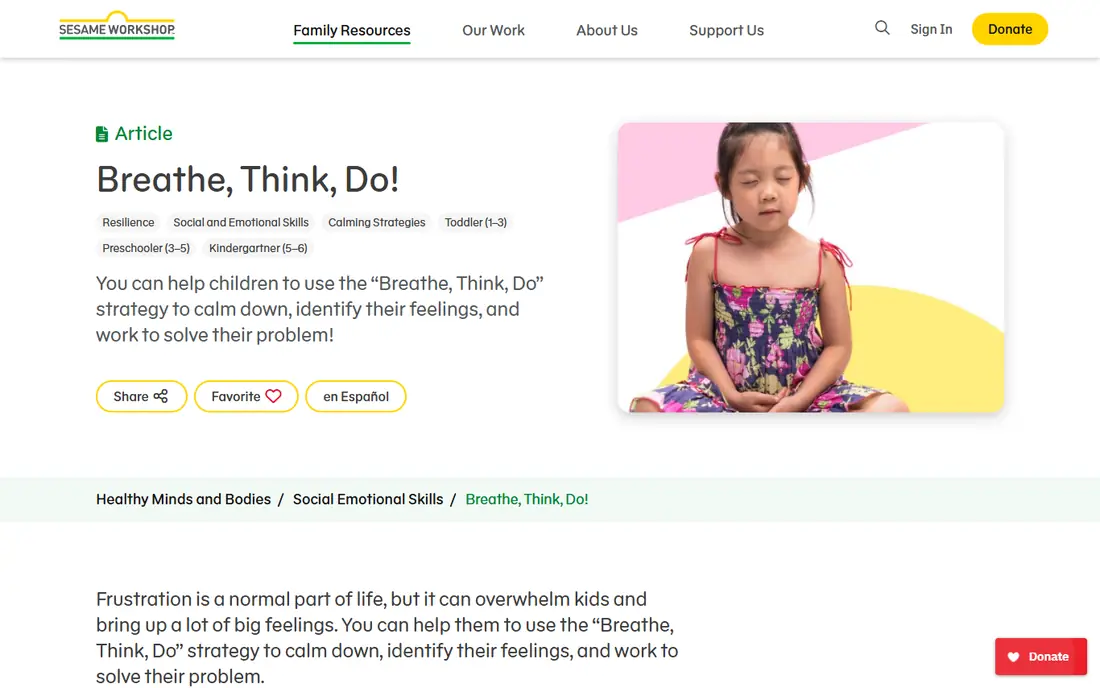
For toddlers and preschoolers, this free app from Sesame Workshop is a gentle first step. A Sesame Street monster models how to calm down and solve everyday problems using the "Breathe, Think, Do" strategy, through five interactive activities and a breathing exercise.
The App Store listing says it is intended for ages 2 to 5, and the description notes English and Spanish support. There is also a parent section, which helps adults use the same language at home when a meltdown happens.
It is not a meditation library, and older kids will outgrow it quickly. Its 3.8 rating from about 150 App Store ratings is also lower than the other apps on this list.
- Completely free from Sesame Workshop
- Teaches a simple three-step calming strategy
- Bilingual in English and Spanish
- Designed for very young children only
- Lower App Store rating (3.8) than the bigger apps
GoNoodle
Ideal for: kids who cannot sit still for meditation
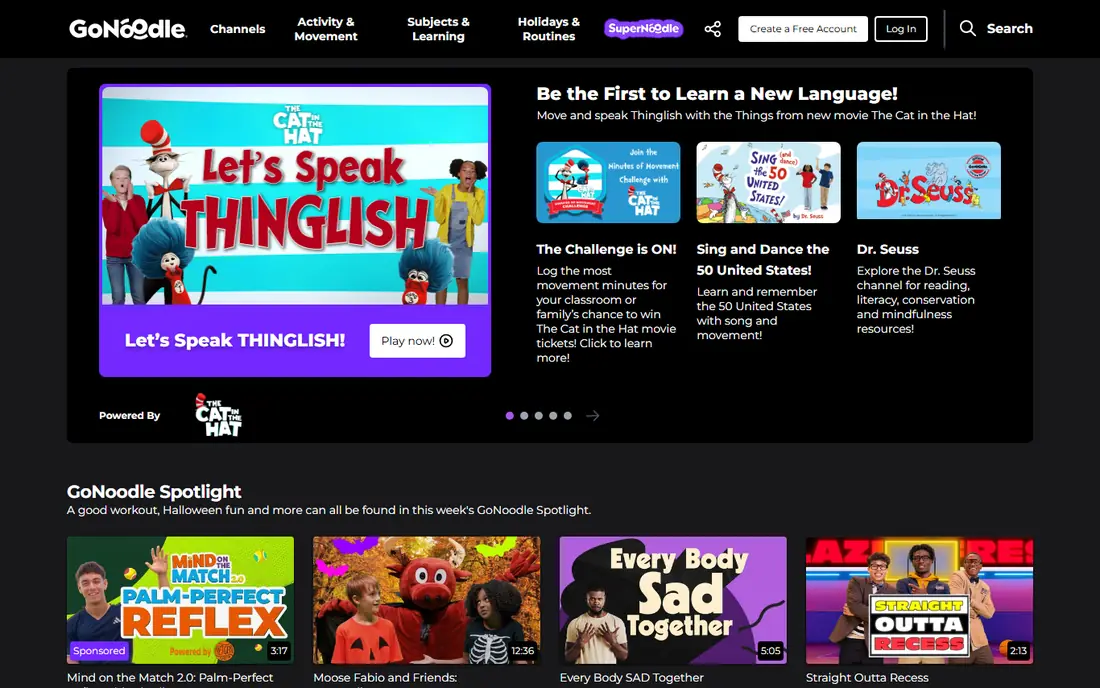
GoNoodle is a different kind of pick. Many young kids find stillness hard, and GoNoodle starts with movement, then offers breathing videos such as "Sense Your Senses" and "Balanced Breathing with Grogu," plus a "Focus and Settle" collection.
Its site says the video apps are free and lists them on the Apple App Store, Google Play, Apple TV, Roku and the Amazon App Store. The family website is certified by the kidSAFE Seal Program, which is a reassuring sign for privacy.
If your goal is quiet, eyes-closed meditation, this is not it. As a classroom-style way to reset energy before homework or bed, it works well.
- Free video apps for families
- Breathing and "focus and settle" videos alongside movement breaks
- Available on phones, Apple TV, Roku and Amazon devices
- Mostly a movement app, not a meditation app
- Content is video, so it means more screen time
Insight Timer
Ideal for: parents who want free kids' tracks plus a huge adult library

Insight Timer calls itself the largest free meditation library, and its kids' page lists free tracks such as bedtime stories, sleep meditations and lullabies. Some tracks are labeled by age, for example a kids' bedtime fear-release track for ages 2 to 9.
The structured kids' courses, such as "Kids: Learn To Meditate," are premium. The App Store lists the subscription at $59.99 per year or $9.99 per month.
This is a parent's app first. It is rated 13+ on the App Store and includes chat and user-generated content, so choose tracks yourself and play them for your child instead of handing over the account.
- Very large free library, including a "For Kids" section
- Free kids' bedtime stories, sleep meditations and lullabies
- Good for parents' own practice
- Rated 13+ with user-generated content and chat
- Kids' courses are premium
Medito
Ideal for: a truly free app for older kids, teens and parents
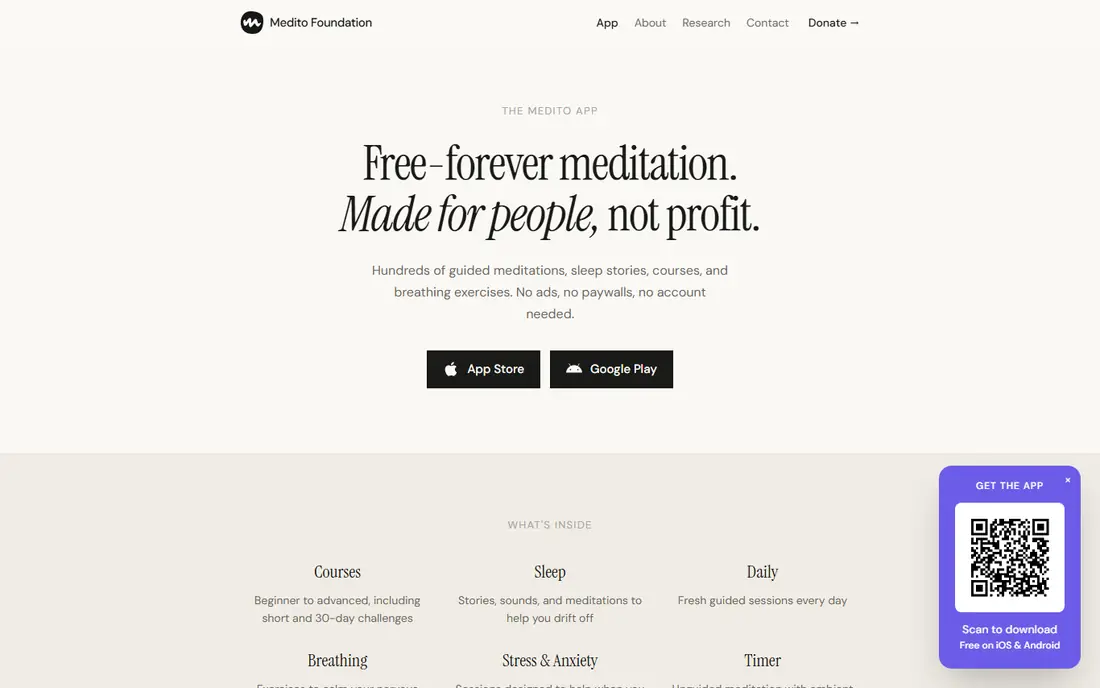
If you searched for the best free meditation app, Medito deserves a look. The Medito Foundation says every meditation is free, with no trial, no premium tier and no sign-up needed. It has a 4.9 rating from about 4,300 App Store ratings.
It is not a children's app. The content is aimed at adults and students, and the App Store rating is 9+. We include it because it works well for older kids and teens, and for parents who want to practice alongside them.
One honest note: the App Store privacy section lists identifiers used to track users across other companies' apps and websites. Review the privacy policy if that matters to you.
- 100% free with no premium tier, according to Medito
- Run by a registered charity
- No sign-up required to start
- Not designed specifically for children (rated 9+)
- App Store privacy label lists identifiers used for tracking
How we picked these
We did not run a months-long trial with children. We compared each app's official website, its US App Store listing (price, age rating, ratings and privacy label), and its stated age range and kids' content in October 2026. We favored apps with clear age guidance, transparent pricing and organizations with a track record in child development or mental wellbeing.
We left out apps we could not verify as currently available in the US or whose pricing we could not find. Where a company cited its own research, we say so.
How to choose a meditation app for your child
Match the app to your child's age
Preschoolers do best with short, playful activities, which is where Breathe, Think, Do with Sesame and GoNoodle fit. Children aged 5 to 12 can follow guided sessions in Smiling Mind or Headspace's age groups. Teens may prefer the adult-style content in Medito or Insight Timer.
Decide what problem you want to solve
For bedtime, look at Moshi, Calm Kids and Insight Timer's sleep tracks. For big feelings during the day, Moshi's Moments and Headspace's Cool Off sessions are good. For focus before homework, short breathing exercises work better than long meditations.
Check age ratings and privacy
Several popular apps, including Headspace and Insight Timer, are rated 13+ on the App Store because they are built for adults. Set them up on a parent's account, use screen-time controls, and read the privacy label before downloading.
Try free options before paying
Smiling Mind, Breathe, Think, Do, GoNoodle, Insight Timer and Medito are free. Start there, and only pay for Moshi, Headspace or Calm if your child actually uses them for a couple of weeks. Cancel trials before they renew if they do not stick.
Practice together
Kids copy what they see. Doing a three-minute breathing exercise with your child is more effective than handing over a device, and it helps you calm down too.
Frequently asked questions
What is the best meditation app for kids?
Our top pick is Smiling Mind because it is free, made for ages 5 to 12, and developed with psychologists and educators. For bedtime, Moshi is the strongest paid option. For preschoolers, try Breathe, Think, Do with Sesame.
What is the best free meditation app?
For kids, Smiling Mind is the best free option. For teens and adults, Medito is completely free with no premium tier, and Insight Timer has a very large free library with a kids' section.
What is the best app for guided meditation for children?
Headspace has the clearest guided sessions for children, grouped into ages 3 to 5, 6 to 8 and 9 to 12. Smiling Mind is a free alternative with structured programs.
At what age can kids start meditating?
Very young children can start with simple breathing games. Sesame Workshop's free app is built for ages 2 to 5, and Headspace's kids' content starts at age 3. Keep sessions to a few minutes for little ones.
Can a meditation app help my child's anxiety?
These apps can teach calming and breathing skills, and some families find them helpful. They are not a treatment for anxiety disorders. If anxiety affects school, sleep or friendships, talk to your pediatrician or a licensed mental health professional.
Sources
- https://www.smilingmind.com.au/
- https://www.smilingmind.com.au/smiling-mind-app
- https://apps.apple.com/us/app/smiling-mind/id560442518
- https://www.moshikids.com/
- https://www.headspace.com/meditation/kids
- https://apps.apple.com/us/app/headspace-meditation-sleep/id493145008
- https://www.calm.com/
- https://apps.apple.com/us/app/calm/id571800810
- https://sesameworkshop.org/resources/breathe-think-do/
- https://apps.apple.com/us/app/breathe-think-do-with-sesame/id721853597
- https://www.gonoodle.com/
- https://insighttimer.com/
- https://insighttimer.com/meditation-topics/kids
- https://apps.apple.com/us/app/insight-timer-meditation-app/id337472899
- https://medito.app/
- https://apps.apple.com/us/app/medito-meditation-sleep/id1500780518