This list puts H2O.ai first for Sovereign AI on own infrastructure. Listed starting prices: Comet from $19 a month. Google Cloud Vertex AI is better for building and governing AI agents, and Domino Data Lab is better for enterprise model management and collaboration. The remaining 2 options are covered below with prices and limits.
This Ainotely guide covers 5 ML platforms to manage AI workflows. Each profile lists a starting price, free plan details, strengths and drawbacks, so you can drop poor fits quickly.
Key takeaways
H2O.ai is the opening pick, best for Sovereign AI on own infrastructure.
Just one of the 5 tools, Comet, has a free plan.
Comet has the lowest monthly starting price in this list: $19 per month.
For unified data and AI workflow management, Databricks Data Intelligence Platform is worth a look.
Before buying Google Cloud Vertex AI, weigh this: tied to Google Cloud ecosystem.
H2O.ai targets Sovereign AI on own infrastructure. H2O.ai is best for teams that require complete control and have the infrastructure to support it. For everyday use, running H2O.ai on your own infrastructure means you are responsible for setup, maintenance, and scaling, which can demand significant IT resources and expertise.
Worth adding: H2O.ai gives you control over the whole AI workflow without relying on external cloud services. This is well suited to organizations with strict data sovereignty or security requirements, like government agencies or regulated industries. If you prefer a completely managed service, consider cloud-based systems like Vertex AI. H2O.ai does not show a starting price in this comparison, so check the vendor site for current pricing. Free options: Not stated.
Strengths: Runs on your own infrastructure.
Trade-offs to know: Needs infrastructure management.
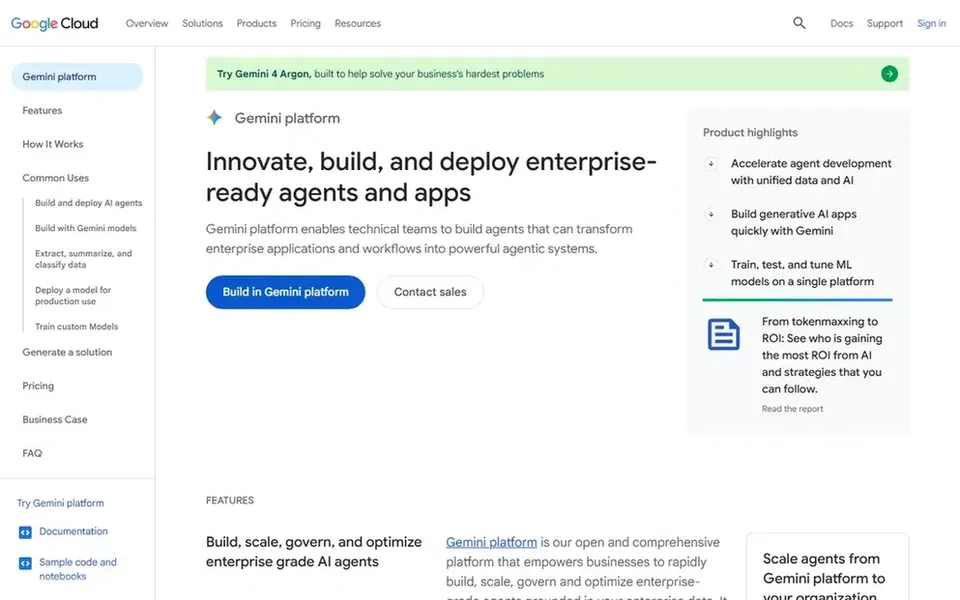
Choose Google Cloud Vertex AI for building and governing AI agents. Google Cloud Vertex AI is a thorough product for developers to build, scale, govern, and optimize agents. It gives you tools for the whole agent lifecycle, from development to monitoring, within the Google Cloud environment.
Honest limits: May need cloud expertise.
This makes it a strong match for teams already using Google Cloud services or those looking to use Gemini models and agent capabilities in a managed setting. It also assumes a certain level of cloud expertise. More specifically, if you need a multi-cloud or on-premises option, consider products like H2O.ai or Domino Data Lab instead. No starting price is listed for Google Cloud Vertex AI here; confirm pricing on the vendor site. As for free access: Not stated.
Best for: Enterprise model management and collaboration
In short, Domino Data Lab is for enterprise model management and collaboration. Domino Data Lab offers a product for managing and deploying models at scale, with a focus on collaboration and reproducibility.
In daily use, Domino is a solid fit for organizations that require to operationalize AI workflows across several teams. Pricing for Domino Data Lab is not stated here, so ask the vendor for current figures. As for free access: Not stated.
Honest limits: May be complicated for smaller teams.
Best for: AI observability and experiment tracking
Comet targets AI observability and experiment tracking. Comet is the creator of Opik, an end-to-end AI observability system for developers with best-in-class agent testing, optimization, and monitoring. It helps teams track experiments, monitor model performance, and ensure AI systems work as intended.
Where it falls short: May need integration with other tools.
It commonly plugs into other systems to fill those gaps. Comet is best as a focused tool for monitoring and testing. The starting price for Comet: $19 per month. Comet has a free plan.
Databricks Data Intelligence Platform serves unified data and AI workflow management. Databricks Data Intelligence Platform supplies a unified environment for data, analytics, and AI. It supports a data-centric approach, helping teams build better AI by simplifying ETL, data warehousing, governance, and AI workflows on a single product.
This makes it a good fit for organizations that want to handle the full lifecycle of data and AI without stitching together separate tools, particularly those already invested in data engineering. Even so, Databricks can be complicated to set up and handle, especially for smaller teams or those without dedicated data engineers. In daily use, otherwise, Databricks excels when you need tight integration between data and AI. In practice, the product's breadth means a steeper ramp-up time. No starting price is listed for Databricks Data Intelligence Platform here; confirm pricing on the vendor site. Free options: Not stated.
Drawbacks to consider: Can be complicated for small teams.
Ask H2O.ai, Google Cloud Vertex AI, Domino Data Lab and Databricks Data Intelligence Platform for a written quote, since no starting price is shown.
Test the free plan from Comet against your real workload before relying on it.
Read the limits listed for H2O.ai first: needs infrastructure management.
Make sure Domino Data Lab lets you export your data in a format another tool can read.
Total up the real monthly cost of Comet, including add-ons, extra users and usage-based fees.
How we picked
The comparison looks at four things: starting price, free access, how well the feature set matches ML platforms to manage AI workflows, and the main limit of each tool. Figures are shown as the vendors publish them. Billing terms, seat minimums and add-ons can change the real cost. The sequence is a judgement call: typical use case first, then pricing transparency, then free access. Use the profiles to check fit.
Every price and plan detail on this page comes from the vendors’ own websites. We did not run hands-on tests unless the text says so, and we do not publish star ratings or review scores. See how we score and our disclosure.
Keep your shortlist in one place
Paste prices, trial dates and notes from this guide into Ainotely, our AI note app. It files them into a topic and pulls out tasks like “cancel trial by Friday”. Free 7-day trial, no card needed.
How are the tools for ML platforms to manage AI workflows ordered?
H2O.ai sits first and Databricks Data Intelligence Platform last because the order follows typical fit for ML platforms to manage AI workflows, then price clarity and free access. It is a judgement call, so read each profile for fit and limits.
What is the cheapest option for ML platforms to manage AI workflows in this list?
On published monthly entry prices, Comet is the lowest here at $19 per month. Entry price is only part of the cost, because seats, add-ons and billing terms can change the total.
Which options for ML platforms to manage AI workflows have a free plan?
Comet is the only tool in this list with a free plan. Free plans usually cap users, projects or features, so check the limits on the vendor page. Each of the 5 options in this ML platforms to manage AI workflows guide has its own card above with the price, free plan and limits.
Can I try these tools before paying?
Often, yes. Comet has a free plan. Use your own data and a real task during the test, and check what the free tier or trial limits before you rely on it.
Which product is best for strict data sovereignty requirements?
H2O.ai comes first here and is built for Sovereign AI on own infrastructure. Buyers with other needs may prefer Google Cloud Vertex AI (for building and governing AI agents) or Domino Data Lab (for enterprise model management and collaboration). Compare costs and limits first.
What should I look for in a ML system for AI workflow management?
Key considerations bundle support for the full workflow (data prep, model development, deployment, monitoring), governance and security features, integration with your existing tools, and deployment adaptability. Also consider simplicity and collaboration capabilities for your team.