Best Mobile Marketing Companies in 2026: 7 Compared

- Braze is our pick for customer engagement, with messaging, journeys, and analytics in one platform.
- AppLovin suits game and app teams focused on user acquisition through ads.
- Airship and CleverTap suit engagement and retention, with push, in-app, and lifecycle tools.
- AppsFlyer, Singular, and Liftoff cover attribution, measurement, and growth for performance teams.
Quick comparison
| Product | Ideal for | Price from | Free version | |
|---|---|---|---|---|
 AppLovin | App user acquisition | See website | No | Visit |
 Braze | Customer engagement platform | See website | No | Visit |
 Airship | Push and in-app messaging | See website | No | Visit |
 CleverTap | Retention and lifecycle marketing | See website | No | Visit |
 AppsFlyer | Mobile attribution | See website | No | Visit |
 Singular | Marketing measurement | See website | No | Visit |
 Liftoff | Performance app marketing | See website | No | Visit |
The best mobile marketing companies
Mobile marketing companies help apps grow through ads, push messages, in-app campaigns, and measurement. The right partner depends on whether you need user acquisition, engagement, or analytics most.
We compared official company pages, product pages, and pricing pages for each platform below. Our pick for most app teams is Braze, because it combines messaging, journey building, and analytics in a system marketers can run without constant developer help.
Pricing for these platforms is usually custom, so treat the notes below as a guide to strengths and fit, and request demos and quotes for your scale.
AppLovin
Ideal for: App user acquisition
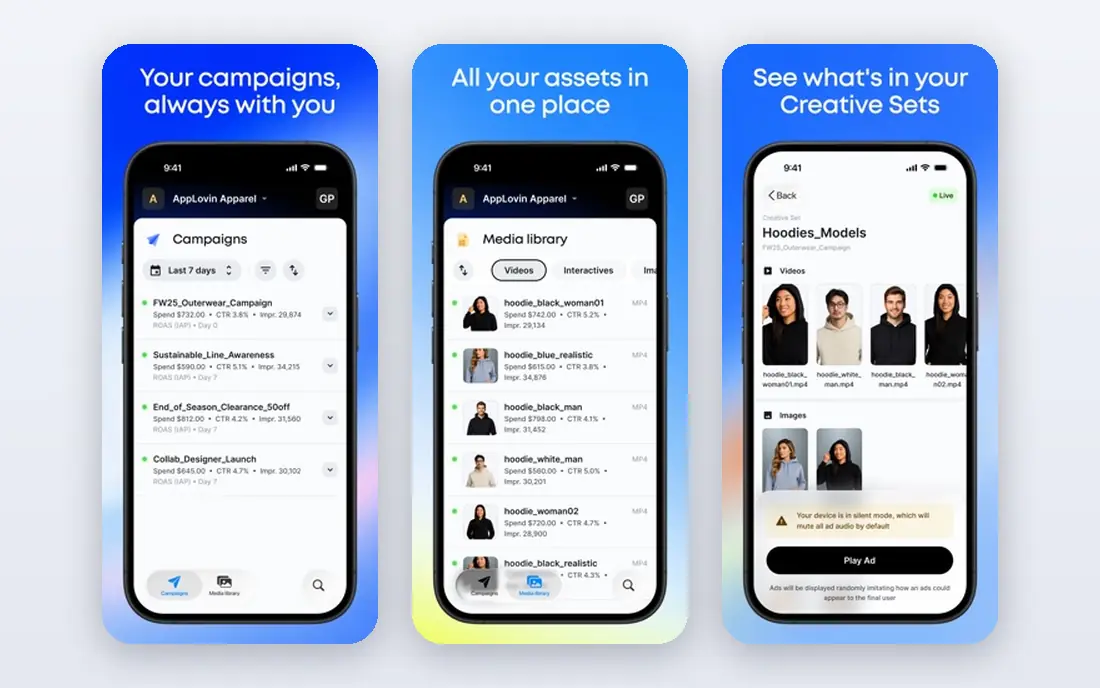
AppLovin runs a large mobile ad network and growth tools, especially strong for games. App teams use it to acquire users at scale and to monetise through ads.
Its strength is acquisition at scale, so smaller apps or non-game apps may find other platforms a better fit. Pricing is custom and campaign based.
Our view: a leading acquisition platform, especially for games.
Bottom line: AppLovin is a strong fit for app user acquisition, and its main draw is large ad network for apps. Weigh that against the limits above before you commit, and test it with your own real work during any trial or free period.
- Large ad network for apps
- Game growth tools
- Monetisation options
- Best for games and large-scale acquisition
- Smaller apps may find it costly
Braze
Ideal for: Customer engagement platform
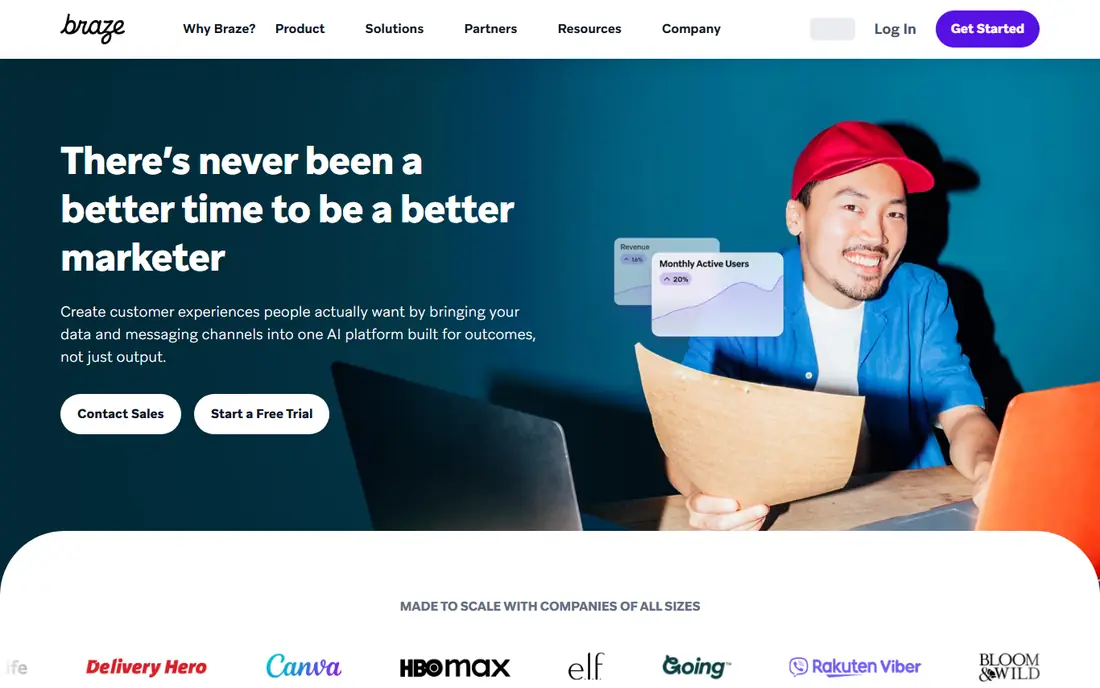
Braze lets marketers build customer journeys across push, email, in-app messages, and SMS, with analytics to measure results. Its interface is built for marketers, not only developers.
Pricing is enterprise level and custom, and complex journeys need careful setup. For teams that live on engagement and retention, though, it is a powerful system.
Our view: our pick for app teams focused on engagement and retention.
Bottom line: Braze is a strong fit for customer engagement platform, and its main draw is messaging, journeys, and analytics in one platform. Weigh that against the limits above before you commit, and test it with your own real work during any trial or free period.
- Messaging, journeys, and analytics in one platform
- Marketer-friendly tools
- Strong integrations
- Enterprise pricing
- Setup needs care for complex journeys
Airship
Ideal for: Push and in-app messaging
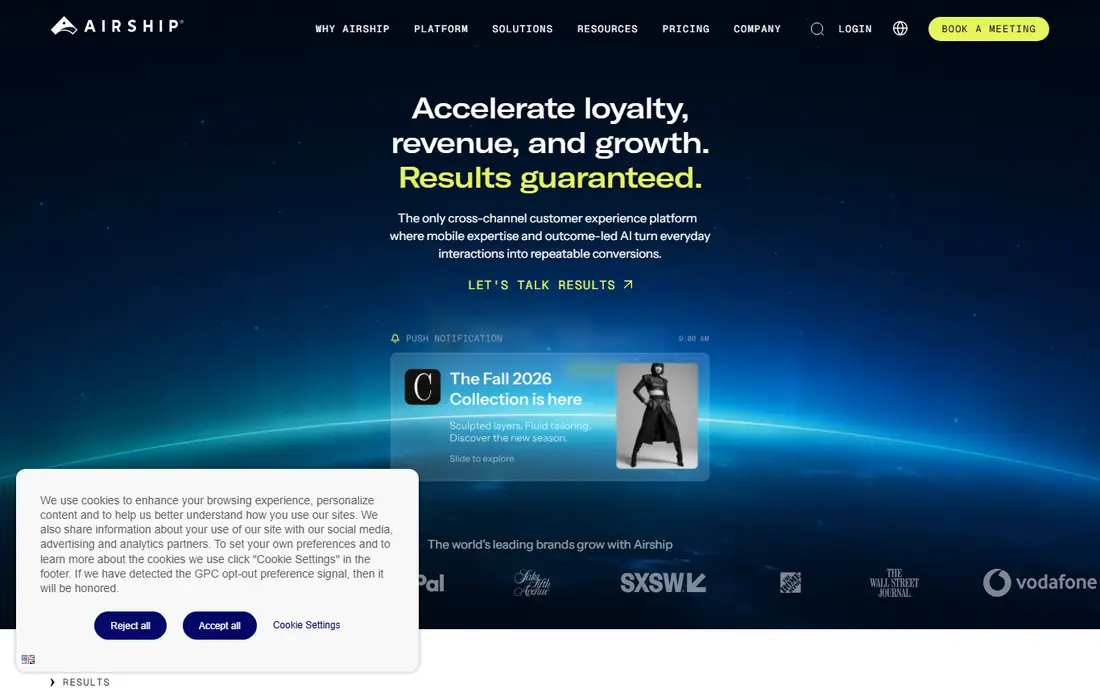
Airship offers push notifications, in-app messages, wallet passes, and journey tools for mobile engagement. It suits brands that need reliable messaging at scale.
Pricing is custom, and smaller teams may find simpler tools enough. For large brands with complex messaging needs, its reliability and depth stand out.
Our view: a strong enterprise messaging platform for mobile engagement.
Bottom line: Airship is a strong fit for push and in-app messaging, and its main draw is push, in-app, and wallet messaging. Weigh that against the limits above before you commit, and test it with your own real work during any trial or free period.
- Push, in-app, and wallet messaging
- Journey tools
- Enterprise reliability
- Pricing is custom
- Smaller teams may prefer simpler tools
CleverTap
Ideal for: Retention and lifecycle marketing
CleverTap combines analytics, segmentation, and lifecycle campaigns to help apps retain users. Marketers can build segments, test messages, and track retention in one place.
Its interface takes time to learn, and pricing is custom by scale. For retention-focused teams, especially in consumer apps, it is a strong all-round platform.
Our view: a capable retention platform for consumer app teams.
Bottom line: CleverTap is a strong fit for retention and lifecycle marketing, and its main draw is lifecycle campaigns. Weigh that against the limits above before you commit, and test it with your own real work during any trial or free period.
- Lifecycle campaigns
- Analytics and segmentation
- Push and in-app tools
- Interface takes learning
- Pricing is custom
AppsFlyer
Ideal for: Mobile attribution
AppsFlyer is a mobile attribution platform that measures which campaigns drive installs and actions, with fraud protection and broad partner integrations. Performance teams rely on it for clean measurement.
It focuses on attribution, so messaging and engagement need a separate platform such as Braze. Pricing is custom by volume and features.
Our view: a leading attribution choice for performance marketing teams.
Bottom line: AppsFlyer is a strong fit for mobile attribution, and its main draw is mobile attribution and measurement. Weigh that against the limits above before you commit, and test it with your own real work during any trial or free period.
- Mobile attribution and measurement
- Fraud protection
- Broad integrations
- Attribution focus means messaging needs another tool
- Pricing is custom
Singular
Ideal for: Marketing measurement
Singular aggregates marketing costs and results across channels, giving teams a unified view of spend and performance. It suits teams that run many channels and need one measurement source.
It is a measurement platform, not a messaging tool, so engagement still needs another system. Setup needs care with data sources and naming.
Our view: a strong measurement platform for multi-channel app teams.
Bottom line: Singular is a strong fit for marketing measurement, and its main draw is cross-channel measurement. Weigh that against the limits above before you commit, and test it with your own real work during any trial or free period.
- Cross-channel measurement
- Cost aggregation
- Fraud detection
- Measurement focus, not messaging
- Setup needs data care
Liftoff
Ideal for: Performance app marketing
Liftoff runs performance marketing campaigns for apps, using machine learning to optimise creative and targeting. It suits teams with real acquisition budgets and clear growth goals.
Pricing is campaign based, so smaller teams may find it costly. For performance-focused growth, its optimisation and creative testing are valuable.
Our view: a strong performance partner for app growth campaigns.
Bottom line: Liftoff is a strong fit for performance app marketing, and its main draw is performance campaigns for apps. Weigh that against the limits above before you commit, and test it with your own real work during any trial or free period.
- Performance campaigns for apps
- Creative testing
- Machine learning optimisation
- Campaign-based pricing
- Best for teams with acquisition budgets
How we picked these
We compared official company pages, product pages, and pricing pages, and we looked at acquisition, engagement, messaging, attribution, and integrations. We favoured platforms with a clear stated strength rather than vague all-in-one claims.
We did not claim hands-on campaigns. Where pricing was custom, we wrote See website rather than inventing a figure.
How to choose a mobile marketing company
Decide your main goal first. Acquisition suits AppLovin or Liftoff, engagement suits Braze, Airship, or CleverTap, and measurement suits AppsFlyer or Singular. One platform rarely leads at all three. Write that goal down and share it with vendors, so demos stay focused on your needs.
Ask for a demo with your own data and use cases. A generic demo hides integration gaps, so test your key journeys, segments, and reporting needs before signing. Include your analytics team in the demo, since integration gaps usually surface there first.
Check integrations with your stack. Your marketing platform must connect cleanly with your app, analytics, CRM, and ad partners, or your team will waste time on manual work.
Confirm privacy and consent handling. Mobile marketing must respect platform rules and privacy law, including consent for tracking and messaging. Ask how each platform handles consent and data retention. Document consent flows for each channel, since push, email, and SMS rules differ.
Model total cost, including messages, users, and overages. Custom pricing can grow with volume, so price your expected monthly active users and message volume, not just the base quote. Ask about charges for extra users, messages, and data retention, since those add-ons often surprise teams.
Finally, plan for measurement from day one. Agree which events, attributions, and reports matter before launch, so growth claims can be checked against real data.
Also review platform rules and consent requirements with your legal team. App store rules on tracking and messaging change often, and a campaign that breaks them can be paused or removed.
Frequently asked questions
What does a mobile marketing company do?
It helps apps grow through ads, push and in-app messages, lifecycle campaigns, and measurement of installs and actions. Different companies specialise in different parts of that work.
Which mobile marketing platform is best for engagement?
Braze is our pick for engagement, with messaging, journeys, and analytics in one platform. Airship and CleverTap are also strong engagement choices.
Do I need attribution as well as messaging?
Yes, usually. Attribution platforms such as AppsFlyer or Singular measure which campaigns work, while engagement platforms such as Braze send the messages. Many teams use both.
How much do mobile marketing platforms cost?
Pricing is usually custom, based on users, messages, or campaign volume. Request quotes for your scale and model overage costs before committing.
Can small apps use these platforms?
Yes, though enterprise pricing may be high. Smaller teams should start with simpler tools or a focused platform, and move to enterprise systems as volume grows.
What is the difference between Braze and AppsFlyer?
Braze focuses on sending messages and building customer journeys, while AppsFlyer focuses on measuring which campaigns drive installs. Many app teams use both together.