6 Best Modern Architecture in Data Integration Platforms for 2026

- Number one here is Estuary, a fit for live CDC and streaming.
- Informatica fits enterprise data integration.
- No starting price is shown for any of the 6 tools, Estuary and Informatica included, so plan time for sales calls.
- One limit worth knowing about dbt: transformation only, not ingestion.
- Meltano, Airbyte: these are the 2 tools out of 6 that offer a free plan.
Direct answer
Estuary is the first pick on this list for live CDC and streaming. Look at Meltano for open-source DataOps, and at dbt for SQL-based transformation. Prices, free plans and limits for all 6 tools follow.
Quick comparison
| Product | Ideal for | Price from | Free version | |
|---|---|---|---|---|
 Estuary | Live CDC and streaming | See website | No | Visit |
 Meltano | Open-source DataOps | See website | Yes | Visit |
 dbt | SQL-based transformation | See website | No | Visit |
 Airbyte | Open-source connectors | See website | Yes | Visit |
 Fivetran | Completely managed ELT | See website | No | Visit |
 Informatica | Enterprise data integration | See website | No | Visit |
Modern Architecture in Data Integration Platforms profiles
Choosing modern architecture in data integration platforms usually comes down to price, fit and limits. This Ainotely guide sets 6 tools side by side on those three points, with the facts kept short and checkable.
Estuary
Ideal for: Live CDC and streaming
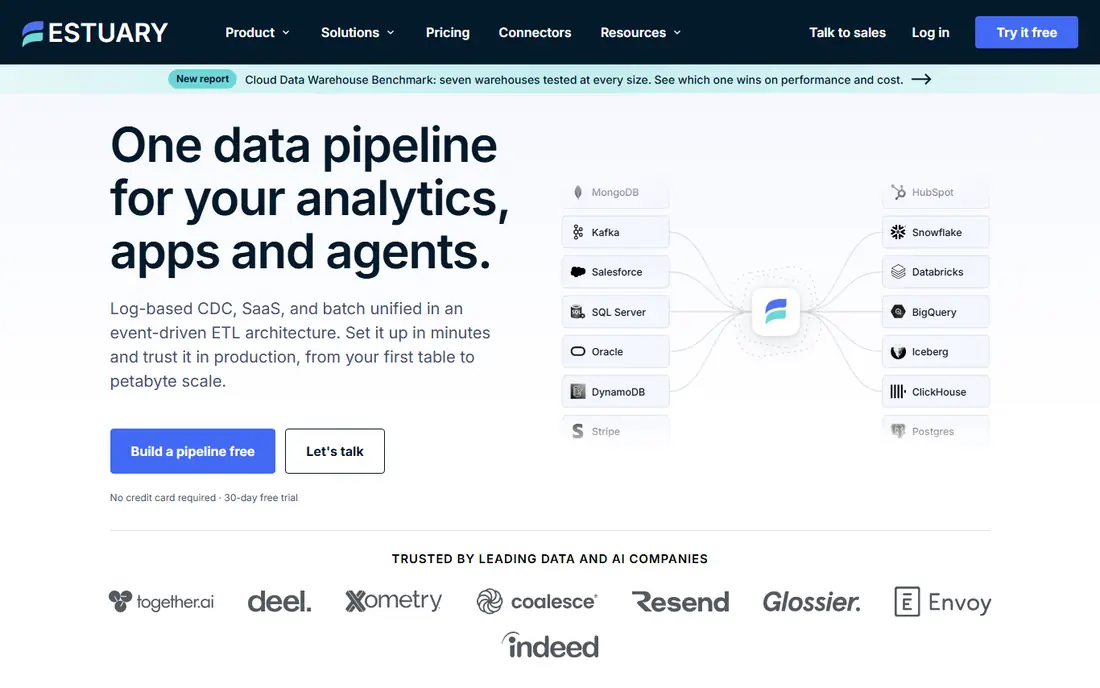
In short, Estuary is for live CDC and streaming. Estuary suits teams wanting live data movement without Kafka complexity.
Where it falls short: Newer vendor with a smaller community.
Estuary shows no starting price here, so confirm the cost on the vendor site. There is no free plan with Estuary.
- BYOC deployment
- 200-plus managed connectors
- Real-time architecture is a paradigm shift for batch teams
Meltano
Ideal for: Open-source DataOps
Choose Meltano for open-source DataOps. Meltano brings software engineering practices to data: pipelines as code with version control and CI/CD, assembling best-in-class open-source tools.
Trade-offs to know: No managed pricing, but not really free in effort.
The Singer tap ecosystem supplies connectors. It demands engineering investment. Check the vendor site for Meltano pricing; none is listed in this comparison. You can start on Meltano without paying.
- Open-source DataOps product
- CI/CD and code review for pipelines
- Scaling documentation is thin
dbt
Ideal for: SQL-based transformation
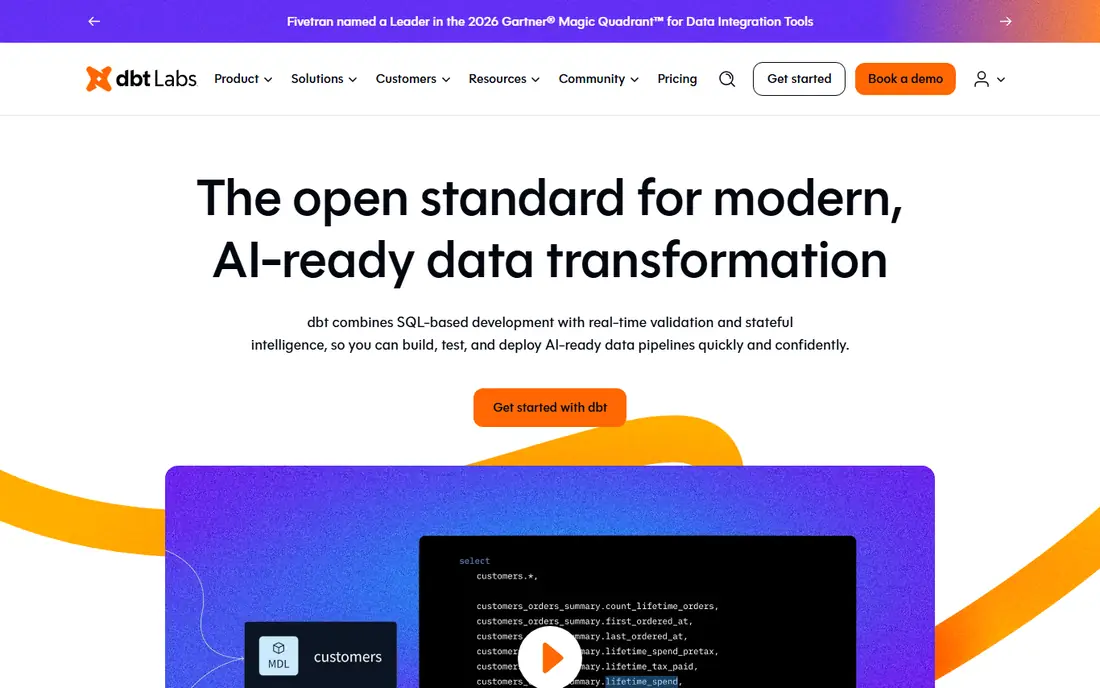
dbt is a good fit for SQL-based transformation. dbt owns the T in ELT: analysts write SQL models with tests, documentation and version control, transforming raw loaded data into analytics-ready tables.
Where it is weaker: Needs an ELT tool alongside.
Worth adding: the community and ecosystem are unmatched. No starting price is listed for dbt here; confirm pricing on the vendor site. dbt does not include a free plan.
- The standard for in-warehouse transformation
- Dbt Cloud brings orchestration
- Transformation only, not ingestion
Airbyte
Ideal for: Open-source connectors
Where Airbyte fits: open-source connectors. Airbyte's open-source model built the largest connector ecosystem alternative to Fivetran: build custom connectors, self-host for control, or use the cloud for convenience.
Drawbacks to consider: Connector quality varies.
In practice, Airbyte suits data teams wanting open infrastructure and connector extensibility. Airbyte shows no starting price here, so confirm the cost on the vendor site. A free plan is available with Airbyte.
- Open-source with a huge connector community
- No vendor lock-in on the core
- Self-hosting needs engineering
Fivetran
Ideal for: Completely managed ELT
In short, Fivetran is for completely managed ELT. Cost scales with usage.
What Fivetran does well: Proven at enterprise scale; SOC 2.
Fivetran suits teams wanting integration handled entirely, without pipeline maintenance. This comparison lists no price for Fivetran; ask the vendor. Fivetran does not include a free plan.
The main drawbacks: Less control than open-source alternatives.
- 700-plus completely managed connectors
- HIPAA and ISO certifications
- Consumption-based pricing can surprise
Informatica
Ideal for: Enterprise data integration
Informatica is designed for enterprise data integration. Small teams should look elsewhere.
The cloud integration service manages complicated enterprise scenarios. Informatica does not show a starting price in this comparison, so check the vendor site for current pricing. Informatica does not include a free plan.
Honest limits: Overkill for straightforward pipelines.
- Cloud data integration with governance
- Massive connector and transformation library
- Enterprise licensing and complexity
What went into this list
Selection started from tools commonly considered for modern architecture in data integration platforms, then narrowed to 6 that have clear pricing information or a clear quote process. Prices and plan limits come from vendor pages and can change, so confirm them on the vendor site before you buy. The ranking is editorial: typical fit first, then clear pricing, then free access. If your needs are unusual, read the profiles rather than relying on position.
Questions to settle before buying
- Ask each vendor, from Estuary to Informatica, for a written quote; none of them publishes a starting price.
- Look at free plan limits closely: Meltano and Airbyte have one, and the caps decide whether it is usable for real work.
- Before choosing Estuary, weigh its main limit: newer vendor with a smaller community.
- Check the support hours and onboarding help Informatica offers; smaller vendors vary a lot here.
- Add up seats, add-ons and usage charges for dbt before comparing it with cheaper entries.
Frequently asked questions
Can I try these options before paying?
Often, yes. Meltano and Airbyte have a free plan. Use your own data and a real task during the test, and check what the free tier or trial limits before you rely on it.
What is a data lakehouse?
Architecture combining data lake storage economics with warehouse query performance, popularized by Databricks. Worth adding: integration tools increasingly target lakehouse destinations.
Which options for modern architecture in data integration platforms have a free plan?
On this list, Meltano and Airbyte include a free plan. Caps on seats, usage or features are common, so test the free plan against your real workload.
Do these tools publish their prices?
No. None of the tools, from Estuary to Informatica, shows a fixed starting price here, so budget time for quotes.
What is the difference between ETL and ELT?
ETL transforms data before loading; ELT loads raw data into the warehouse first, then transforms it there. Modern cloud products favor ELT for adaptability and compute economics.
Where does dbt fit?
dbt takes care of transformation inside the warehouse. It complements ingestion tools like Fivetran or Airbyte instead of replacing them.