Best Motivational Apps Free in 2026: 8 Apps Compared

- Fabulous and Habitica suit daily routine building, with Fabulous leaning to guided journeys and Habitica to games.
- Forest and Stoic suit focus and reflection, helping you stay present rather than chasing streaks alone.
- ThinkUp and Dreamfora suit positive self-talk and goal visualization through affirmations and dream boards.
- Happify and Shine suit mood support, with activities and meditations for stress and low days.
Quick comparison
| Product | Ideal for | Price from | Free version | |
|---|---|---|---|---|
 Fabulous | Guided daily routines | See website | Yes | Visit |
 Habitica | Gamified motivation | See website | Yes | Visit |
 Forest | Focus timer with a tree | See website | Yes | Visit |
 ThinkUp | Personal affirmations | See website | Yes | Visit |
 Dreamfora | Goals and dream boards | See website | Yes | Visit |
 Stoic | Morning reflection | See website | Yes | Visit |
 Happify | Mood and stress activities | See website | Yes | Visit |
 Shine | Daily motivation and meditation | See website | Yes | Visit |
The best motivational apps free
We compared official feature pages, pricing pages, and app-store listings to find motivational apps with genuinely useful free tiers, covering habits, focus, affirmations, and mood support.
Fabulous
Ideal for: Guided daily routines
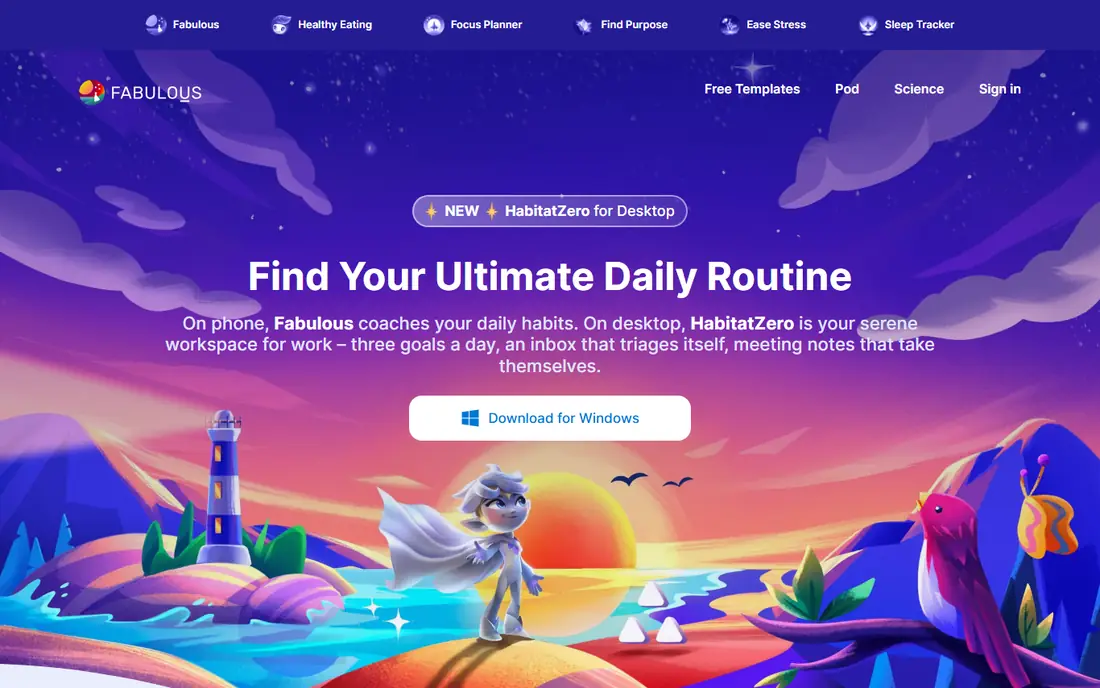
Fabulous builds motivation around small, guided journeys rather than a bare habit list. You start with a simple routine, such as drinking water in the morning, and the app adds steps gradually as the habit sticks. Coaching-style prompts explain why each step matters, which helps on days when willpower alone is thin.
The free tier covers core journeys and routines, while longer programs and extra coaching sit behind a paid plan. Notifications can also feel frequent if you enable them all. If you want a guided path rather than a blank checklist, Fabulous is our pick for routine building.
- Guided journeys for habits
- Morning and evening routines
- Coaching-style prompts
- Full journeys need a paid plan
- Notifications can feel frequent
Habitica
Ideal for: Gamified motivation
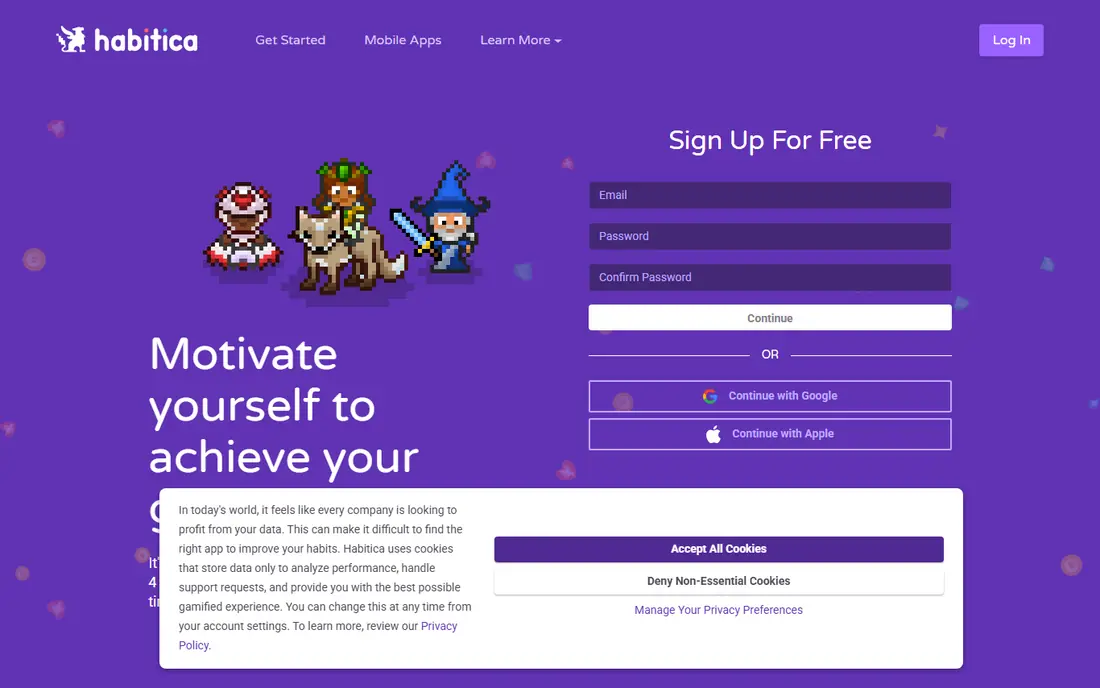
Habitica turns habits and to-dos into a role-playing game, where completing tasks earns experience and items for your character. That playful reward loop works well for people who find plain trackers dull, and parties let friends take on quests together. Challenges around fitness, study, and work add extra structure without a fixed program.
The game can distract if you spend more time on rewards than on habits, and a long task list takes time to set up. Still, the free plan covers the core game, which makes Habitica one of the best free motivational apps for people who enjoy play and social goals.
- Turns habits into a game
- Parties and quests
- Strong free plan
- Game layer can distract
- Setup takes time
Forest
Ideal for: Focus timer with a tree
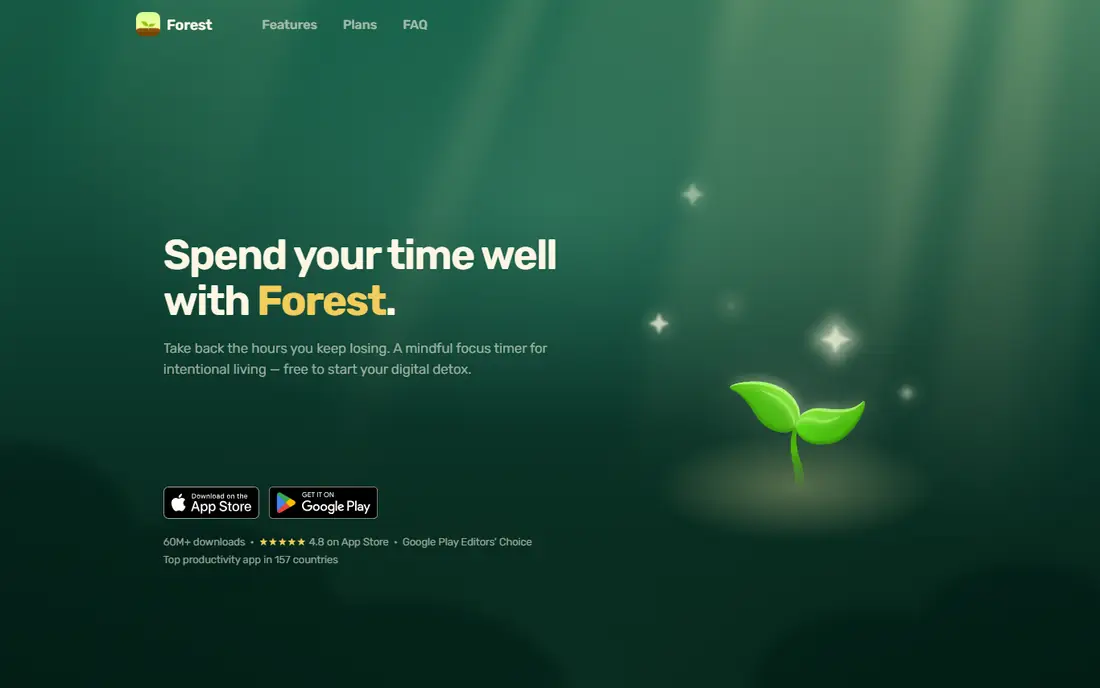
Forest uses a simple idea: plant a virtual tree, stay off your phone, and watch the tree grow. If you leave the app early, the tree withers, which gives a light, visual reason to keep going. That gentle pressure suits people who get distracted by their phone during study or work, and the growing forest over weeks shows your focus history at a glance.
Forest is a focus timer, not a full habit tracker, so it works best alongside another app for routines. It also offers a way to support real tree planting through partner programs in some versions. If phone distraction is your main blocker, Forest is our pick for a calm, visual timer.
- Simple focus timer
- Virtual tree grows as you focus
- Gentle guilt-free design
- Limited habit features
- Best paired with a separate tracker
ThinkUp
Ideal for: Personal affirmations
ThinkUp lets you write affirmations, record them in your own voice, and play them back on a schedule. Hearing your own voice state a goal can feel more personal than reading a generic quote, and the app groups affirmations by goals such as confidence, health, and work. Reminders help you listen daily, which is where affirmation practice either sticks or fades.
Affirmations do not suit everyone, and users who prefer action plans may find them too soft on their own. ThinkUp works best paired with a habit app, so the words support real steps. If positive self-talk helps you, ThinkUp is our pick for a personal approach.
- Record affirmations in your own voice
- Scheduled reminders
- Goal-based affirmation sets
- Affirmations suit some users more than others
- Premium voices need a paid plan
Dreamfora
Ideal for: Goals and dream boards
Dreamfora combines dream boards, goal plans, affirmations, and habit tracking in one app. You can set a long-term goal, break it into steps, and see a visual board that keeps the goal in mind each day. That visual link between a distant dream and a daily task is useful for goals that take months, such as fitness, study, or career changes.
The app is newer than Fabulous or Habitica, so its community is smaller, and some features need a paid plan. Still, the free tier covers boards, goals, and habits well. If you like visualizing goals, Dreamfora is our pick for an all-in-one motivational app.
- Dream boards and goal plans
- Daily affirmations
- Habit tracking built in
- Newer app with a smaller community
- Some features need a paid plan
Stoic
Ideal for: Morning reflection
Stoic builds motivation through short morning and evening reflection, with prompts for gratitude, priorities, and mood. That quiet start helps users plan the day with intent rather than reacting to notifications from the moment they wake. Mood tracking over time also shows patterns, such as which days tend to go well and which do not.
The reflection style can feel slow for users who want fast, gamified rewards, and the full exercise library needs a paid plan. If you prefer calm planning to streaks and points, Stoic is our pick for a thoughtful daily routine.
- Morning and evening journaling
- Mood tracking
- Guided breathing and quotes
- Reflection focus may feel slow
- Full library needs a paid plan
Happify
Ideal for: Mood and stress activities
Happify offers short activities and games designed to support mood, stress, and confidence, organized into tracks for different goals. Activities take only a few minutes, which makes them easy to fit into a lunch break or a commute. Progress tracking shows how often you complete activities, which helps build a routine around mental well-being.
Full tracks and some features need a paid plan, and activities can feel repetitive after several months. Happify is not a replacement for professional help on serious mental health issues, but as a daily mood tool it is accessible and well structured. If low mood or stress drags your motivation down, Happify is our pick here.
- Science-based activities for mood
- Tracks for stress and confidence
- Short games
- Full tracks need a paid plan
- Activities can feel repetitive over time
Shine
Ideal for: Daily motivation and meditation
Shine offers daily meditations, pep talks, and motivational content with an inclusive approach, including content for different identities and life situations. Short daily sessions fit easily into a morning routine, and the tone is warm without being preachy. Community features let users share reflections and support each other.
The full library needs a paid plan, and the content style will not suit users who prefer a more neutral or data-driven app. Still, the free tier gives a good taste of the daily format. If you want a short, encouraging start to the day, Shine is our pick for daily motivation.
- Daily meditations and pep talks
- Inclusive content
- Community support
- Full library needs a paid plan
- Content style may not suit everyone
How we picked these
We compared official feature pages, pricing pages, and app-store listings for motivational apps with a real free tier in October 2026. We favored apps that support a clear mechanism, whether routines, games, focus, affirmations, or mood activities, rather than apps that only show quotes. We left out apps with no free tier or no clear motivational feature beyond a quote feed.
What to check before you choose
Start with your blocker. If you struggle to start, pick a routine app like Fabulous. If you get distracted, pick Forest. If self-doubt holds you back, pick ThinkUp or Shine. If low mood is the issue, pick Happify or Stoic. Matching the app to the blocker matters more than downloading every app at once.
Next, use only one or two apps for at least two weeks. Motivation apps fail when they become another chore, so keep the routine short and check in at the same time each day. Track whether you actually complete more of your goals, not just whether you opened the app.
Finally, remember that apps support action, they do not replace it. Pair any motivational app with one concrete daily step, such as a ten-minute walk or a single study session. If low mood or anxiety persists, consider talking to a clinician, since apps here are for general support, not treatment.
Frequently asked questions
What is the best free motivational app overall?
Fabulous is our pick for guided routines, while Habitica is our pick for gamified motivation. Forest suits focus, ThinkUp suits affirmations, and Happify suits mood support. The best app depends on what blocks your motivation most.
Are these motivational apps really free?
Yes, all eight apps here have free tiers that cover core features. Paid plans mainly add longer programs, full libraries, and premium content. Try the free tier for two weeks before paying, since the core routine is usually free.
Which motivational app is best for building habits?
Fabulous and Habitica suit habit building best, with Fabulous offering guided journeys and Habitica offering game rewards. Dreamfora also combines habits with goal boards. Pick guided structure if you like coaching, and games if you like rewards.
Can motivational apps help with low mood?
They can support daily mood with short activities, meditations, and reflection, and Happify and Shine are built for that purpose. They are not a replacement for professional help, so seek support from a clinician if low mood persists or worsens.
How long should I use a motivational app before judging it?
Give it at least two weeks of daily use, since a few days rarely show a pattern. Track one goal you care about, such as workouts or study sessions, and judge the app by whether that goal improves, not by streaks alone.