Best Multi Carrier Shipping Software in 2026: 8 Options Compared

- 1
 ShipStationOnline sellers shipping across many carriersVisit
- 2
 ShippoSmall sellers and developers needing shipping APIsVisit
- 3
 EasyPostDevelopers and businesses building shipping into appsVisit
- 4
 ShipBobBrands that want fulfilment plus shipping softwareVisit
- 5
 Pirate ShipSmall sellers who want free shipping softwareVisit
- ShipStation is our broad starting point for best multi carrier shipping software, with online sellers shipping across many carriers as its core strength.
- Shippo is a strong alternative when small sellers and developers needing shipping apis matters more than a general feature set.
- Prices and free plans vary a lot, so check the official pricing page for the exact plan you would buy rather than assuming the headline price applies to you.
- Trials matter most: test setup, sharing, and your daily workflow with real data before committing to a paid plan.
- The best choice is the option that fits your team size and budget without forcing you to change how you work.
Quick comparison
| Product | Ideal for | Price from | Free version | |
|---|---|---|---|---|
| ShipStation | Online sellers shipping across many carriers | See website | Free trial | Visit |
| Shippo | Small sellers and developers needing shipping APIs | See website | Yes | Visit |
| EasyPost | Developers and businesses building shipping into apps | See website | Yes | Visit |
| ShipBob | Brands that want fulfilment plus shipping software | See website | No | Visit |
| Pirate Ship | Small sellers who want free shipping software | Free | Yes | Visit |
 Sendcloud | European sellers shipping across carriers | See website | Free trial | Visit |
 Descartes ShipRush | Businesses shipping with ERP and carrier depth | See website | No | Visit |
 Pacejet | Companies shipping from ERP and warehouse systems | See website | No | Visit |
The best multi carrier shipping software
Selling online gets expensive when each carrier, label, and tracking update lives in a different system. We compared official feature pages, pricing pages, and public documentation for shipping tools that compare rates, print labels, and track parcels across carriers.
ShipStation
Ideal for: Online sellers shipping across many carriers
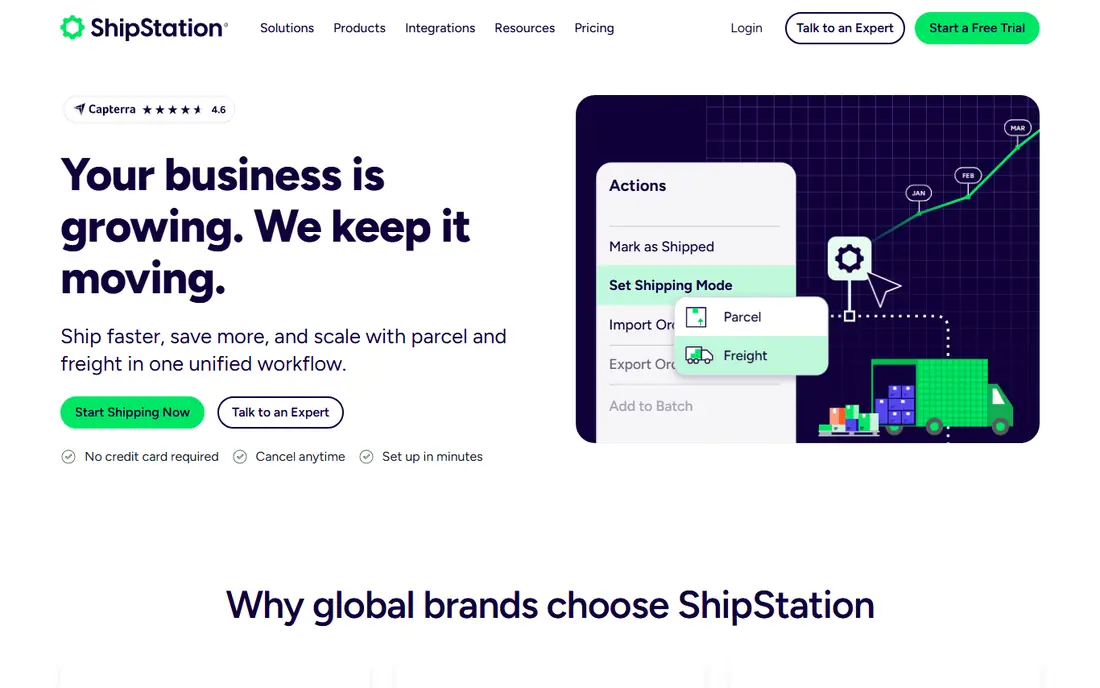
ShipStation is a strong pick for online sellers shipping across many carriers. ShipStation suits a seller who ships daily across several carriers and stores. Its strength is carrier breadth, since labels, rates, and tracking can sit in one dashboard..
Check pricing on the official site before you commit, since tiers change. The price above is see website and the free plan status is free trial. Use a trial to test setup, sharing, and exports on your real workflow.
The catch is monthly cost, so compare it with your current label spend. ShipStation earns its place here because it fits the daily work and budget for its audience, even with that trade-off.
- Multi-carrier labels
- Rate comparison
- Order imports from stores
- Monthly pricing
- Carrier discounts vary
Shippo
Ideal for: Small sellers and developers needing shipping APIs

For small sellers and developers needing shipping apis, Shippo deserves a close look. Shippo suits a small seller or developer who wants labels plus an API option. Its strength is flexibility, since both dashboard and API paths are available..
Check pricing on the official site before you commit, since tiers change. The price above is see website and the free plan status is yes. Use a trial to test setup, sharing, and exports on your real workflow.
The catch is volume limits, so growing sellers should check paid tiers. Shippo earns its place here because it fits the daily work and budget for its audience, even with that trade-off.
- Shipping labels and rate comparison
- API for developers
- Tracking tools
- Free tier limits volume
- Paid plans add features
EasyPost
Ideal for: Developers and businesses building shipping into apps

EasyPost stands out for developers and businesses building shipping into apps. EasyPost suits a business that wants shipping built into its own app or checkout. Its strength is API depth, since many carriers can be reached through one integration..
Check pricing on the official site before you commit, since tiers change. The price above is see website and the free plan status is yes. Use a trial to test setup, sharing, and exports on your real workflow.
The catch is technical fit, so small sellers may prefer ShipStation or Shippo first. EasyPost earns its place here because it fits the daily work and budget for its audience, even with that trade-off.
- Shipping API across carriers
- Labels, tracking, and insurance options
- API-first, so non-developers may prefer a dashboard tool
ShipBob
Ideal for: Brands that want fulfilment plus shipping software
If your priority is brands that want fulfilment plus shipping software, start with ShipBob. ShipBob suits a brand that wants warehousing and shipping handled together. Its strength is fulfilment, since stock, picking, and shipping can run as one service..
Check pricing on the official site before you commit, since tiers change. The price above is see website and the free plan status is no. Use a trial to test setup, sharing, and exports on your real workflow.
The catch is commitment, so compare fulfilment fees with software-only options. ShipBob earns its place here because it fits the daily work and budget for its audience, even with that trade-off.
- Fulfilment network plus shipping tools
- Inventory and order management
- Fulfilment pricing
- Not a software-only pick for everyone
Pirate Ship
Ideal for: Small sellers who want free shipping software
Pirate Ship is a strong pick for small sellers who want free shipping software. Pirate Ship suits a small US seller who wants free software and discounted labels. Its strength is price, since the software itself costs nothing..
Check pricing on the official site before you commit, since tiers change. The price above is free and the free plan status is yes. Use a trial to test setup, sharing, and exports on your real workflow.
The catch is scope, so high-volume sellers may need automation tools elsewhere. Pirate Ship earns its place here because it fits the daily work and budget for its audience, even with that trade-off.
- Free shipping software
- Discounted labels for small sellers
- Simple interface
- US focus
- Feature range is narrower than large platforms
Sendcloud
Ideal for: European sellers shipping across carriers
For european sellers shipping across carriers, Sendcloud deserves a close look. Sendcloud suits a European seller who ships across many local and international carriers. Its strength is European coverage, since local carriers and returns are well supported..
Check pricing on the official site before you commit, since tiers change. The price above is see website and the free plan status is free trial. Use a trial to test setup, sharing, and exports on your real workflow.
The catch is region, so US-focused sellers should confirm carrier lists first. Sendcloud earns its place here because it fits the daily work and budget for its audience, even with that trade-off.
- Multi-carrier shipping
- Checkout and returns tools
- Tracking pages
- European carrier strength
- US sellers should check coverage
Descartes ShipRush
Ideal for: Businesses shipping with ERP and carrier depth
Descartes ShipRush stands out for businesses shipping with erp and carrier depth. Descartes suits a business that wants shipping tied to ERP and order systems. Its strength is system linkage, since orders can flow into labels without retyping..
Check pricing on the official site before you commit, since tiers change. The price above is see website and the free plan status is no. Use a trial to test setup, sharing, and exports on your real workflow.
The catch is complexity, so small sellers may find simpler tools faster to start. Descartes ShipRush earns its place here because it fits the daily work and budget for its audience, even with that trade-off.
- Multi-carrier shipping linked to business systems
- Rate shopping
- Label printing
- Enterprise positioning
- Pricing is quoted
Pacejet
Ideal for: Companies shipping from ERP and warehouse systems
If your priority is companies shipping from erp and warehouse systems, start with Pacejet. Pacejet suits a company shipping from ERP or warehouse software that needs rate shopping built in. Its strength is ERP fit, since shipping can run from existing order data..
Check pricing on the official site before you commit, since tiers change. The price above is see website and the free plan status is no. Use a trial to test setup, sharing, and exports on your real workflow.
The catch is setup, so allow time for carrier and ERP connections. Pacejet earns its place here because it fits the daily work and budget for its audience, even with that trade-off.
- Multi-carrier rate shopping
- Label printing
- ERP connections
- Quoted pricing
- Implementation takes care
How we picked these
We compared official feature pages, pricing pages, app-store listings, privacy policies, and public reviews for each option, and we kept only products that exist and work in October 2026 and truly fit the topic. Where we could not verify a price from the vendor site, we wrote See website rather than guessing a figure. We did not claim hands-on testing that did not happen, and we weighed each product on fit, pricing clarity, and honest trade-offs rather than marketing claims alone.
How to choose multi-carrier shipping software
Start with the job, not the feature list. Write down the three tasks you will do most often, the number of people who will use the tool, and the systems it must connect to. Then check pricing for that exact team size, including add-ons and renewal terms, and test the tool with real data during a trial. Pay attention to exports and cancellation, since a tool should not lock your data away. Finally, check support hours and onboarding help, because a good tool with slow support can still slow your team down.
Check fit during a trial
Use the trial for real work, not just a demo. Invite the people who will use the tool daily, test the hardest workflow first, and note where it feels slow or confusing. If the trial does not cover your main workflow, ask for a demo with your own data before buying.
Check total cost
Add licence fees, add-ons, implementation, and any per-use charges together. A low starting price can grow quickly with seats or volume, while a higher plan may include features you would otherwise buy separately. Compare total cost over a year, not just the first month.
Frequently asked questions
What is best multi carrier shipping software?
best multi carrier shipping software covers tools that help with this task, and the right choice depends on your team size, budget, and daily workflow. Start with the problem you need to solve, then compare the options in this guide against that problem. A tool that looks strong in general may still miss the one feature you use most.
How much does best multi carrier shipping software cost?
Prices vary widely, and several options on this list use quoted pricing, so check the official pricing page for the plan you would actually buy. Free plans and trials can cover small teams, while larger teams usually pay per user or by usage. Always separate licence fees from add-ons, implementation, and payment fees.
Is there a free option for best multi carrier shipping software?
Yes, several options in this guide offer a free plan or a free trial, and the comparison table shows which ones do. Free tiers work well for testing, but they often limit users, volume, or advanced features. Use the free tier to test your real workflow before paying.
How do I choose between these options for best multi carrier shipping software?
List your must-have features, your budget, and the tools you already use, then shortlist two or three options and trial them on real work. Check integration, support, and export options, since switching later costs time. The buying guide below gives a checklist to use during trials.
Which option is best for most people for best multi carrier shipping software?
For most people, ShipStation and Shippo are sensible starting points, because they cover the core job well and are widely used. That said, the best pick still depends on your budget and workflow, so use the comparison table and the product write-ups to match an option to your situation.