Best Multi-Tenant Cloud Security Platforms Compared

- 1
 Palo Alto Networks Prisma CloudLarge enterprises already on Palo Alto toolingVisit
- 2
 WizAgentless multi-cloud risk and attack pathsVisit
- 3
 Orca SecurityFast agentless coverage for mid-market teamsVisit
- 4
 Lacework (now part of Fortinet)Behaviour-based detection in Fortinet shopsVisit
- 5
 Sysdig SecureRuntime security for container teamsVisit
- Most vendors in this list publish no price, so expect a quote for Prisma Cloud, Wiz, Orca Security, Lacework, Sysdig Secure, and Aqua Security, and budget time for a sales cycle.
- Microsoft Defender for Cloud is the only platform here with a published per-server price, starting at $4.906 per server per month for Plan 1, and CrowdStrike publishes Falcon bundle pricing from $59.99 per device per year.
- Agentless scanning from Wiz and Orca Security gives fast coverage across many tenants, while agent-based runtime tools from Sysdig Secure and Aqua Security give deeper container and workload detail.
- Per-tenant policy, role-based access, and separate reporting views matter more than raw feature counts when one console serves many customers or business units.
- Lacework now sits inside Fortinet as FortiCNAPP, and Prisma Cloud is being carried forward under the Cortex Cloud name, so check which brand and console a quote actually covers.
Quick comparison
| Product | Ideal for | Price from | Free version | |
|---|---|---|---|---|
| Palo Alto Networks Prisma Cloud | Large enterprises already on Palo Alto tooling | quote only | Free trial (30 days) | Visit |
| Wiz | Agentless multi-cloud risk and attack paths | quote only | Free trial | Visit |
| Orca Security | Fast agentless coverage for mid-market teams | quote only | No | Visit |
| Lacework (now part of Fortinet) | Behaviour-based detection in Fortinet shops | quote only | Free trial | Visit |
| Sysdig Secure | Runtime security for container teams | quote only | Free trial (14 days) | Visit |
 Aqua Security | Container and Kubernetes lifecycle security | quote only | No | Visit |
 CrowdStrike Falcon Cloud Security | Falcon customers adding cloud security | $59.99 per device/year (billed annually) | Free trial (15 days) | Visit |
 Microsoft Defender for Cloud | Azure-centred teams needing published pricing | $4.906 per server/month | Free trial (30 days) | Visit |
The best multi-tenant cloud security platforms
Palo Alto Networks Prisma Cloud
Ideal for: Large enterprises already on Palo Alto tooling
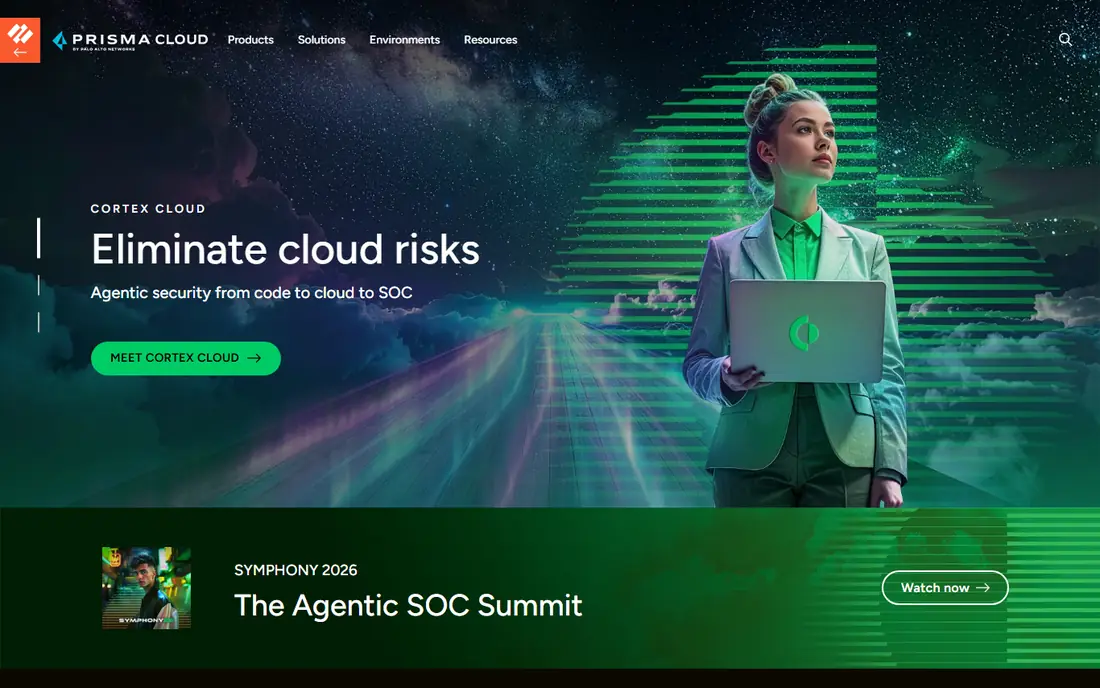
Prisma Cloud is Palo Alto Networks cloud-native application protection platform, covering cloud security posture management, workload protection, code security, and API security in one console. Palo Alto introduced Cortex Cloud in February 2025 as the next version of Prisma Cloud. For multi-tenant use, Prisma Cloud organises cloud accounts into account groups with separate policies, roles, and reporting, which lets a central team set guardrails while each tenant keeps its own view of its own risk.
The platform scans code, infrastructure as code, container images, and running workloads, then connects findings into attack paths. The trade-off is complexity. Credit-based licensing maps credits to protected resources across modules, and that model is hard to model in a spreadsheet before a sales conversation. Palo Alto publishes no price list for Prisma Cloud or Cortex Cloud, so treat the platform as quote only.
- Broad CNAPP coverage from code to cloud
- Deep integration with Palo Alto firewalls and Cortex tooling
- Credit-based licensing is hard to forecast as the estate grows
- Deployment and policy tuning take real engineering time
Wiz
Ideal for: Agentless multi-cloud risk and attack paths
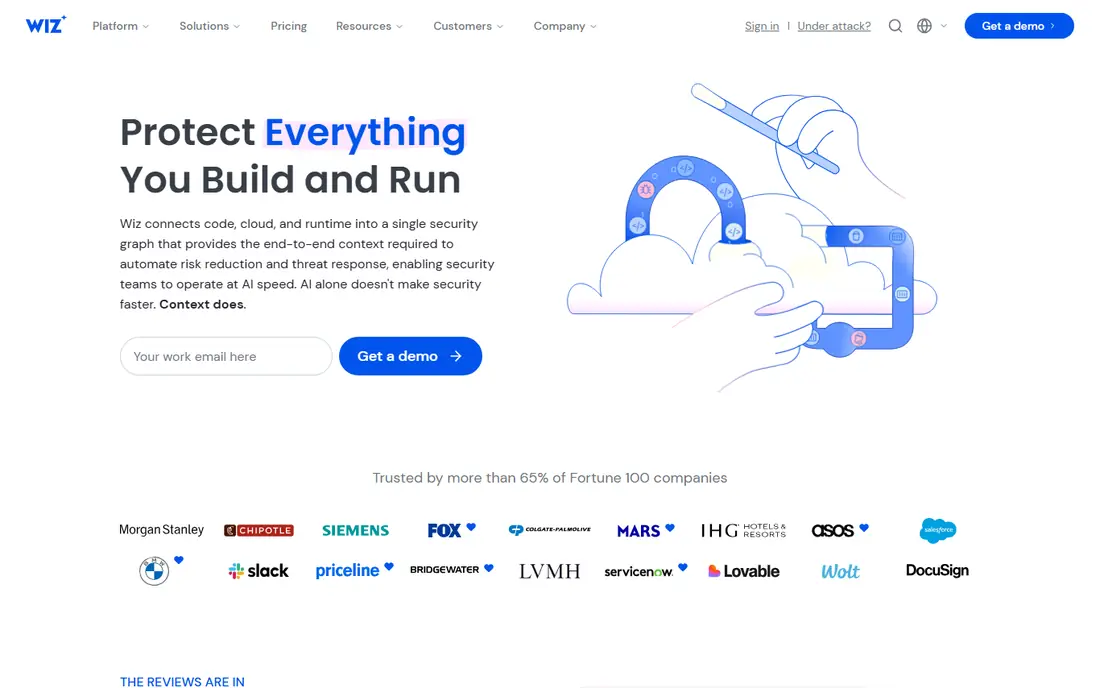
Wiz connects to cloud accounts through APIs and builds a security graph of the whole estate without installing agents, which is why it is a common first choice for teams that need coverage across many tenants fast. A managed service provider can onboard a new customer account in minutes and see misconfigurations, exposed data, identities, and vulnerabilities in one place. The graph shows how a chain of small issues in one tenant could reach sensitive data, and it ranks fixes by exploitability.
Google completed its acquisition of Wiz in March 2026, and Wiz keeps its brand and multi-cloud support. Coverage spans posture management, code security, runtime detection through the Defend and Sensor add-ons, and AI security posture management. The buying model is modular, with Wiz Cloud, Wiz Code, Wiz Defend, and Wiz Sensor licensed separately, plus a Wiz Go bundle aimed at smaller businesses. Wiz publishes no price on its own pricing page, so the platform is quote only.
- Agentless connection shows risk in minutes across AWS, Azure, Google Cloud and Oracle Cloud
- Security graph links misconfigurations into attack paths
- Modular pricing across Cloud, Code, Defend, and Sensor add-ons complicates cost planning
- Runtime features cost extra
Orca Security
Ideal for: Fast agentless coverage for mid-market teams

Orca Security is built around agentless scanning. Its SideScanning technology reads cloud block storage out of band to build a model of each workload, which means a team can cover a new tenant account without deploying or maintaining agents on every host. For multi-tenant operators, that speed is the main attraction. One console holds many cloud accounts, and the platform scores risk by attack path. Coverage spans AWS, Azure, Google Cloud, Oracle Cloud, Alibaba Cloud, and Kubernetes, with more than 2,500 configuration controls.
Orca sells a single edition priced annually on the average number of workloads scanned, which keeps the buying conversation simple compared with module-based rivals. The same simplicity is a limit, because there is no smaller tier for a tenant that needs only posture management, and there is no free plan. Orca publishes no price list, so the platform is quote only. Teams that need deep runtime behaviour inside containers often pair Orca with an agent-based tool.
- Single edition with agentless SideScanning across cloud and Kubernetes
- Attack-path ranking cuts alert noise
- No free plan and no lower tier, so small tenants face enterprise pricing
- Agentless scanning gives less runtime depth than agent-based tools
Lacework (now part of Fortinet)
Ideal for: Behaviour-based detection in Fortinet shops
Lacework is a cloud security platform built on behavioural analytics and anomaly detection, and Fortinet acquired it in 2024 for $152.3 million in cash. The product now sells as FortiCNAPP inside the Fortinet Security Fabric, which suits organisations that already run FortiGate firewalls and other Fortinet products. For multi-tenant use, Lacework maps normal behaviour per cloud account and flags deviations. Coverage includes posture management, workload protection, container security, and compliance reporting across AWS, Azure, and Google Cloud.
The behavioural approach is a genuine strength, because it catches novel attacks that signature-based checks miss, and it reduces the policy writing burden for teams with many tenants. The weakness is commercial clarity. Fortinet publishes no list price for FortiCNAPP, and the product is often bundled into wider Fortinet licensing, so a buyer can struggle to see what the cloud security piece costs on its own. Ask for the FortiCNAPP line item separated from the rest of the Fortinet quote.
- Behavioural analytics flag anomalies that static rules miss
- FortiCNAPP bundles fit Fortinet Security Fabric licensing
- Fortinet integration is still evolving after the 2024 acquisition
- Pricing is quote-based and often bundled, which hides the true cost
Sysdig Secure
Ideal for: Runtime security for container teams
Sysdig Secure is a cloud-native application protection platform with its strongest suit in runtime security. It grew out of the Falco open-source runtime engine, and it watches system calls inside containers to catch attacks as they happen, not only misconfigurations that existed at scan time. That runtime depth is valuable for multi-tenant Kubernetes estates, where one cluster may host workloads for many internal teams or customers and a compromised container needs to be stopped quickly. The platform also covers posture management, vulnerability scanning, and compliance frameworks, and it supports AWS, Azure, and Google Cloud.
Sysdig prices per host secured and monitored, with Secure and Monitor sold as separate product lines that can be bundled. The vendor does not publish a price list for Sysdig Secure, so the platform is quote only. Agent deployment across many clusters and tenants takes planning, and runtime policies need tuning so legitimate container behaviour does not trigger alerts.
- Deep runtime threat detection built on Falco, with container and Kubernetes focus
- Vulnerability and compliance scanning in one console
- Agent deployment and policy tuning need real engineering effort
- Per-host pricing can climb fast at scale
Aqua Security
Ideal for: Container and Kubernetes lifecycle security
Aqua Security protects cloud-native applications across their full lifecycle, from code and container image scanning through Kubernetes admission control to runtime enforcement. Its open-source scanner Trivy gives teams a no-cost way to test Aqua scanning quality before buying the commercial platform. For multi-tenant operators, Aqua applies policy per cluster and namespace, so different tenants on shared Kubernetes infrastructure can run under different admission rules and runtime controls. Coverage includes container security, serverless functions, software supply chain, and cloud posture management.
The commercial platform is priced by nodes or workloads under an annual enterprise agreement, and Aqua publishes no standard price list, so the platform is quote only. Third-party estimates put entry deployments at $25,000 to $40,000 a year. Implementation can take around three months on larger estates, because runtime policies, admission controls, and CI/CD integrations need to be fitted to each tenant.
- Full lifecycle coverage from image scanning to runtime enforcement
- Trivy open-source scanner gives a no-cost entry point
- No public price list and a high enterprise entry cost
- Implementation can take months on large estates
CrowdStrike Falcon Cloud Security
Ideal for: Falcon customers adding cloud security
CrowdStrike Falcon Cloud Security adds cloud posture, workload protection, and container security to the Falcon platform, which most buyers know for endpoint detection and response. The appeal for multi-tenant teams is consolidation. One agent and one console cover endpoints, identities, and cloud workloads, and the Threat Graph connects telemetry across those domains. Falcon Cloud Security covers AWS, Azure, and Google Cloud, with agentless posture scanning alongside agent-based workload protection, plus container image scanning and Kubernetes admission control.
CrowdStrike is the most transparent vendor on price in this list for its endpoint bundles, publishing Falcon Go at $59.99 per device per year, Pro at $99.99, and Enterprise at $184.99, all billed annually, with a 15-day free trial. Those bundle prices cover endpoint protection tiers, and the cloud security modules are priced separately by quote, so the $59.99 figure is an entry point, not the full cost of Falcon Cloud Security. Falcon Complete, the fully managed tier, is also quote only.
- Single lightweight agent and cloud-native console shared with endpoint protection
- Threat Graph links cloud, identity, and endpoint telemetry
- Full cloud security value sits in higher tiers and quoted modules, so the entry bundle covers only part of the platform
- Per-device pricing grows with every protected host
Microsoft Defender for Cloud
Ideal for: Azure-centred teams needing published pricing
Microsoft Defender for Cloud is a cloud-native application protection platform that combines posture management, DevOps security, and cloud workload protection across Azure, AWS, and Google Cloud, with the deepest coverage on Azure. For multi-tenant use, Defender plans are enabled per subscription, so each tenant runs its own plan set while a central team views secure score across all subscriptions. Defender for Cloud also feeds Microsoft Sentinel. The free tier covers basic posture recommendations, and the first 30 days of the commercial plans are free.
Microsoft is the only vendor in this list that publishes a full per-resource price list. Defender for Servers Plan 1 costs $4.906 per server per month and Plan 2 costs $14.60 per server per month, with separate per-instance prices for databases, App Service, Key Vault, storage, containers, and APIs. That transparency makes budgeting straightforward, but the bill grows with every protected resource type across every tenant. Coverage of AWS and Google Cloud is real but less deep than Azure coverage.
- Published per-resource pricing with a free first 30 days
- Deepest integration with Azure services and Microsoft Sentinel
- Capabilities are deeper on Azure than on AWS and Google Cloud
- Enabling many per-resource plans adds up across a large estate
How we chose
We compared vendor pricing pages, product documentation, and feature pages for all eight platforms on 11 November 2026. We checked which vendors publish a price and which ask for a quote, and we marked every unpublished price as quote only rather than repeating third-party estimates as fact. We compared multi-tenant features that matter to managed service providers and enterprise platform teams: separate tenant accounts, per-tenant policy and roles, separate reporting, agentless scanning, runtime protection, and CNAPP coverage across code, posture, and workloads. We gave weight to pricing transparency, onboarding speed for new tenants, and whether runtime depth or posture breadth fits the buyer. We did not run hands-on tests, scan a test environment, or negotiate quotes, so feature claims here come from vendor documentation.
What to check before you buy
Check tenant isolation first. Confirm that one tenant admin cannot see another tenant data, findings, or policies, and that roles can be scoped per tenant rather than only globally. Ask how a new tenant is onboarded, how long it takes, and whether onboarding is self-service or needs vendor help. Check whether per-tenant policy, alert routing, and reporting are included in the base licence or gated behind a higher tier. Confirm which clouds and services are covered agentlessly and which need agents, because agent rollout across many tenants is a project in itself. Check data residency options, because some tenants need their findings stored in a specific region. Confirm how the price is metered, whether by workload, host, server, device, or credit, and get a three-year cost model that covers growth in tenant count. Finally, run a proof of value on two or three real tenant accounts, not a demo environment, and measure time to first finding, alert volume, and time to remediate.
| Team size and budget | Best fit | Why | Watch out | | 1 to 10 people, under $25,000 a year | Microsoft Defender for Cloud | Published per-server pricing from $4.906 a month and a free 30 days | Costs rise as you enable more per-resource plans | | 10 to 50 people, $25,000 to $100,000 a year | Orca Security, Sysdig Secure | Fast agentless coverage or strong runtime depth without a huge platform team | Orca has no free plan; Sysdig needs agent rollout effort | | 50 to 200 people, $100,000 to $250,000 a year | Wiz, CrowdStrike Falcon Cloud Security | Broad multi-cloud graph or consolidation with endpoint security | Wiz module pricing is hard to forecast; CrowdStrike cloud modules are quoted | | 200 or more people, over $250,000 a year | Palo Alto Networks Prisma Cloud, Lacework (FortiCNAPP), Aqua Security | Enterprise CNAPP breadth, Fortinet integration, or container lifecycle depth | Credit or bundle pricing hides true cost; implementation can take months |
Frequently asked questions
What is a multi-tenant cloud security platform?
A multi-tenant cloud security platform secures many separate cloud accounts, customers, or business units from one console while keeping each tenant data, policies, and findings separate. It supports per-tenant roles, policies, and reporting, so one team can manage many tenants without a separate tool for each one.
Which platform is best for a managed service provider?
Orca Security and Wiz suit managed service providers because agentless scanning onboards a new customer account in minutes and shows risk across many accounts at once. Microsoft Defender for Cloud suits providers with Azure-heavy customers. The right pick depends on your customer cloud mix, staffing, and need for runtime depth.
Do these platforms work across AWS, Azure, and Google Cloud?
Most of them do, including Wiz, Orca Security, Prisma Cloud, Sysdig Secure, Aqua Security, and Microsoft Defender for Cloud. Coverage depth varies by cloud, and Defender for Cloud is deepest on Azure. Check the specific services you run, not just the cloud names, before you shortlist.
Is agentless scanning enough for cloud security?
Agentless scanning covers posture, misconfigurations, vulnerabilities, and attack paths quickly, and it is enough for many teams. It gives less runtime detail than agent-based tools, so teams running containers at scale often add runtime protection from Sysdig Secure or Aqua Security.
How much do multi-tenant cloud security platforms cost?
Six of the eight platforms in this guide publish no price and sell by quote. Microsoft Defender for Cloud starts at $4.906 per server per month for Plan 1, and CrowdStrike Falcon Go starts at $59.99 per device per year. Always get a written quote based on your tenant and workload counts.
Sources
- https://www.paloaltonetworks.com/resources/guides/prisma-cloud-pricing-and-editions.md
- https://www.wiz.io/
- https://orca.security/
- https://www.lacework.com/
- https://www.sysdig.com/
- https://www.aquasec.com/
- https://www.crowdstrike.com/en-us/products/trials/try-falcon/
- https://azure.microsoft.com/en-gb/pricing/details/defender-for-cloud/