Best Mushroom Identification Apps in 2026: 7 Apps Compared

- 1
 Picture MushroomDedicated mushroom photo IDVisit
- 2
 iNaturalistCommunity nature identificationVisit
- 3
 SeekFast nature identificationVisit
- 4
 PlantNetPlant and fungi reference IDVisit
- 5
 Rogers MushroomsDetailed fungi referenceVisit
- Picture Mushroom is our pick for dedicated mushroom identification by photo.
- iNaturalist and Seek suit nature identification broadly, with expert community help.
- PlantNet and First Nature suit reference and learning, though they are not mushroom-only apps.
- Rogers Mushrooms and Mushroom Observer suit detailed study and community records.
Quick comparison
| Product | Ideal for | Price from | Free version | |
|---|---|---|---|---|
| Picture Mushroom | Dedicated mushroom photo ID | Free | Yes | Visit |
| iNaturalist | Community nature identification | Free | Yes | Visit |
| Seek | Fast nature identification | Free | Yes | Visit |
| PlantNet | Plant and fungi reference ID | Free | Yes | Visit |
| Rogers Mushrooms | Detailed fungi reference | Free | Yes | Visit |
 Mushroom Observer | Community fungi records | Free | Yes | Visit |
 First Nature | Fungi identification guides | Free | Yes | Visit |
The best mushroom identification apps
Mushroom identification apps promise to name a fungus from a photo, but they vary in accuracy and none should decide whether a mushroom is safe to eat. Used as learning aids, though, they help beginners notice features and learn species.
We compared official app pages, help pages, and app store listings for each app below. Our pick for most people is Picture Mushroom, because it is built for fungi, gives detailed species pages, and is easy to use in the field.
The safety rule for this whole article is simple: an app result is a starting point for learning, never a permission to eat. When in doubt, leave the mushroom alone.
Picture Mushroom
Ideal for: Dedicated mushroom photo ID
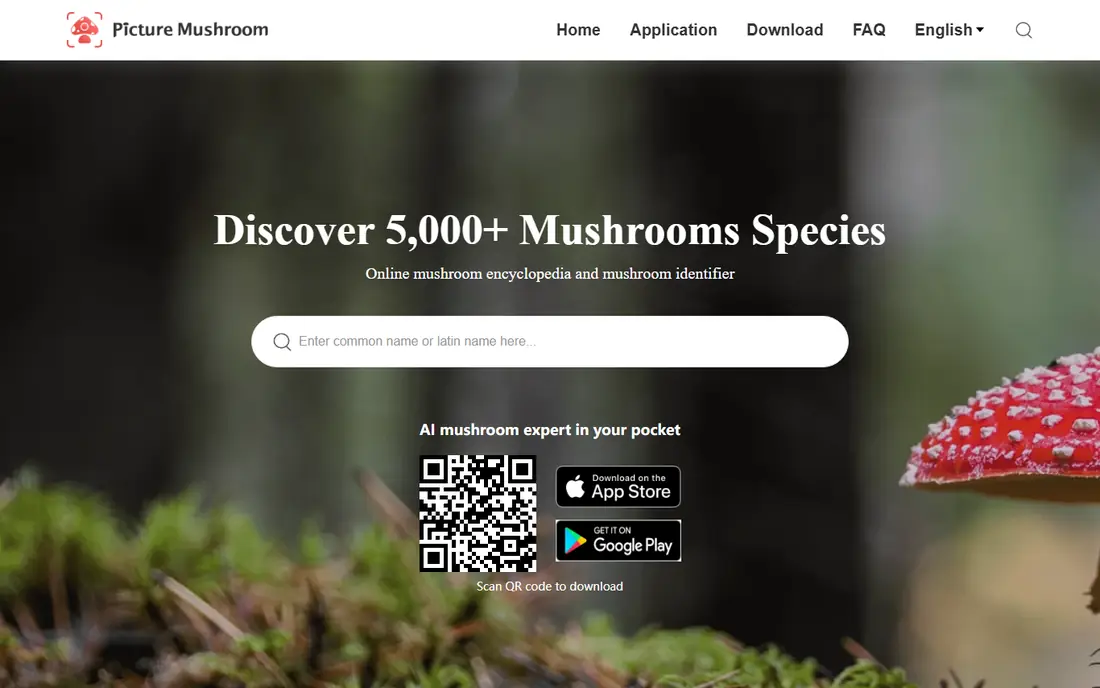
Picture Mushroom identifies fungi from photos and gives detailed species pages covering appearance, habitat, and edibility notes. Its fungi focus makes it more useful than general plant apps for mushroom learners.
Accuracy depends on photo quality and species, and lookalike species can still confuse any app. Treat results as suggestions to study further, not as final identifications.
Our view: the best dedicated mushroom ID app for learning in the field.
Bottom line: Picture Mushroom is a strong fit for dedicated mushroom photo ID, and its main draw is built for fungi. Weigh that against the limits above before you commit, and test it with your own real work during any trial or free period.
- Built for fungi
- Detailed species pages
- Photo ID with confidence notes
- Accuracy varies by photo and species
- Full features need a paid plan
iNaturalist
Ideal for: Community nature identification
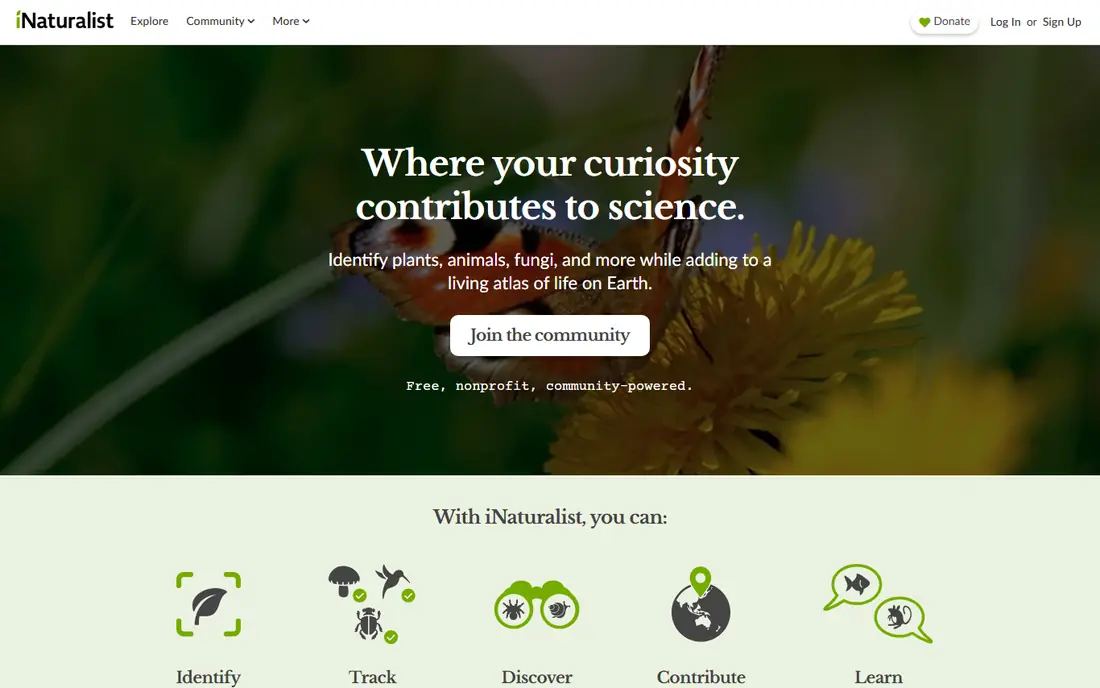
iNaturalist lets you post photos of fungi and other nature, and its community of experts and enthusiasts helps identify them. Its database and observation records are vast, which aids learning.
Identification depends on community response, so it is slower than instant photo apps. For careful, expert-checked identification, though, it is the gold standard for learners.
Our view: the best community-backed identification tool for serious learners.
Bottom line: iNaturalist is a strong fit for community nature identification, and its main draw is community experts help identify observations. Weigh that against the limits above before you commit, and test it with your own real work during any trial or free period.
- Community experts help identify observations
- Huge species database
- Free
- Identification is community based, so speed varies
- Not mushroom-only
Seek
Ideal for: Fast nature identification
Seek, from the iNaturalist team, identifies nature instantly through your camera, with challenges and badges that make learning fun. It covers fungi alongside plants, insects, and animals.
Instant results are less reliable than expert-reviewed identifications, and fungi detail is thinner than Picture Mushroom. It is best for casual learning and sparking curiosity.
Our view: a fun, fast app for casual nature and fungi learning.
Bottom line: Seek is a strong fit for fast nature identification, and its main draw is instant identification by camera. Weigh that against the limits above before you commit, and test it with your own real work during any trial or free period.
- Instant identification by camera
- Challenges and badges
- Free and family friendly
- Instant results are less reliable than expert review
- Fungi detail is thinner
PlantNet
Ideal for: Plant and fungi reference ID
PlantNet identifies plants from photos using a research-backed database, and it also covers some fungi. Its strength is careful, science-based identification rather than flashy features.
Fungi coverage is thinner than its plant coverage, so mushroom learners should pair it with a dedicated fungi app. For general nature identification, it is a respected free tool.
Our view: a respected free reference for nature identification alongside fungi apps.
Bottom line: PlantNet is a strong fit for plant and fungi reference ID, and its main draw is photo ID for plants and fungi. Weigh that against the limits above before you commit, and test it with your own real work during any trial or free period.
- Photo ID for plants and fungi
- Research-backed database
- Free
- Fungi coverage is thinner than plant coverage
- Interface is academic
Rogers Mushrooms
Ideal for: Detailed fungi reference
Rogers Mushrooms is a detailed fungi reference site with species profiles, photos, and descriptions that help learners compare features. It suits study at home after a field walk.
It is a reference, not an instant photo ID app, so you identify by comparing features yourself. That slower method actually teaches more than a one-tap answer.
Our view: an excellent study reference for mushroom learners.
Bottom line: Rogers Mushrooms is a strong fit for detailed fungi reference, and its main draw is detailed species profiles. Weigh that against the limits above before you commit, and test it with your own real work during any trial or free period.
- Detailed species profiles
- Photos and descriptions
- Free reference
- Reference site rather than instant photo ID
- Design is dated
Mushroom Observer
Ideal for: Community fungi records
Mushroom Observer is a community site where fungi enthusiasts post observations, photos, and identifications, with expert input on tricky species. Its records are detailed and useful for study.
It is a community research site rather than a simple consumer app, so beginners need patience. For learners who want depth, it is a rich resource.
Our view: a deep community resource for serious fungi study.
Bottom line: Mushroom Observer is a strong fit for community fungi records, and its main draw is community fungi observations. Weigh that against the limits above before you commit, and test it with your own real work during any trial or free period.
- Community fungi observations
- Expert input
- Detailed records
- Community site, not a simple app
- Identification needs care and study
First Nature
Ideal for: Fungi identification guides
First Nature offers clear fungi identification guides with photos, habitat notes, and edibility warnings, written for learners. Its guides stress lookalike species, which is exactly what beginners need.
It is a web guide rather than a mobile app, and its focus is mainly UK fungi, so species coverage varies by region. As a learning companion, it is still valuable.
Our view: a clear, safety-conscious guide to pair with a photo ID app.
Bottom line: First Nature is a strong fit for fungi identification guides, and its main draw is clear fungi guides. Weigh that against the limits above before you commit, and test it with your own real work during any trial or free period.
- Clear fungi guides
- Edibility warnings
- Photos and habitat notes
- Web guide rather than an app
- UK focus may not suit all regions
How we picked these
We compared official app pages, help pages, and app store listings, and we looked at fungi focus, identification method, species detail, and safety warnings. We favoured tools that warn about lookalikes and uncertainty.
We did not claim hands-on expert identification. No app result here should be treated as safe-to-eat advice, and we say that plainly in each section.
How to use mushroom identification apps safely
Photograph the mushroom well. Capture the cap, gills or pores, stem, base, and habitat, since one top-down photo is rarely enough for a reliable identification. Good photos help both apps and human experts.
Compare several sources before believing a result. Check the same mushroom in Picture Mushroom, iNaturalist, and a reference guide, and note where they agree or disagree. Disagreement means uncertainty.
Learn lookalike species deliberately. Many poisonous mushrooms mimic edible ones, so study the dangerous lookalikes for any species you hope to learn, not just the edible species itself.
Never eat based on an app alone. Confirm with an expert, a local mycology group, or an experienced forager in person, and if any doubt remains, do not eat it. This rule has no exceptions.
Keep notes and photos of finds. Recording date, place, habitat, and photos builds your learning over seasons, and it helps experts help you with tricky identifications.
Finally, follow local picking rules. Some areas restrict fungi collection, and some species are protected. Check local rules before picking, and leave rare species alone.
Frequently asked questions
Can a mushroom app tell me if a mushroom is safe to eat?
No. Apps give identification suggestions, not safety guarantees. Many edible and poisonous species look alike, so never eat based on an app result alone.
Which mushroom identification app is most accurate?
Picture Mushroom is best for dedicated fungi photo ID, while iNaturalist offers expert community review. Accuracy still varies by photo, species, and lookalikes.
What should I photograph for mushroom identification?
Photograph the cap, gills or pores, stem, base, and habitat, plus a note of nearby trees. Several angles help apps and experts far more than one photo.
Are mushroom apps free?
Picture Mushroom, iNaturalist, Seek, PlantNet, and the reference guides here offer free use, with paid plans for fuller features on some apps.
Should beginners pick wild mushrooms to eat?
No, not without expert guidance in person. Beginners should learn identification for a long time, join a local mycology group, and never eat an uncertain find.