No Code AI Agent Platforms in 2026: A Guide to 6 Tools

- 1
 Zapier AgentsTeams already running ZapsVisit
- 2
 GumloopVisual agents on a shared canvasVisit
- 3
 DustKnowledge agents for internal teamsVisit
- 4
 LindyChat-built agents in Slack and emailVisit
- 5
 Relevance AIAgents with evaluations and audit logsVisit
- Zapier Agents sits first on this list: teams already running Zaps.
- n8n fits technical teams wanting visual control.
- Starting prices begin at $24 per month with Dust.
- A free plan is available from 3 of the 6 tools: Zapier Agents, Gumloop, n8n.
Direct answer
Zapier Agents leads the list, best for teams already running Zaps. Alternatives: Gumloop for visual agents on a shared canvas, and Dust for knowledge agents for internal teams. All 6 tools are compared below on price, free plan and limits.
Quick comparison
| Product | Ideal for | Price from | Free version | |
|---|---|---|---|---|
| Zapier Agents | Teams already running Zaps | $50 per month | Yes | Visit |
| Gumloop | Visual agents on a shared canvas | $37 per month | Yes | Visit |
| Dust | Knowledge agents for internal teams | $24 a month | No | Visit |
| Lindy | Chat-built agents in Slack and email | $29.99 a month | Free trial | Visit |
| Relevance AI | Agents with evaluations and audit logs | $29 per month | No | Visit |
 n8n | Technical teams wanting visual control | $24 per month | Yes | Visit |
No Code AI Agent Platforms, one by one
Ainotely compared 6 no code AI agent platforms. The goal is a practical shortlist: published prices, free plan facts, best-fit use cases and honest limits for every entry.
Zapier Agents
Ideal for: Teams already running Zaps

Zapier Agents makes the most sense for teams already running Zaps. Rather than learning a new system, you add an agent that can reason over triggers, check apps, and act across thousands of connected tools.
The honest limit is cost layering. If you already pay for Zapier, agent activities are an additional meter to watch, and a busy agent can climb levels rapidly. Zapier Agents cost at the entry level: $50 per month. Zapier Agents offers a free plan.
Limits to weigh: Less visual than canvas builders.
- Activities meter is simple to track
- Builds on the huge Zapier app catalog
- Complicated agents can get pricey
Gumloop
Ideal for: Visual agents on a shared canvas
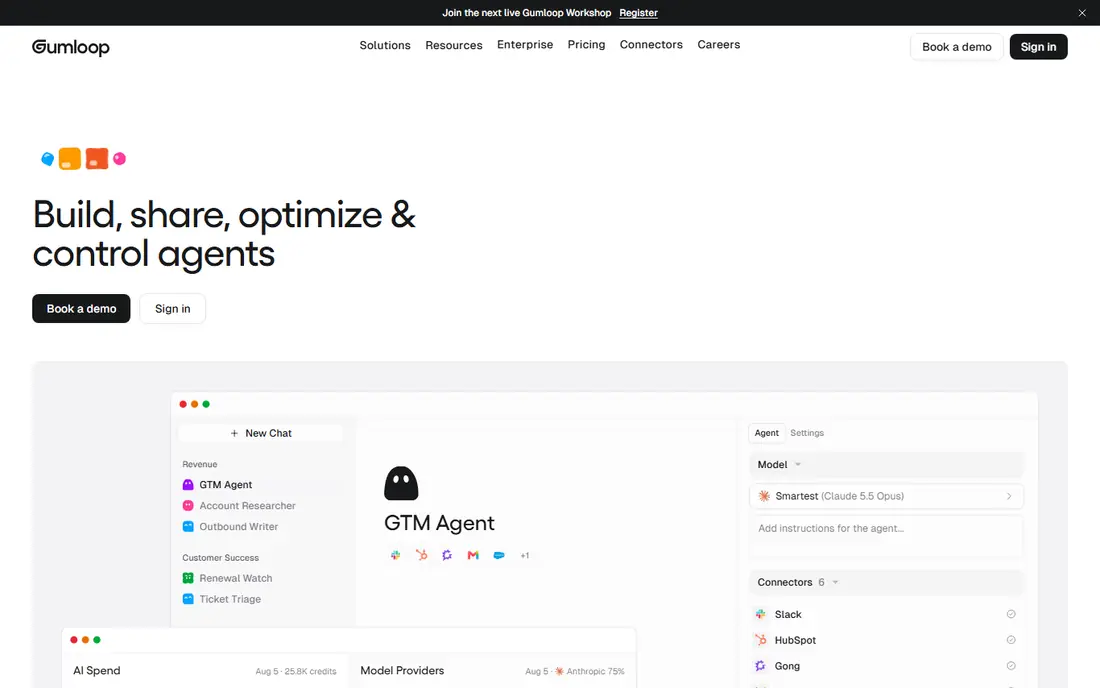
Gumloop makes the most sense for visual agents on a shared canvas. The trade-off is maturity. The community and template library are smaller than Zapier or n8n, so unusual use cases may need more manual setup.
Watch-outs: Newer product with a smaller community.
Gumloop blends two styles: describe an agent in chat, then inspect and adjust it on a shared visual canvas. In practice, plans start at 37 dollars a month, with a free level for testing. On cost, Gumloop starts like this: $37 per month. You can start on Gumloop without paying.
- Well suited to ops teams working together
- Wide app connections
- Advanced controls need learning
Dust
Ideal for: Knowledge agents for internal teams

Dust targets knowledge agents for internal teams. That makes it a strong pick for HR, support, and operations teams drowning in internal questions. On top of that, the limit is scope.
Dust shines on knowledge work and less on agents that must act across plenty of external sales or marketing tools. Plans start at 24 dollars a month per seat plus credits. On cost, Dust starts like this: $24 per month. Dust has no free tier.
Drawbacks to consider: Concentrated on internal knowledge more than external actions.
- Security and access controls
- Plenty of enterprise connectors
- Per-seat pricing brings up
Lindy
Ideal for: Chat-built agents in Slack and email
Choose Lindy for chat-built agents in Slack and email. Lindy is the fastest path to a working agent for most business teams. Worth adding: start with one agent, watch credit use for per month, and only then roll it out wider.
the main limit is the credit meter. For everyday use, you describe the job in chat, pick a template for tasks for example scheduling, inbox triage, or meeting follow-up. The agent runs in Slack, email, or your CRM. The Plus plan opens at 29.99 dollars per user a month with 3,000 credits, which fits a small team delegating routine work. Heavy research or multi-step work burns credits quicker than simple tasks, and overage costs additional. What you pay to start with Lindy: $29.99 per month. Free plan details: Free trial.
Downsides: Credits can run out on heavy use.
- Build agents by chatting, with solid templates
- Credits pool across seats
- Per-user pricing brings up for large teams
Relevance AI
Ideal for: Agents with evaluations and audit logs
Relevance AI serves Agents with evaluations and audit logs. Relevance AI stands out for teams that require to prove what an agent did. Plans start at 29 dollars a month, with usage on top.
From a buyer's view, evaluations, audit logs, and structured tools help managers review agent decisions, which matters when agents touch leads, support tickets, or customer data. In daily use, for a first experiment, start with a free-tier tool instead. More specifically, for regulated or quality-sensitive work, the audit features may justify that cost. On top of that, without a free level, you need a premium plan or a sales conversation to test seriously, and usage-based pricing rewards careful scoping. The starting price for Relevance AI: $29 per month. Relevance AI has no free tier.
Points against: Pricing is usage-based and can climb.
- Large connector catalog
- Agent evaluations and audit trails
- Interface takes time to learn
n8n
Ideal for: Technical teams wanting visual control
n8n targets technical teams wanting visual control. You build with visual nodes, add code nodes when a step needs custom logic, and choose cloud hosting from 24 dollars a month or a free self-hosted edition. That control appeals to technical teams that care about data residency and custom integrations.
Drawbacks to consider: Self-hosting needs maintenance.
In daily use, straightforward agents are approachable, but multi-system agents with branching logic need someone comfortable with APIs and data formats. For non-technical users, the ramp-up time is real. What you pay to start with n8n: $24 per month. n8n offers a free plan.
- Visual nodes with code when you need it
- Solid control over data and hosting
- Truly no-code only for more straightforward flows
A practical way to choose no code AI agent platforms
Start with the job, not the system. On top of that, watch three things: how frequently it needs correction, how plenty of credits or activities it uses, and whether a teammate can understand its steps from the builder view. In practice, then set guardrails before scaling.
For everyday use, need approval for external messages, payments, and data changes, limit which systems the agent can write to, and review logs weekly in the first month.
Selection criteria
Each tool was reviewed on what its vendor publishes: price, plan limits, core features and stated drawbacks. We did not run hands-on tests. Treat prices as a snapshot: vendors change plans often, so check the vendor site for the figure that applies today. The sequence is a judgement call: typical use case first, then pricing transparency, then free access. Use the profiles to check fit.
What to check before you buy
- Prices are a starting point; Dust shows $24 per month to start, so verify what your seat count would cost.
- Read the fine print on the free plans from Zapier Agents, Gumloop and n8n; seat, project and feature caps differ.
- Run a trial of Lindy with real work before paying for a year; your own workflow is the best test.
- Before choosing Zapier Agents, weigh its main limit: agent plans are separate from standard Zapier plans.
- List the apps you already depend on and check that n8n supports each one on the plan you would buy.
- A short pilot of Lindy with your real workflow tells you more than a feature table.
Frequently asked questions
Is Zapier Agents the right pick for everyone comparing no code AI agent platforms?
No single tool suits every team. Zapier Agents comes first because it fits teams already running Zaps, while Gumloop suits visual agents on a shared canvas and Dust suits knowledge agents for internal teams. Match the tool to your own size, budget and workflow before deciding.
What are the best no-code products for ai agents?
Zapier Agents comes first here and is built for teams already running Zaps. Buyers with other needs may prefer Gumloop (for visual agents on a shared canvas) or Dust (for knowledge agents for internal teams). Compare costs and limits first.
Can I try these options before paying?
Often, yes. Zapier Agents, Gumloop and n8n have a free plan and Lindy offers a free trial. Use your own data and a real task during the test, and check what the free tier or trial limits before you rely on it.
How are the no code AI agent platforms ordered?
Zapier Agents sits first and n8n last because the order follows typical fit for no code AI agent platforms, then price clarity and free access. It is a judgement call, so read each profile for fit and limits.
What is the best no-code ai agent tool for beginners?
The first pick on this list is Zapier Agents, because it suits teams already running Zaps. Gumloop is better for visual agents on a shared canvas, and Dust for knowledge agents for internal teams. Check price and limits against your own needs before choosing.
What is the cheapest option for no code AI agent platforms in this list?
On published monthly entry prices, Dust is the lowest here at $24 per month. Entry price is only part of the cost, because seats, add-ons and billing terms can change the total.