Best Online Banking Apps in 2026: 8 Apps Compared

- 1
 Ally BankSavers wanting strong rates and phone supportVisit
- 2
 SoFiAll-in-one banking, investing and lendingVisit
- 3
 ChimeSimple, fee-free daily bankingVisit
- 4
 Capital One 360Online banking with branch backupVisit
- 5
 Discover Online BankingChecking plus savings with debit rewardsVisit
- Ally and SoFi suit savers and all-in-one users, while Chime suits people who want simple, fee-free daily banking.
- Savings rates change with interest rates, so check the current APY on the bank's own site before opening an account.
- This is not financial advice. Deposit insurance limits and terms vary, so read the account agreement before moving money.
- Cash deposits and in-person help remain the main gaps for online-only banks, so many people keep a local account too.
Quick comparison
| Product | Ideal for | Price from | Free version | |
|---|---|---|---|---|
| Ally Bank | Savers wanting strong rates and phone support | Free | Yes | Visit |
| SoFi | All-in-one banking, investing and lending | Free | Yes | Visit |
| Chime | Simple, fee-free daily banking | Free | Yes | Visit |
| Capital One 360 | Online banking with branch backup | Free | Yes | Visit |
| Discover Online Banking | Checking plus savings with debit rewards | Free | Yes | Visit |
 Marcus by Goldman Sachs | Simple high-yield savings without complexity | Free | Yes | Visit |
 Varo Bank | Fee-free banking with cashback and savings tools | Free | Yes | Visit |
 Wealthfront Cash Account | Cash management beside investing | Free | Yes | Visit |
The best online banking apps
We compared official feature pages, pricing pages, app store listings, privacy policies and public reviews to build this list of 8 options for best online banking app. Prices were checked in October 2026 and can change, so confirm the current price on the vendor site before you buy. Our pick for most people is the first option that fits your budget and workflow, not necessarily the most expensive tool on the list. Read the quick comparison first to narrow the field, then read the full write-ups for the two or three options that fit your needs best.
Ally Bank
Ideal for: Savers wanting strong rates and phone support
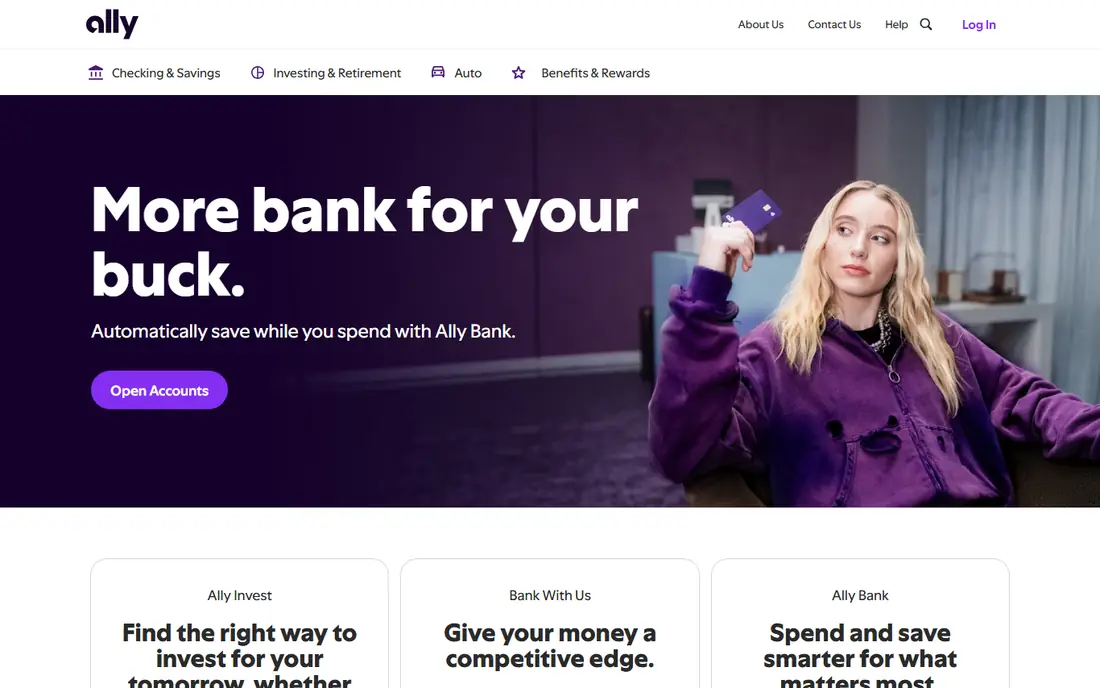
Ally Bank is a strong all-round online bank, with competitive savings rates, no monthly maintenance fees on its main accounts, and savings buckets for goals. Phone support around the clock is a real difference from app-only rivals, and the app covers checking, savings, CDs and investing in one place.
The lack of branches matters for cash deposits and in-person help, and checking interest is modest next to savings. Ally suits savers who bank mainly online and want a human on the phone when something goes wrong.
- Competitive savings rates
- Savings buckets
- 24/7 phone support
- No branches
- Cash deposits are awkward
- Checking interest is modest
SoFi
Ideal for: All-in-one banking, investing and lending

SoFi is the closest thing to a full financial app among online banks. Checking and savings sit beside investing, lending and credit products, so a user can manage most money tasks in one login. Savings rates are competitive when direct deposit conditions are met, and ATM access is broad.
The best rate is conditional on direct deposit, and the sheer number of products can feel busy for people who only want a checking account. There are also no branches. SoFi suits users who want one app for banking and investing.
- Banking, investing, loans and cards in one app
- Competitive savings APY with direct deposit
- Broad ATM access
- Best savings rate needs direct deposit
- No branches
- Product breadth can feel busy
Chime
Ideal for: Simple, fee-free daily banking

Chime keeps daily banking simple: no monthly fees, early direct deposit and a large fee-free ATM network. SpotMe gives eligible users fee-free overdraft cover up to $200, which helps people living paycheck to paycheck. The app is clean and easy for beginners.
Chime itself is a financial technology company, with banking services provided by partner banks, which some users dislike. Savings rates trail Ally and SoFi, and support is mainly in-app. For fee-free daily banking, Chime is still a strong pick.
- No monthly fees
- Early direct deposit
- SpotMe overdraft cover up to $200 for eligible users
- Chime is a financial technology company, not a bank
- Savings rate is lower than leaders
- Support is app-led
Capital One 360
Ideal for: Online banking with branch backup
Capital One 360 pairs online banking with physical cafes and branches, which solves the main online-bank weakness. Checking and savings have no monthly fees, and family features such as teen accounts with parental controls suit households. The app is solid across banking and cards.
Savings rates usually trail Ally and SoFi, and the app covers many products, so it feels less focused than Chime. For users who want online banking plus occasional in-person help, Capital One 360 is a balanced choice.
- No monthly fees
- Capital One cafes and branches for help
- Teen accounts with controls
- Savings rate trails online-only leaders
- App is broad rather than focused
- Some features need a Capital One account
Discover Online Banking
Ideal for: Checking plus savings with debit rewards
Discover pairs a checking account with debit cashback rewards and a savings account, with no monthly fees. That combination suits people who use a debit card daily and want rewards without a credit card. Customer service reputation is also strong for an online bank.
There are no branches, and savings rates move with the market, so the headline rate should be checked at signup. Product breadth is narrower than SoFi. For checking-plus-savings users who value rewards, Discover is a good fit.
- Cashback debit rewards
- No monthly fees
- Strong customer service reputation
- No branches
- Savings rate varies
- Fewer extra products than SoFi
Marcus by Goldman Sachs
Ideal for: Simple high-yield savings without complexity
Marcus focuses on savings, with a competitive high-yield account, no monthly fees and no minimum deposit. That simplicity suits people who want a clean place for an emergency fund, separate from daily spending. The Goldman Sachs name also reassures cautious savers.
Marcus has no checking account, so it cannot replace a daily bank on its own. There are no branches and no debit card spending features. Use Marcus as a savings home alongside a checking account elsewhere.
- Competitive savings rates
- No monthly fees
- No minimum deposit on savings
- No checking account
- No branches
- Fewer everyday banking features
Varo Bank
Ideal for: Fee-free banking with cashback and savings tools
Varo is a chartered online bank with no monthly fees, early direct deposit and cashback features. Savings tools help users set money aside automatically, and the app is designed for people who want banking and budgeting in one place. For fee-sensitive users, the cost case is clear.
The highest savings rate requires qualifying direct deposit and activity, so not every user earns it. There are no branches, and support is mainly in-app. Varo suits users who want a modern, fee-free bank and can meet the qualifying conditions.
- No monthly fees
- Cashback offers
- Savings tools for goals
- Highest savings rate needs qualifying activity
- No branches
- Support is app-led
Wealthfront Cash Account
Ideal for: Cash management beside investing
Wealthfront Cash Account suits people who already invest with Wealthfront and want cash earning interest in the same app. Coverage through partner banks can exceed the single-bank FDIC limit, and transfers to investing are simple. For cash waiting to be invested, it is convenient.
It is a cash management account, not a traditional checking account with full branch services. Users who need cash deposits or in-person help should keep a local bank too. As a high-yield cash home beside investing, Wealthfront is strong.
- High-yield cash account
- Broad FDIC coverage through partner banks
- Investing in the same app
- Not a traditional checking account
- No branches
- Best for users already investing
How we picked these
We started from the topic and shortlisted products that exist and work today, then checked each vendor homepage, pricing page and free tier. We compared feature pages, app store listings, privacy policies and public reviews, and we dropped any product whose homepage could not be verified or whose price could not be checked. Where a price was unclear or varied by region, we wrote See website rather than guessing a number. That rule kept the list honest, even where a neat price would have made the comparison table look tidier.
We also weighed fit over fame. A well-known product stayed on the list only if it truly fits the topic, and smaller tools earned a place when they served a clear use case better. No product here was tested hands-on for this article, and no vendor paid for placement.
Price and free-tier details matter most when plans change often, so we favoured products with clear published pricing and a trial or free tier where one exists. If a vendor changed a plan after our check, the vendor site is the correct source, and the ranking here still reflects fit, not just price. That check takes extra time, but it prevents a shortlist built on outdated pricing or a product that no longer exists.
Choosing an online banking app without chasing a headline rate
Rank fees, ATM access and support before APY, because a high rate that requires direct deposit or a minimum balance may not apply to you. Check how cash gets deposited, how fast transfers move, and whether support is available by phone at useful hours. A bank that fits daily habits beats a bank with a slightly higher rate.
Before you pay, run a trial on a real task from your own work, not a demo file. Check export formats, mobile access and support hours, because those details decide whether a tool survives daily use. Also check renewal terms and cancellation steps, since a cheap first year can become an expensive second year if renewal jumps. Finally, ask who will own setup and training, because a tool nobody is responsible for tends to fall out of use within a few months. Keep a short note on why you picked the winner, so a future review can judge it against the same criteria instead of starting from scratch.
A useful final test is to imagine the tool in six months, when the first excitement has faded and the work is routine. If the daily steps are still quick, the cost is still clear, and the support route is still obvious, the choice is likely sound. If any of those three answers is unclear, use the trial period to get a clear answer before committing to an annual plan.
Frequently asked questions
Are online banks safe?
Online banks in the US are subject to the same banking regulation as branch banks, and deposits at FDIC-insured banks are covered up to the legal limit per depositor, per bank. Check FDIC status and the account agreement before opening an account.
Which online banking app has the best customer service?
Ally is widely cited for 24/7 phone support, while Chime and SoFi rely more on app and chat support. If phone help matters, test support hours and wait times before switching.
Can I deposit cash into an online bank?
Cash deposits are the weak point for online banks. Some accept cash through retail partners or ATM networks, while others do not, so check the method and fees before closing a local account.
Is early direct deposit worth choosing a bank for?
Early direct deposit can help cash flow by a day or two, but timing depends on the payer and the bank. Do not pick a bank on that feature alone if fees or support are worse.