Best Online Event Software in 2026: 8 Tools Compared

- Hopin and Whova are our top picks for virtual and hybrid events, with stages, networking and exhibitor tools.
- vFairs and Airmeet suit large virtual conferences and expos, while Bizzabo suits enterprise event programs.
- Eventbrite, Zoom Events and RingCentral Events offer strong options for ticketing, webinars and meetings based events.
- Pricing is usually quote based for large events, so request a quote for your attendee count and event length.
- Test networking, exhibitor and mobile experience before committing, since those features decide attendee satisfaction.
Quick comparison
| Product | Ideal for | Price from | Free version | |
|---|---|---|---|---|
 Hopin | Virtual and hybrid events at scale | See website | No | Visit |
 Whova | Conferences with strong networking | See website | No | Visit |
 vFairs | Virtual expos and large conferences | See website | No | Visit |
 Airmeet | Virtual conferences and networking | See website | Free trial | Visit |
 Eventbrite | Event ticketing and discovery | Free | Yes | Visit |
 Zoom Events | Webinars and meetings based events | See website | No | Visit |
 RingCentral Events | Virtual and hybrid events | See website | No | Visit |
 Bizzabo | Enterprise event programs | See website | No | Visit |
The best online event software
Online event software covers registration, live stages, networking, exhibitor booths and analytics for virtual and hybrid events. The tools below differ in scale and focus, from simple ticketing to full virtual venues, so match the tool to your event size and format.
Hopin
Ideal for: Virtual and hybrid events at scale

Hopin is a leading virtual event platform, with stages for keynotes, networking areas for attendee conversations, expo booths for sponsors, and analytics for organizers. Its breadth suits large virtual and hybrid conferences that need many formats in one venue.
Pricing is quote based, and complexity can overwhelm a small webinar. For a large virtual conference or hybrid event, Hopin offers the most complete venue in this list. Test networking and expo features with real attendees before committing.
- Stages, networking and expo areas
- Broad event formats
- Analytics
- Pricing is quote based
- Complexity for small events
Whova
Ideal for: Conferences with strong networking
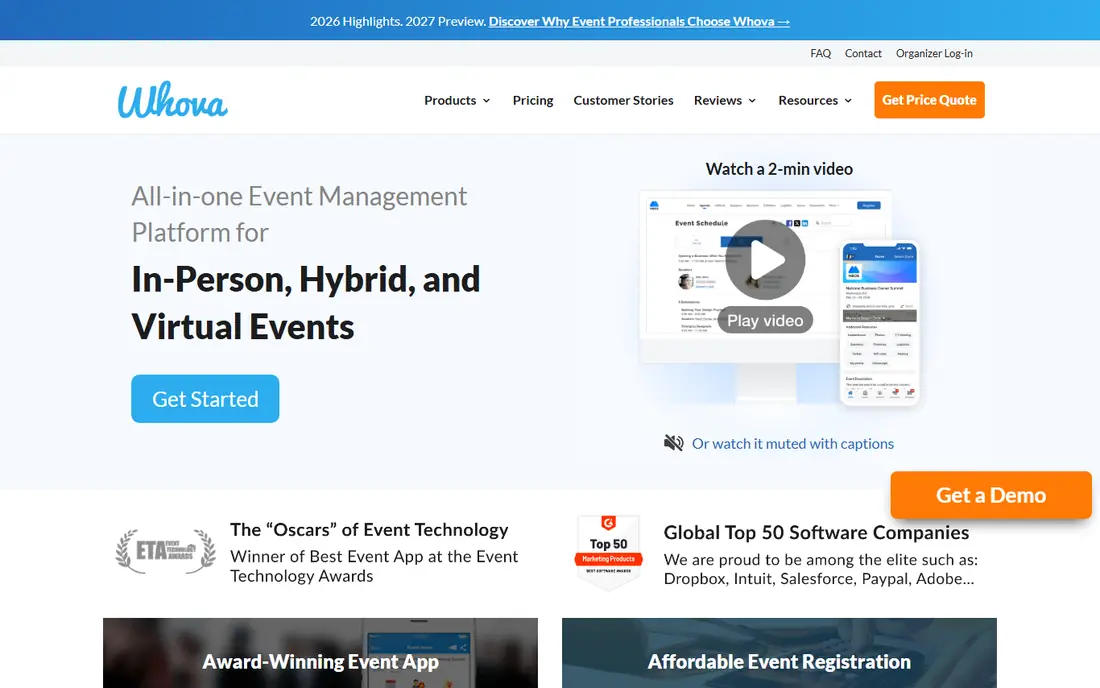
Whova combines event logistics with strong attendee networking, including attendee profiles, messaging, meetups and a mobile app that works for in person, virtual and hybrid events. Its agenda, speaker and logistics tools help organizers run a conference smoothly.
Virtual stage features vary by plan, so confirm the exact live tools for your format. Pricing is quote based. For a conference where networking and attendee experience matter most, Whova is an excellent choice.
- Strong attendee networking
- Agenda and logistics tools
- Mobile app
- Pricing is quote based
- Virtual stage features vary by plan
vFairs
Ideal for: Virtual expos and large conferences
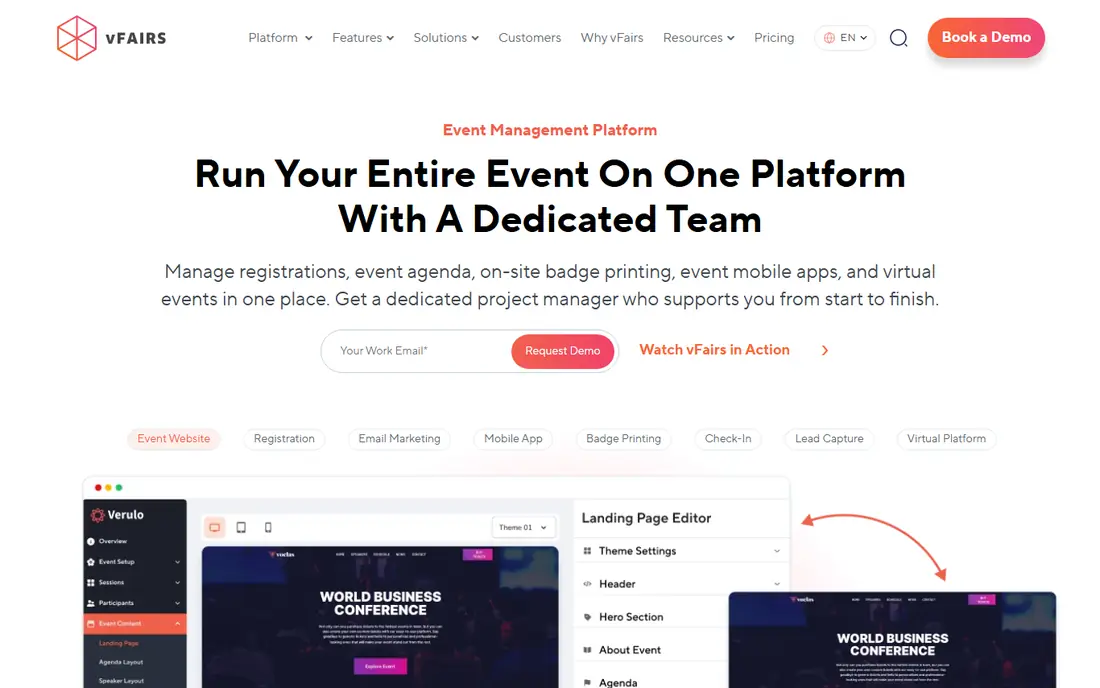
vFairs specializes in virtual expos and large conferences, with virtual halls, booths and 3D venues that mimic a physical trade show. Exhibitors get booths, chat and lead capture, while attendees navigate a visual venue rather than a list of links.
Pricing is quote based, and custom venues take setup time. For a virtual trade show or large expo where exhibitor experience drives revenue, vFairs is a strong choice. Plan setup early for a custom venue.
- Virtual expo halls
- 3D venues
- Strong for large events
- Pricing is quote based
- Setup takes time for custom venues
Airmeet
Ideal for: Virtual conferences and networking
Airmeet offers virtual conferences with networking tables, where attendees join small video tables for conversations, plus stage tools for keynotes and panels. That table format makes networking feel natural, closer to a real conference break than a chat box.
Pricing varies by plan, and Airmeet is smaller than Hopin, so check scale for very large events. A trial lets you test the format. For a virtual conference where networking matters, Airmeet is a refreshing and effective choice.
- Networking tables
- Good stage tools
- Trial to test
- Pricing varies by plan
- Smaller vendor than Hopin
Eventbrite
Ideal for: Event ticketing and discovery
Eventbrite is the simplest choice for ticketing, with easy event creation, a discovery marketplace that helps attendees find events, and free use for free events. Its virtual event tools cover basic streaming and online events, though they are lighter than dedicated virtual venues.
Fees apply to paid tickets, so check the fee structure for your ticket prices. For a small online event, workshop or webinar where ticketing matters most, Eventbrite is the easiest and most discoverable option.
- Easy ticketing
- Discovery marketplace
- Free for free events
- Virtual event features are lighter
- Fees apply to paid tickets
Zoom Events
Ideal for: Webinars and meetings based events
Zoom Events builds on the familiar Zoom experience, offering webinars, multi session conferences and event hubs for organizers already using Zoom. Attendees find it easy, since most already know Zoom, and reliability is strong.
Networking and expo features are lighter than Hopin or vFairs, so large expos should look elsewhere. Pricing varies by plan. For a webinar series or a meetings based conference for a Zoom using organization, Zoom Events is a natural choice.
- Familiar Zoom experience
- Webinars and multi session events
- Good reliability
- Networking and expo features are lighter
- Pricing varies by plan
RingCentral Events
Ideal for: Virtual and hybrid events
RingCentral Events, formerly Hopin Events, offers virtual and hybrid event tools including stages, networking and expo areas, backed by RingCentral communications infrastructure. Its reliability suits large events where stream stability matters.
Pricing is quote based, and the brand history, with Hopin assets moving to RingCentral, can confuse buyers, so confirm the exact product and support terms. For a large virtual event needing reliable stages and networking, RingCentral Events is a solid option.
- Virtual event platform formerly Hopin Events
- Stages and networking
- Good reliability
- Pricing is quote based
- Brand history can confuse buyers
Bizzabo
Ideal for: Enterprise event programs
Bizzabo is an enterprise event platform covering registration, event websites, virtual and hybrid events, and analytics across an event program. Its strength is managing many events consistently, with data flowing into CRM and marketing systems.
Enterprise pricing applies, and complexity can overwhelm a single small event. For a company running an ongoing program of events, Bizzabo offers consistency and measurement that single event tools cannot match.
- Enterprise event management
- Registration and analytics
- Hybrid support
- Enterprise pricing
- Complexity for small events
How we picked these
We compared official feature pages, pricing pages and public reviews for each tool, focusing on products that are still maintained and work in October 2026. We favored tools with reliable streaming, networking, registration and analytics, plus a track record with real events. We left out generic meeting tools with no event features, discontinued platforms, and tools with no verifiable large events. Prices vary by attendees, so request a quote for your event size.
How to choose online event software
Start with your event format. A webinar needs reliable streaming and Q and A, a conference needs stages plus networking, and an expo needs booths plus lead capture. A tool built for one format will disappoint in another, so shortlist by format first.
Next, test the attendee experience end to end. Register as an attendee, join a session, try networking, visit a booth and use the mobile app. Attendee friction is the main reason virtual events disappoint, and a test run reveals it before your real audience feels it.
Finally, check analytics and follow up. Confirm you can measure attendance, engagement, booth visits and leads, and that data flows into your CRM or email tools. An event that ends without usable follow up data wastes most of its value, so plan the post event workflow before you choose.
Rehearse the live portions of your event with real speakers on their real home connections, not just in a studio test. Home internet, microphone quality, and screen sharing behave differently under event conditions, and a ten minute rehearsal per speaker catches most problems. Record a backup of key talks where possible, so a dropped connection becomes a brief switch to playback rather than a dead stage. Attendees forgive a short hiccup, but they remember a session that never recovered. Also plan sponsor value explicitly, since sponsors fund many virtual events and judge them on leads, not attendance alone. Confirm how booth visits, chat interactions, and content downloads translate into lead reports, and share a sample report with sponsors before the event so expectations match. A sponsor who receives clear, qualified leads will return next year, while one who receives a raw attendance list will not.
Time zone handling is a small detail that causes outsized confusion for global events, so test it carefully before launch. Confirm that agenda times display in each attendee local time, that calendar invites carry the right zone, and that session reminders adjust correctly for daylight saving changes. A single time zone mistake can empty a keynote, since attendees who miss the start rarely return. Publish a clear time zone note on the agenda page and test with attendees in at least three zones. Also record every session by default, even if live attendance is your focus, since recordings extend an event value for weeks. Attendees in other zones, colleagues who could not attend, and prospects who discover the event later all benefit from recordings, and on demand viewing often exceeds live viewing for large events. Confirm recording permissions with speakers in advance, and publish recordings promptly with chapters and transcripts for easy navigation.
Frequently asked questions
What is the best online event software?
Hopin and Whova lead for virtual and hybrid conferences, while vFairs leads for virtual expos. Eventbrite is best for simple ticketing, and Zoom Events suits webinar based events. Match the tool to your format and size.
How much does online event software cost?
Most large event platforms use quote based pricing tied to attendees, event length and features. Simple ticketing on Eventbrite is free for free events, with fees on paid tickets. Request a quote for your exact event.
Can online event software handle hybrid events?
Yes, Hopin, Whova, RingCentral Events and Bizzabo all support hybrid events with in person and virtual audiences. Confirm how in person and virtual attendees interact, since hybrid networking is harder than either format alone.
What features matter most for virtual events?
Reliable streaming, easy networking, exhibitor booths with lead capture, mobile access and clear analytics matter most. Test each with real users before committing, since demos often hide friction.
Do I need a virtual venue or just webinars?
A webinar tool suffices for a single speaker session, while a virtual venue suits a multi session conference or expo with networking and sponsors. Choose the simplest tool that covers your format well.