Best Open Source Software for Password Protection in 2026: 8 Tools Compared

- Bitwarden is our first suggestion for most buyers, because its balance of features, pricing clarity, and support is hard to beat for the topic at hand.
- KeePassXC suits buyers who want a lower starting price or a simpler setup, while KeePass fits teams that need more depth in one specific area.
- Prices and free tiers vary widely, so check the vendor pricing page for the plan that includes the features you actually need, rather than judging by the headline price alone.
- Run a trial with your own data and your own workflow before you pay for a year, since setup effort and day-to-day ease only show up in real use.
Quick comparison
| Product | Ideal for | Price from | Free version | |
|---|---|---|---|---|
 Bitwarden | Most people wanting open-source passwords | Free | Yes | Visit |
 KeePassXC | Privacy-focused desktop users | Free | Yes | Visit |
 KeePass | Windows users wanting a proven offline vault | Free | Yes | Visit |
 Passbolt | Teams sharing credentials securely | Free | Yes | Visit |
 Padloc | Simple open-source vault for small teams | Free | Yes | Visit |
 Psono | Businesses needing self-hosted team vaults | Free | Yes | Visit |
 Buttercup | Users wanting a simple desktop vault | Free | Yes | Visit |
 LessPass | Users wanting stateless password generation | Free | Yes | Visit |
The best open source software for password protection
These eight open-source tools store, generate, and autofill passwords without locking you into a closed system, from hosted vaults to offline desktop apps. We compared official feature pages, pricing pages, app-store listings, privacy policies, and public reviews to sort out where each option earns its place.
Bitwarden
Ideal for: Most people wanting open-source passwords
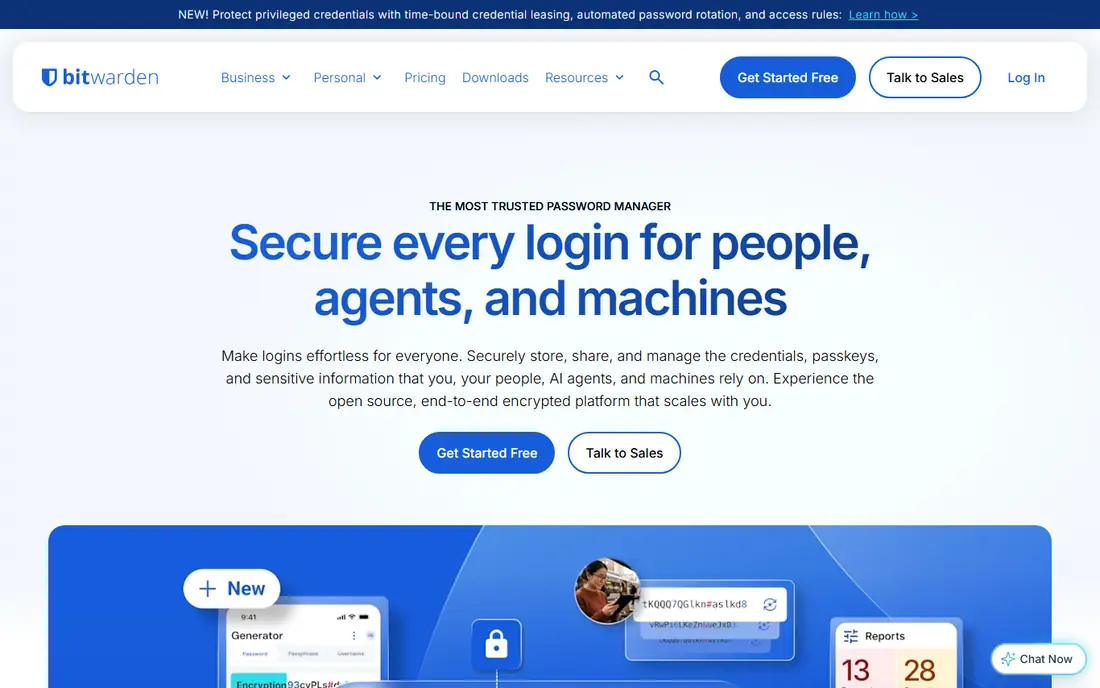
Bitwarden is our first suggestion for most people moving to an open-source password manager. Its code is open and audited, the free tier covers unlimited devices, and sync works across phones and computers. For most buyers, the deciding factor is not the longest feature list but the fit with daily work, the total price, and how much setup the team can handle. The catch is premium gating: advanced reports and some features need the paid plan, and self-hosting is a technical project. If that trade-off fits your budget and your tolerance for setup, it is worth a trial before you commit the whole team. For password protection, trust matters most: open code that anyone can inspect, plus a backup plan so you never lose access to your own vault.
- Open source with audited code
- Free tier covers most needs
- Syncs across devices
- Premium features need paid plan
- Self-hosting needs technical skill
KeePassXC
Ideal for: Privacy-focused desktop users
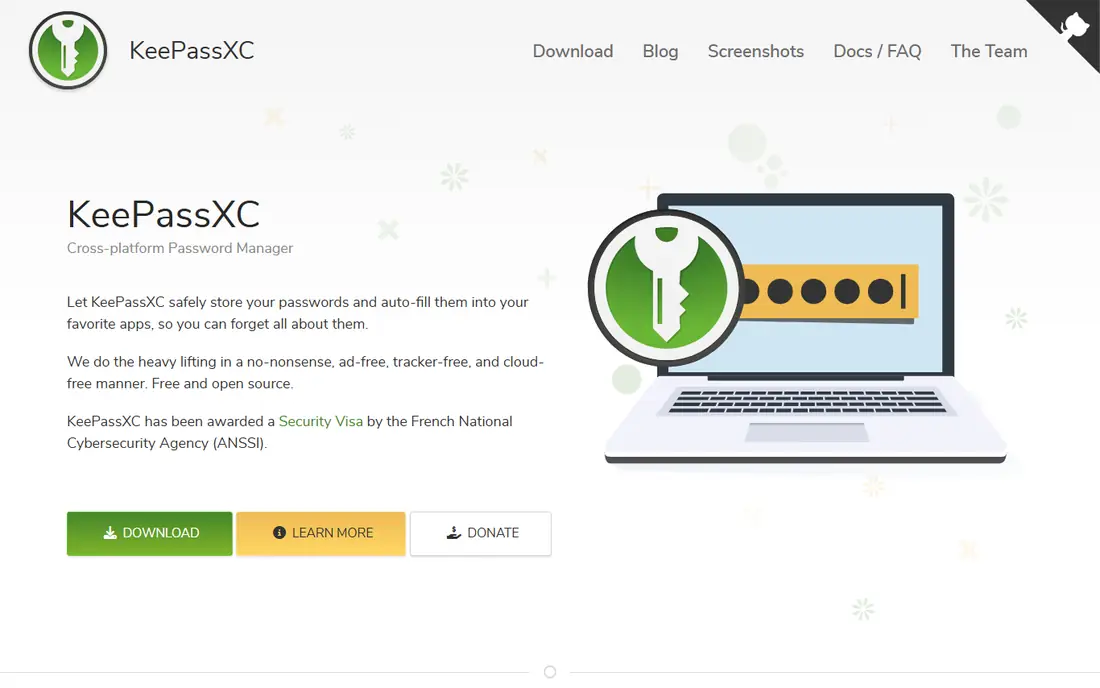
KeePassXC suits users who want their vault as a local file under their own control. It needs no account, stores everything locally with strong encryption, and costs nothing. A tool that looks strong on a pricing page can still disappoint if onboarding is slow, support is thin, or the plan that holds the needed feature sits two tiers up. The catch is sync: there is no built-in cloud sync, so you must arrange your own file syncing across devices. Put it on a shortlist if its strengths match your main use case, and test it with real data during the trial period. For password protection, trust matters most: open code that anyone can inspect, plus a backup plan so you never lose access to your own vault.
- Free and open source
- Local vault file
- No account needed
- Strong encryption
- No built-in cloud sync
- Browser integration needs setup
KeePass
Ideal for: Windows users wanting a proven offline vault

KeePass is the long-running original that many other tools descend from. It is proven, plugin-rich, and fully offline, which appeals to privacy-focused Windows users. We gave extra weight to clear pricing, honest limits, and products that explain what happens to your data when you leave. The catch is age: the interface looks dated, it is Windows-focused, and syncing is a manual job. It earns a place on the shortlist when its main strength lines up with the job you will ask it to do every week. For password protection, trust matters most: open code that anyone can inspect, plus a backup plan so you never lose access to your own vault.
- Long-running open-source project
- Plugin ecosystem
- Fully offline option
- Windows-focused
- Interface looks dated
- Sync is manual
Passbolt
Ideal for: Teams sharing credentials securely
Passbolt is built for teams that need to share credentials with proper permissions. Its open-source team features and self-hosted option suit organisations that want control over shared secrets. For most buyers, the deciding factor is not the longest feature list but the fit with daily work, the total price, and how much setup the team can handle. The catch is setup: self-hosting needs technical skill, and its ecosystem is smaller than Bitwarden's. Try it first with a small group, so you learn how it behaves before you roll it out more widely. For password protection, trust matters most: open code that anyone can inspect, plus a backup plan so you never lose access to your own vault.
- Open source with team sharing
- Self-hosted option
- Good permission controls
- Setup needs technical skill
- Smaller ecosystem than Bitwarden
Padloc
Ideal for: Simple open-source vault for small teams
Padloc is the simple open-source vault for people who find other tools overcomplicated. Its clean design and easy setup make it approachable, with a self-hosted option for control. A tool that looks strong on a pricing page can still disappoint if onboarding is slow, support is thin, or the plan that holds the needed feature sits two tiers up. The catch is scale: the community is smaller and advanced features are fewer than the leaders. If that trade-off fits your budget and your tolerance for setup, it is worth a trial before you commit the whole team. For password protection, trust matters most: open code that anyone can inspect, plus a backup plan so you never lose access to your own vault.
- Open source and easy to use
- Self-hosted option
- Clean design
- Smaller community
- Fewer advanced features
Psono
Ideal for: Businesses needing self-hosted team vaults
Psono suits businesses that want a self-hosted team password manager with enterprise controls. Its team management and enterprise features cover business use, while the core stays open source. We gave extra weight to clear pricing, honest limits, and products that explain what happens to your data when you leave. The catch is cost and setup: enterprise features need paid plans and deployment needs expertise. Put it on a shortlist if its strengths match your main use case, and test it with real data during the trial period. For password protection, trust matters most: open code that anyone can inspect, plus a backup plan so you never lose access to your own vault.
- Open source with enterprise features
- Self-hosted
- Good team management
- Enterprise features need paid plans
- Setup needs expertise
Buttercup
Ideal for: Users wanting a simple desktop vault
Buttercup is a simple open-source vault with desktop and mobile apps. It keeps vaults as local files you control, with a clean interface that is easy to learn. For most buyers, the deciding factor is not the longest feature list but the fit with daily work, the total price, and how much setup the team can handle. The catch is scale: it is a smaller project, and syncing across devices needs external storage you arrange yourself. It earns a place on the shortlist when its main strength lines up with the job you will ask it to do every week. For password protection, trust matters most: open code that anyone can inspect, plus a backup plan so you never lose access to your own vault.
- Open source
- Desktop and mobile apps
- Local vault files
- Smaller project
- Sync needs external storage
LessPass
Ideal for: Users wanting stateless password generation
LessPass takes a different approach: it generates passwords on demand instead of storing them. Because nothing is stored, there is no vault to breach or sync, which some security-minded users prefer. A tool that looks strong on a pricing page can still disappoint if onboarding is slow, support is thin, or the plan that holds the needed feature sits two tiers up. The catch is usability: with no stored vault, you cannot browse saved logins, and recovery depends on remembering your exact inputs. Try it first with a small group, so you learn how it behaves before you roll it out more widely. For password protection, trust matters most: open code that anyone can inspect, plus a backup plan so you never lose access to your own vault.
- Generates passwords without storing a vault
- Open source
- No sync needed
- No vault means no stored logins to browse
- Recovery depends on remembering inputs
How we picked these
We started from the vendor's own feature and pricing pages, then checked app-store listings and public reviews for signs of trouble, such as slow support, confusing pricing, or features that only appear on higher plans. Products that no longer exist, that had no working official homepage, or that did not truly fit the topic were left out, even when they were well known in a nearby category. We also weighed who each product is built for. A strong enterprise tool can be a poor pick for a small team, and a simple free tool can be a poor pick for a regulated workplace. The list below mixes well-known leaders with smaller options, so you can match the pick to your size, budget, and tolerance for setup work.
How to choose an open-source password manager
Decide where your vault lives: a hosted service, your own server, or a local file. Hosted services are easiest, self-hosting gives control, and local files give privacy but need your own backup discipline. Check autofill and sync across your devices. A manager that works on your phone but not your laptop will push you back to reused passwords, which defeats the point.
Shortlist checklist
- Write down the two or three jobs the tool must do every week, and test exactly those jobs in the trial.
- Check the total price for your team size, including any add-ons, seats, or usage charges that sit outside the headline plan.
- Ask how you export your data, what happens at cancellation, and how support responds when something breaks.
- Confirm privacy, security, and compliance terms fit your workplace rules before you move real customer or staff data into the tool. Set up emergency access and backups before you migrate everything in, and test recovery while you still remember your old passwords.
Frequently asked questions
What should I look for first when comparing best open source software for password protection?
Start with the job you need done most often, then check whether the plan you can afford includes it. Look at total price for your team size, setup effort, and how data can be exported. A trial with real work will tell you more than a feature list, so test the exact workflow you will use every week.
Is there a good free option for best open source software for password protection?
Some products on this list offer a free plan or a free trial, but free plans usually limit seats, storage, or advanced features. Check the free plan line for each product above, and treat a free tier as a way to test fit rather than a promise that it will cover a growing team.
How much should I expect to pay?
Pricing varies by seats, usage, and plan tier, and several vendors on this list only publish custom quotes. Use the starting price column as a guide, then get a written quote for your team size before you budget. Watch for add-ons that are charged separately from the headline plan.
Can I switch later if I pick the wrong one?
In most cases yes, but switching costs time and effort, especially if your data is hard to export. Before you buy, confirm export options and contract length, and keep a copy of your data in a format you control. A short initial term lowers the risk of being stuck with a poor fit.
How do I know a vendor is trustworthy?
Look for clear pricing, a readable privacy policy, security documentation, and responsive support. Check recent public reviews for repeated complaints about billing or support, and prefer vendors that explain data handling in plain language rather than hiding it in vague terms.