Best Options Trading Platform in 2026: 8 Platforms Compared

- 1
 thinkorswim by Charles SchwabOptions analysis and paper tradingVisit
- 2
 tastytradeActive options traders and multi-leg strategiesVisit
- 3
 Interactive BrokersGlobal and cost-sensitive options tradersVisit
- 4
 FidelityOptions inside a full investing accountVisit
- 5
 E*TRADE Power E*TRADEVisual options analysis for active tradersVisit
- Our pick for most people is thinkorswim by Charles Schwab, because it balances price, features and ease of use for the widest group of readers.
- Free plans are real here, but the limits matter: check what tastytrade and Interactive Brokers actually include before you commit.
- Prices in this guide come from vendor pricing pages and current comparisons checked in October 2026, and they can change, so confirm the plan on the vendor site before you buy.
- The best choice depends on your budget, your experience level and how much support you want, not on which brand is most famous.
Quick comparison
| Product | Ideal for | Price from | Free version | |
|---|---|---|---|---|
| thinkorswim by Charles Schwab | Options analysis and paper trading | $0.65 per contract | Free trial | Visit |
| tastytrade | Active options traders and multi-leg strategies | $1 per contract to open | No | Visit |
| Interactive Brokers | Global and cost-sensitive options traders | See website | No | Visit |
| Fidelity | Options inside a full investing account | $0.65 per contract | No | Visit |
| E*TRADE Power E*TRADE | Visual options analysis for active traders | $0.65 per contract | No | Visit |
 Webull | Low-cost options trading on mobile | Free | Yes | Visit |
 Robinhood | Simple options trading for beginners | Free | Yes | Visit |
 TradeStation | Algorithmic and technical options traders | $0.60 per contract | Free trial | Visit |
The best Options Trading Platform in 2026
We compared official feature pages, pricing pages, app store listings, privacy policies and public reviews to build this list for best options trading platform. Every option below exists and works today, and each one earns its place for a different kind of reader.
thinkorswim by Charles Schwab
Ideal for: Options analysis and paper trading
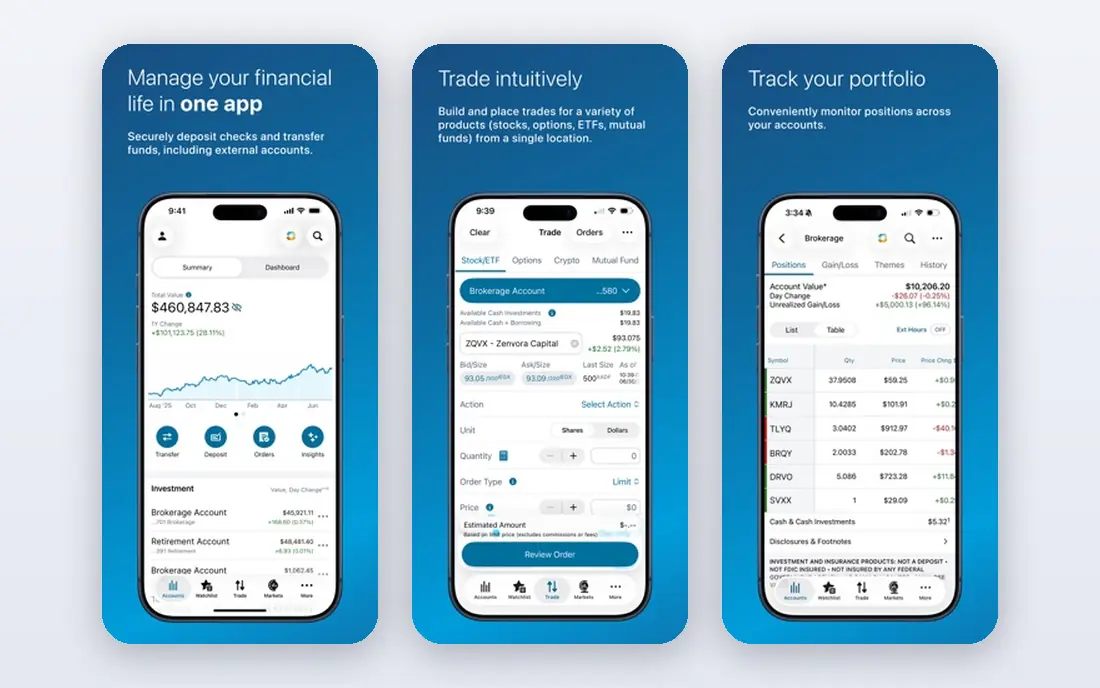
Here is the short version. thinkorswim is the platform serious options traders keep coming back to, because its Analyze tab models profit, loss and probability for multi-leg trades before you place them. It fits readers who want options analysis and paper trading, and its published feature set matches that promise rather than trying to cover every possible use case at once. When we weighed it against the rest of this list, the balance of price, scope and support stood out for that group. The price picture is $0.65 per contract, with a free plan status of free trial. The depth is also the drawback: a new trader can spend weeks learning the platform, so start with paperMoney and one simple strategy before risking real money. Before you sign up, check the current plan limits on the official site, because caps on users, usage or features are where most buyers get surprised after the first month.
- Deep options analytics and probability tools
- PaperMoney practice trading
- Strong charting
- Steep learning curve
- Interface can overwhelm beginners
tastytrade
Ideal for: Active options traders and multi-leg strategies

Start here if you want the safe default. tastytrade is built around options from the ground up, and its capped opening commission makes large multi-leg trades cheaper than a flat per-contract fee. It fits readers who want active options traders and multi-leg strategies, and its published feature set matches that promise rather than trying to cover every possible use case at once. When we weighed it against the rest of this list, the balance of price, scope and support stood out for that group. The price picture is $1 per contract to open, with a free plan status of no. The platform assumes you already understand options, so beginners should use its education library first and keep position sizes small. Before you sign up, check the current plan limits on the official site, because caps on users, usage or features are where most buyers get surprised after the first month.
- Options-first workflow
- Opening commission capped at 10 dollars per leg
- Free closes on stock and ETF options
- Index options are not covered by the cap
- Fewer long-term investing tools
Interactive Brokers
Ideal for: Global and cost-sensitive options traders

This one suits a specific kind of reader. Interactive Brokers suits traders who want low costs on index options and access to markets beyond the United States, with risk tools that model a whole portfolio. It fits readers who want global and cost-sensitive options traders, and its published feature set matches that promise rather than trying to cover every possible use case at once. When we weighed it against the rest of this list, the balance of price, scope and support stood out for that group. The price picture is see website, with a free plan status of no. The platform is not friendly to newcomers, and its fee schedule takes real reading, so it rewards traders who already know what they are doing. Before you sign up, check the current plan limits on the official site, because caps on users, usage or features are where most buyers get surprised after the first month.
- Tiered pricing
- Access to global markets
- Strong risk tools
- Complex platform
- Pricing varies by plan and volume
Fidelity
Ideal for: Options inside a full investing account
Consider this if the top picks do not fit. Fidelity is a sensible home for traders who also invest long term, because options sit beside retirement accounts, research and fractional shares in one login. It fits readers who want options inside a full investing account, and its published feature set matches that promise rather than trying to cover every possible use case at once. When we weighed it against the rest of this list, the balance of price, scope and support stood out for that group. The price picture is $0.65 per contract, with a free plan status of no. If options are your main activity, the analytics feel thinner than the specialists, but for most part-time traders that trade-off is fine. Before you sign up, check the current plan limits on the official site, because caps on users, usage or features are where most buyers get surprised after the first month.
- Strong research
- No account minimums
- Good customer support
- Options tools are less specialised than thinkorswim or tastytrade
E*TRADE Power E*TRADE
Ideal for: Visual options analysis for active traders
A strong option for a narrower need. Power E*TRADE gives options traders a visual way to build and test strategies, with risk graphs that make spreads easier to understand than a table of numbers. It fits readers who want visual options analysis for active traders, and its published feature set matches that promise rather than trying to cover every possible use case at once. When we weighed it against the rest of this list, the balance of price, scope and support stood out for that group. The price picture is $0.65 per contract, with a free plan status of no. The active discount is a real condition, so casual traders should assume the standard per-contract price when they compare costs. Before you sign up, check the current plan limits on the official site, because caps on users, usage or features are where most buyers get surprised after the first month.
- Visual trade analysis
- Integrated practice trading
- Active trader discount
- Discount needs 30 trades per quarter
- Platform is being folded into Morgan Stanley
Webull
Ideal for: Low-cost options trading on mobile
Worth a close look before you decide. Webull appeals to traders who want zero-commission options on a fast mobile app, with paper trading to practice before going live. It fits readers who want low-cost options trading on mobile, and its published feature set matches that promise rather than trying to cover every possible use case at once. When we weighed it against the rest of this list, the balance of price, scope and support stood out for that group. The price picture is free, with a free plan status of yes. Commission-free does not mean cost-free, because regulatory and exchange fees still apply, and the platform rewards frequent trading, which is a risk for beginners. Before you sign up, check the current plan limits on the official site, because caps on users, usage or features are where most buyers get surprised after the first month.
- No commission on stock and ETF options
- Extended hours
- Paper trading
- Index and oversized order fees apply
- Research is thinner than Schwab or Fidelity
Robinhood
Ideal for: Simple options trading for beginners
This belongs on the shortlist for a reason. Robinhood is the easiest place to place a first options trade, because the app hides complexity and shows the key numbers in plain language. It fits readers who want simple options trading for beginners, and its published feature set matches that promise rather than trying to cover every possible use case at once. When we weighed it against the rest of this list, the balance of price, scope and support stood out for that group. The price picture is free, with a free plan status of yes. That simplicity cuts both ways: the analytics are thin, and options can expire worthless, so treat every trade as money you can afford to lose. Before you sign up, check the current plan limits on the official site, because caps on users, usage or features are where most buyers get surprised after the first month.
- Simplest interface in this list
- No per-contract fee on stock options
- Fractional shares
- Basic analytics
- No paper trading depth
- Interface can encourage overtrading
TradeStation
Ideal for: Algorithmic and technical options traders
Do not overlook this one. TradeStation suits traders who want to code their own indicators and automate parts of a strategy, with charting that goes well beyond a standard broker app. It fits readers who want algorithmic and technical options traders, and its published feature set matches that promise rather than trying to cover every possible use case at once. When we weighed it against the rest of this list, the balance of price, scope and support stood out for that group. The price picture is $0.60 per contract, with a free plan status of free trial. The power is wasted if you never use the scripting side, so compare it on charting and automation, not on headline commission alone. Before you sign up, check the current plan limits on the official site, because caps on users, usage or features are where most buyers get surprised after the first month.
- Custom indicators and automation
- Strong charting
- Futures and options in one account
- Learning curve for its scripting tools
- Fewer education resources for beginners
How we picked these
We started from official feature pages and pricing pages, then checked app store listings, privacy policies and public reviews to confirm each product still works and still fits the topic. Products that could not be verified, or that only partly matched the topic, were left out, even when they were well known. We favoured a mix of established leaders and strong smaller options, and we weighted price transparency, a usable free tier or trial, and honest limits more heavily than marketing claims. No product on this list paid for its place, and our pick for most people is the one we would suggest to a friend with ordinary needs and an ordinary budget.
How to choose an options platform without overpaying
Start with the cost that actually applies to your trades, not the headline. A platform that charges nothing per contract can still pass through exchange and regulatory fees, and a capped commission only helps if you trade multi-leg strategies. Next, check whether the platform offers paper trading, because practising a strategy with fake money is the cheapest education in options. Then look at the analytics: probability of profit, profit and loss graphs and position risk matter more than a pretty chart once you trade spreads. This is not financial advice, and options trading carries risk, including the risk of losing your whole premium, so only trade with money you can afford to lose and learn the basics of calls, puts and spreads first. Also check approval levels, because most brokers restrict complex strategies until you show experience and income, and check whether index options carry different fees. A platform that fits a beginner with single calls may not fit an active spread trader, and switching later means moving positions and learning a new interface, so choose for the trader you plan to be in a year, not just the trader you are today.
Frequently asked questions
What is the best options trading platform for beginners?
For beginners, Fidelity or Schwab offer education, support and paper trading alongside options, which matters more than the lowest fee. Robinhood is simpler, but its thin analytics make it harder to learn why a trade won or lost.
What is the best platform for options trading?
thinkorswim leads on analytics and paper trading, while tastytrade leads for active multi-leg traders thanks to its capped opening commission. Interactive Brokers leads on cost for index options and global access.
How much does options trading cost?
Costs vary: Schwab, Fidelity and E*TRADE charge 0.65 dollars per contract, tastytrade charges 1 dollar to open with a 10 dollar per-leg cap, and Webull and Robinhood charge no per-contract commission on stock options. Exchange and regulatory fees still apply.
Can I practice options trading for free?
Yes, thinkorswim paperMoney, Webull paper trading and Power E*TRADE practice accounts let you test strategies with virtual money. Practising first is the safest way to learn how spreads and time decay behave.
Is options trading risky?
Yes, options can expire worthless, borrowed money magnifies losses, and complex strategies need real knowledge. Most brokers require approval based on experience, and beginners should start small and learn one strategy at a time.