Best Ovulation and Period Tracking Apps in 2026: 8 Apps Compared

- Clue and Flo are the most popular all-round trackers, with Clue strongest on privacy transparency and Flo strongest on content.
- Natural Cycles is the only FDA-cleared app here for contraception, using temperature data, and it requires careful daily use.
- Ovia and Glow suit users trying to conceive, with fertility and pregnancy features built in.
- Premom and Kindara suit users who want ovulation test integration and detailed charting.
Quick comparison
| Product | Ideal for | Price from | Free version | |
|---|---|---|---|---|
 Clue | Privacy-conscious cycle tracking | Free | Yes | Visit |
 Flo | All-round tracking and content | Free | Yes | Visit |
 Natural Cycles | FDA-cleared contraception app | See website | No | Visit |
 Ovia | Fertility and pregnancy tracking | Free | Yes | Visit |
 Glow | Trying to conceive community | Free | Yes | Visit |
 Kindara | Detailed fertility charting | Free | Yes | Visit |
 Premom | Ovulation test integration | Free | Yes | Visit |
 WomanLog | Simple private tracking | Free | Yes | Visit |
The best ovulation and period tracking apps
This is general information, not medical advice. If you have irregular cycles, fertility concerns or health questions, talk to a clinician. Period and ovulation apps predict fertile windows from logged data, and predictions are estimates, not guarantees. The eight apps below are established trackers in 2026, compared on features, privacy and price from official pages and privacy policies. Privacy matters here: check how each app handles, stores and shares sensitive health data before logging it.
Clue
Ideal for: Privacy-conscious cycle tracking

Clue is a science-led period and ovulation tracker from Berlin, known for clear cycle predictions, educational content and a privacy stance that emphasizes user control and European data hosting. It tracks periods, symptoms, moods and fertility windows without advertising in the core experience.
Advanced features sit on the paid plan, and predictions improve with consistent logging, as with every tracker. For a user who values privacy transparency alongside solid tracking, Clue is the strongest all-round pick here.
- Science-based predictions and education
- Clear privacy stance with data hosted in Europe
- No ads in the core app
- Some features need a paid plan
- Predictions need regular logging to stay accurate
Flo
Ideal for: All-round tracking and content

Flo is the most widely used period tracker, covering periods, ovulation, pregnancy, symptoms and health insights, with a large library of articles and a community feature. Its interface is friendly, and its predictions draw on a large anonymized dataset.
Flo faced privacy criticism in the past over data sharing, and it has since changed policies, so read the current privacy policy and settings before use. For a user who wants tracking plus rich content in one app, Flo remains a popular choice.
- Large content library and community
- Tracks periods, ovulation, pregnancy and symptoms
- Easy interface
- Past privacy controversies make policy checks important
- Many features need Premium
Natural Cycles
Ideal for: FDA-cleared contraception app
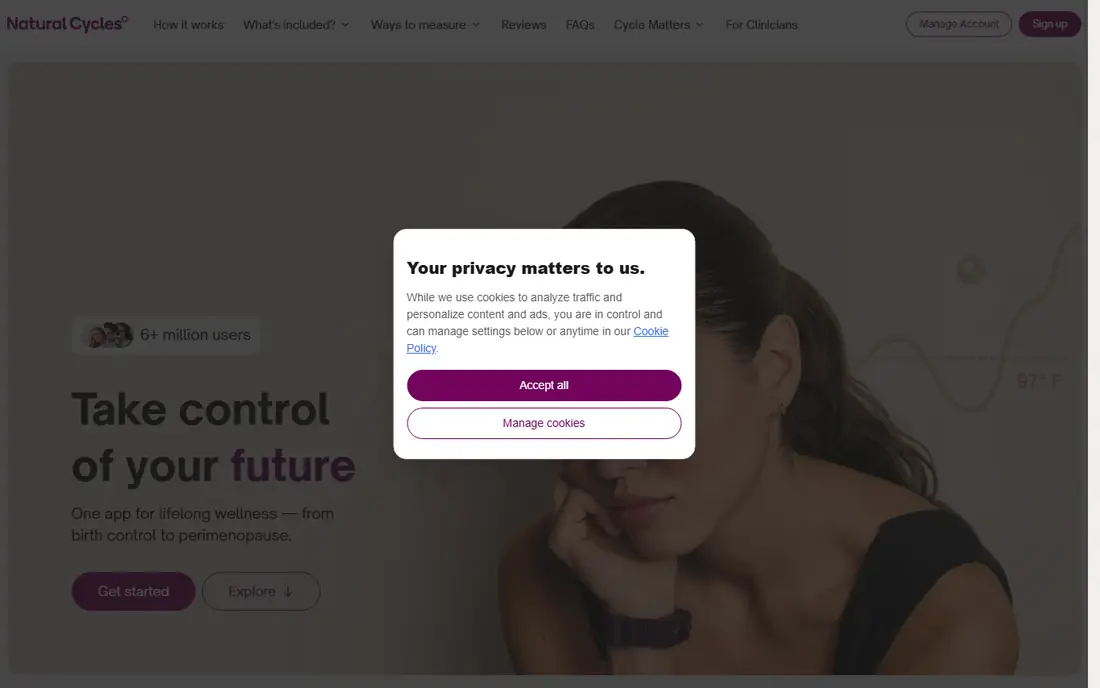
Natural Cycles is distinct: it is FDA-cleared as a contraception app, using daily basal body temperature and cycle data to give a daily fertility status. That clearance reflects clinical evidence, but it also demands discipline, since missed temperatures reduce accuracy.
It is subscription only and not suitable for everyone, including users with irregular cycles or certain health conditions, so read eligibility guidance and talk to a clinician first. For a user seeking a hormone-free, app-based contraception method, Natural Cycles is the regulated option.
- FDA-cleared for contraception with temperature data
- Clear daily fertility status
- Works with thermometers and wearables
- Requires daily temperature logging for accuracy
- Subscription only
- Not suitable for everyone
Ovia
Ideal for: Fertility and pregnancy tracking
Ovia offers free apps for fertility, pregnancy and parenting, with detailed tracking, health content and insights tailored to each stage. Its fertility app predicts ovulation windows and tracks symptoms, while its pregnancy app follows development week by week.
Because Ovia also works with employers and health plans, users should review data-sharing settings carefully and choose personal accounts where preferred. For a user moving from conception to pregnancy, Ovia's linked apps are convenient.
- Free fertility, pregnancy and parenting apps
- Detailed health and symptom tracking
- Employer and health plan options
- Data sharing with employers or plans needs careful settings review
- Interface can feel busy
Glow
Ideal for: Trying to conceive community
Glow focuses on fertility, with ovulation predictions, symptom and treatment tracking, and a large community where users share experiences while trying to conceive. A partner app lets a partner follow the journey and receive insights.
Premium adds fuller features, and community advice should never replace medical guidance. For a user trying to conceive who values community support alongside tracking, Glow is a strong choice.
- Strong fertility predictions and community
- Tracks many symptoms and treatments
- Partner app option
- Many features need Premium
- Community content varies in quality
Kindara
Ideal for: Detailed fertility charting
Kindara is built for fertility awareness charting, letting users log temperature, cervical fluid and other signs in detailed charts that reveal ovulation patterns. Its Wink thermometer syncs temperature data automatically, reducing manual entry errors.
It suits users who want to understand their cycles deeply rather than just receive a prediction, and its community is smaller than the biggest apps. For serious fertility awareness practice, Kindara is a respected and detailed tool.
- Detailed fertility awareness charting
- Works with Wink thermometer
- Educational focus on fertility awareness
- Smaller user base than Clue or Flo
- Some features need Premium
Premom
Ideal for: Ovulation test integration
Premom specializes in ovulation prediction through test strips: photograph an ovulation test with your phone camera, and the app reads the result, tracks LH surges and predicts ovulation. That test-based approach suits users who want more than calendar estimates.
Accuracy depends on test strip quality and photo conditions, and fuller features need Premium. For a user already using ovulation tests, Premom turns those tests into a clear, charted record.
- Reads ovulation test strips by camera
- Clear LH surge tracking
- Free core features
- Accuracy depends on test quality and lighting
- Premium needed for full features
WomanLog
Ideal for: Simple private tracking
WomanLog is a long-running, calendar-focused period tracker that keeps things simple: log periods, symptoms and moods, view predictions, and track pregnancy and weight without a busy social layer. Its simplicity appeals to users who want a private diary rather than a content platform.
The interface is plainer than Clue or Flo, and educational features are lighter. For a user who wants straightforward, private tracking, WomanLog is a dependable choice.
A further consideration is sharing data with a partner or clinician. Some apps let you share cycle summaries or export charts, which can help a partner understand fertility windows or a clinician review patterns. Check sharing controls first, share only what you intend, and remember that exported charts are health information that deserves the same care as the app data itself.
- Simple, calendar-focused tracking
- Long track record
- Works without an account in some modes
- Interface is plainer than rivals
- Fewer educational features
How we picked these
We compared official product pages and privacy policies, focusing on prediction methods, features for conception and pregnancy, and how each app handles sensitive health data. We favored apps that are actively maintained today and publish clear privacy information.
We also treated medical claims carefully: only Natural Cycles here is FDA-cleared for contraception, and other apps' fertility predictions are estimates. That distinction is flagged wherever it matters, and we recommend clinical advice for health decisions.
How to choose a period tracker and protect your data
Start with your goal. General cycle tracking suits Clue, Flo or WomanLog. Trying to conceive suits Glow, Ovia, Premom or Kindara. Hormone-free contraception is a different decision entirely, and only Natural Cycles carries FDA clearance for it, with strict daily use requirements. Matching goal to app avoids paying for features you will not use.
Read the privacy policy before you log anything
Period data is sensitive health information. Check where data is stored, whether it is sold or shared with third parties, whether you can delete it fully, and whether law enforcement requests are disclosed. Prefer apps with clear, restrictive policies, and use available privacy settings, including passcodes and anonymous modes where offered.
Log consistently for better predictions
Predictions improve with regular, honest logging of periods, symptoms and, where relevant, temperature or test results. A month of careful data beats a year of sporadic entries. If cycles are irregular, expect wider prediction ranges and consider discussing patterns with a clinician.
Treat predictions as estimates
No app guarantees ovulation dates or contraception, except where a regulated app like Natural Cycles states its cleared use and conditions. Use predictions to plan and understand patterns, and use reliable contraception separately unless you are following a cleared method exactly as directed.
Frequently asked questions
What is the best ovulation and period tracking app?
Clue is the strongest all-round pick for privacy and science-based tracking, Flo leads for content and popularity, and Natural Cycles is the only FDA-cleared contraception app here. The best choice depends on your goal and privacy needs.
Are period tracking apps accurate?
They estimate ovulation and periods from logged data, and accuracy improves with consistent logging. Irregular cycles, illness, stress and missed entries widen uncertainty, so treat predictions as estimates, not guarantees.
Is Natural Cycles effective for contraception?
Natural Cycles is FDA-cleared for contraception when used as directed, with daily temperature logging. Effectiveness depends on correct, consistent use, and it is not suitable for everyone, so read eligibility guidance and talk to a clinician first.
How do period apps protect my data?
Policies vary widely: some store data in Europe with restrictive sharing, others share anonymized data with partners. Read each app's current privacy policy, check sharing settings, and prefer apps that allow full deletion and limit third-party sharing.
Can a period app tell me if I am pregnant?
Apps can note a late period and suggest testing, but they cannot diagnose pregnancy. A home pregnancy test and, if needed, a clinician visit are the reliable next steps after a missed period.
Can I share my cycle data with my doctor?
Many apps let you export charts or summaries to show a clinician, which can help discussions about irregular cycles or fertility. Check the export format before your appointment, and bring a printed or saved summary in case the clinic cannot open the app.