Best Paraphrasing Tool for Academic Writing

- 1
 QuillBotDeepest paraphrasing modes for student essaysVisit
- 2
 ScribbrFree rewords with citation reminders for short passagesVisit
- 3
 WordtuneSentence level rewrites plus summaries for research readingVisit
- 4
 GrammarlyGrammar, tone and plagiarism checks around your paraphrasesVisit
- 5
 PaperpalJournal manuscript preparation and submission checksVisit
- QuillBot Premium at $8.33 a month billed annually is the best all round paraphraser for academic writing, with nine modes and a plagiarism checker.
- Scribbr is the best free option: the same QuillBot engine, no sign up, 125 words per input, with citation guidance on the page.
- Wordtune Unlimited now costs $6.99 a month billed annually, down from $9.99, but development has stopped, so expect maintenance, not new features.
- A paraphrase still needs a citation. Rewording a source without credit is plagiarism at most institutions, whatever tool did the rewording.
- Paperpal and Trinka are the academic specialists: Paperpal for journal submission, Trinka for technical style guides.
Quick comparison
| Product | Ideal for | Price from | Free version | |
|---|---|---|---|---|
| QuillBot | Deepest paraphrasing modes for student essays | $8.33 per month (billed annually) | Yes | Visit |
| Scribbr | Free rewords with citation reminders for short passages | $0 | Yes | Visit |
| Wordtune | Sentence level rewrites plus summaries for research reading | $6.99 per month (billed annually) | Yes | Visit |
| Grammarly | Grammar, tone and plagiarism checks around your paraphrases | $12 per member/month (billed annually) | Yes | Visit |
| Paperpal | Journal manuscript preparation and submission checks | $12 per month (billed annually) | Yes | Visit |
 Trinka | Academic and technical style, including APA, AMA and IEEE | $6.67 per month (billed annually) | Yes | Visit |
 Writesonic | Budget long form rewriting with built in SEO checks | $16 per month (billed annually) | Yes | Visit |
 Jasper | Long form drafting when paraphrasing is only one step | $39 per month (billed annually) | Free trial (7 days) | Visit |
The best paraphrasing tools for academic writing
QuillBot
Ideal for: Deepest paraphrasing modes for student essays
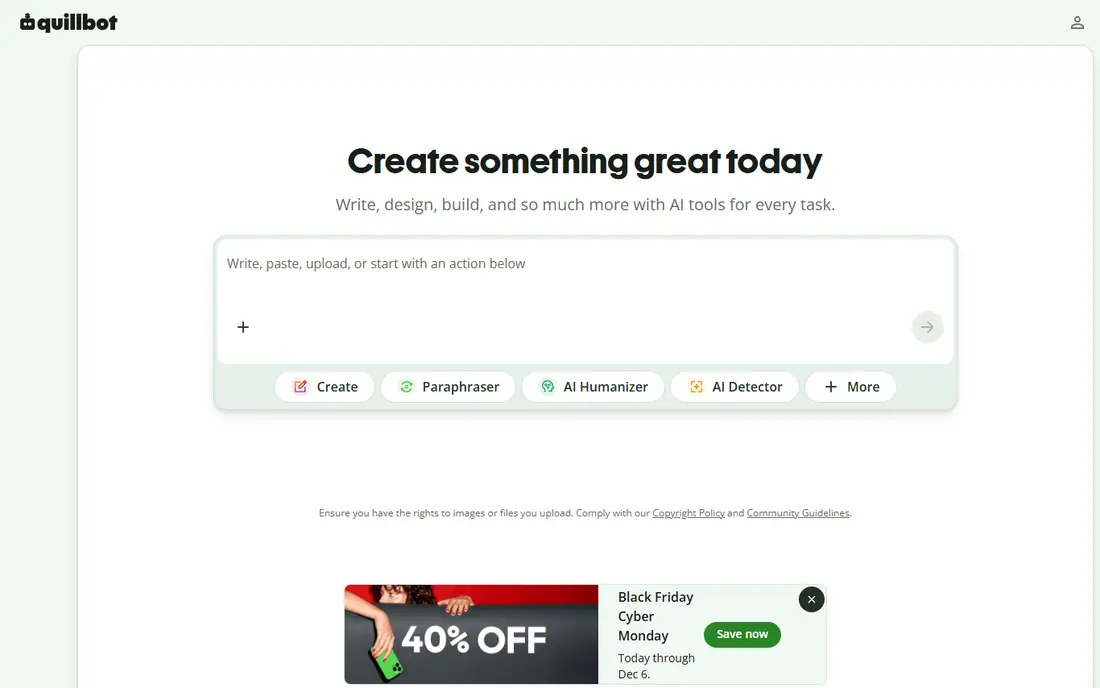
QuillBot is the most widely used paraphraser for academic work, and its Premium page, read today, lists Free at $0 and Premium at $8.33 a month billed annually, with a 58 percent saving against monthly billing. Premium gives unlimited paraphrasing in nine modes, plus unlimited custom modes, a plagiarism checker with 25,000 words a month, a summarizer up to 6,000 words, and a citation generator. The free plan paraphrases up to 125 words at a time in Standard and Fluency modes, which is enough for a single paragraph but not a full section.
The academic value is in the modes. Formal mode suits essays and dissertations, while the synonym slider controls how far the wording moves from the source, which matters when a claim must stay exact. Monthly billing is $19.95, so a year costs $239.40 against $99.95 on the annual plan. The plagiarism checker is a Premium feature, and the free AI detector is limited.
- Nine paraphrasing modes plus unlimited custom modes on Premium
- Plagiarism checker with 25,000 words a month
- Free plan caps paraphrasing at 125 words per pass with only two modes
- Monthly billing costs $19.95, more than double the annual rate
Scribbr
Ideal for: Free rewords with citation reminders for short passages
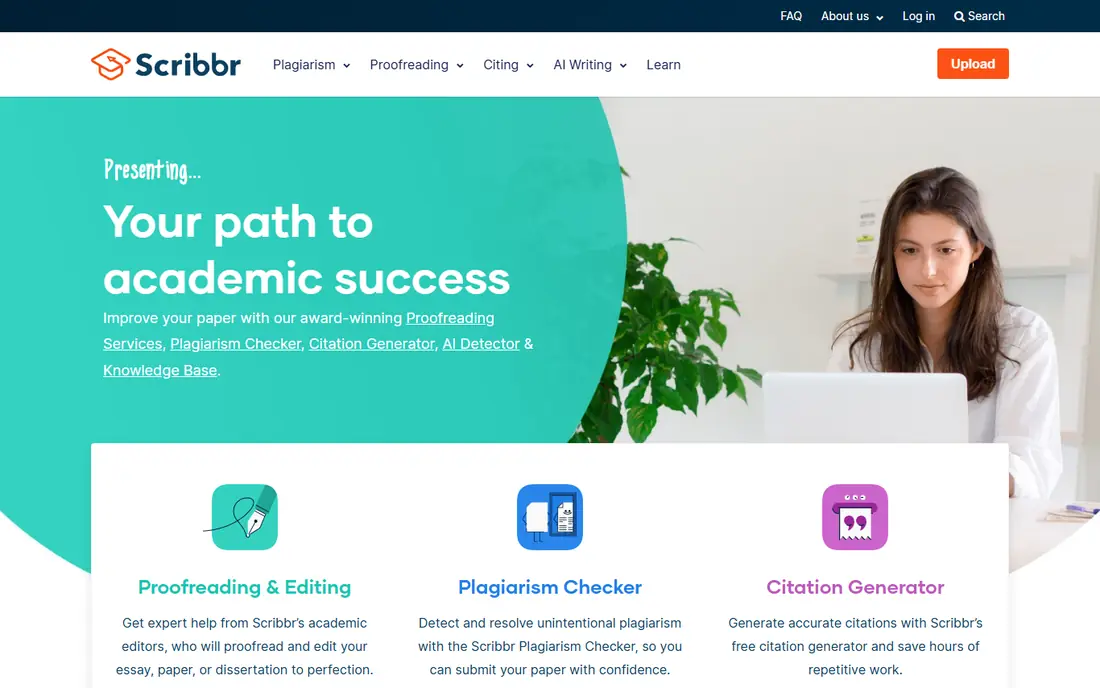
Scribbr's paraphrasing tool is free, needs no sign up, and states on its own page that it runs on QuillBot technology. It accepts up to 125 words per input, offers Standard and Fluency modes, and takes Word, Google Docs or PDF files as input. What sets it apart is the academic framing: the tool page reminds users that a paraphrase still needs a citation, because the idea still belongs to the source author.
Scribbr is best for a quick reword of a clumsy sentence or a short passage when you do not want another account. Its wider site adds a citation generator, a plagiarism checker and professional proofreading, with the plagiarism checker priced per document at $19.95 for up to 7,499 words as of October 2026. The ceiling is the same as QuillBot free, so a full literature review still needs chunking or a subscription.
- Free with no sign up and no ads, up to 125 words per input
- Built for academic writing with citation guidance on the tool page
- Only Standard and Fluency modes, and the same 125 word cap as QuillBot free
- Longer texts need a QuillBot Premium subscription
Wordtune
Ideal for: Sentence level rewrites plus summaries for research reading
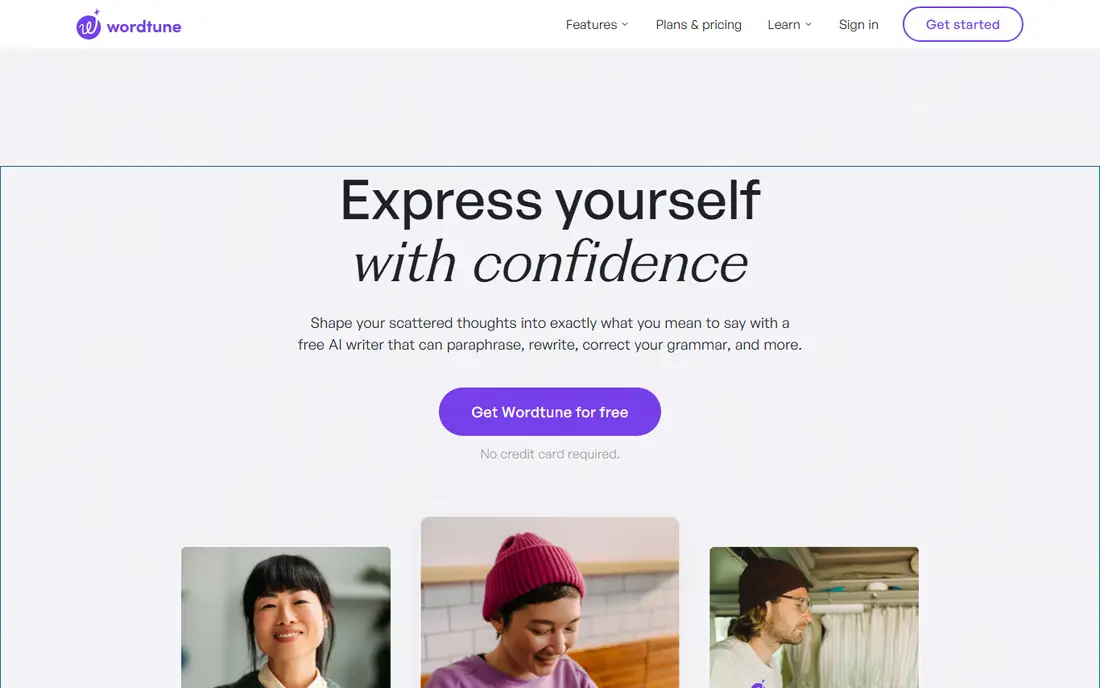
Wordtune, built by AI21 Labs, rewrites single sentences with several alternatives rather than reworking whole passages, which suits academic writers who want to fix one awkward sentence at a time. Its plans page, read today, shows Unlimited at $6.99 a month billed annually, down from a struck through $9.99, with a 3 day free trial. Advanced is $4.89 a month billed annually, and Basic is free with 10 rewrites and AI suggestions a day and 3 AI summaries a month.
Advanced allows 30 rewrites a day and 15 summaries a month, while Unlimited lifts both caps and adds vocabulary, clarity and fluency suggestions plus premium support. Students and educators with a valid .edu address get 30 percent off either plan. A 2026 review reports AI21 Labs stopped active development of Wordtune in April 2025, so expect maintenance, not new features. Check the monthly price on the toggle before paying, since the page opens on annual billing.
- Unlimited rewrites and summaries on the Unlimited plan
- 30 percent discount for students and educators
- Development has stopped, so new features are unlikely
- The plans page shows only annual prices until you flip the billing toggle
Grammarly
Ideal for: Grammar, tone and plagiarism checks around your paraphrases
Grammarly is not a paraphraser first, but its Pro plan, read on the vendor plans page today at $12 a member a month billed annually, adds full sentence rewrites, tone adjustment, plagiarism detection and AI text detection to a strong free grammar checker. The free plan covers spelling and grammar, tone, and 100 AI prompts a month, while Pro raises that to 2,000 prompts a member a month. That combination suits students who paraphrase in QuillBot or Scribbr and then check the result for grammar, tone and accidental overlap with sources.
The academic limits matter. Grammarly Pro has one style guide and one brand tone, and it does not check references against APA, AMA or IEEE rules the way Trinka and Paperpal do. Monthly billing is $30 a member, so the annual plan at $144 a year saves $216 against monthly billing. A 2026 pricing review also reports a $72 first year student offer for Pro, which is worth checking before you pay the full rate.
- Full sentence rewrites, plagiarism and AI text detection, and 2,000 AI prompts a month on Pro
- Free plan includes 100 AI prompts a month
- Pro is built for general writing, not academic style guides, and monthly billing costs $30, two and a half times the annual rate
Paperpal
Ideal for: Journal manuscript preparation and submission checks
Paperpal is built for researchers rather than general writers, and it is trained on millions of peer reviewed journal articles to give discipline specific language corrections. Prime costs $12 a month billed annually, or $144 a year, and $25 a month on monthly billing, according to the Paperpal help center as read in October 2026. Prime gives 20,000 grammar and consistency edits a month, 10,000 words of plagiarism checking a month, and reference and submission readiness checks.
The free plan allows 200 edits a month, which suits an occasional check but not a full manuscript. Paperpal also offers a Pro tier at $348 a year for heavier plagiarism, reference and journal fit checking. The pricing page did not render prices in our text read on 12 November 2026, so re-check the live page before paying; a discount of up to 30 percent on annual plans was showing in late October.
- Trained on peer reviewed research with academic language corrections
- Plagiarism checks built with Turnitin and reference checks
- The pricing page did not render prices in our text read today, so the price comes from October 2026 vendor page reads
- Plagiarism scanning stays metered by word count even on Prime
Trinka
Ideal for: Academic and technical style, including APA, AMA and IEEE
Trinka is built for academic and technical writing, with grammar and style corrections tuned to research language and style guides for APA, AMA, IEEE and ACS. Premium costs about $6.67 a month on a yearly subscription, or about $80 a year, according to Trinka's own comparison page, with monthly billing at about $20. The free Basic plan covers 5,000 words a month with grammar and spell checks, a paraphraser, and consistency checks, plus 4 credits a month.
Premium adds unlimited Power Mode grammar, advanced style corrections, publication readiness checks and a journal finder, while Premium Plus at about $10.42 a month billed annually adds bundled plagiarism and AI detection pages. The trade off is the credit system: plagiarism and AI detection draw on credits even on Premium, so heavy checking costs extra. Trinka also sells a Confidential Data plan at about $500 a year for sensitive content, with no data storage and no AI training on inputs.
- Style guides for APA, AMA, IEEE and ACS, plus a paraphraser and journal finder
- Free Basic plan covers 5,000 words a month
- Plagiarism and AI detection use credits even on Premium
- The pricing page shows a $0 to $20 a month range without a single headline figure
Writesonic
Ideal for: Budget long form rewriting with built in SEO checks
Writesonic's Individual plan costs $16 a month billed annually, or $20 a month on monthly billing, according to October 2026 reads of the vendor pricing page. It gives 100,000 premium words a month, the full template library, Article Writer, Chatsonic and built in SEO checks, which suits students who also write for the web. The free plan gives a small credit allowance, enough to test the tool before paying.
The catch is the meter. Writesonic separates premium words, which use GPT-4 level models, from regular words, and the 100,000 word limit applies to premium words only. The homepage has also changed: it now sells an AI search visibility platform for GEO and AEO, so the writing plans sit behind that new positioning. For pure academic paraphrasing, QuillBot or Scribbr are a closer fit, but Writesonic is the cheapest route to high volume rewriting.
- Individual plan gives 100,000 premium words a month and a full template library at a low price
- Free plan with a small credit allowance
- The homepage now sells AI search visibility, not the writing suite, so the writing plans are harder to find
- Premium and regular words are metered separately, which can burn credits fast
Jasper
Ideal for: Long form drafting when paraphrasing is only one step
Jasper is a marketing content platform, not an academic tool, but it earns a place here for students and researchers who draft long form text and then reshape it. Creator costs $39 a month billed annually, or $49 a month on monthly billing, according to 2026 reads of the vendor pricing page, with unlimited words, one brand voice and a browser extension. Pro costs $59 a month billed annually, or $69 monthly, and adds more brand voices, agents and SEO mode.
The limits are clear. There is no permanent free plan, only a 7 day free trial, and the homepage now leads with enterprise marketing agents, so the Creator plan is harder to find than it was. Jasper also meters usage in AI credits on some plans, and its best SEO workflow needs a separate Surfer SEO subscription from $89 a month. For academic paraphrasing alone, it is the most expensive tool here, and QuillBot or Paperpal give more for less.
- Unlimited words on every plan with brand voice and marketing agents
- 7 day free trial
- No permanent free plan, and the site now leads with enterprise marketing, so the Creator plan is no longer front and centre
- Pro costs $59 a month billed annually
Which tool fits your academic need
| Academic need | Best pick | Cost | Why it fits | | Quick free reword of a paragraph | Scribbr | $0 | No sign up, citation reminder on the page | | Daily paraphrasing for essays | QuillBot Premium | $8.33 a month billed annually | Nine modes, plagiarism checker, 25,000 words a month | | Sentence fixes plus summaries | Wordtune Unlimited | $6.99 a month billed annually | Unlimited rewrites and summaries, 30 percent student discount | | Journal manuscript submission | Paperpal Prime | $12 a month billed annually | Trained on peer reviewed research, Turnitin plagiarism checks | | Technical writing with style guides | Trinka Premium | $6.67 a month billed annually | APA, AMA, IEEE and ACS style guides | | Budget high volume rewriting | Writesonic Individual | $16 a month billed annually | 100,000 premium words a month |
How we chose
We opened the vendor pricing pages for QuillBot, Wordtune and Grammarly on 12 November 2026, and the homepages for Scribbr, Paperpal, Trinka, Jasper and Writesonic the same day. Prices for Paperpal, Trinka, Jasper and Writesonic come from vendor pricing pages as read in October 2026, because their pages did not render prices in our text reads today, and we flag each one. Wordtune's Advanced price of $4.89 a month billed annually comes from a vendor page read on 12 November 2026, since the live page extract rendered only the Unlimited card. We compared word limits, rewrite modes, plagiarism and AI detection, citation support and academic style guides, with no hands-on testing. Paraphrasing tools are judged here on legitimate academic use: rewording your own sentences and drafting with sources cited, not on evading plagiarism or AI detection, which is academic misconduct.
What to check before you buy
Check the free word limit per pass first: QuillBot and Scribbr free cap paraphrasing at 125 words. Compare the billing period, since monthly billing can cost more than double the annual rate on QuillBot, Grammarly and Wordtune. Ask whether the plagiarism checker is included or metered by words or credits, and whether the tool supports your citation style. Read how your text is stored and whether it is used for AI training, which matters for unpublished research. Check your institution's rules on AI writing tools before you submit anything, and always cite the source of a paraphrased idea.
Frequently asked questions
Is using a paraphrasing tool plagiarism?
No, if you use it to reword your own sentences and you cite the source of any idea you paraphrase. It becomes plagiarism when you reword someone else's idea without credit, or when the wording and sentence structure stay so close to the source that it is still their text. Scribbr's own guidance warns about both cases, and most universities treat unattributed paraphrasing the same as copying.
What is the best free paraphrasing tool for students?
Scribbr is the best free option for academic writing. It runs on the QuillBot engine, needs no sign up, takes up to 125 words per input, and reminds you on the page that a paraphrase still needs a citation. QuillBot free gives the same 125 word cap and two modes, but needs an account for the full feature set. For a single paragraph with no account, Scribbr wins.
Is QuillBot or Wordtune better for academic writing?
QuillBot is better for academic writing overall, because it offers nine paraphrasing modes, a plagiarism checker, a summarizer and a citation generator in one subscription. Wordtune is better for fixing single sentences and summarising research papers, with unlimited rewrites on its Unlimited plan. Choose QuillBot for essays and dissertations, and Wordtune if you mainly polish sentences and read long papers.
Can paraphrasing tools help non-native English speakers?
Yes, and this is where the academic specialists stand out. Paperpal corrects academic English with discipline specific suggestions trained on peer reviewed research, and Trinka checks formal and technical English with style guides for APA, AMA and IEEE. Both keep the formal register that general rewriters often lose, and both flag consistency issues across a full manuscript rather than one sentence at a time.
Do paraphrasing tools handle citations and references?
They reword text, they do not manage citations, so you still need to cite the source yourself. QuillBot includes a citation generator on Premium, Paperpal checks references as part of its submission readiness report, and Trinka formats citations with credits. None of them can tell whether a paraphrase is close enough to need a citation, so check the wording against the source and add the reference by hand.
How much does QuillBot Premium cost?
QuillBot Premium costs $8.33 a month when billed annually, or $99.95 a year, according to the vendor Premium page read on 12 November 2026. Monthly billing costs $19.95, and a quarterly option costs $13.31 a month. Verified students can get Premium for $6.25 a month billed annually with a .edu email. The free plan stays at $0 with 125 words per pass and two modes.