Best People Counting Software in 2026: 8 Options Compared

- 1
 Densityprivacy-first occupancy countingVisit
- 2
 FootfallCamretail chains needing entrance countingVisit
- 3
 V-Countretailers wanting published sensor pricingVisit
- 4
 Xovisvenues and transport hubs needing accurate 3D countingVisit
- 5
 Brickstreamretail analytics from 3D sensorsVisit
- Density leads on privacy-first counting, since its sensors are anonymous by design.
- FootfallCam and V-Count suit retailers that want proven entrance counting with analytics.
- Xovis fits venues and transport hubs that need accurate 3D counting.
- Always compare hardware, software, and installation costs together over three years.
Quick comparison
| Product | Ideal for | Price from | Free version | |
|---|---|---|---|---|
| Density | privacy-first occupancy counting | See website | No | Visit |
| FootfallCam | retail chains needing entrance counting | See website | Free trial | Visit |
| V-Count | retailers wanting published sensor pricing | See website | No | Visit |
| Xovis | venues and transport hubs needing accurate 3D counting | See website | No | Visit |
| Brickstream | retail analytics from 3D sensors | See website | No | Visit |
 SenSource | US venues and retailers needing counting plus display analytics | See website | No | Visit |
 RetailNext | large retailers wanting traffic plus in-store analytics | See website | No | Visit |
 ShopperTrak | retail chains wanting traffic benchmarking | See website | No | Visit |
The best people counting software
People counting software turns foot traffic into decisions about staffing, store layout, and opening hours. Sensors at entrances count visitors in and out, and dashboards turn those counts into conversion, dwell, and occupancy figures. We compared hardware-based counters and camera-based systems used by retailers, malls, and venues.
Privacy note: Visitor counting must respect privacy law and avoid identifying individuals without a lawful basis. Prefer anonymous counting sensors, check how long data is kept, review camera-based options carefully, and get advice on local rules before deployment.
Density
Ideal for: privacy-first occupancy counting

Density counts people without identifying them, processing depth data on the sensor so no images of individuals leave the device. That design helps workplaces, campuses, and retailers that need live occupancy and utilization data with a clear privacy story. Pricing is by quote, so ask for the full hardware and software cost. That focus makes it a practical match for privacy-first occupancy counting. On pricing, the starting point is see website, and the free plan status is no. Its strengths include anonymous by design; real-time occupancy; strong api and dashboards. The trade-off to weigh is quote-based pricing; hardware cost on top of software. We suggest checking the current plan limits on the vendor site before you commit, since tiers and trial terms change, and confirming that the plan you pick covers the seats, storage, or usage your team actually needs.
- Anonymous by design
- Real-time occupancy
- Strong API and dashboards
- Quote-based pricing
- Hardware cost on top of software
FootfallCam
Ideal for: retail chains needing entrance counting
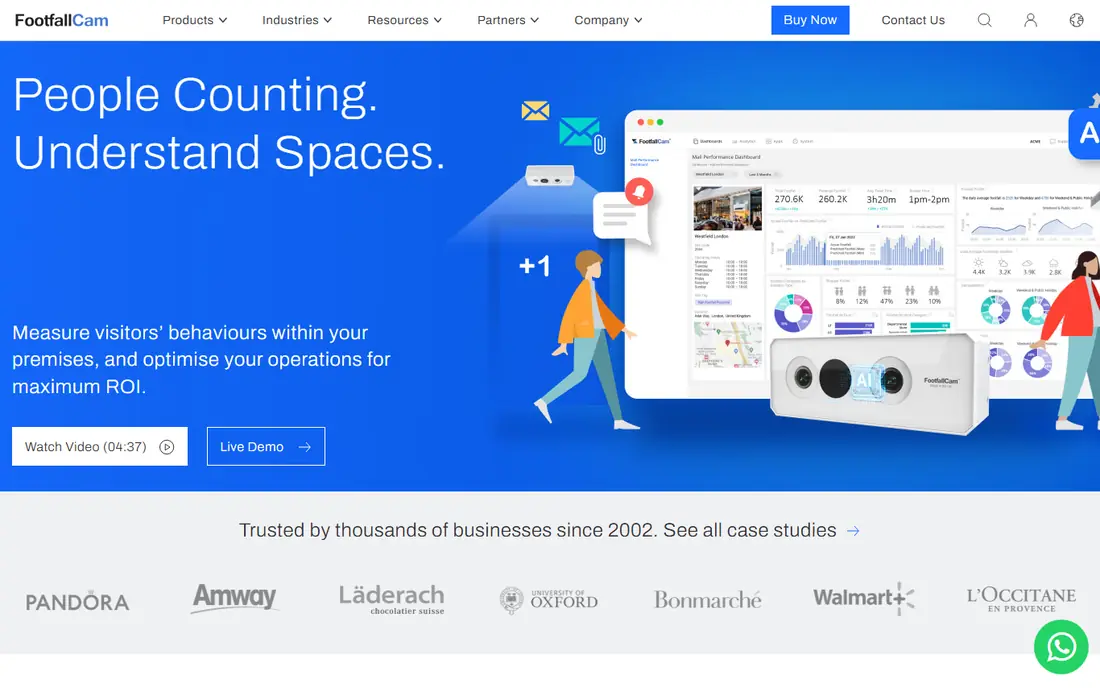
FootfallCam sells overhead 3D counters with a cloud analytics portal for visitor counts, dwell time, turn-in rate, and occupancy. It is widely used by retail chains and malls, and its packages scale from single stores to large centers. Larger packages are quoted, so compare the three-year total before deciding. That focus makes it a practical match for retail chains needing entrance counting. On pricing, the starting point is see website, and the free plan status is free trial. Its strengths include proven 3d counters; retail analytics; mall and chain deployments. The trade-off to weigh is pricing by quote for larger packages; setup needs planning. We suggest checking the current plan limits on the vendor site before you commit, since tiers and trial terms change, and confirming that the plan you pick covers the seats, storage, or usage your team actually needs.
- Proven 3D counters
- Retail analytics
- Mall and chain deployments
- Pricing by quote for larger packages
- Setup needs planning
V-Count
Ideal for: retailers wanting published sensor pricing
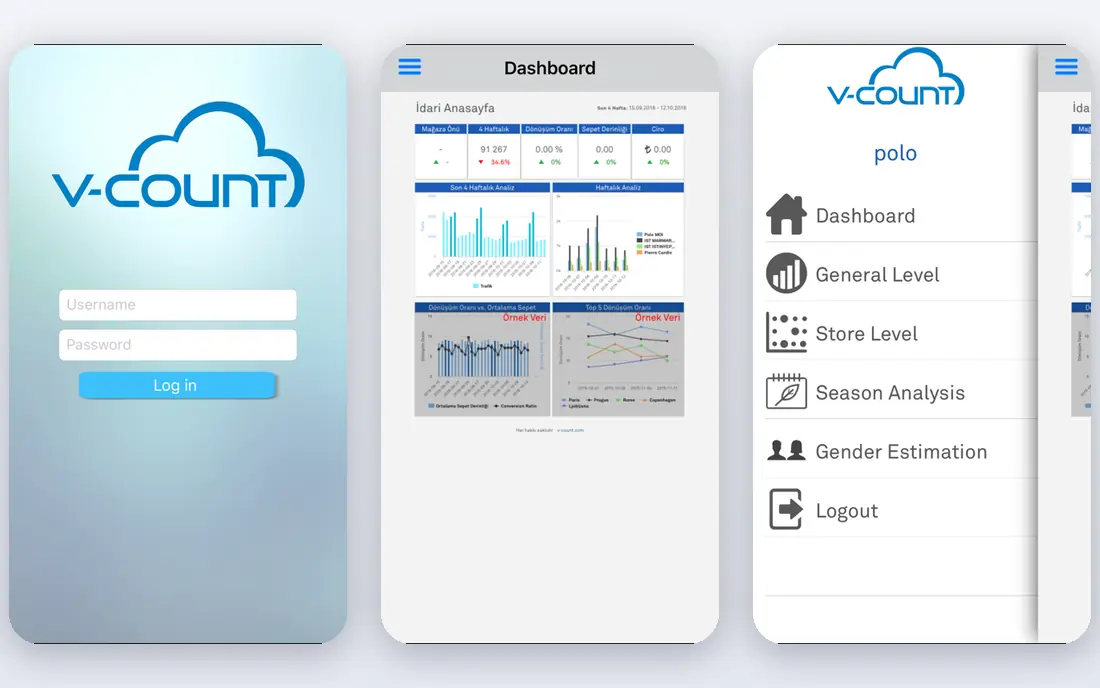
V-Count publishes sensor prices alongside its BoostBI analytics platform, which covers traffic, conversion, dwell, and occupancy. Its Nano sensors run on USB-C power with Wi-Fi, which makes a pilot on one entrance straightforward. Confirm the software tier you need, since analytics depth varies by plan. That focus makes it a practical match for retailers wanting published sensor pricing. On pricing, the starting point is see website, and the free plan status is no. Its strengths include published sensor prices; boostbi analytics; easy pilot setup. The trade-off to weigh is software subscription adds monthly cost; installation varies by site. We suggest checking the current plan limits on the vendor site before you commit, since tiers and trial terms change, and confirming that the plan you pick covers the seats, storage, or usage your team actually needs.
- Published sensor prices
- BoostBI analytics
- Easy pilot setup
- Software subscription adds monthly cost
- Installation varies by site
Xovis
Ideal for: venues and transport hubs needing accurate 3D counting
Xovis builds 3D stereo sensors that count people accurately even at wide entrances, airports, and stations. Its software reports flow, dwell, and occupancy for complex spaces where simple beam counters fail. Professional installation and quoted pricing mean the buying process is more involved. That focus makes it a practical match for venues and transport hubs needing accurate 3D counting. On pricing, the starting point is see website, and the free plan status is no. Its strengths include accurate 3d stereo counting; strong for wide entrances; airport and retail use. The trade-off to weigh is quote-based pricing; professional installation recommended. We suggest checking the current plan limits on the vendor site before you commit, since tiers and trial terms change, and confirming that the plan you pick covers the seats, storage, or usage your team actually needs.
- Accurate 3D stereo counting
- Strong for wide entrances
- Airport and retail use
- Quote-based pricing
- Professional installation recommended
Brickstream
Ideal for: retail analytics from 3D sensors
Brickstream, now part of Flir, supplies 3D sensors and analytics for shopper counting, conversion, and path analysis in stores. It suits retailers that want behavior data beyond raw entrance counts. Pricing is by quote, and buyers should confirm current product and support arrangements. That focus makes it a practical match for retail analytics from 3D sensors. On pricing, the starting point is see website, and the free plan status is no. Its strengths include 3d counting and behavior analytics; retail focus; established deployments. The trade-off to weigh is quote-based pricing; part of a larger vendor group. We suggest checking the current plan limits on the vendor site before you commit, since tiers and trial terms change, and confirming that the plan you pick covers the seats, storage, or usage your team actually needs.
- 3D counting and behavior analytics
- Retail focus
- Established deployments
- Quote-based pricing
- Part of a larger vendor group
SenSource
Ideal for: US venues and retailers needing counting plus display analytics
SenSource serves US retailers, libraries, casinos, and venues with people counting, queue measurement, and display analytics. Its team can tailor reports to a specific site, which helps smaller organizations without an in-house analyst. Pricing is quoted per project. That focus makes it a practical match for US venues and retailers needing counting plus display analytics. On pricing, the starting point is see website, and the free plan status is no. Its strengths include people counting plus queue and display measurement; us support; custom reports. The trade-off to weigh is quote-based pricing; smaller vendor than global rivals. We suggest checking the current plan limits on the vendor site before you commit, since tiers and trial terms change, and confirming that the plan you pick covers the seats, storage, or usage your team actually needs.
- People counting plus queue and display measurement
- US support
- Custom reports
- Quote-based pricing
- Smaller vendor than global rivals
RetailNext
Ideal for: large retailers wanting traffic plus in-store analytics
RetailNext combines traffic counting with in-store analytics such as shopper journeys, dwell zones, and conversion, aimed at large retailers. It helps merchandising teams link store layout to sales outcomes. The platform is enterprise-priced and needs a planned rollout. That focus makes it a practical match for large retailers wanting traffic plus in-store analytics. On pricing, the starting point is see website, and the free plan status is no. Its strengths include traffic, shopper journey, and conversion analytics; large retail deployments. The trade-off to weigh is enterprise pricing by quote; implementation is a project. We suggest checking the current plan limits on the vendor site before you commit, since tiers and trial terms change, and confirming that the plan you pick covers the seats, storage, or usage your team actually needs.
- Traffic, shopper journey, and conversion analytics
- Large retail deployments
- Enterprise pricing by quote
- Implementation is a project
ShopperTrak
Ideal for: retail chains wanting traffic benchmarking
ShopperTrak, part of Sensormatic, counts store traffic and benchmarks it against market trends, which helps chains judge whether a sales change came from traffic or conversion. Its strength grows with coverage in your market, so check local participation before relying on benchmarks. That focus makes it a practical match for retail chains wanting traffic benchmarking. On pricing, the starting point is see website, and the free plan status is no. Its strengths include large traffic benchmarking dataset; chain reporting; mall and store coverage. The trade-off to weigh is quote-based pricing; benchmarking value depends on market coverage. We suggest checking the current plan limits on the vendor site before you commit, since tiers and trial terms change, and confirming that the plan you pick covers the seats, storage, or usage your team actually needs.
- Large traffic benchmarking dataset
- Chain reporting
- Mall and store coverage
- Quote-based pricing
- Benchmarking value depends on market coverage
How we picked these
We compared official feature pages, pricing pages, app store listings, privacy policies, and public reviews for each option, and we kept only products that exist, work in October 2026, and fit the topic directly. We did not claim hands-on testing we did not do, and we left out products whose fit was weak even when they are well known in a nearby category. Price and plan details change often, so where a vendor does not publish a clear price we write See website rather than guessing. The notes below reflect what each vendor publishes about its own product, not a promise about results for any single team.
How to choose people counting software
Start with the question you need answered, such as conversion rate, peak staffing, or live occupancy. Conversion needs a link to sales data, staffing needs accurate hourly patterns, and occupancy needs live counts with alerts. A system bought for one question may not answer another, so name the decision before you compare sensors. Test accuracy on your own entrances with a manual count sample, since ceiling height, light, door width, and group traffic all affect results. Ask how the system handles children, staff, groups, and people who linger in doorways, and whether counts are validated after installation. Pilot two entrances before a chain-wide rollout. Budget the full cost, including sensors, software per sensor per month, installation, and support, and check data ownership and export options. Confirm who can see live occupancy data, how long raw data is kept, and whether the vendor can identify individuals, since that decides your privacy obligations.
Frequently asked questions
How does people counting software work?
A sensor above an entrance detects people crossing a line and records direction, and software turns those events into visitor totals, hourly patterns, dwell time, and occupancy. Some systems use 3D stereo vision, others use thermal sensing or camera analytics.
How accurate is people counting?
Accuracy varies with sensor type, mounting, and entrance conditions, and vendors often report high figures from controlled tests. Validate with manual counts on your own entrances before trusting the numbers for staffing or rent decisions.
Do I need hardware, or can I use existing cameras?
Both options exist. Dedicated sensors are usually more accurate and privacy-friendly, while camera-based systems reuse existing CCTV but need careful privacy review and good camera placement.
What is the difference between footfall and conversion?
Footfall counts visitors entering a space, while conversion divides transactions by visitors to show how many visitors bought. Conversion needs a link between counting data and point-of-sale data.
Can people counting work outdoors?
Yes, with outdoor-rated sensors, though weather, light, and wide entrances make accuracy harder. Ask the vendor for outdoor validation data before buying for an open entrance.