Best Period Tracker App in 2026: 8 Apps Compared

- Our pick for most people is Flo, because it covers feature depth and community with the fewest trade-offs in this group.
- If you want to start without paying, Flo is the strongest free option here, though its paid tier adds the deeper features.
- Clue is the best second look when Flo does not fit, since it serves irregular cycles and privacy-first tracking rather than the same audience.
- Prices and plan limits change often, so confirm the current terms on each vendor site and read the fine print on limits, renewals and cancellation.
Quick comparison
| Product | Ideal for | Price from | Free version | |
|---|---|---|---|---|
 Flo | Feature depth and community | Free | Yes | Visit |
 Clue | Irregular cycles and privacy-first tracking | Free | Yes | Visit |
 Natural Cycles | Regulated contraception tracking | $149.99 per year | No | Visit |
 Glow | Trying to conceive and fertility tracking | Free | Yes | Visit |
 Stardust | Daily ritual and hormone insights | Free | Yes | Visit |
 Ovia | Cycle, fertility and pregnancy in one family | Free | Yes | Visit |
 Apple Health Cycle Tracking | iPhone users who want on-device privacy | Free | Yes | Visit |
 WomanLog | Simple, private cycle logging | Free | Yes | Visit |
The best period tracker apps
Choosing among best period tracker app comes down to fit, not fame. We compared official feature pages, pricing pages, app store listings, privacy policies and public reviews for each option below, and we weighed what you actually get on the entry plan against what stays behind a paywall. Flo leads this list because it handles feature depth and community well for the widest range of readers, but the right choice depends on your budget, your device and how much hand-holding you want. Read the shortlist with your own situation in mind. A cheaper tool that you actually use beats a powerful one that sits untouched, and a plan that looks cheap on the monthly line can cost more once add-ons and limits are counted. Privacy deserves as much weight as predictions. Read how each app stores and shares health data before you log a single cycle. This is not medical advice; talk to a clinician about irregular cycles or concerning symptoms.
Flo
Ideal for: Feature depth and community

Flo is the most feature-rich tracker here, with a large content library and a community alongside core cycle predictions. Its free tier covers basic tracking, while Premium adds a health assistant and deeper insights. For readers focused on feature depth and community, the appeal is broad toolset with health content and community. That strength matters in daily use, because it is the part you will notice every week, not a feature you open once and forget. Compare it against the rest of the list on that one point first, then look at price, platform support and how the company handles your data. The honest weakness is best insights sit behind Premium. Past data-sharing history deserves a careful read Try it on a real task before you pay, and check whether the entry plan covers the feature you actually need.
- Broad toolset with health content and community
- Anonymous mode for extra privacy
- Symptom and mood tracking alongside cycles
- Best insights sit behind Premium
- Past data-sharing history deserves a careful read
Clue
Ideal for: Irregular cycles and privacy-first tracking
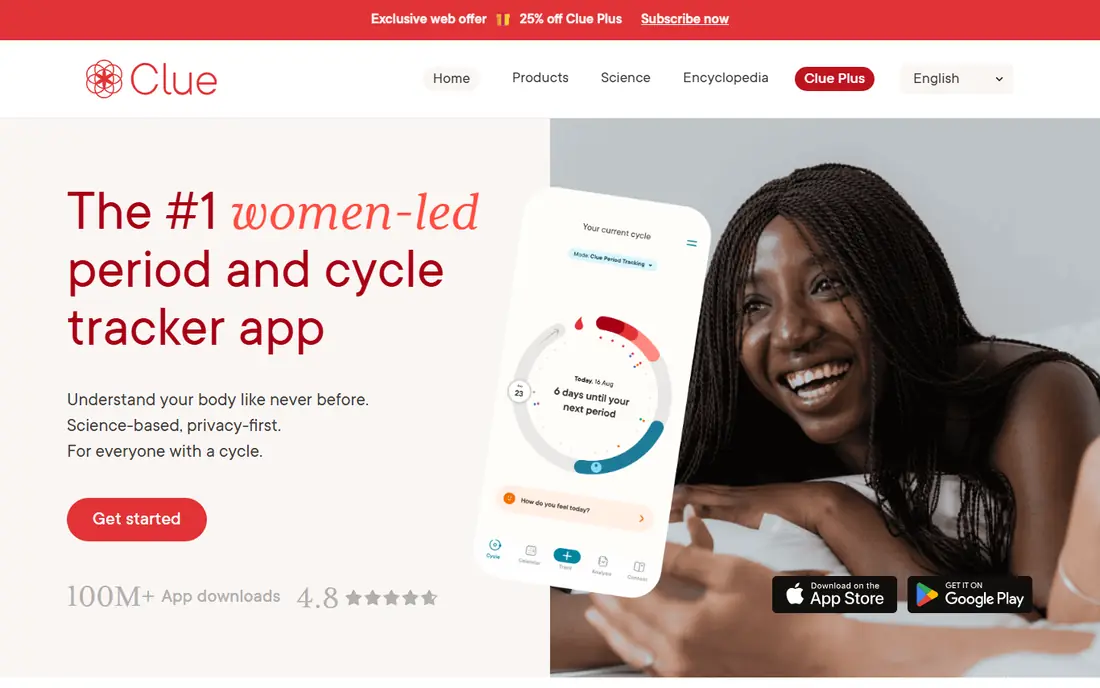
Clue is built for irregular cycles, with an algorithm that adapts as it learns your personal pattern. Its privacy posture and clean science focus make it a strong pick for readers who weigh data handling heavily. For readers focused on irregular cycles and privacy-first tracking, the appeal is adaptive predictions that learn your cycle pattern. That strength matters in daily use, because it is the part you will notice every week, not a feature you open once and forget. Compare it against the rest of the list on that one point first, then look at price, platform support and how the company handles your data. Watch out for deeper analysis sits behind Clue Plus. No community features like Flo If you can live with that limit, the rest of the package is easy to recommend for its audience.
- Adaptive predictions that learn your cycle pattern
- Science-led design with detailed symptom logging
- Based in Berlin under strict privacy rules
- Deeper analysis sits behind Clue Plus
- No community features like Flo
Natural Cycles
Ideal for: Regulated contraception tracking

Natural Cycles is different from a simple tracker, because it is a regulated contraceptive method based on temperature data. That distinction matters: it is the pick only when you specifically want that method, not just cycle predictions. For readers focused on regulated contraception tracking, the appeal is regulated medical device for contraception. That strength matters in daily use, because it is the part you will notice every week, not a feature you open once and forget. Compare it against the rest of the list on that one point first, then look at price, platform support and how the company handles your data. The catch is no free tier. Requires consistent daily temperature readings If that trade-off is acceptable for how you work, this is a solid choice, and a short trial will tell you more than any review can.
- Regulated medical device for contraception
- Temperature-based algorithm with a clear method
- Works with a wearable band on the annual plan
- No free tier
- Requires consistent daily temperature readings
Glow
Ideal for: Trying to conceive and fertility tracking
Glow organizes its apps around trying to conceive, with fertility charts and a community of people at the same stage. It suits readers focused on conception more than general cycle tracking, and its free tier covers the basics. For readers focused on trying to conceive and fertility tracking, the appeal is fertility-focused tools and community. That strength matters in daily use, because it is the part you will notice every week, not a feature you open once and forget. Compare it against the rest of the list on that one point first, then look at price, platform support and how the company handles your data. The honest weakness is premium needed for advanced charts. Interface can feel busy Try it on a real task before you pay, and check whether the entry plan covers the feature you actually need.
- Fertility-focused tools and community
- Separate trackers for cycle, pregnancy and baby
- Detailed charts for conception planning
- Premium needed for advanced charts
- Interface can feel busy
Stardust
Ideal for: Daily ritual and hormone insights
Stardust pairs cycle tracking with daily hormone stories, which makes opening the app feel more like a ritual than a chore. Its design-first approach appeals to younger users, though serious fertility planners may want deeper charts. For readers focused on daily ritual and hormone insights, the appeal is daily hormone narratives and a distinctive design. That strength matters in daily use, because it is the part you will notice every week, not a feature you open once and forget. Compare it against the rest of the list on that one point first, then look at price, platform support and how the company handles your data. Watch out for smaller feature set than Flo or Clue. Premium needed for full features If you can live with that limit, the rest of the package is easy to recommend for its audience.
- Daily hormone narratives and a distinctive design
- Friend syncing for shared cycles
- Clean, modern interface
- Smaller feature set than Flo or Clue
- Premium needed for full features
Ovia
Ideal for: Cycle, fertility and pregnancy in one family
Ovia covers the whole journey from cycle tracking through pregnancy, which suits users who want one account for several stages. Its breadth is the draw, since you do not need a new app when your goals change. For readers focused on cycle, fertility and pregnancy in one family, the appeal is cycle, fertility and pregnancy tracking in one account. That strength matters in daily use, because it is the part you will notice every week, not a feature you open once and forget. Compare it against the rest of the list on that one point first, then look at price, platform support and how the company handles your data. The catch is data and content are broad rather than deep. Premium-style features vary by app If that trade-off is acceptable for how you work, this is a solid choice, and a short trial will tell you more than any review can.
- Cycle, fertility and pregnancy tracking in one account
- Health content and symptom logging
- Works for the full family journey
- Data and content are broad rather than deep
- Premium-style features vary by app
Apple Health Cycle Tracking
Ideal for: iPhone users who want on-device privacy
Apple Health Cycle Tracking is built into the iPhone, so there is nothing to install and no separate account to manage. Its on-device encryption is the strongest privacy story here, and it suits users who already live in the Apple ecosystem. For readers focused on iphone users who want on-device privacy, the appeal is built into iOS with no extra app needed. That strength matters in daily use, because it is the part you will notice every week, not a feature you open once and forget. Compare it against the rest of the list on that one point first, then look at price, platform support and how the company handles your data. The honest weakness is apple devices only. No community or content library Try it on a real task before you pay, and check whether the entry plan covers the feature you actually need.
- Built into iOS with no extra app needed
- Health data encrypted on device
- Retrospective ovulation estimates on supported watches
- Apple devices only
- No community or content library
WomanLog
Ideal for: Simple, private cycle logging
WomanLog keeps cycle tracking simple, with a calendar view and symptom logging that takes seconds each day. It suits readers who want a quiet, private log without content feeds or community pressure. For readers focused on simple, private cycle logging, the appeal is simple calendar-based tracking. That strength matters in daily use, because it is the part you will notice every week, not a feature you open once and forget. Compare it against the rest of the list on that one point first, then look at price, platform support and how the company handles your data. Watch out for design is plain compared with rivals. Advanced predictions are limited If you can live with that limit, the rest of the package is easy to recommend for its audience.
- Simple calendar-based tracking
- Symptom and mood logging
- No social features to distract from logging
- Design is plain compared with rivals
- Advanced predictions are limited
How we picked these
We started from the topic itself and kept only products that exist and work today and truly fit it. For each one we checked the official homepage, the pricing page and the free tier, and we read app store listings, privacy policies and public reviews where they were relevant. Products with a homepage we could not verify were left out, and prices we could not verify are shown as See website rather than guessed. We favored a mix of well-known leaders and strong smaller options, and we weighed entry price, free tier, platform coverage and honest weaknesses. No product here paid for its place, and we did not claim hands-on testing we did not do. What follows is a comparison of published facts, so you can check any claim on the vendor site before you buy.
How to choose a period tracker you can trust with health data
Start by naming the job you need done, then match it to one entry plan, not to a whole product family. Check which devices are supported, whether your data can be exported, and what happens when you cancel. A tool that locks your work inside its own format costs more to leave later, even when the monthly price looks low. Next, test the free tier or trial on a real task from your own week, and watch for the limit that bites first. That limit is usually a seat count, a usage cap or a feature held back for a higher tier. Natural Cycles and Glow are worth comparing side by side here, because they serve different audiences at different prices, and the cheaper one is not always the weaker one for your case. Finally, read the renewal and cancellation terms before you enter payment details, and set a reminder to review the subscription after the first month. Many buyers keep paying for a tool they stopped opening, and a short review each quarter keeps the stack honest. If two options feel close, pick the one with clearer pricing and simpler cancellation.
Frequently asked questions
What is the best best period tracker app?
For most readers it is Flo, because it covers feature depth and community with a clear pricing page and broad support. Clue is the best alternative when you need irregular cycles and privacy-first tracking instead. Try the free tier or trial of both before you decide, since daily feel matters as much as the feature list.
Is there a free best period tracker app?
Yes, several options here offer a free tier, including Flo, Clue, Glow. Free tiers usually limit seats, usage or advanced features, so check what is included before you rely on one for daily work.
How much should I expect to pay?
Entry prices in this list run from free up to the higher tiers shown in the comparison table, and the real cost depends on seats, usage and add-ons. Flo starts at free, which is a fair benchmark for the group. Always confirm the current price on the official site, since vendors change plans during the year.
Can I switch to a different option later?
In most cases yes, but the effort depends on how much data you have stored and whether it exports cleanly. Before you commit, check export options and whether a trial lets you import your existing work. Keeping a backup outside the tool makes any future switch far easier.
Can a period tracker predict ovulation accurately?
It can estimate a fertile window from past cycles, but predictions are estimates, not guarantees, and they vary with cycle regularity. Wearable temperature data can improve estimates, while a tracker alone should not be relied on as contraception unless it is a regulated device.