Best Platforms for Personalized Student Learning in 2026: 8 Platforms Compared

- Our pick for most people is Khan Academy, because it covers free adaptive learning for all ages with the fewest trade-offs in this group.
- If you want to start without paying, Khan Academy is the strongest free option here, though its paid tier adds the deeper features.
- IXL is the best second look when Khan Academy does not fit, since it serves adaptive skill practice rather than the same audience.
- Prices and plan limits change often, so confirm the current terms on each vendor site and read the fine print on limits, renewals and cancellation.
Quick comparison
| Product | Ideal for | Price from | Free version | |
|---|---|---|---|---|
 Khan Academy | Free adaptive learning for all ages | Free | Yes | Visit |
 IXL | Adaptive skill practice | See website | Free trial | Visit |
 DreamBox | Adaptive math for young learners | See website | Free trial | Visit |
 Prodigy | Game-based math motivation | Free | Yes | Visit |
 ABCmouse | Early learning for young children | See website | Free trial | Visit |
 SplashLearn | Game-based math and reading | See website | Free trial | Visit |
 AdaptedMind | Adaptive math and reading practice | See website | Free trial | Visit |
 Freckle | Differentiated classroom practice | See website | Yes | Visit |
The best platforms for personalized student learning
Choosing among options for best platform for personalized student learning comes down to fit, not fame. We compared official feature pages, pricing pages, app store listings, privacy policies and public reviews for each option below, and we weighed what you actually get on the entry plan against what stays behind a paywall. Khan Academy leads this list because it handles free adaptive learning for all ages well for the widest range of readers, but the right choice depends on your budget, your team size and how much hand-holding you want. Read the shortlist with your own situation in mind. A cheaper tool that you actually use beats a powerful one that sits untouched, and a plan that looks cheap on the monthly line can cost more once add-ons and limits are counted. Take notes as you read, and shortlist two or three options to test before you decide. A note on child data privacy: these platforms handle student data, so check each vendor's school data-protection compliance, its privacy policy and its data-sharing settings before use. Parents and teachers should review sharing settings together, limit student accounts to what the learning needs, and prefer tools that do not use student data for advertising.
Khan Academy
Ideal for: Free adaptive learning for all ages
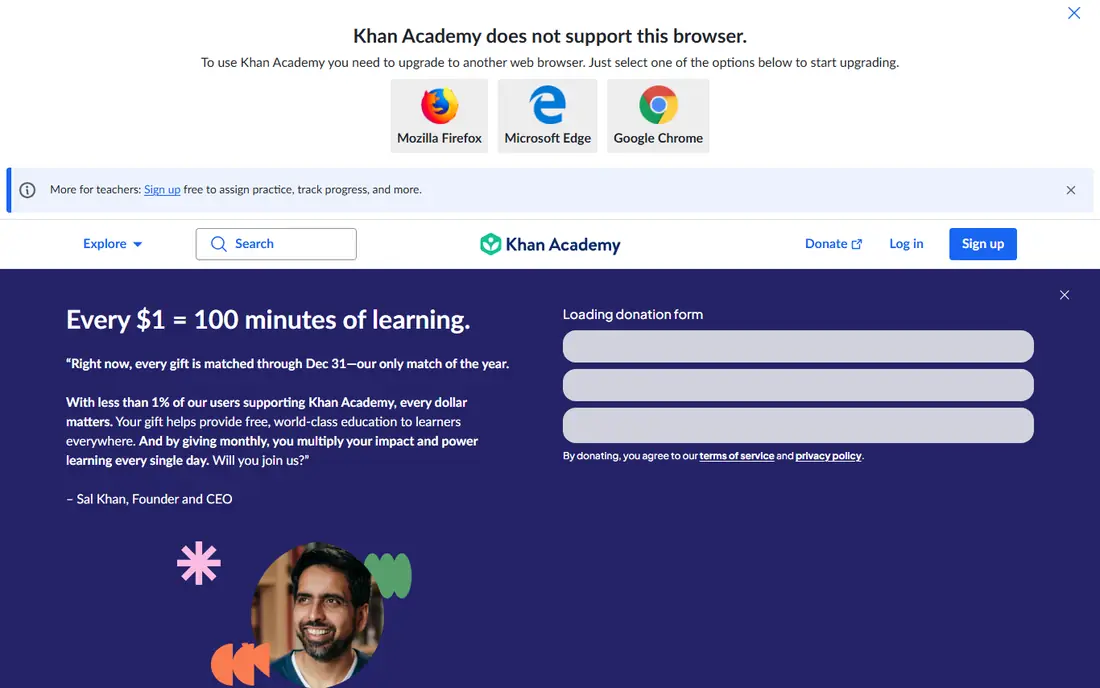
Khan Academy is the free starting point for personalized learning, with adaptive practice that adjusts to each learner across math, science and humanities. Its mastery system lets students move on only when they truly understand a skill, which builds real confidence. For readers focused on free adaptive learning for all ages, the appeal is completely free. That strength matters in daily use, because it is the part you will notice every week, not a feature you open once and forget. Compare it against the rest of the list on that one point first, then look at price, platform support and how the company handles your data. The honest weakness is less game-based motivation for young children. teacher tools are basic Try it on a real task before you pay, and check whether the entry plan covers the feature you actually need.
- Completely free
- Adaptive practice
- Huge subject library
- Less game-based motivation for young children
- Teacher tools are basic
IXL
Ideal for: Adaptive skill practice
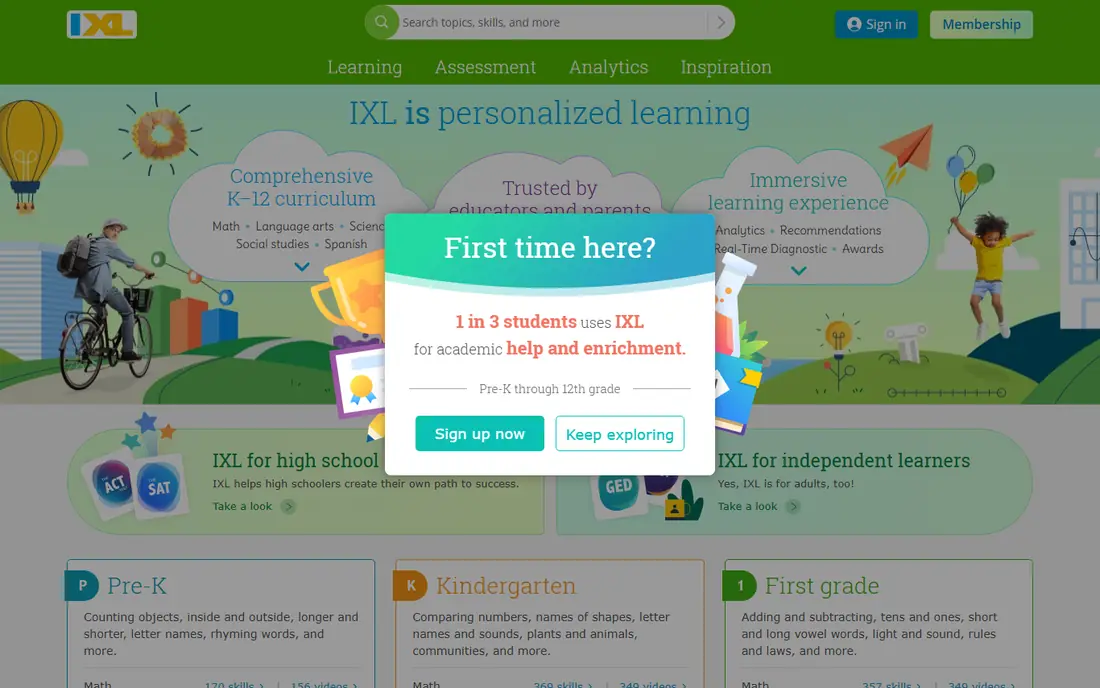
IXL diagnoses skill gaps and builds a personal plan for each student, with practice that adapts as answers come in. Its reports show parents and teachers exactly which skills need work, which makes tutoring time more focused. For readers focused on adaptive skill practice, the appeal is adaptive diagnostics and skill plans. That strength matters in daily use, because it is the part you will notice every week, not a feature you open once and forget. Compare it against the rest of the list on that one point first, then look at price, platform support and how the company handles your data. Watch out for subscription cost adds up per child. practice style is not for everyone If you can live with that limit, the rest of the package is easy to recommend for its audience.
- Adaptive diagnostics and skill plans
- Detailed progress reports
- Broad subjects
- Subscription cost adds up per child
- Practice style is not for everyone
DreamBox
Ideal for: Adaptive math for young learners
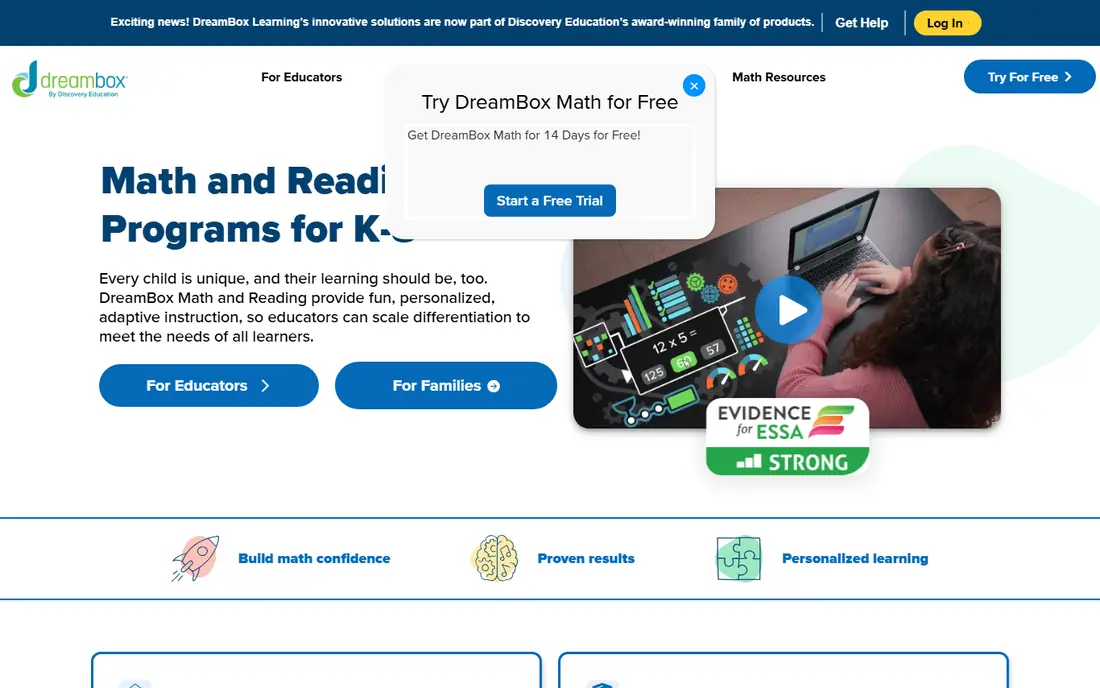
DreamBox adapts math lessons moment by moment, so each child gets a path shaped by how they solve problems, not just right or wrong answers. Its lesson design keeps younger learners engaged while adults get reports they can act on. For readers focused on adaptive math for young learners, the appeal is real-time adaptive math. That strength matters in daily use, because it is the part you will notice every week, not a feature you open once and forget. Compare it against the rest of the list on that one point first, then look at price, platform support and how the company handles your data. The catch is math only. per-student pricing If that trade-off is acceptable for how you work, this is a solid choice, and a short trial will tell you more than any review can.
- Real-time adaptive math
- Engaging lessons
- Clear teacher and parent reports
- Math only
- Per-student pricing
Prodigy
Ideal for: Game-based math motivation
Prodigy turns math practice into a game students want to return to, with questions that adapt to each player's level. Its dashboards let adults see progress without hovering over every session. For readers focused on game-based math motivation, the appeal is free game-based math. That strength matters in daily use, because it is the part you will notice every week, not a feature you open once and forget. Compare it against the rest of the list on that one point first, then look at price, platform support and how the company handles your data. The honest weakness is game elements can distract. premium upsell is visible Try it on a real task before you pay, and check whether the entry plan covers the feature you actually need.
- Free game-based math
- Adaptive difficulty
- Parent and teacher dashboards
- Game elements can distract
- Premium upsell is visible
ABCmouse
Ideal for: Early learning for young children
ABCmouse gives young children a step-by-step learning path across reading, math, science and art, with thousands of activities. Its structured path suits preschool and early elementary learners who need gentle guidance. For readers focused on early learning for young children, the appeal is full early learning curriculum. That strength matters in daily use, because it is the part you will notice every week, not a feature you open once and forget. Compare it against the rest of the list on that one point first, then look at price, platform support and how the company handles your data. Watch out for best for ages 2 to 8 only. subscription needed after trial If you can live with that limit, the rest of the package is easy to recommend for its audience.
- Full early learning curriculum
- Step-by-step path
- Engaging activities
- Best for ages 2 to 8 only
- Subscription needed after trial
SplashLearn
Ideal for: Game-based math and reading
SplashLearn uses adaptive games to teach math and reading to elementary students, adjusting difficulty as children progress. Its parent reports show skills practiced and mastered, which helps families pick what to work on next. For readers focused on game-based math and reading, the appeal is adaptive games for math and reading. That strength matters in daily use, because it is the part you will notice every week, not a feature you open once and forget. Compare it against the rest of the list on that one point first, then look at price, platform support and how the company handles your data. The catch is best for elementary ages. full features need a subscription If that trade-off is acceptable for how you work, this is a solid choice, and a short trial will tell you more than any review can.
- Adaptive games for math and reading
- Parent reports
- Curriculum aligned
- Best for elementary ages
- Full features need a subscription
AdaptedMind
Ideal for: Adaptive math and reading practice
AdaptedMind adapts math and reading lessons to each child, with videos that explain concepts when practice alone is not enough. Its straightforward design suits families that want focused practice without game distractions. For readers focused on adaptive math and reading practice, the appeal is adaptive lessons with videos. That strength matters in daily use, because it is the part you will notice every week, not a feature you open once and forget. Compare it against the rest of the list on that one point first, then look at price, platform support and how the company handles your data. The honest weakness is smaller content library than IXL. design is simple Try it on a real task before you pay, and check whether the entry plan covers the feature you actually need.
- Adaptive lessons with videos
- Progress tracking
- Curriculum aligned
- Smaller content library than IXL
- Design is simple
Freckle
Ideal for: Differentiated classroom practice
Freckle differentiates math and reading practice automatically, so each student works at the right level without teacher setup for every child. Its free tier makes it easy for a teacher or parent to try before involving a whole school. For readers focused on differentiated classroom practice, the appeal is differentiated practice. That strength matters in daily use, because it is the part you will notice every week, not a feature you open once and forget. Compare it against the rest of the list on that one point first, then look at price, platform support and how the company handles your data. Watch out for full school features need a paid plan. practice-focused If you can live with that limit, the rest of the package is easy to recommend for its audience.
- Differentiated practice
- Free teacher tier
- Progress tracking
- Full school features need a paid plan
- Practice-focused
How we picked these
We started from the topic itself and kept only products that exist and work today and truly fit it. For each one we checked the official homepage, the pricing page and the free tier, and we read app store listings, privacy policies and public reviews where they were relevant. Products with a homepage we could not verify were left out, and prices we could not verify are shown as See website rather than guessed. We favored a mix of well-known leaders and strong smaller options, and we weighed entry price, free tier, platform coverage and honest weaknesses. No product here paid for its place, and we did not claim hands-on testing we did not do. What follows is a comparison of published facts, so you can check any claim on the vendor site before you buy.
Choosing a personalized learning platform for your child or class
Start with the student's age, subject gaps and learning style, because a game-based tool and a practice-based tool suit different children. Check curriculum alignment and whether the platform works on your devices at home and at school. Next, run a short trial and watch the diagnostic results, not just the time spent. Compare two finalists on how clearly they show gaps and how easily a parent or teacher can assign follow-up work.
Frequently asked questions
What is personalized student learning?
Personalized student learning adjusts pace, level and content to each learner, using diagnostics and adaptive practice. It helps students fill gaps without waiting for the whole class.
Which platform is best for elementary students?
ABCmouse suits ages 2 to 8, SplashLearn and DreamBox suit elementary math and reading, and Prodigy motivates through games. The right pick depends on age and subject.
Is Khan Academy really free?
Yes, Khan Academy is free for learners, parents and teachers, funded as a nonprofit. It covers many subjects, though its style is more practice-based than game-based.
Do these platforms replace school?
No, they support school by giving extra practice and showing where help is needed. Teachers and parents still matter most for explanation, encouragement and checking understanding.
How much screen time is reasonable?
That depends on age and purpose, and most families set limits around practice sessions of 20 to 30 minutes. Use the platform reports to keep sessions focused rather than open-ended.